
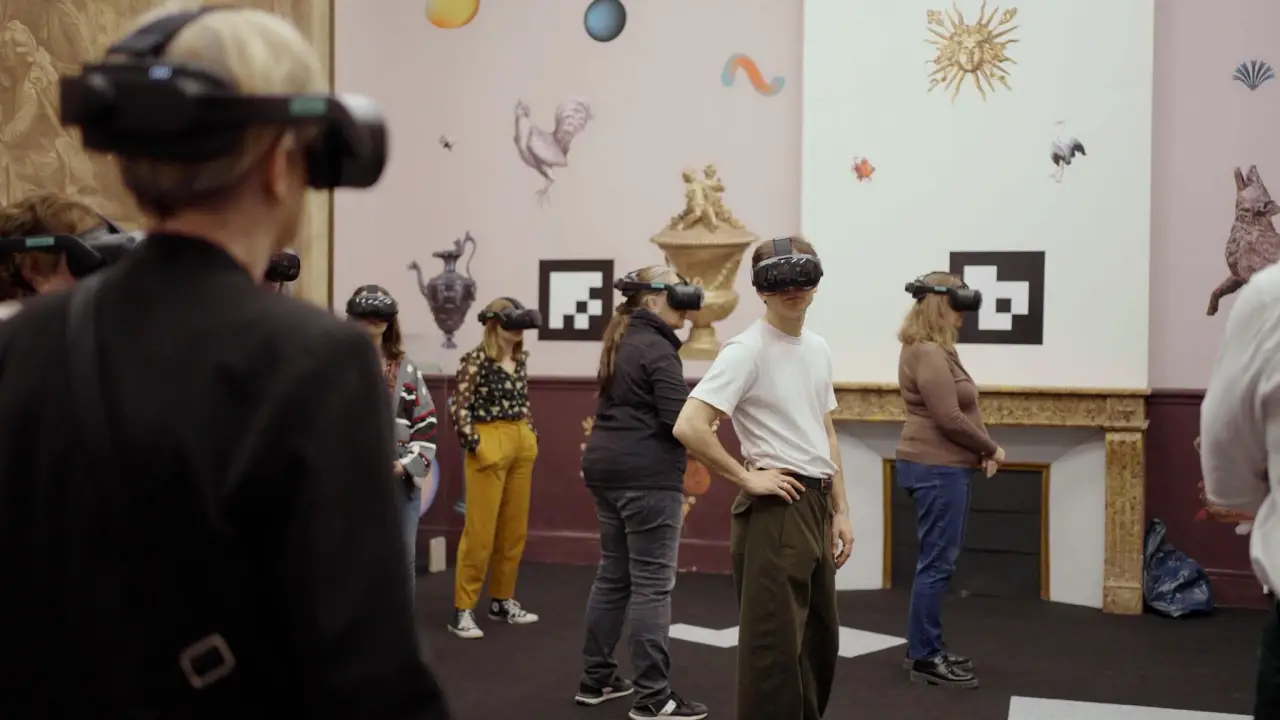
The appetite for major cultural experiences has always been a vertical business for growing XR. From the outset, HTC VIVE has been involved in this sector, both with studios (including, historically, Excurio) and now with the growing number of distribution venues. We meet Thomas Dexmier, VP Sales & Marketing EMEA at HTC VIVE, fifteen years after he joined the manufacturer (at the time of smartphones). Thomas Dexmier traces the gradual shift towards immersive technology and, above all, how the group is now structuring a comprehensive B2B offering for XR experiences in dedicated venues: headsets, management software, operational support, and networking with studios and cultural institutions.
Cover: VERSAILLES: LOST GARDENS OF THE SUN KING @ Château de Versailles
From the general public to businesses: a clear trajectory, driven by location-based services
Thomas Dexmier describes a “natural” evolution: after the original Vive designed for the general public (2015-2016), HTC VIVE quickly identified uses beyond the consumer market. The pivot towards the enterprise market was then built around multiple verticals (education, healthcare, energy, etc.), with a particular focus on art and culture, which he presents as an ideal field for demonstrating the maturity of immersive technologies.
At the heart of the matter is LBVR/LBE (Location-Based VR/Entertainment), understood as VR/MR experiences, often multi-user, enjoyed in physical spaces equipped with professional hardware and tailored software solutions. For HTC VIVE, this is not a “new” opportunistic venture: Dexmier points out that LBE has always been one of the Vive platform’s strengths, first through arcades/gaming, then through industrial uses (training, simulation, operations). He cites advanced training scenarios (firefighters, professional accessories, multi-user environments) and mentions French players using shared XR environments in their own way, a sign of already structured adoption on the industry side.
VIVE Arts: a cultural showcase… and a lever for deployment
Within the HTC ecosystem, VIVE Arts plays a key role in the cultural sector, serving as a gateway, showcase, and production/distribution partner. The division has a clear mission: to connect artistic creation with cutting-edge technologies to “reinvent” the art experience, with a positioning that includes VR/XR and content licensing services for institutions.
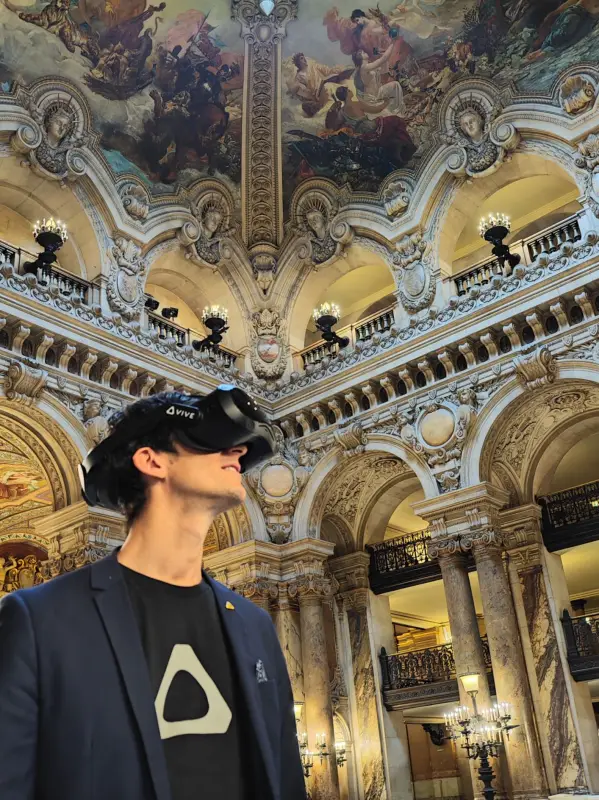
But the interesting aspect, from a B2B perspective, lies elsewhere: Dexmier emphasizes the operational reality of cultural venues. Institutions are innovating, but they don’t always have the in-house technical skills to develop, deploy, and operate an immersive experience over time. He cites an emblematic example: LA MAGIE OPERA by BackLight, a first XR experience at the Paris Opera (Palais Garnier), made possible by technological support and the identification of partner studios, with a logic of co-development and support. The challenge, according to him, is precisely to bridge the gap between heritage/historic sites and technological requirements (network, operation, maintenance, fleet management).
HTC VIVE support: a “platform + services” approach designed for operation
This essentially leads to a value proposition typically expected by LBE operators: reliability, deployment, support, and the ability to run “10 hours a day” over long periods. This puts the headsets back in an “enterprise” context: fleet management, IT requirements, security, remote supervision. The key point is accessibility: how can non-IT teams be enabled to use multi-user XR devices without encountering insurmountable complexity?
In this context, Thomas Dexmier cites VIVE Business+ as the central software component: a licensing model and suite of solutions for managing headsets, orchestrating shared environments, and securing operations. He talks about support that ranges from upstream (listening to needs, designing paths, scoping) to the field (visits, network diagnostics, content integration, remote support), with engineering teams based in Europe. He emphasizes the imperative of “quality of service”: LBE, he points out, is a ticketing and operations business, and the technical chain cannot afford to be approximate.
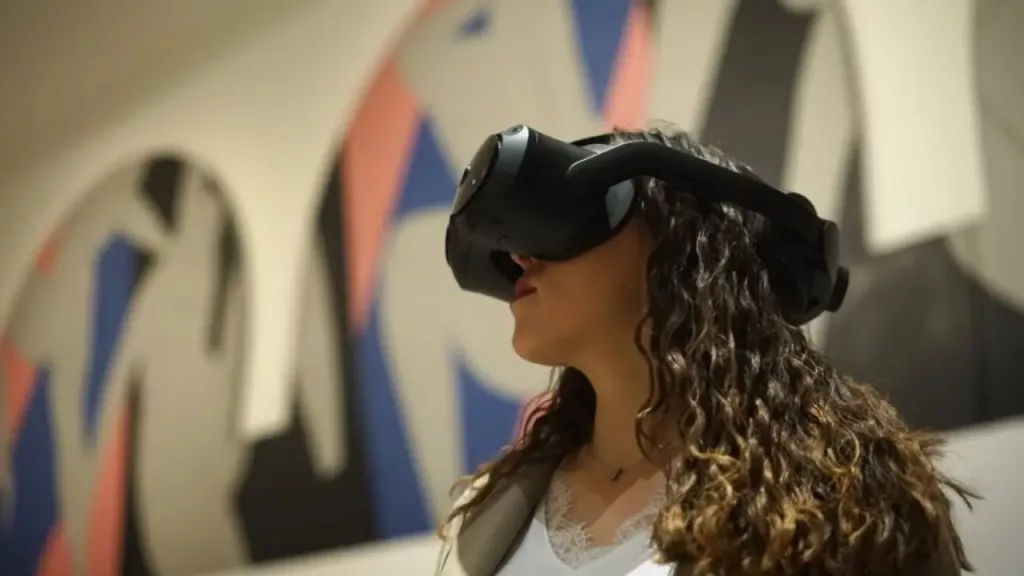
This approach has a direct consequence: HTC VIVE positions itself less as a hardware supplier and more as a deployment partner, capable of providing methodology, feedback, and responsiveness. Dexmier goes so far as to describe “WhatsApp” support situations that reflect the level of proximity required when the business depends on service continuity.
The first piece of advice for cultural venues: clarify the “why,” then compare the reality
Faced with the enthusiasm generated by immersive technologies, Dexmier warns of a classic pitfall: imagining an “enormous” experience too quickly, then being caught up by technical, budgetary, and operational realities. His initial recommendation is simple: start with the need and the intention. Why launch an immersive experience? What is the goal of the experience? What are the constraints in terms of location, flow, audience, and budget?
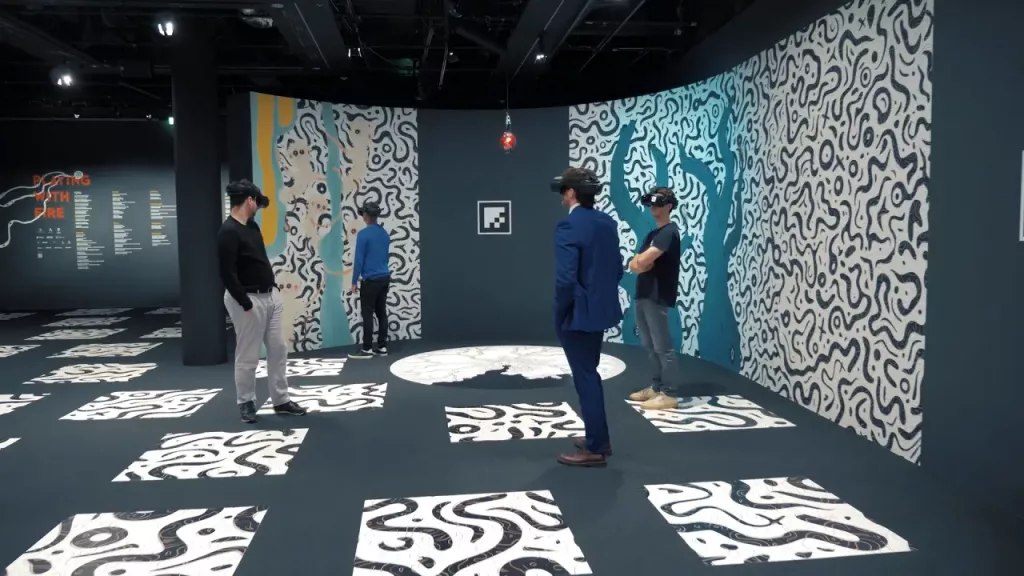
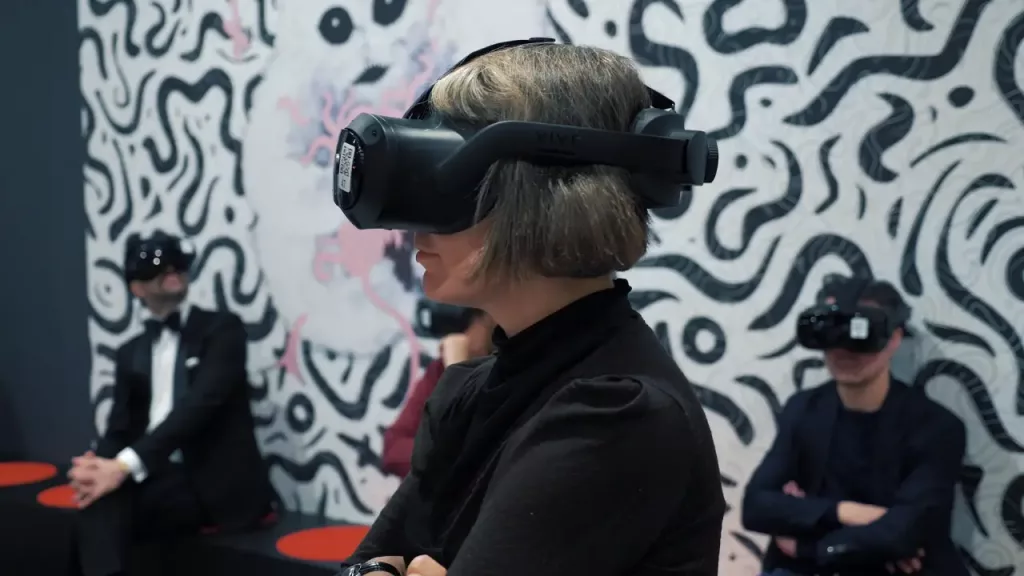
He then proposes a very “hands-on” approach: going to see what already exists. He takes Paris as an example of an ecosystem where a range of experiences can be compared (size, price, duration, simultaneity, graphic rendering, levels of VR/MR mix), in order to anchor decisions in concrete terms. In particular, he mentions hybrid approaches combining physical elements and virtual layers, which create an aesthetic and grammar specific to cultural LBE.
Independent studios: the “foundation” of creation and a driver of innovation for HTC
The message is clear on one point: in art and culture, technology is worthless without studios. Dexmier cites players (Excurio, BackLight, Small Creative, Unframed Collection among others) and emphasizes France’s leading role in creating LBE cultural experiences on an international scale. He mentions close collaboration: artistic and scenographic ambitions challenge HTC VIVE, which then prioritizes developments relevant to culture… often reusable in other B2B verticals.
It provides an indicator of maturity that has become central to investors and operators: the ability to scale up. Dexmier cites Excurio with several “major” experiences deployed internationally, rooms that can accommodate very large numbers of visitors simultaneously, and a cumulative visitor volume that now places cultural XR in a market context, not just as a prototype.
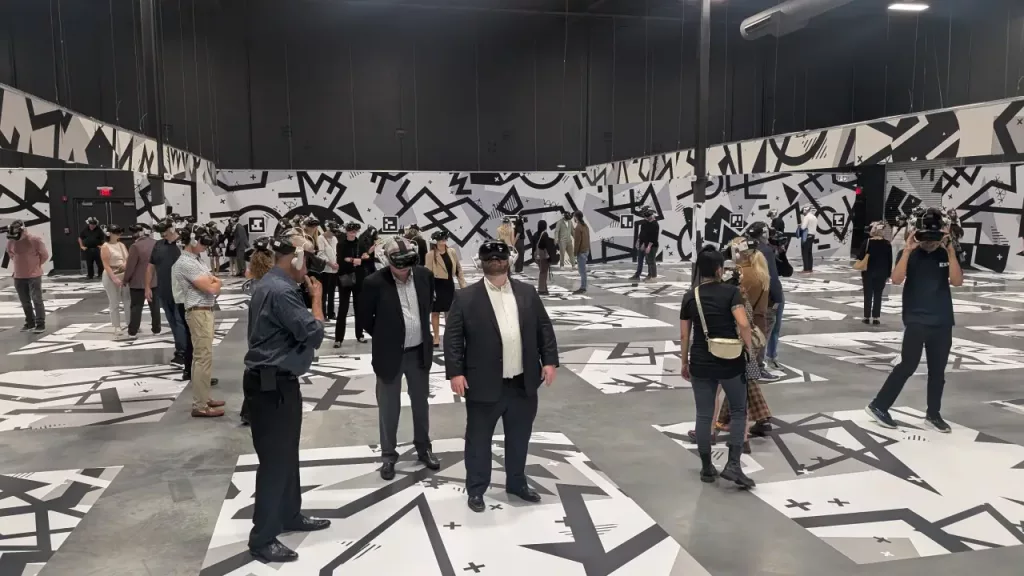
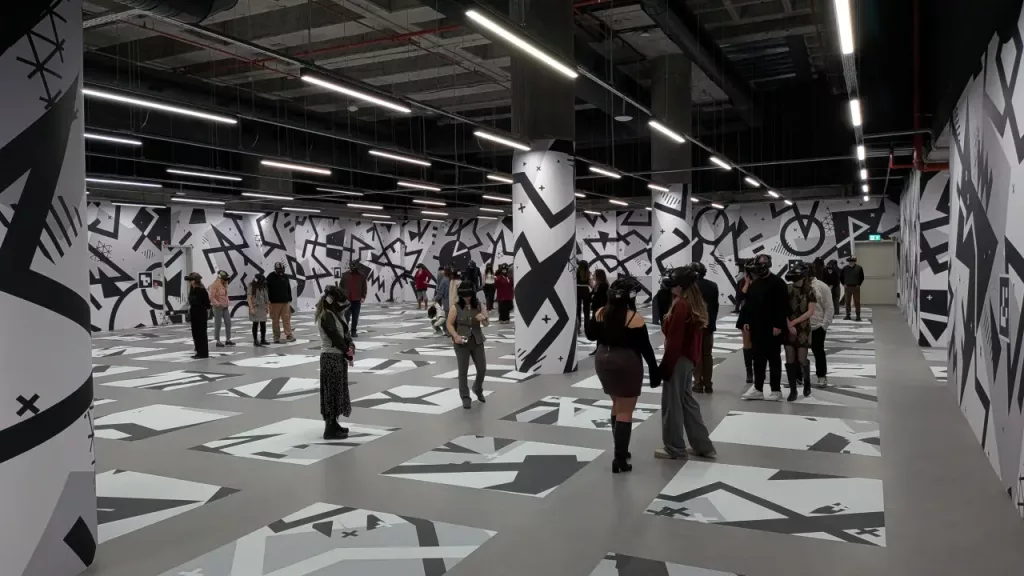
Behind these figures lies a challenge for the industry: the best studios are also those with dual expertise—creative and technological—capable of combining artistic vision, hardware/software constraints, and operational reality. And this is where part of the “next generation” comes into play: the technological roadmap is fueled by studios that push the medium to its limits.
Data, security, sovereignty: “privacy by design” as a B2B differentiator
The subject of data is addressed head-on, and Dexmier advocates a structured approach: HTC is a Taiwanese company, independent of any social network, and is committed to a “privacy by design” approach. He states that the platform does not capture user data on the headsets, while giving studios and institutions API access (for example, to analyze flows, optimize a journey, or understand congestion points). He adds that ISO standards govern IT practices and that it is possible to operate the headsets on private infrastructures, or even on closed intranet-type networks, without relying on an HTC cloud.
This positioning is consistent with the B2B strategy: the ability to “prove one’s credentials” to sensitive organizations (defense, healthcare, etc.) is a decisive argument when XR moves beyond entertainment and into regulated contexts.
Next step: uses invented by the market… from “AI” glasses to personalized audio guides
For Dexmier, innovation is not an imposed agenda: HTC observes misuse and industrializes what emerges. He illustrates this logic with an old example: uses linked to NASA are said to have helped inspire the creation of Vive Trackers, now used in cultural and performance devices incorporating body tracking.
More broadly, it opens up a new frontier: AI-powered smart glasses. HTC has officially launched VIVE Eagle, a pair of AI glasses (initially in Taiwan at the time of the announcement), designed for translation and everyday use. This new product is accompanied by an “open platform” strategy (multiple AI compatibilities) and will be rolled out gradually in Asia in early 2026, then potentially in Europe and the United States thereafter.
In the interview, Dexmier focuses on how this type of device could change culture: an “audio guide 2.0” that would become a deeply personalized guide, interacting with the knowledge base and curation of the venue. The idea is simple and powerful: at a museum, not everyone has the same expectations or the same level of understanding; in the future, the same tour could generate layers of explanations tailored to different audiences (children, amateurs, experts), without imposing the same experience on everyone.
This scenario has industrial implications: while XR has already proven its ability to create memorable collective experiences in dedicated venues, the arrival of “contextual” AI glasses could open up a second market that is more widespread and more everyday, but more demanding in terms of integration, ethics, and trust. Dexmier says it explicitly: integration must be “done right” to avoid pitfalls, and this is where B2B DNA (security, control, deployment) becomes central again.
Ultimately, this draws a clear line: HTC VIVE is less interested in “selling headsets” than in securing an operating ecosystem, particularly for culture and location-based services. Software platform, field support, partner network, scalability, and privacy policy: the promise is that of an XR that is moving beyond the experimental stage to become a sustainable cultural and commercial infrastructure.
Leave a Reply
You must be logged in to post a comment.