
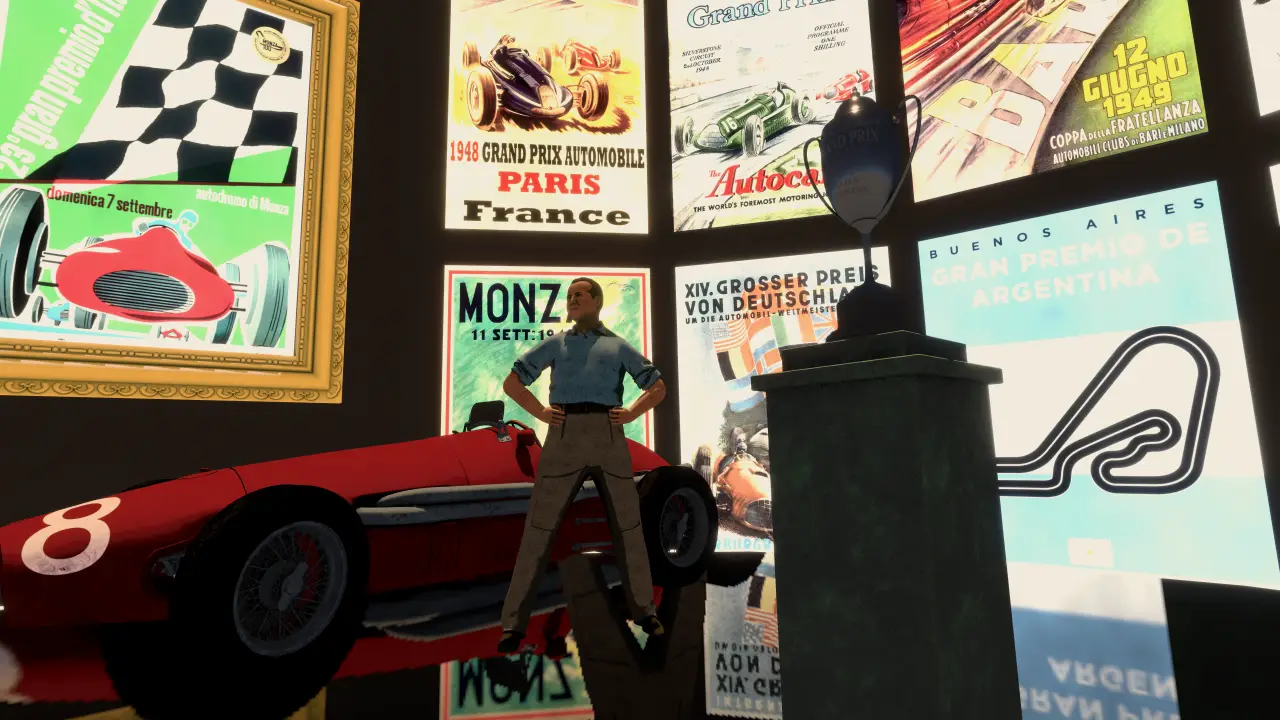
Museums are no longer asking whether immersive experiences “can work” in their walls. The real question is whether they can work at scale, with mixed audiences, tight operational constraints, and an institutional standard of meaning that goes beyond spectacle. BLACK CATS & CHEQUERED FLAGS is a strong case study precisely because it was conceived as location-based from the start: not a tech demo looking for a venue, but a cultural experience engineered for public-facing deployment. The project – selected at Venice Immersive 2025 – blends room-scale VR and multiplayer Mixed Reality to tell the story of Alberto Ascari, the only Italian two-time Formula 1 World Champion, through archives, performance and a collaborative “pit stop” sequence.
Cover: BLACK CATS & CHEQUERED FLAGS, by Elisabetta Rotolo and Siobhan McDonnella
A producer profile shaped by space, strategy, and the realities of public venues
Elisabetta Rotolo’s pathway matters because it explains why the project lands so naturally in museum and exhibition contexts. She does not frame her expertise as purely artistic or purely technical; instead, she comes from a hybrid foundation combining global strategic marketing & communication, organisational transformation for global corporations, and a long-standing practice around space and interior architecture, later reinforced through an MBA and a deliberate pivot into immersive storytelling. That blend is not a detail. In museums, the success of an immersive installation often hinges on factors that sit between disciplines: how audiences flow, how staff are trained, how the experience is explained, how it fits the brand and mission of the host institution, and how it remains legible to visitors who do not “speak XR.” Rotolo’s narrative puts those concerns front and centre.
She describes a formative period starting in 2016, travelling internationally to understand immersive creation and its market potential. Her conclusion is blunt: too many works were driven by a “nerd approach” that privileged technique over creative ambition, while education pipelines for hybrid profiles were missing. Rather than accept that gap as structural, she chose to build a framework around it. That is where MIAT (Multiverse Institute of Arts and Technology) becomes significant: not as a label, but as a model that deliberately mixes training, production and research, designed to cultivate teams able to operate across art, narrative, technology and delivery.
For museums, this positioning is practical. Institutions rarely want a one-off piece that cannot be maintained, adapted, toured or contextualised. They need partners who understand both the creative promise and the operational durability of a project. Rotolo also speaks explicitly about a “high-end” philosophy rather than volume production – an approach that mirrors how many museums protect visitor trust. The implicit promise is that the experience will be treated with the same seriousness as an exhibition: robust design, controlled quality, and a narrative that respects the audience’s time.
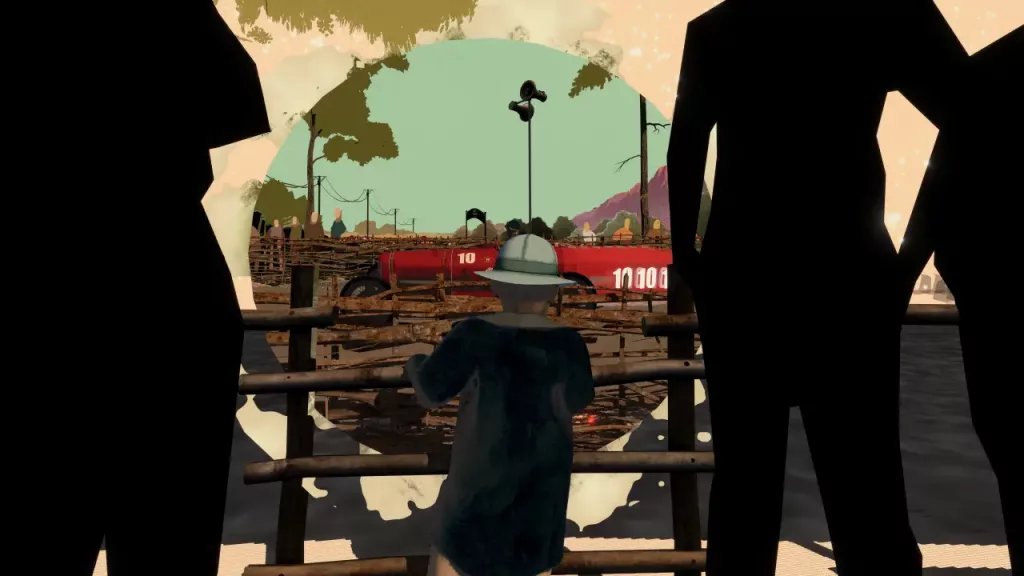
Even the precedents she mentions support this reading. When Rotolo points to earlier premium commissions, she does so through the lens of spatial storytelling, artistic interpretation and audience experience—language that aligns with museum practice. That consistency is not cosmetic: it signals a producer who understands that location-based immersive work is not “content plus headsets,” but a fully staged encounter where space, rhythm and mediation determine whether visitors leave curious or frustrated.
Designing a museum-native LBE: story, interaction and operations built as one system
The premise of BLACK CATS & CHEQUERED FLAGS is already museum-compatible: a heritage-driven narrative anchored in Ascari’s life and legend, shaped by themes that resonate beyond motorsport—speed and risk, superstition and fate, public myth and private fragility. But the project’s real value for the museum LBE sector lies in how it translates that premise into a programmable experience. Rotolo does not describe a single format; she describes an ecosystem of formats designed to work together.
At the heart of the piece is a deliberate alternation between an intimate mode and a collective mode. Room-scale VR and narrative immersion carry the emotional and archival dimension: the visitor is placed in a relationship with memory, testimony and atmosphere. Multiplayer Mixed Reality then shifts the energy toward a shared task—an embodied pit-stop sequence where collaboration becomes the engine of meaning. This two-speed dramaturgy is a smart response to museum audiences. It recognises that visitors arrive with different thresholds: some want contemplation, others want participation, many want both. By designing for both, the project reduces the risk of alienating either group.
Operationally, multiplayer MR is not only an engagement choice; it is a throughput choice. It encourages group attendance and reduces the “one person at a time” bottleneck that can cripple location-based installations in high-traffic periods. Rotolo makes that operational intention explicit when she discusses the pit stop as timed and replayable. The timing mechanic is not there to “gamify” culture for its own sake; it creates a reason to try again, to compare performances, to return—an economic logic that museums increasingly need when they build premium experiences, while still keeping the cultural layer intact.
The project also positions authenticity as part of the visitor contract. Rotolo points to the integration of archive materials and sound work as a structural pillar, not decorative texture. That matters because museums are sensitive to the risk of XR “flattening” heritage into a generic sensation. Here, the approach is closer to exhibition interpretation: mediated access to historical traces, re-authored into a contemporary experiential language. Even her references to aesthetic choices—such as musical influences that evoke a spaghetti western atmosphere—read as curatorial framing: a way to help audiences emotionally locate a period and its archetypes, rather than simply admire an engine.
Another museum-relevant point is the project’s technical pragmatism. Rotolo speaks about headset ecosystem changes and the need to migrate after Venice, driven by the realities of co-location and multiplayer stability. Museums and touring exhibitions live inside that same volatility: hardware evolves quickly, but installations must remain stable for months, sometimes years, with staff who are not XR specialists. A production that anticipates that instability and adapts early is far more “museum-native” than one that treats the venue as a lab.
Distribution:
- MAUTO Museo Nazionale dell’ Automobile – Torino (2025)
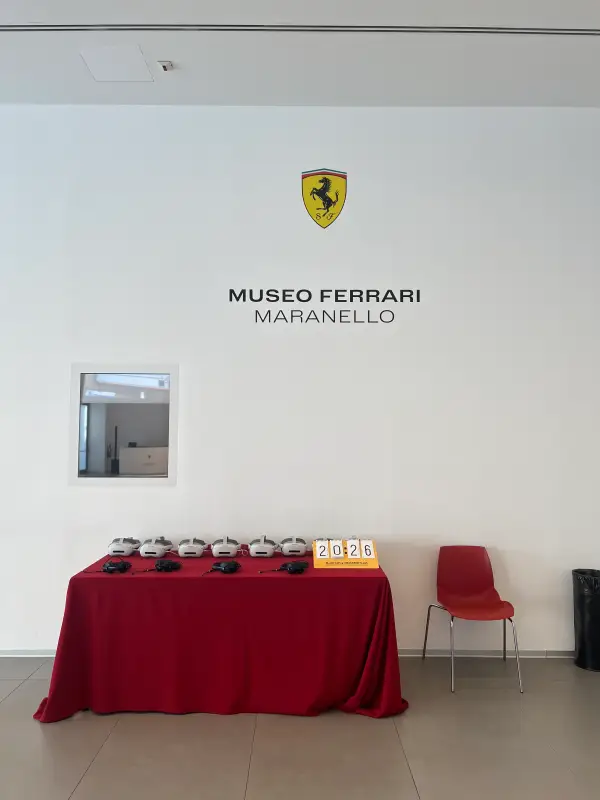
- Museo Ferrari Maranello – Maranello (2025-2026 – see the exhibition report)
Museum deployment, audience results and what this case teaches the sector
A project becomes a true case study for museum LBE only when it proves itself in real visitor conditions: peak attendance, mixed demographics, limited tolerance for friction, and a constant need for mediation. Rotolo’s account puts the emphasis exactly where museums do: on how the experience performed with the public, not only on how it looked in a headset.
She describes BLACK CATS & CHEQUERED FLAGS as deployed at significant scale, with a clear spatial footprint and a dual-structure visitor journey capable of handling large volumes. The focus is repeatedly on audience diversity: children, adults and elderly visitors engaging successfully with the same experience. This intergenerational compatibility is one of the biggest barriers for immersive work in museums, because the institution rarely programs for a single demographic. In Rotolo’s telling, the pit-stop mechanic becomes a key bridge: it lowers intimidation, creates immediate purpose, and turns participation into something social rather than solitary.
The social dimension is not framed as a bonus; it is framed as an observable transformation in visitor behaviour. Rotolo highlights moments where strangers became temporary teams, coordinating and improving through shared effort, sometimes achieving top performances without knowing each other beforehand. That is exactly the kind of “museum magic” that institutions value: visitors not only consuming information, but actively creating a collective memory inside the venue. It shifts immersive from personal gadgetry to public experience—which is the core promise of location-based culture.

Just as important is the measurement mindset. Rotolo references feedback collection through questionnaires and extremely high satisfaction results, positioned as a strategic asset for the host institution and for future touring. Museums increasingly demand evidence—qualitative and quantitative—when they invest in premium experiences. In that context, the partner who builds evaluation into the delivery process becomes more credible, because they speak the language of public service, accountability and continuous improvement. The message is clear: immersive is not only staged, it is assessed.
Finally, the project offers a wider lesson about business models for museum LBE without compromising cultural legitimacy. Rotolo describes a multi-use trajectory: the experience works as heritage interpretation, as entertainment with replay value, and as a potential corporate/team-building format built around collaboration under pressure. Museums are increasingly pushed toward diversified revenue streams—private events, sponsorship-driven programming, premium ticketing layers. A format that can credibly operate across these contexts, while still carrying a strong narrative core, becomes more resilient and easier to tour.
The takeaway is straightforward, and museums should not soften it: location-based immersive succeeds when story, space, operations and monetisation are designed together. BLACK CATS & CHEQUERED FLAGS demonstrates a pathway where cultural depth coexists with multiplayer spectacle, and where visitor joy is not opposed to institutional rigour. That combination is exactly what the museum sector needs if it wants immersive to become a repeatable format rather than a series of fragile experiments.

BLACK CATS & CHEQUERED FLAGS – Cast & Crew
Directed by
Elisabetta Rotolo
Directed by
Siobhan McDonnell
Creative Production, Executive Production, and Production by
Elisabetta Rotolo
Lead XR Design by
Daniel Stankowski
Art Direction by
Stephen Stephenson
Artists
Michele Falasconi
Luca Meloni
Music Composition & Sound Design by
Mustafa Bal
Director of Photography, Shooting, Editing, and Compositing by
Paolo De Rocco
Carlo Borean (Courtesy of Centrica)
Voice Narration and Car Sound Recordings by
Matteo Milani
Lorenzo Di Tria (Courtesy of U.S.O. Production)
Narration by
Saverio Buono
Cast
Antonio and Alberto Ascari
Christian Zecca
Young Alberto Ascari
Ian Thomas Szemere
Leave a Reply
You must be logged in to post a comment.