
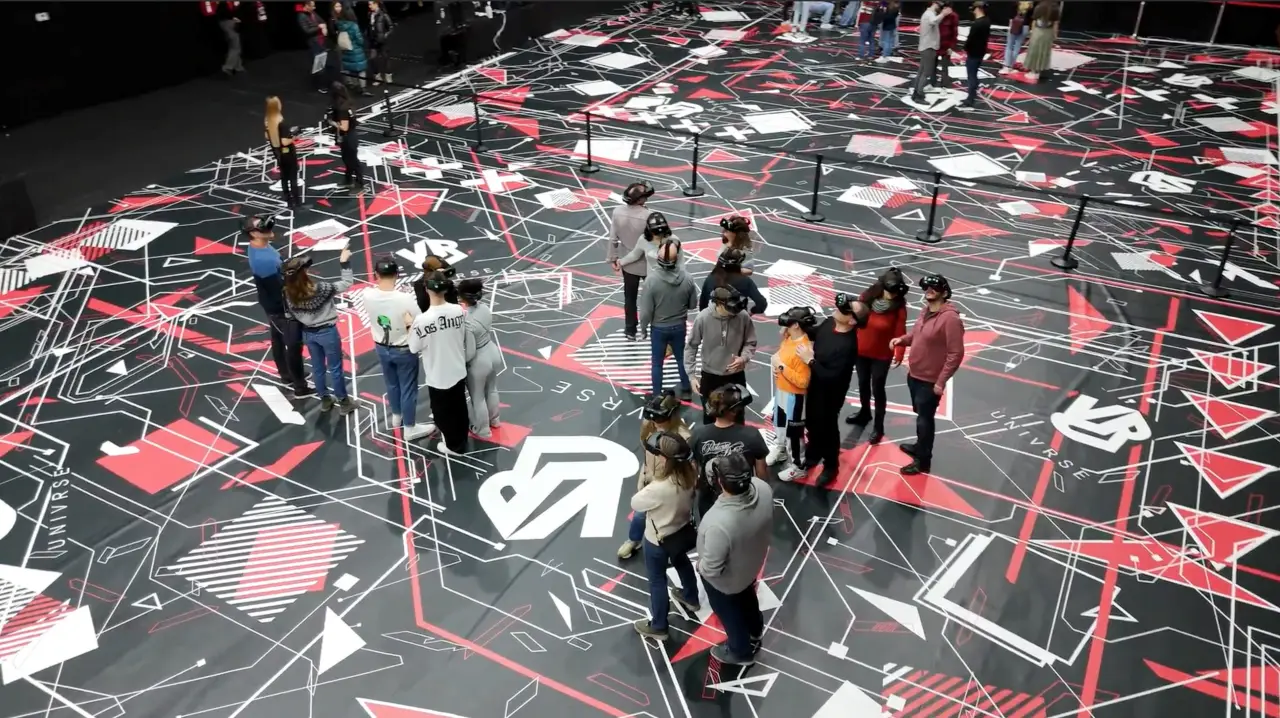
Free-roam VR is entering a make-or-break phase: the sector doesn’t need more proof that the format can amaze—it needs infrastructure that helps it scale. In this episode of our FreeRoaming series, the conversation with David Bardos (Univrse) focuses on XRoam, a platform designed to connect creation, venue operations, and distribution for large-scale, multi-user LBVR.
The discussion looks behind the scenes of what makes free-roam content repeatable: faster iteration for creators, standardized control for operators, and a catalogue mindset that lets experiences circulate beyond flagship locations. At stake is a simple shift – moving LBVR from one-off technical feats to a sustainable exhibition format that can travel, renew itself, and grow an audience over time.
Why LBVR’s Growth Now Depends on Operations, Not Hype
Univrse’s starting point is direct: free-roam, large-scale multi-user VR is considered powerful enough to justify building an entire company around pushing its boundaries—because it mixes scale and intimacy in a rare way. The format isn’t only immersive; it is also social. It can turn VR from something historically perceived as isolating into something collective—people can share reactions in real time, experience story beats together, and even physically connect.
That social and physical intensity is framed as the foundation for product-market fit – especially in art, culture, and high-traffic venues searching for new reasons to remain relevant in an attention economy dominated by streaming platforms and games. In this view, LBVR offers two advantages at once: emotional impact and throughput. But the conversation quickly makes one thing clear: impact alone doesn’t scale a sector. What scales a sector is reliability in the daily grind.
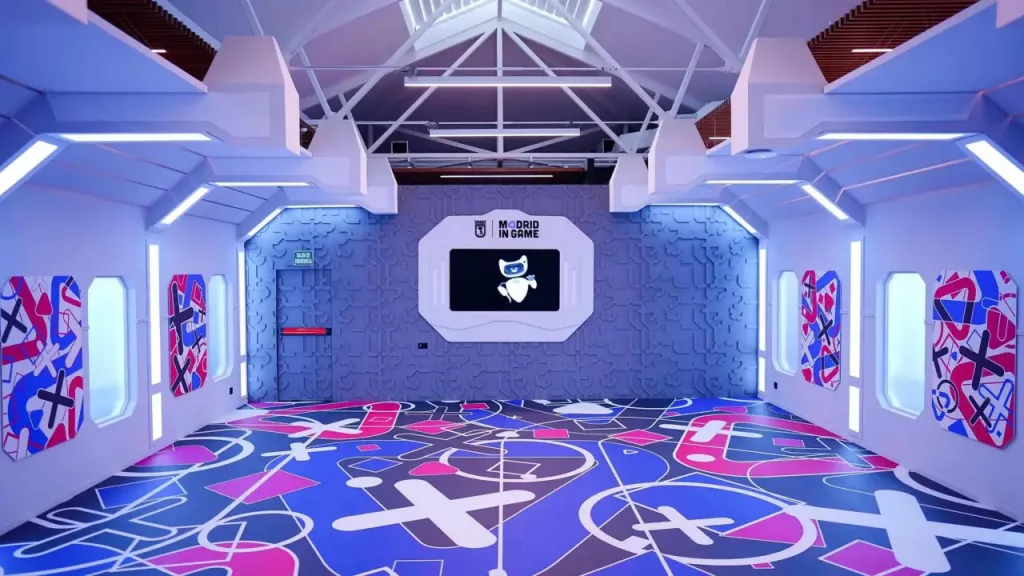
From Univrse’s perspective, the operational reality is where most free-roam experiences break. Multi-user synchronization, scene transitions, safety layers, onboarding, and the “invisible” technical plumbing must be solid, or the result is a beautiful piece of content that fails as a stable operation. This is the gap the platform is meant to close: the argument is that solving those challenges on a one-off, project-by-project basis can produce great experiences—but it rarely produces a scalable ecosystem.
There is also a business logic behind this: early LBVR installations often supported small groups (four users was common), while the ambition for sustainable operations pushes toward far higher simultaneous capacity. Univrse explicitly ties the evolution of its approach to that need for higher throughput and more robust pipelines.
So the context for XRoam is not “software as a nice-to-have,” but software as the missing bridge between three realities:
- creators need faster iteration and production support,
- operators need intuitive, standardized control,
- and the sector needs distribution mechanics that don’t collapse under friction.
XRoam as a Creator Kit: Making Complexity Buildable (and Testable)
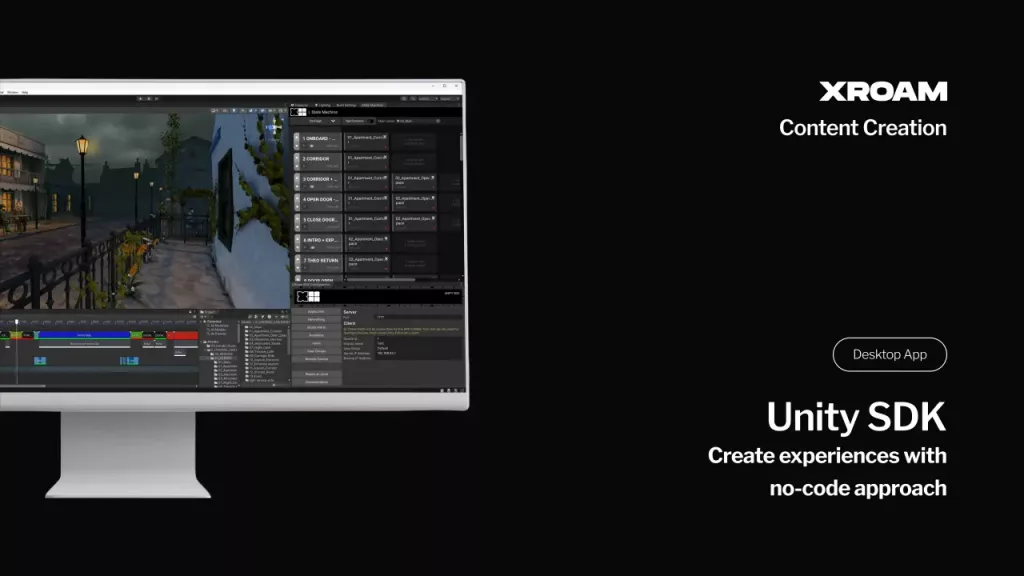
Many players in LBVR have built launchers because the market demands them. Univrse acknowledges that launcher functionality is “a must”—but positions XRoam as something broader: a content creator kit built as a layer on top of Unity, designed to abstract away recurring complexity so artists can assemble sophisticated experiences with less dependency on heavy engineering resources. The point is blunt: stable storytelling with multiple scenes is expensive and slow when each project rebuilds the same foundational systems.
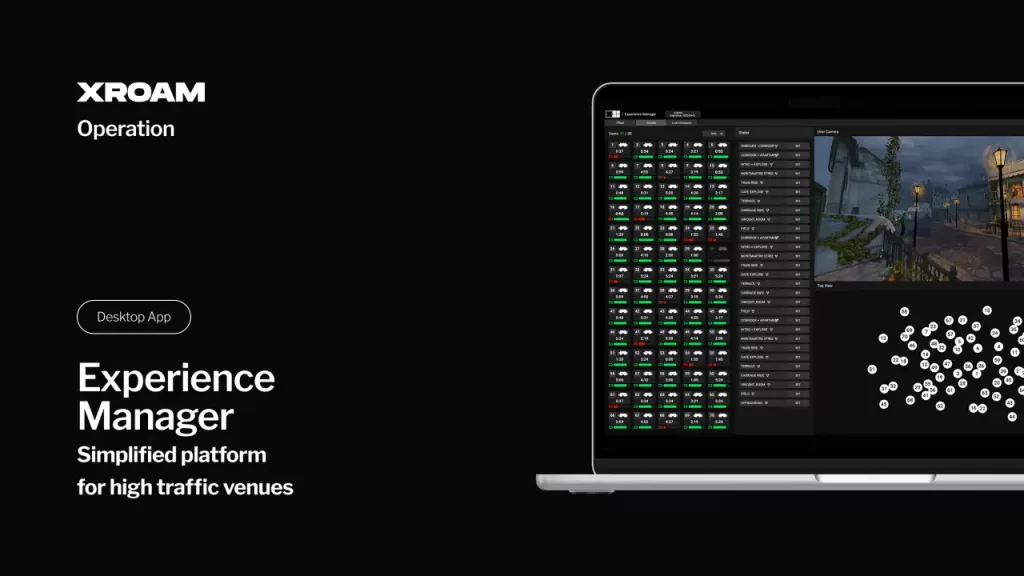
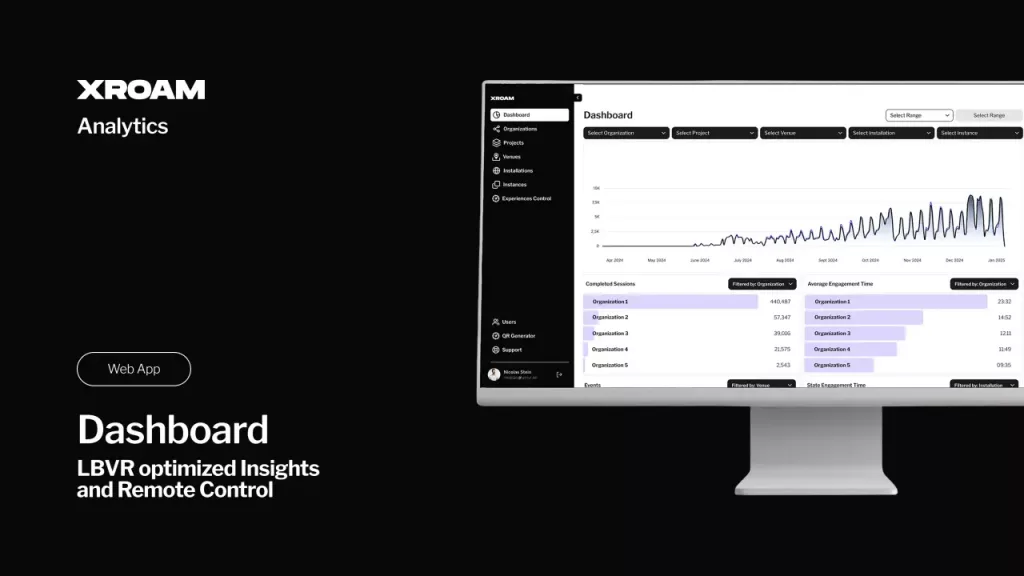
The discussion emphasizes “battle-tested” credibility: XRoam experiences have reportedly run across installations in 18 countries, with “more or less 4 million participants” over several years. Whether a reader treats these as market metrics or simply as maturity signals, they support one claim: the platform has been shaped in real operational conditions, not only in lab environments.
A major part of the conversation is also very concrete: iteration speed. XRoam is presented as a way to reduce the classic VR “black box” pain, where testing can become a daily tax—exporting builds, pushing to devices, replaying long sequences just to reach the moment that needs adjustment. The platform’s approach includes editor-side testing that can jump to specific moments and configure scenes automatically, compressing the feedback loop that typically costs hours.
Two interface concepts come up repeatedly because they directly translate to production and storytelling:
- State machine as “experience description.” The state machine is framed as the structured map of an experience: onboarding, moments, scenes, and actions triggered by conditions. It can support linear storytelling or a decision-tree topology based on user interaction—important for creators moving between “cinematic” and interactive grammar.
- Timeline + triggers as operational choreography. The timeline view and trigger system highlight how free-roam experiences are less about “levels” and more about choreography in space: colliders, doors, transitions, and scene loading/unloading that must remain invisible to the participant. The platform’s goal here is clear: keep the experience seamless while the technical machinery shifts under the hood.
There’s also a pragmatic hardware stance. The discussion positions standalone devices as the most scalable form of LBVR, because streaming increases technical complexity and CAPEX, reducing scalability. This logic is used to explain why the platform started on Unity (stronger for mobile/standalone pipelines), while also noting an ongoing port to Unreal to reach a broader creator community and high-end visual expectations.
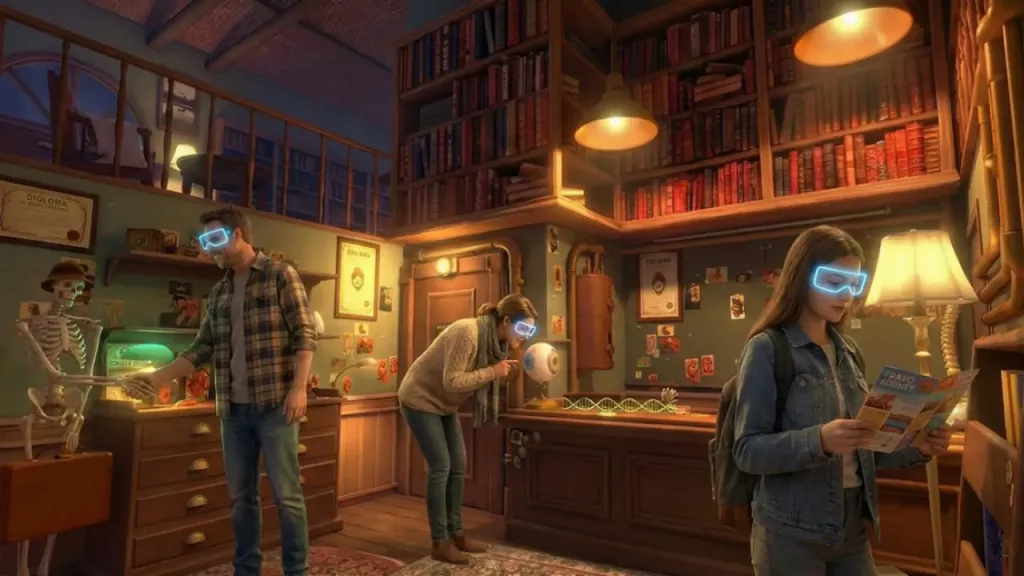
Finally, XRoam is described as hardware-agnostic and venue-agnostic—a claim backed with operational examples: continuous flow venues aiming for very high throughput, synchronized group sessions for friends and families, or guided educational experiences where a teacher controls parts of the journey. Different topologies, different operational needs; the platform is framed as a flexible layer meant to support them without forcing a single format.
From Creation to Distribution: Standards, Interoperability, and the “Cinema Logic”
The most strategic segment of the conversation lands on distribution. The LBVR market is described as growing “under the radar,” now attracting serious attention—including from major IP holders—and sometimes being discussed as a possible “future of cinema,” in the sense that it can repurpose physical spaces by giving audiences a new reason to show up. In this framing, a headline example is the BLACK MIRROR experience, described as launching soon, alongside other “hero IP” projects intended to help open new venues.
But the core distribution argument is not “IP will save the sector.” It’s that content creators immediately face the same business question: where and how to exploit a piece of content sustainably? For that to work, venues need an intuitive solution that does not require switching between multiple platforms or relearning operations for every new title—because that is not scalable.
This is where XRoam’s positioning becomes ecosystem-level rather than company-level: interoperability is presented as the shared pain point, and collaboration – even with competitors – is framed as necessary because operators behave like exhibitors. Operators want the best content available, regardless of which studio produced it, in the same way cinemas do not “stick” to a single studio’s films. If the best title comes from Studio A this month and Studio B next month, the operational layer should not become the reason a venue says no.
That idea leads to a statement about standards: no single company can “own” a standard – otherwise it isn’t a standard. The conversation references the way standards emerged historically in web and mobile development, and argues that LBVR needs shared standards between studios and platforms to reach genuine scalability.
There is also an evolution roadmap: after running a closed beta with selected creators and sharing know-how accumulated over years of mistakes and iterations, the plan described is to open the platform more broadly. In parallel, a second generation of XRoam is framed as moving closer to a “Netflix of LBVR” concept – less as a metaphor for consumer streaming, more as shorthand for catalogue logic and distribution efficiency.
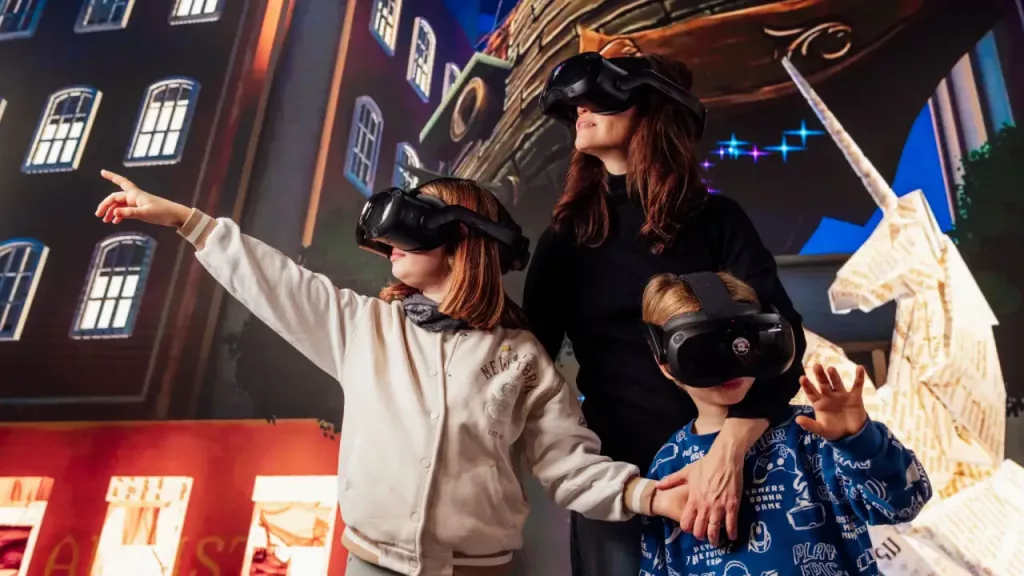
Finally, the conversation widens the geographic lens. LBVR’s infrastructure is described as relatively light compared to many touring immersive exhibitions: “a big box,” markers, headsets, and a server computer. That lower overhead can change the business logic and make smaller cities viable – places that may not normally receive innovative cultural formats but show strong audience appetite when something new arrives. The discussion even points to touring-kit scenarios reaching smaller towns and villages, while keeping the same content that might run in major cities.
That’s the real endgame implied here: not just better tools, but a distribution layer that allows free-roam content to travel further, faster, and with less operational reinvention – turning LBVR into a format that can build long-term cultural and economic presence.
Leave a Reply
You must be logged in to post a comment.