
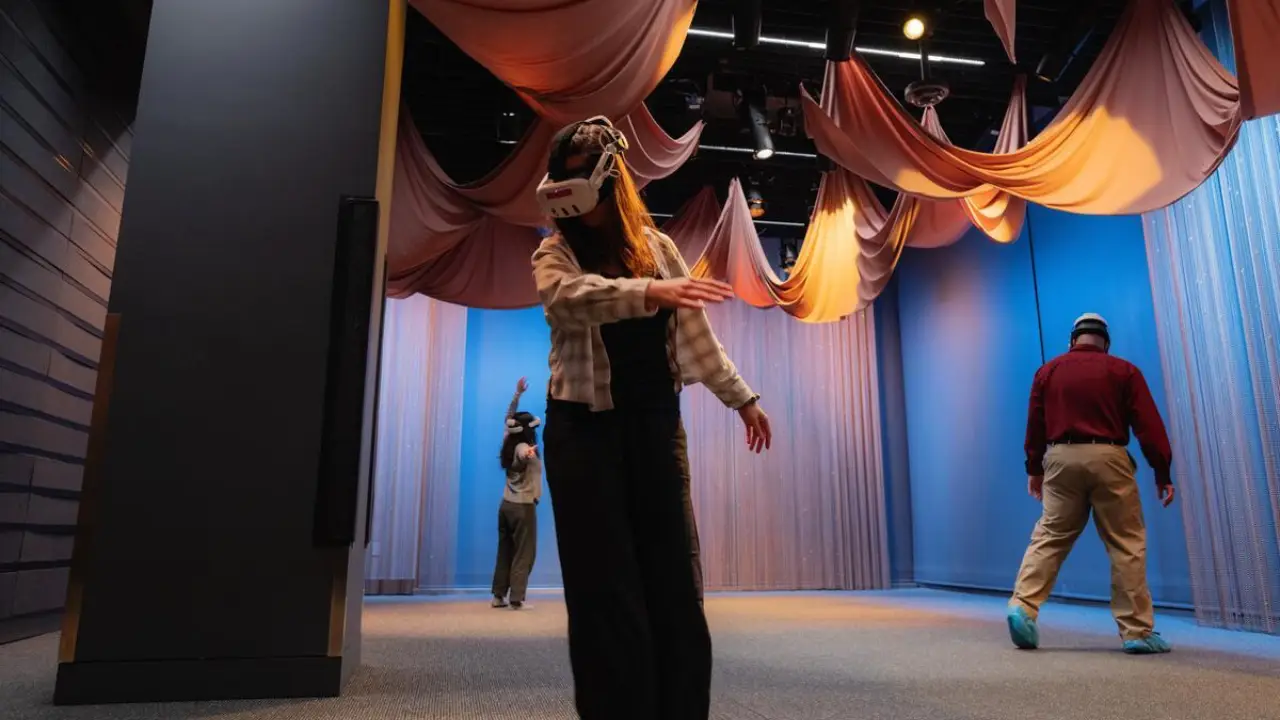
Immersive work is no longer a side attraction tacked onto a performing arts calendar. At the Lincoln Center for the Performing Arts in New York, it is increasingly treated as a programming language—one that can expand access, strengthen community ties, and give artists new ways to stage emotion, memory, and presence. In this conversation with Jordana Leigh (Senior Vice President, Artistic Programming at Lincoln Center), one principle stays consistent: XR matters only when it serves people first—audiences, neighborhoods, artists—and meets the same artistic standards as any stage. The outcome is a season (Lincoln Center Immersive) where immersive experiences sit alongside concerts and performances, not as “tech demos,” but as cultural propositions.
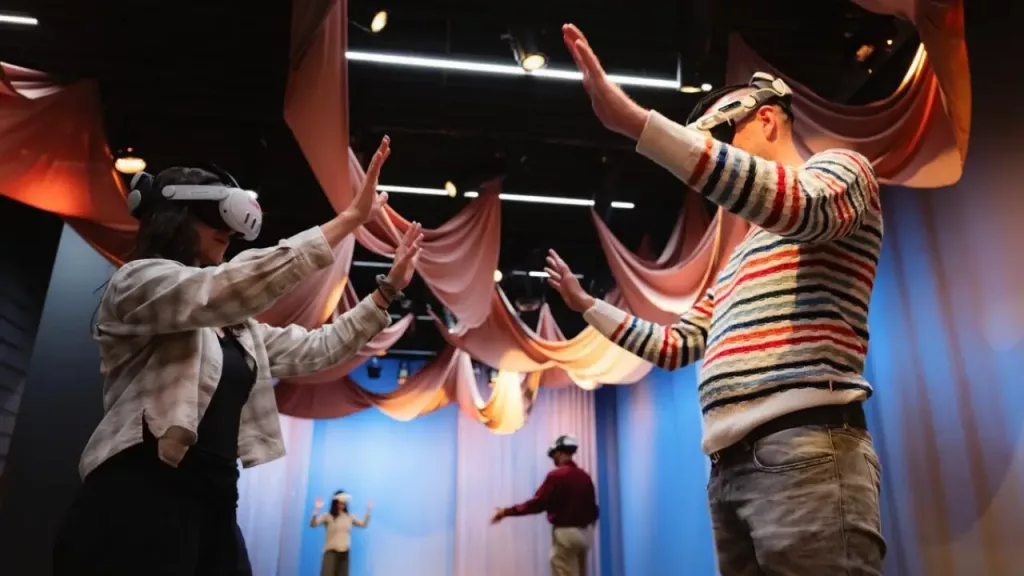
Cover: COLLECTIVE BODY @ Lincoln Center for the Performing Arts 📸 Lawrence Sumulong
From a crisis reflex to a long-term season: immersion as a natural extension of Lincoln Center
Leigh traces the acceleration of immersive programming back to a clear turning point: the 2020 pandemic. When venues went dark, institutions had to reinvent how they stayed connected, how they supported artists, and how they fought isolation. In her framing, technology wasn’t the story—it was a tool pointed toward reconnection. What matters is the intention: using digital forms not to “replace” live culture, but to preserve the relationship between artists and audiences when the usual infrastructure collapses.
When in-person life returned, that logic didn’t disappear. It shifted. Instead of abandoning what digital reach had enabled, Lincoln Center began re-anchoring that momentum into physical gathering—pulling immersive work out of the screen and into the campus, where it could become a shared encounter again. It’s a subtle but decisive move: XR becomes a bridge between distance and presence, a way of keeping the expanded audience mindset while returning to the power of the collective.
That shift also aligns with how Lincoln Center thinks about its public-facing spaces, especially the David Rubenstein Atrium – a threshold designed to be welcoming rather than intimidating. Leigh emphasizes accessibility as a programming strategy, not a communications slogan. Free entry or “choose what you pay” models reduce the risk for first-time audiences and help turn attendance into a habit. The objective is straightforward: if you want people to build a relationship with the arts, you have to lower the barriers that make participation feel occasional, expensive, or “not for me.”
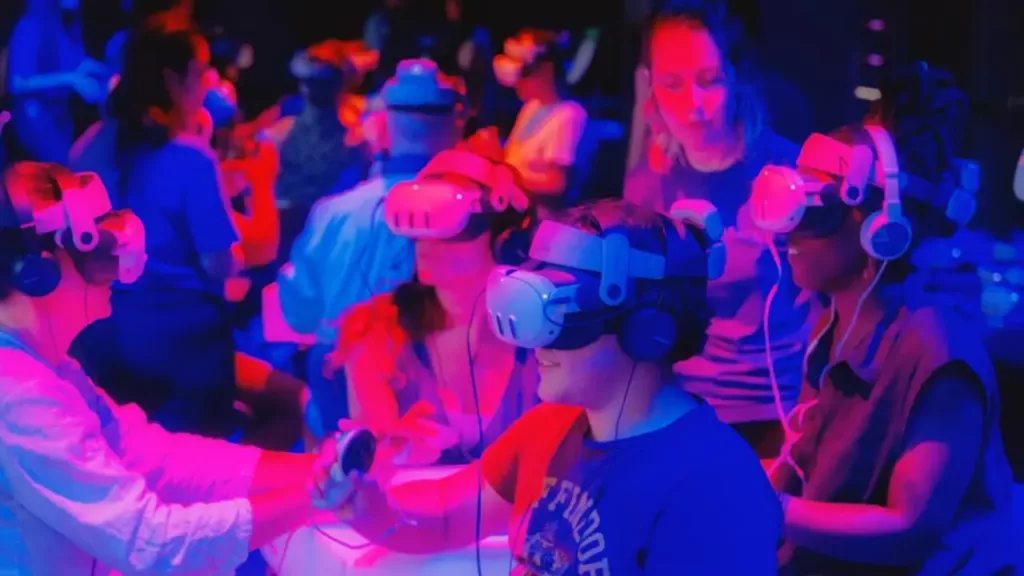
From there, immersion stops being an occasional experiment and becomes an intentional thread in the season. Leigh is explicit about the positioning: these works are not “on the fringe.” They are programmed side by side with everything else because they pursue the same institutional goals—gathering people, reflecting diverse stories, and giving artists room to expand their language. The campus becomes a platform where audiences can move between forms: a concert hall one night, an immersive encounter the next, without being asked to mentally switch from “art” to “tech.”
What’s interesting in her account is that this normalization isn’t framed as a brand reinvention. It reads more like continuity. Lincoln Center’s job is to convene public culture. If immersive tools allow new kinds of convening—especially for audiences who don’t automatically see themselves in classical venues—then they belong in the season. Not as novelty, but as a programming responsibility.
An artist-driven curation: emotion, community, and care as the real compass
Leigh’s curatorial stance is sharp: she is not “selling” technology, she is programming artists. That isn’t rhetorical. It’s the selection filter. XR only earns its place when the work has a clear artistic need for immersion—when the experience, not the interface, is the point. This puts the emphasis back where it belongs: story, feeling, and authorship. The device is never the headline; it’s the delivery mechanism for an intent that already exists.
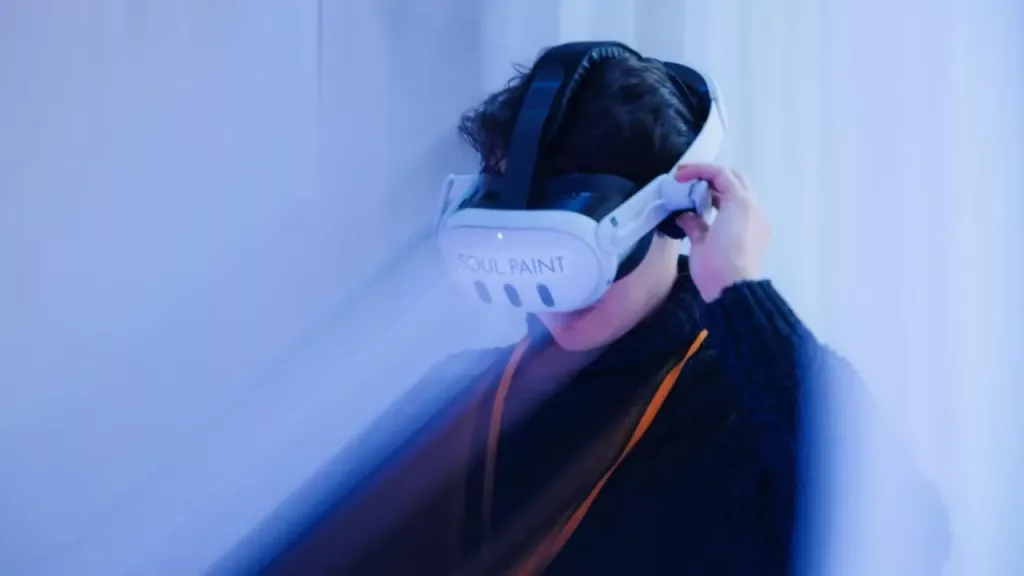
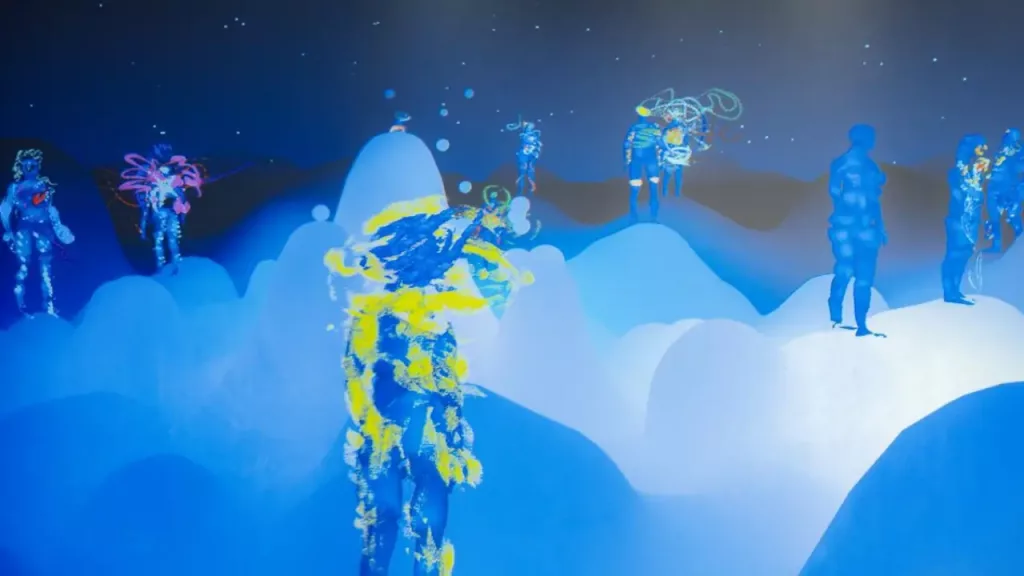
A second pillar is community. Leigh returns to the idea of gathering as a baseline requirement—even when an experience seems individual. She talks about XR as something that can produce intimacy without isolation, precisely because it can generate traces that become shareable. In the case of SOUL PAINT, for instance, the experience may begin as a private act of expression, but it is designed to leave a visible footprint—something that can be displayed, revisited, and talked about. When the outputs live on a media wall, people come back with friends or family to show what they made, to explain a mood, to externalize an interior state. In that sense, XR becomes a social surface: it gives the emotional life of visitors a form that can circulate.
This logic connects directly to another strategic axis in Leigh’s thinking: the intersection of art and well-being. She describes immersive work as part of a broader conversation about how culture impacts attention, stress, embodiment, and reflection. The positioning here matters. It isn’t a promise of therapy. It’s a recognition that certain artistic experiences can influence the body and the nervous system—and that institutions can responsibly host that conversation when they partner with appropriate expertise. What’s being programmed is not “wellness content,” but works that acknowledge how people actually live right now: overstimulated, anxious, socially fragmented—and still hungry for meaning.
Leigh also highlights a practical truth that many XR presentations forget: audiences don’t primarily want “headsets.” They want experiences. With COLLECTIVE BODY, the hook isn’t the hardware. It’s the chance to move, to play, to be seen in a different way—to enter a shared physicality that feels both personal and collective. She describes spectators who lean into it joyfully, others who approach more cautiously, but the success metric is not technical performance. It is whether people feel something—whether the work gives them permission to inhabit their bodies differently, and to do it in relation to others.
This is where her “artist-first” framing becomes a structural advantage. When XR is curated through emotion and social impact, it becomes legible to broader audiences. It stops being a specialized field and becomes a set of experiences you can want for the same reasons you want theater: curiosity, joy, empathy, transformation. In Leigh’s view, the best immersive works aren’t trying to prove the future. They are trying to reach the present.
Making immersive work run: hospitality, training, economics—and the question of what comes next
Once immersive experiences move from isolated events into seasonal programming, the operational questions become unavoidable. Who runs the experience? How do you onboard audiences without breaking the artistic spell? How do you maintain quality night after night? Leigh’s answer is grounded: the front-of-house is central, and onboarding is part of the work. She describes a model where docents are recruited locally and trained with the artists’ teams so that facilitation aligns with creative intent. This is a crucial point: for immersive work, “hospitality” isn’t logistics—it’s dramaturgy. The welcome, the instructions, the pace of entry: all of it shapes what the audience feels.
Then comes the economic reality. Leigh is direct about the structural challenge: many performing arts centers struggle to make immersive experiences financially viable at the throughput needed to cover costs and pay artists fairly—especially if their architecture isn’t designed for high-volume circulation. Large “warehouse-like” footprints are rare in legacy institutions, and XR often demands space, staffing, and maintenance that don’t map neatly onto traditional ticketing models.
Lincoln Center’s approach, as she describes it, is partly to treat accessibility as audience development: free or low-barrier entry builds familiarity and trust. The bet is that once audiences see immersive work as “normal” within the season, they will be more willing to follow it into more ambitious formats—and that partners, funders, and touring models will mature alongside that demand. It’s not a quick-fix revenue story. It’s long-game infrastructure building.
That long game also depends on development pathways, not just presentation slots. Leigh points to residency and fellowship structures as essential because they give artists what the market often can’t: time, space, and institutional support to explore. These programs also educate the institution itself. They create internal literacy about production realities, distribution constraints, audience behavior, and what it takes to sustain a pipeline from prototype to public run. In other words, residencies don’t only benefit artists; they professionalize the host venue’s relationship to the medium.
Leigh also addresses, without dodging, the broader maturity question in XR: storytelling quality is uneven. But she refuses the easy dismissal. In her view, unevenness is normal across all art forms; what matters is curation and evolution—finding strong works, supporting strong storytellers, and building bridges so that artists who aren’t “tech natives” can still enter the space with confidence. That is how a field grows: not by fetishizing innovation, but by expanding who feels authorized to create.
The throughline of Leigh’s method is normalization through standards. Immersive work is treated like the rest of the season: held to artistic expectations, built around audience care, and framed as public culture rather than gadgetry. Lincoln Center isn’t merely hosting XR. It is testing how XR becomes a seasonal language—durable, shareable, and defensible in real-world economics. The next phase is not proving that XR belongs in major institutions. It’s proving it can stay there—not as exception, but as habit.
Lincoln Center’s Collider Fellowship
Lincoln Center’s Collider Fellowship welcomes six artists working at the vanguard of their fields for a nine-month residency exploring how technology can enhance and deepen in-person performing arts experiences. Each Fellow is supported in whatever exploratory investigations they wish to undertake—free from conventional commission requirements such as a final product or project. They receive studio space, both at Lincoln Center and at Collider collaborator Onassis ONX, a global Onassis Culture platform dedicated to the development of new media art and immersive experiences; financial stipends; artistic and administrative support from Lincoln Center staff; and regular opportunities to collaborate with one another. Emerging technologies can offer new possibilities to connect with our common humanity and learn about experiences across time and cultures.
Leave a Reply
You must be logged in to post a comment.