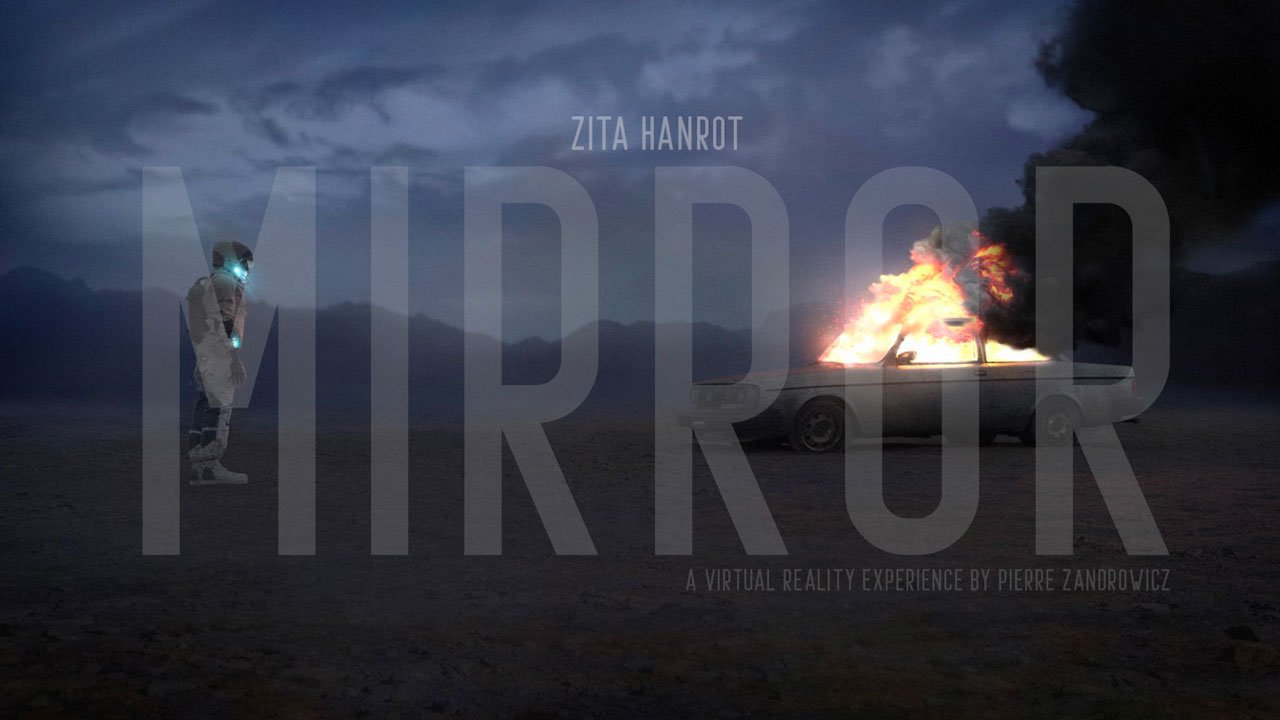
A pioneer of immersive fiction in France with I, PHILIP (2016), Pierre Zandrowicz has never ceased to explore new narrative horizons, with live performance and Bartabas on EX ANIMA EXPERIENCE (2019), or History with CHAUVET VR: THE DAWN OF ART (2020) narrated by Cécile de France. He was back at the Venice Film Festival this year for his long awaited project, the first part of his science fiction saga: MIRROR.
(Science) Immersive fiction: the genesis of MIRROR
P. Z. – After I, PHILIP – which is a work of anticipation, sometimes surrealist – I wanted to continue my exploration of science fiction in virtual reality, to push it into these metaphysical sides. And it’s exciting! We started in many directions, around concepts of “hard SF”, parallel worlds, unknown planets… I love SOLARIS, a feature film by Andreï Tarkovski, adapted from a novel by Stanisław Lem – the Philip K. Dick of the Eastern european countries. MIRROR is a bit of a response to this monument of science fiction. I wrote it with a desire for spatial poetry. And at the same time it allows me to quote influences from those countries where my ancestors were born!
P. Z. – Initially, MIRROR was a 360 film like I, PHILIP. This is what I knew, how to do it, when we started to develop the project. And looking at the evolution of immersive creation, we quickly realized that we were going to have to be much more innovative, and embrace a dynamic, interactive, 6dof format. Developing the film with a game engine, in real time, turned out to be obvious … and a real challenge. With Arnaud (Colinart, producer at Atlas V), we wanted to set the bar high in terms of quality, especially on the photorealism of the image. Get as close as possible to a feature film. It was this requirement that made us wait a while before starting production on this first segment, which served as a laboratory to test all my ideas, set up the universe, and really start our heroine’s journey. The selection in Venice is already a great reward for us. To have already been selected there, it is an important moment in the life of a project, and for us vital for the follow-up of MIRROR. The 3 episodes are written; I collaborated on the screenplay with Rémi Giordano (co-writer of I, PHILIP) and Nicolas Peufaillit (A PROPHET, GOAL OF THE DEAD, ØRDESA …).
Real-time production: MIRROR and the future of VR cinema
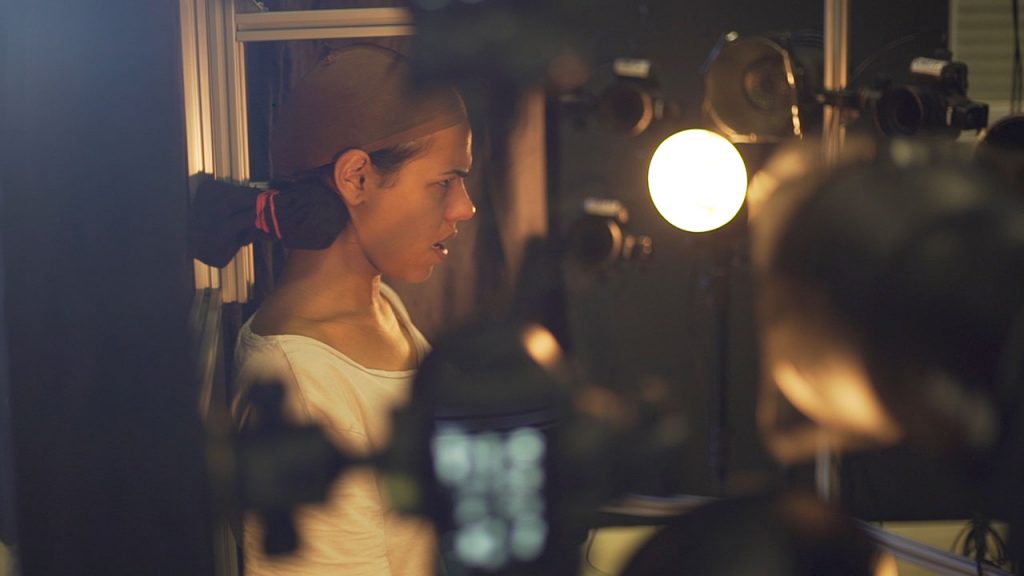
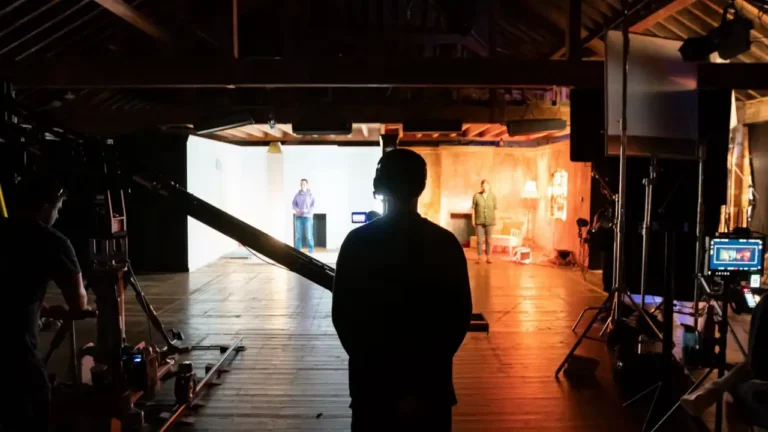
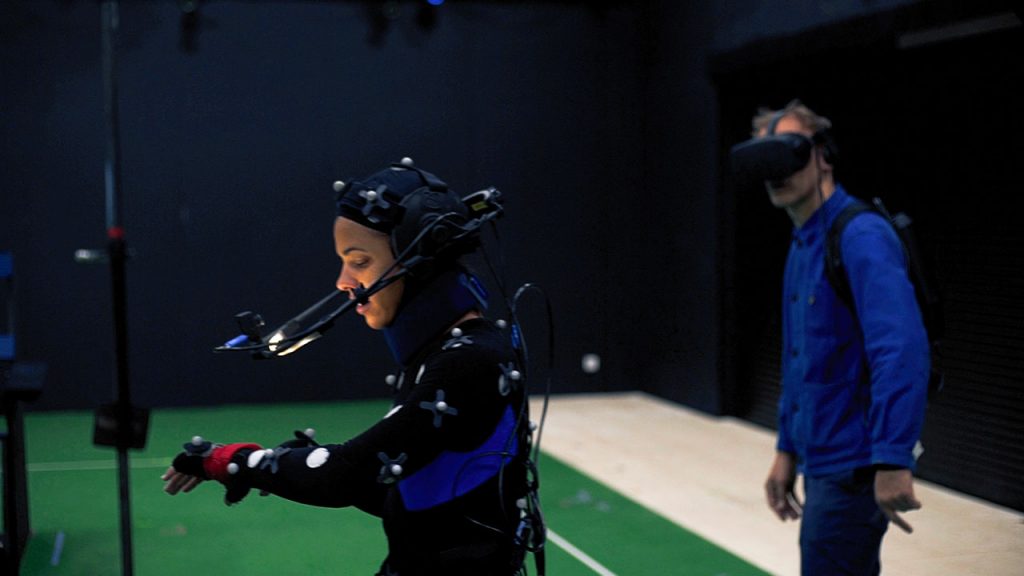
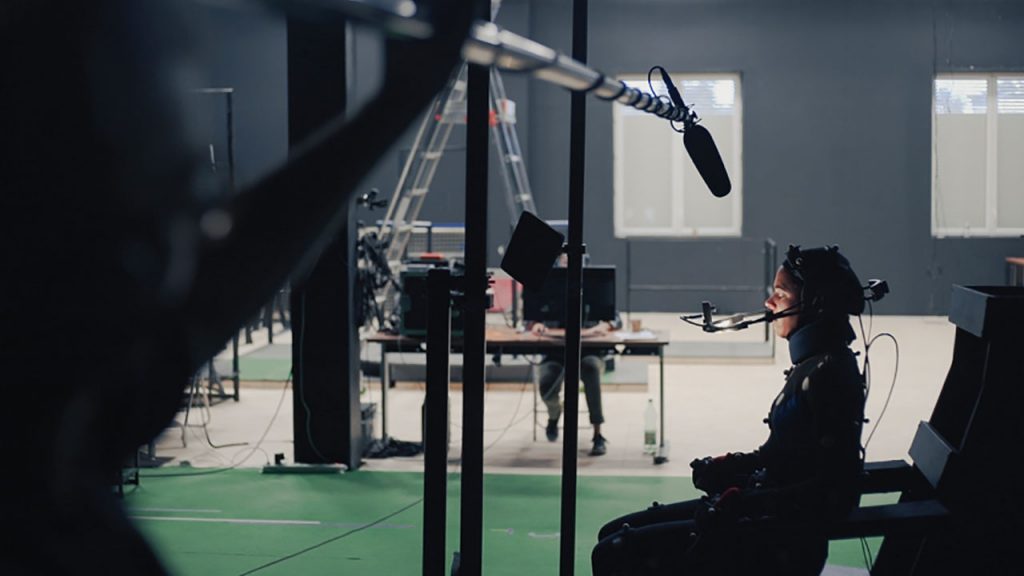
P. Z. – At Atlas V, MIRROR is one of the most technically ambitious projects, perhaps with LIGHTS by Julien Mokrani. That’s why you couldn’t produce everything immediately, it’s a big budget for VR. The first episode of MIRROR was designed with this industrial issue in mind, so as not to make a prototype that we would then have thrown immediately away. Each 3D asset, each image, the intentions is to use everything for the next 2 episodes. It was also with MIRROR that I discovered real time engine – and I have used it a lot in my next films. For me, who comes from a more classic mode of production (live, physical shooting…), I had to learn a lot about building a project with the possibilities offered by real time production. Not without some doubts at first, but once the mocap shoot arrived in Marseille, with the involvement of Zita (Hanrot, our lead role), I understood the effectiveness of the process! She trusted me completely during those 3 days of filming. I was able to multiply the takes, work as close to what I wanted, with almost futuristic tools. We were able to record nearly 150 expressions of Zita to have so much freedom in post-production! It’s fascinating.
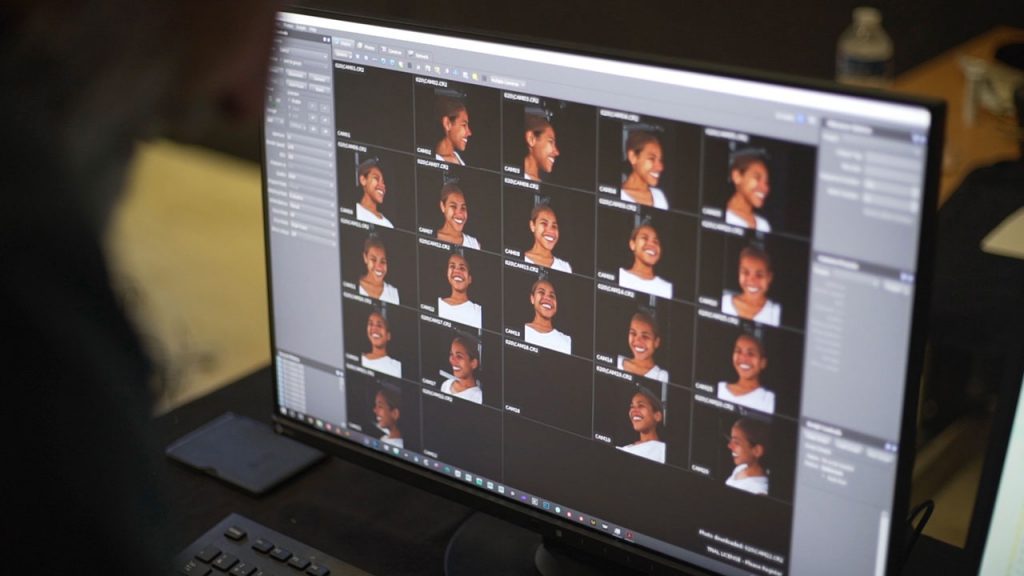
P. Z. – We now know all these new possibilities of production. Thanks to a VR headset, on set, I was able to work with Zita as closely as possible to what had been imagined. I saw the sets in which she progressed, guided her – And for a director, it is a real emotion to discover all of this during the shoot! She obviously had “hard” accessories to better understand the scene, but also weighted shoes to better understand another physical gravity. The only difference with real time is that I feel less invested in the editing, more in the idea of immersion with the viewer.
Working on sound: the composer’s contribution to MIRROR
P. Z. – I was very lucky to be accompanied by Christopher Knight on music and sound design. During the confinement (spring 2020), following our discussions, he delivered almost all of the MIRROR soundtrack to me, which gave the film a real consistency. We had thought about making an interactive film for a while, but in reality MIRROR is a contemplative film, sometimes a little slow, but where exploration takes time. Christopher’s work has been in this direction, and confirms my poetic intention.
MIRROR: a universe with strongly graphic influences
P. Z. – When I met the Fauns team in Lyon (which became Albyon after its takeover by Atlas V early 2020), what I really liked was the involvement of his team in these sci-fi universes, of very creative imaginaries. We went through volumes of graphic novels and comics to find references. Today VR isn’t quite cinema, it’s a bit like video games, there’s a bit of animation or comics, you had to have that approach to understand its full potential. Other studios don’t necessarily have this art direction side of it. We quickly entered into exciting discussions with Raphael (Penasa) or Daniel Balage, their artistic director.
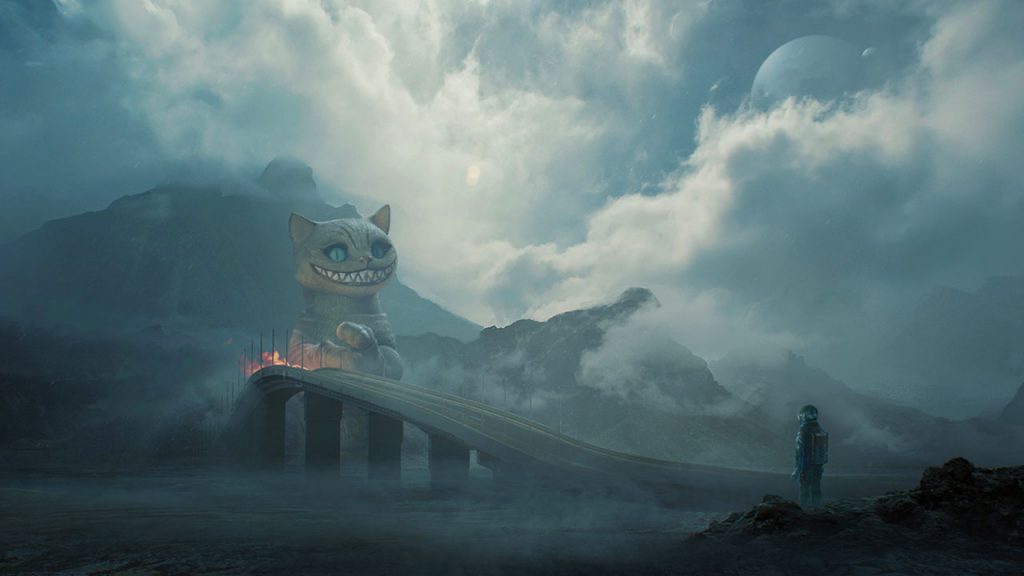
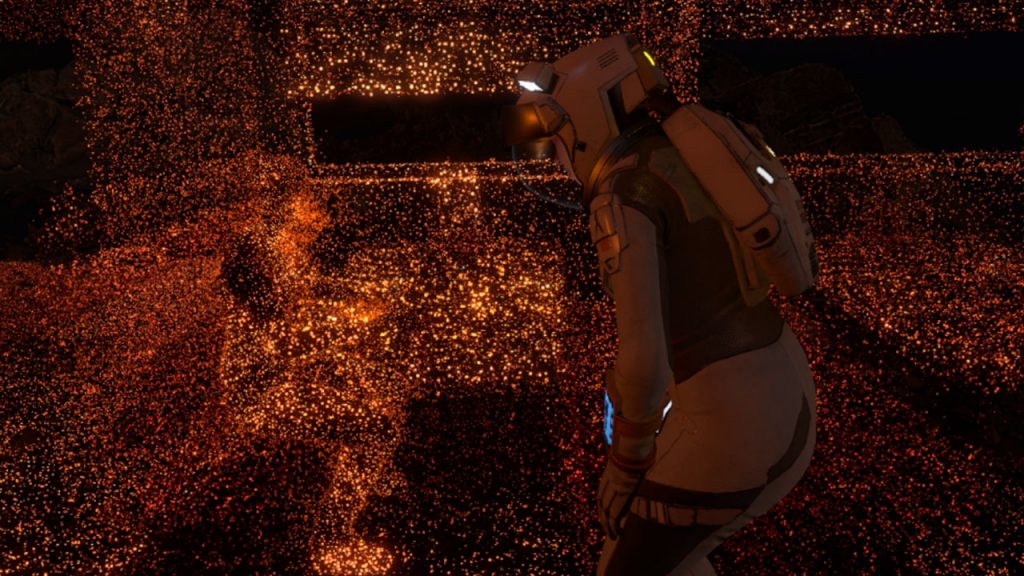
P. Z. – We wanted to transcribe a realistic universe, but with style. We could have been inspired by reality without being able to give it substance. I’m used to cold colors/blue, and Albyon came up with sets or costumes in warm colors, without going into full steampunk (which was considered). We have drawn towards influences rather ex-USSR, Soviet, a little vintage touch, aluminum. In the end, the look is a retro and futurist in-between that works perfectly.
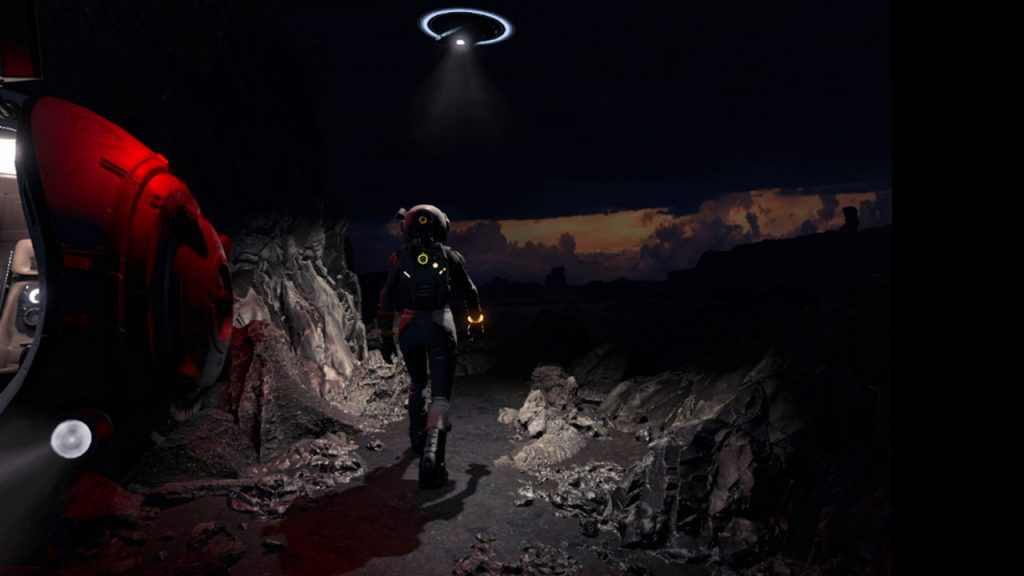
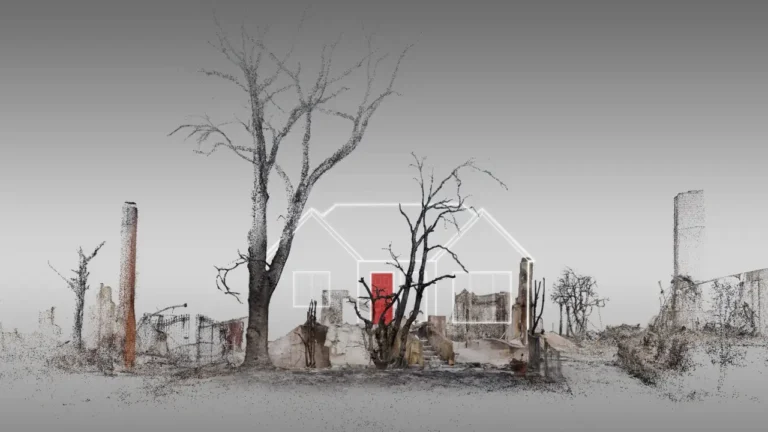
P. Z. – Space is an interesting narrative element, and for VR obvious: we can’t (yet) go! One can imagine many things, because few people have points of comparison. Second, artistically, it’s a very spherical, relatively simple environment. We are unlikely to make mistakes with textures, reconstructions of reality. And then it’s a beautiful escape fantasy, the space horizon. It would be a shame to consider realism without going towards exceptional decorations, or a particular graphic look. I’m thinking a lot about the point cloud look now.
Distribution: technical limits & potential of VR
P. Z. – For me there are two types of VR projects today. Those complicated to finance, for Rift S and wired headsets, and those for the Quest. But MIRROR on Quest, we’re not there yet in terms of quality. Wireless headphones are great, but there is a real difference in power with their predecessors. And this is an evolution that no one saw coming. Even for MIRROR, we never imagined being limited to this level, especially with our desire to provide a high definition VR film.
P. Z. – MIRROR has been my project for a long time. But by launching its production, it has also become a real R&D project for Atlas V to understand the cinema of tomorrow. I understood that real time is the backbone of everything that will happen in the image industries: VR, cinema, virtual production… We cannot limit ourselves today to animated films – which are full successes elsewhere, such as GOODBYE MR OCTOPUS also presented in Venice this year. There is a real idea of moving towards realism for VR, unfortunately with the obligation of having to downgrade your film to broadcast it. Obviously on a classic screen we could present it with its full potential, whether in cinema or in a video game. Especially with the technologies used, MIRROR can be offered on other media! Or even create new sequences with the character without having to go back to filming, if you wanted.