
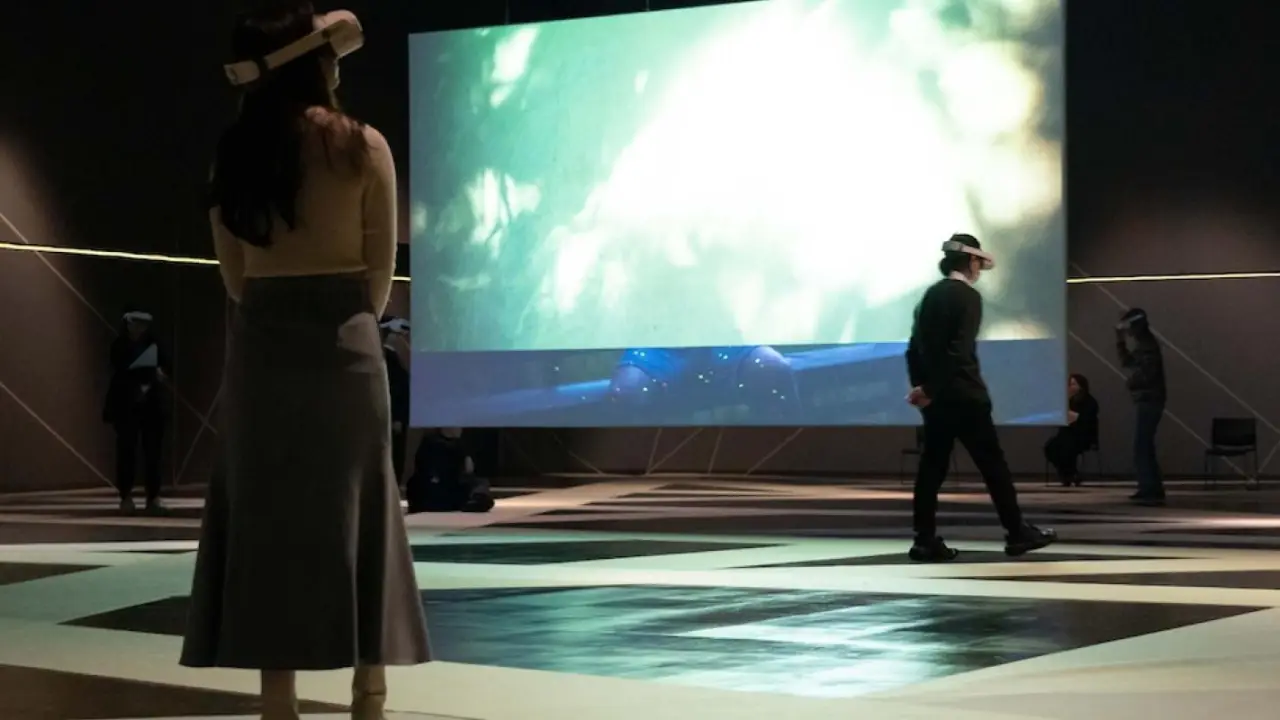
European XR is going through a gray area: ambitious works are proliferating, festivals are multiplying, public funding is intermittent, but few institutions are able to offer a stable, sustainable, and understandable model for the public. In this fragmented landscape, BOZAR, which has found its home in the Palais des Beaux-Arts in Brussels (1928), appears to be an exception. Not because of a race for technological innovation, but because of a patient, cross-disciplinary, economically controlled and, above all, deeply thoughtful strategy.
Between regular VR screenings, performative installations, thematic programming, and institutional collaborations, BOZAR is sketching out what could become a European institutional model for immersive experiences. A model in which XR would no longer be a peripheral experiment, but a cultural form in its own right, integrated into a global artistic project.
Cover: CONVERSATION WITH THE SUN, Theater Commons Tokyo ’24 📸 Shun Sato
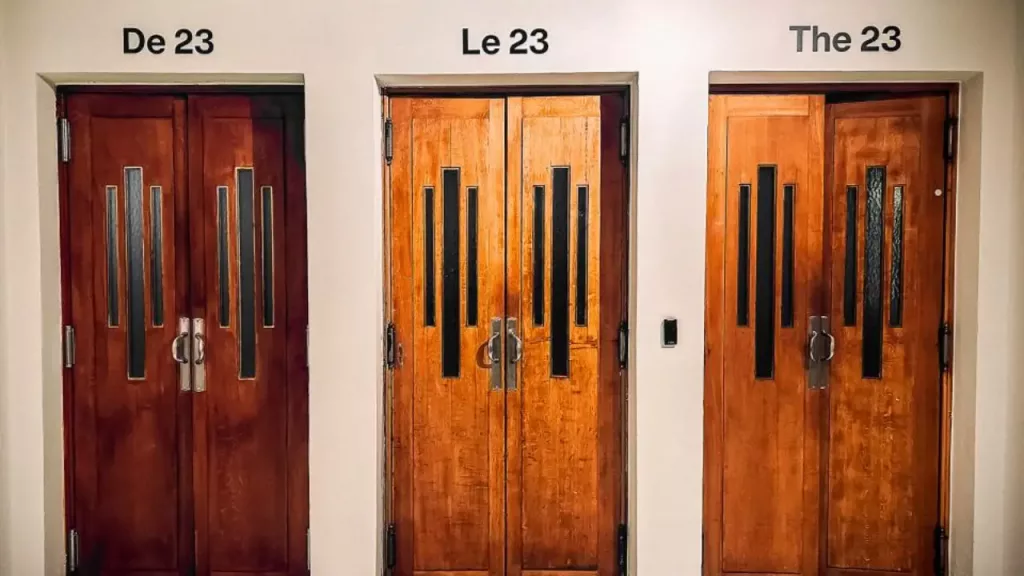
A look back at an interview with Juliette Duret (head of the cinema department, BOZAR) and Emma Dumartheray (coordinator of exhibitions and digital arts, BOZAR).
This article is part of our French XR in Benelux coverage, a 2026 initiative in partnership with Institut français in the Netherlands, the French Embassy in Belgium, and Institut français du Luxembourg, to promote the dynamism of local ecosystems dedicated to immersive creation. https://xrinbenelux.fr
The starting point: fragmentation and the absence of an XR center in Belgium
BOZAR operates in a highly active ecosystem but one that lacks a central infrastructure.
Between iMAL, a radical digital avant-garde hub with little focus on the general public; KIKK, a festival-oriented space for design and technology innovation; ANIMA, powerful in animation but with XR still emerging and commercial VR offerings modeled on gaming, without any cultural stakes, BOZAR is not entering a saturated space, but a structural void produced by the absence of places capable of articulating artistic innovation, regular dissemination, and public accessibility. This diagnosis is not insignificant: it is what gives it a pivotal role but also a strong institutional responsibility.
Ideas are collectively questioned and proposals for the public are put in place because “even though we have taken a place, we are always looking to see how we can evolve,” reports Juliette Duret.
Curatorial innovation: XR conceived as a medium, not as a technology
The first innovation is epistemological: BOZAR rejects the common division between cinema, digital, and XR. XR is not a foreign element; it fits into a pre-existing artistic ecology.
Porosity as a curatorial method
BOZAR offers a non-segmented approach: cinema, digital arts, performance, installation, and AI intersect. Not to mention video games, “which have artistic resonance, appeal to an aesthetically interesting universe, immerse the audience in a world, and make them think,” emphasizes Emma Dumartheray.

The hybridization of writing as a programming tool
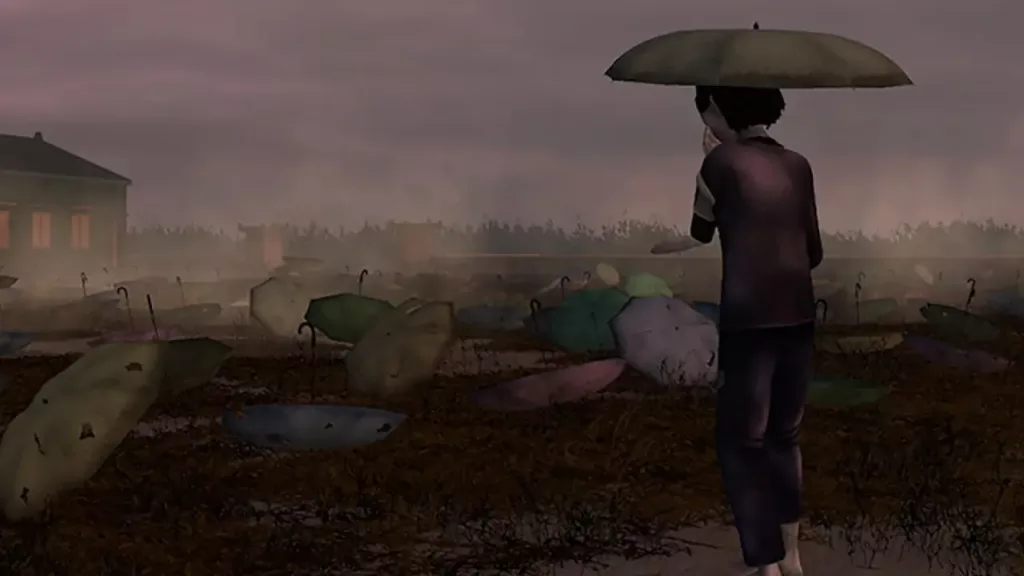
BOZAR does not limit itself. Between “performative works” such as Songs for a Passerby or A Conversation with the Sun; 360° narratives with The Man Who Couldn’t Leave or Goliath; and hybrid narrative devices (AI, VR, video), the offering is rich.
This hybridization is a response to a clearly identified problem. Institutions that isolate XR produce a museum effect; those that technologize it produce a gadget effect. BOZAR avoids both pitfalls.
Institutional normalization: the main innovation of the BOZAR model
In most European cultural venues, XR remains an exception: a festival, an event, a “moment.” BOZAR is turning this on its head: XR is becoming a regular, non-spectacular cultural practice.
The monthly VR screening: a ritual, not an event
The monthly VR Film Screenings make XR a stable cultural practice, comparable to documentary or experimental cinema.
Integration into the existing infrastructure
No dedicated, isolated room: XR inhabits spaces that are already active. It is not “next door,” it is “inside.”
A controlled economy
Combining collaborations with internationally renowned artists while continuing to “program non-interactive VR in our cinema once a month with demanding curation and by theme,” as Emma Dumartheray points out, is undoubtedly an effective programmatic balance.
XR can function without specific structural subsidies, provided that it is regular, reasonably technical, and calibrated for readable formats.
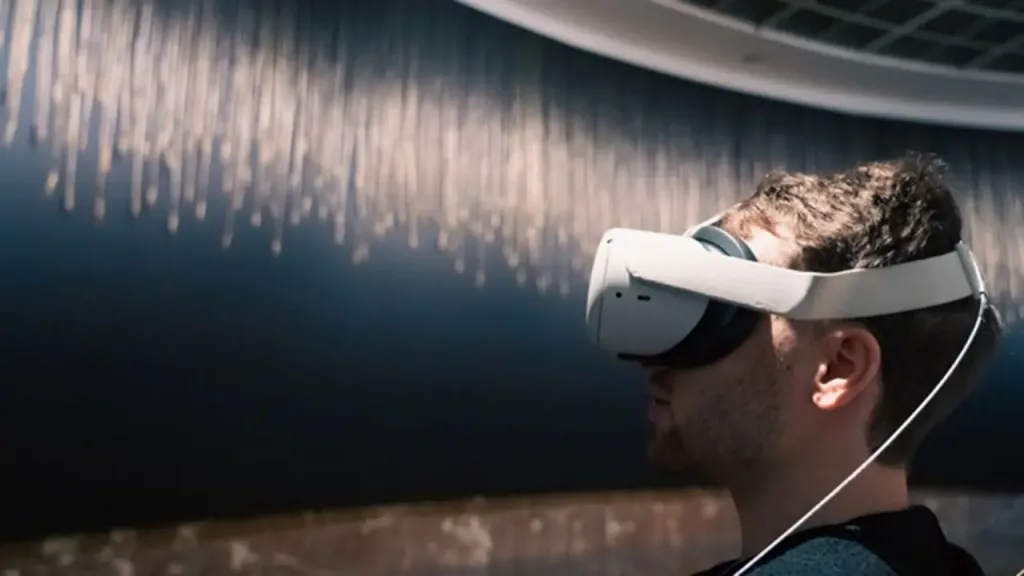
Structural consequence: BOZAR becomes a hub of circulation
XR works no longer disappear after their festival tour. They find a lasting home, which is sorely lacking in the industry. Innovation is therefore institutional, not technological. XR ceases to be “extraordinary” and becomes cultural.
Economic sustainability: a model based on sobriety
The control of resources, long considered a hindrance to immersive technology, becomes a strategic lever at BOZAR: disseminating more by simplifying, stabilizing by reducing technical complexity. Sobriety is not a compromise: it is a driving force.
360° as the backbone
The use of 360° films allows for continuous distribution, low maintenance, broad international programming, and a collective experience.
This creates an XR that is misaligned with costly logic (complex tracking, heavy installations).
The XR team distributes the load
There is no specialized XR unit at BOZAR, but rather a cross-functional team. This reduces dependence on rare technical expertise and builds an internal culture of immersion. All of this has been facilitated by the fact that BOZAR is benefiting from the European recovery plan until June 2026.
The choice of reproducible formats
Interactive “performative VR” has not been abandoned, but it complements rather than structures the economy. BOZAR favors a replicable model, which is an innovation in the cultural field.
These parameters also lead BOZAR to offer a democratic option with tickets for VR film screenings costing around €10-12. These screenings are always sold out.
BOZAR as a systemic operator: collaborations, cultural diplomacy, structuring
BOZAR’s XR strategy goes beyond simple programming.
The dialogue between different sectoral expertise, such as that represented by Juliette Duret with cinema and Emma Dumartheray with the world of exhibitions, enriches the institution’s partnership strategy.
Through its geographical location and institutional links, BOZAR maintains a clear-sighted view of the cultural public policies of European countries. “We make proposals [for initiatives] to the European presidencies,” says Juliette Duret, notably with the VR film screening, which has the advantage of being inexpensive.
This quasi-advisory role to the presidencies of the European Union reveals something more profound: in the absence of a structured immersive policy at the European level, it is the cultural institutions themselves, rather than the political authorities, that are developing the first methodological frameworks. BOZAR is an illuminating example of this.
A three-pillar model
- Pillar 1: VR Film Screenings
Function: stability
Type of experience: immersive cinema
Role: standardization, creation of a sustainable audience - Pillar 2: Performative XR
Function: artistic ambition
Type of experience: presence, interaction, space
Role: maintaining narrative innovation - Pillar 3: Digital Arts / AI
Function: expanded ecology
Role: avoiding compartmentalization of the medium
This triptych articulates sustainability, artistic experience, and conceptual innovation.
Although coherent, this structure reveals the tensions within the XR sector: a shortage of completed works, dependence on festivals, technical fragility, a small team, and a market still under construction.
BOZAR objectifies the constraints. This is part of its strength.
Conclusion: BOZAR, an institutional innovation. Towards a European standard for cultural immersion?
BOZAR did not invent any technology. It did not multiply the number of headsets or produce spectacular devices.
Its innovation is infrastructural: BOZAR has created a stable method for XR to become a regular cultural medium.
What BOZAR demonstrates is that XR can be programmed and economically sustainable; that it can be integrated into existing spaces and exist outside of festivals; that it can become a cultural language, rather than a technological event. Juliette Duret has one wish: that “these works be seen, be experienced, receive feedback, be able to generate money, and have a box office that regenerates a fund.” A true European network is needed “to circulate these works and thus reduce costs. “
This institutional model, based on standardization rather than spectacularization, could form the first methodological basis for a European XR institutional network.BOZAR does not seek to be avant-garde. It seeks to be structural. This is precisely where its greatest strength lies.
Leave a Reply
You must be logged in to post a comment.