
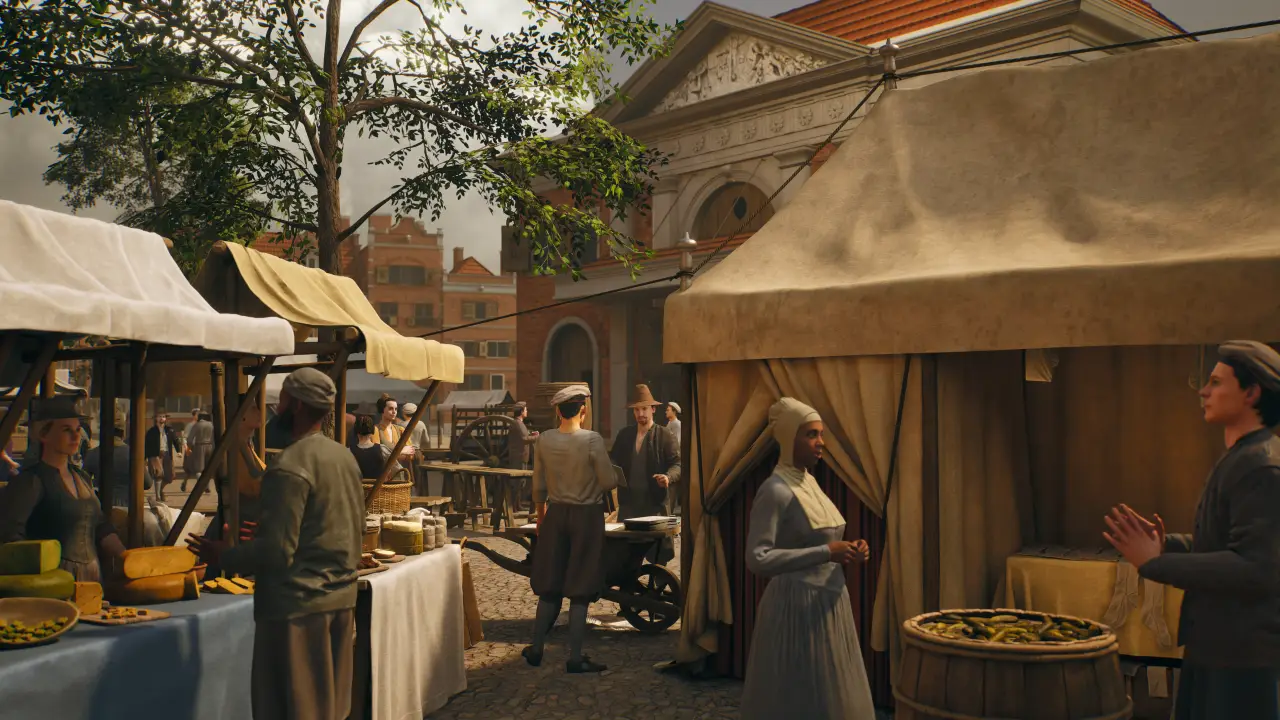
Amsterdam is about to get a new kind of museum. In 2026, ENTR will open near Central Station as a space entirely dedicated to cultural and educational VR experiences – not as a side room in a museum, but as the main event. At the centre of the project is founder Vincent Slangen, a former banker who decided to put his analytical skills and creative background to work in immersive storytelling.
Right now, ENTR is testing its vision with BOTERMARKT 1675, a VR time-travel into 17th-century Amsterdam, directed by Nienke Huitenga Broeren, presented as a pop-up in De Nieuwe Kerk (and recently “Best in Show: Playground & Showcase” at UnitedXR). The pilot is already drawing a broad local audience and offering a glimpse of how shared VR can function as mainstream culture rather than a niche tech attraction.
This article is part of our French XR in Benelux coverage, a 2026 initiative in partnership with Institut français in the Netherlands, the French Embassy in Belgium, and Institut français du Luxembourg, to promote the dynamism of local ecosystems dedicated to immersive creation. https://xrinbenelux.fr
From Wall Street dreams to SLEEP NO MORE
Slangen grew up in a creative household – with an architect and an artist as parents – but chose to study finance because he was told it was “the backbone of entrepreneurship”. That advice took him all the way into banking, including a stint in New York, where he learned to analyse businesses and build structures. On paper, he had reached the career goal he’d been aiming for.
The turning point came not in a boardroom but in an immersive theatre show: SLEEP NO MORE by Punchdrunk. Being dropped into a labyrinthine narrative, free to follow characters and assemble his own version of the story, hit him with unusual force. “It was so cool that you can discover a story by being placed at the centre of it,” he recalls. “I thought: I want to do something with this.”
Back in the Netherlands, he initially imagined a large-scale immersive theatre project on the history of the country. A meeting with a famous musical writer who had spent seven years on his masterpiece convinced him that traditional theatre wasn’t the best route. Looking for another way to put people inside a story, he turned to VR: sceptical at first, used to “isolating, crappy” experiences with too much gear, but intrigued by newer systems that allowed people to move freely together, see each other as avatars and interact.
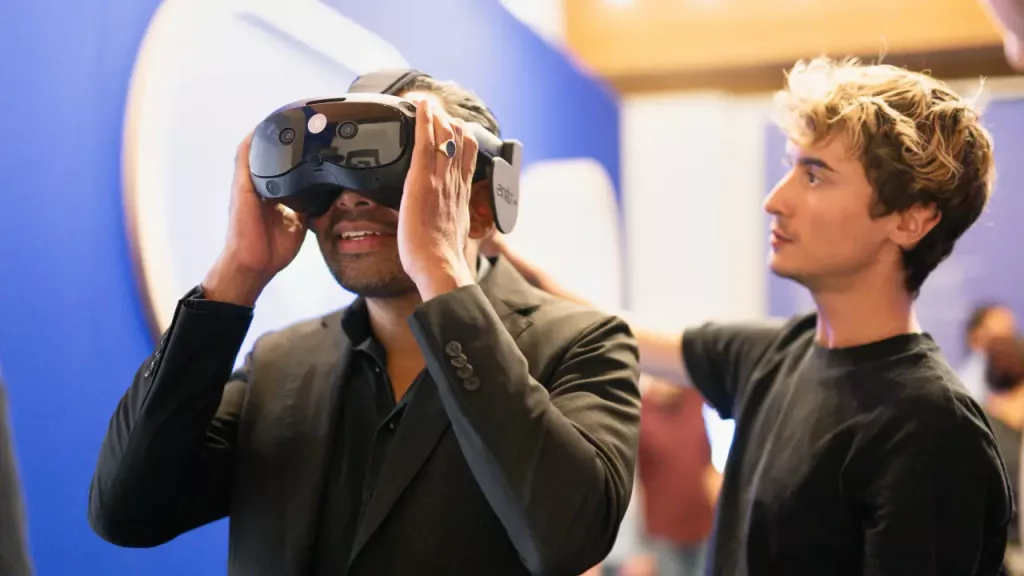
That shift from theatre to VR didn’t change his core ambition. The goal remained to build a place where audiences could step into stories rooted in Dutch culture and history – not as passive visitors, but as participants.
BOTERMARKT 1675: testing the concept with Amsterdam’s past
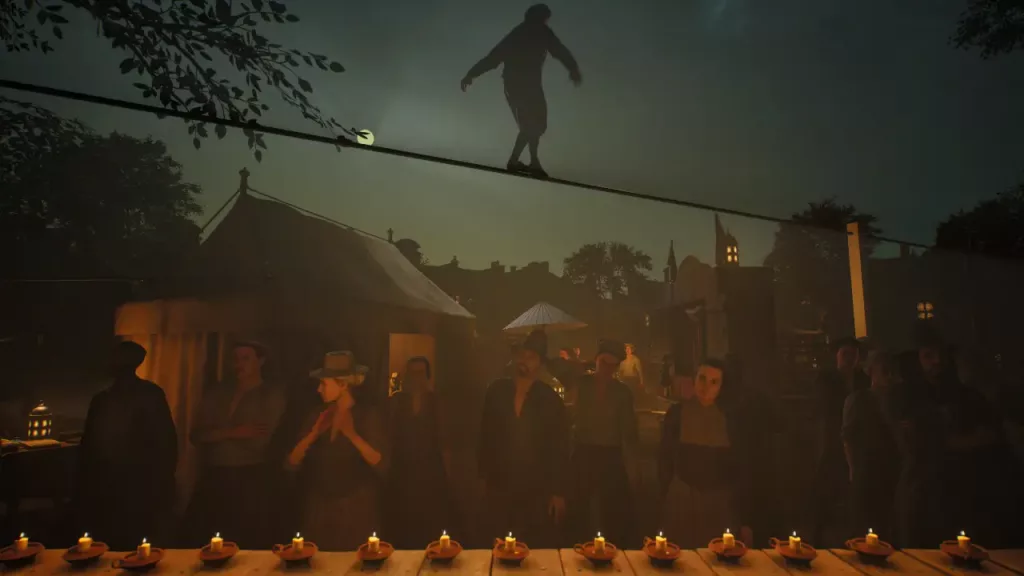
The current pilot, BOTERMARKT 1675, is the first visible outcome of that ambition. Developed with partners including the Amsterdam City Archives and a leading European VR studio, BackLight, the experience invites groups to walk through a reconstruction of the 17th-century marketplace that later became Rembrandtplein. Visitors meet characters, trade at stalls, and explore the sounds and atmosphere of Golden Age Amsterdam.
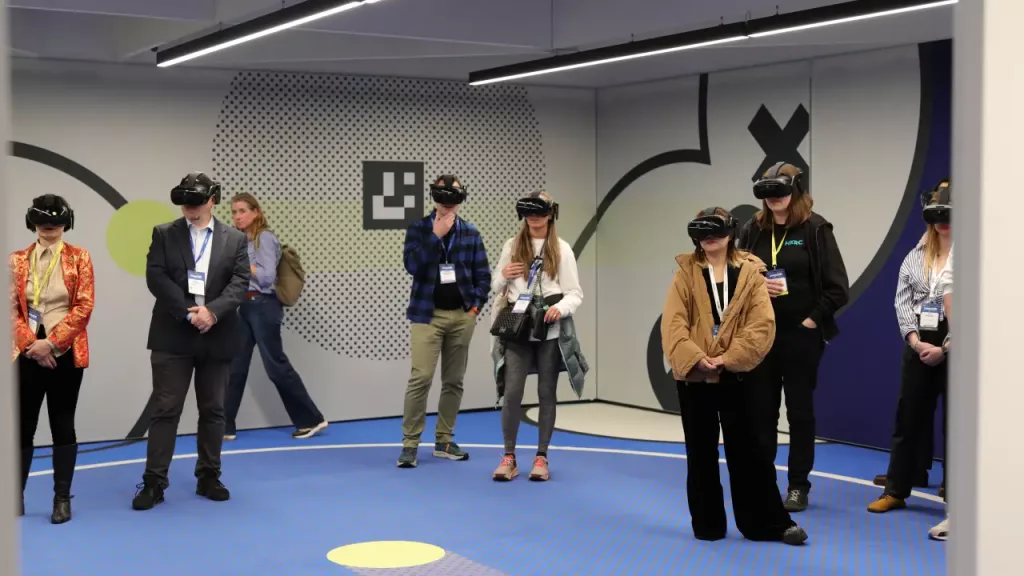
Rather than setting up in a tech hub, ENTR chose De Nieuwe Kerk on Dam Square – a symbolic venue at the heart of the city and of the official “Amsterdam 750” celebrations. The results are telling. Families with children, groups of friends, school classes and elderly visitors all show up; Slangen mentions eight-year-olds grinning under headsets and grandparents in their nineties navigating the space with walking sticks. Around 80% of visitors are locals.
That ratio is no accident. ENTR’s strategy is closer to cinema than to tourist attractions: build a local, returning audience rather than chasing one-off visits. “International tourists don’t usually go to the cinema,” he notes. “If you want to invest in ambitious multiplayer content, you need people who come back.”
At the same time, the pilot is more than a proof of concept for a single show. It’s a public test of ENTR’s broader proposition: that VR can carry museum-grade historical content, be truly multiplayer and social, and still be accessible enough to attract a wide age range at affordable ticket prices.
Standardising shared VR – without flattening creativity
One of the distinctive aspects of ENTR’s model is how it systematically thinks about infrastructure. Slangen’s financial background shows in his insistence on scalability. Rather than tailoring each project to a bespoke, one-off setup, ENTR works around a clear technical standard: an 8×8-metre multiplayer “box” optimised for groups.
In cultural sectors, talking about limits can sound like a threat to creativity. Slangen has had the opposite reaction from many makers. “When we told creators, ‘this is the box you have to work in’, they were relieved,” he says. “They’d rather design for a clear format that can actually be presented somewhere, instead of building something and then discovering it doesn’t fit any venue.”
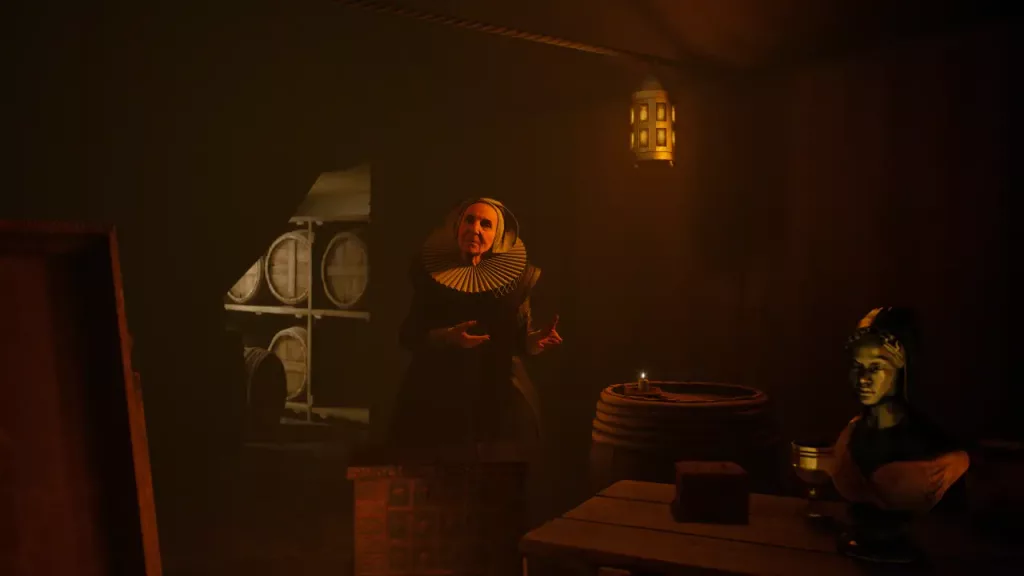
That pragmatic approach extends to ENTR’s role in content. The team does not want to become a VR studio in the traditional sense. The museum will commission and co-produce some experiences, especially around Dutch history, but the long-term plan is to host works by a wide range of creators – providing a platform, audience and revenue model rather than absorbing all creative control. In practice, that can mean anything from licensing existing experiences to co-developing new pieces with external studios.
Education sits at the core of the project in more than one way. The obvious layer is historical and cultural: projects like BOTERMARKT 1675 or the tulip-mania prototype developed with Studio Vrij use playful mechanics to teach visitors about episodes such as the first financial bubble. But ENTR also wants to educate in the sense of demystifying VR itself. The future venue will include a lab and hub where makers can prototype and where visitors, schools and partners can learn how immersive content is conceived and built.
A European mindset for location-based VR
Slangen’s conviction that high-quality cultural VR needs to be shared across borders comes from his own research travels. When he quit banking, he financed a period of exploration through modelling work, taking him to New York, London, Paris, Geneva, Shanghai and beyond. In each city, he sought out VR venues and experiences, from big commercial platforms to art-driven installations.
The trip that marked him most was in China. While on a shoot hours away from Shanghai, he insisted on making the round-trip just to experience LE BAL DE PARIS DE BLANCA LI, a celebrated multiplayer VR piece created by Spanish dancer and choreographer Blanca Li with Paris-based studio Backlight. The combination of narrative, choreography and technical polish felt exactly aligned with what he wanted ENTR to become. Back in Europe, he picked up the phone.
The conversation with Backlight moved fast. Slangen sent an email outlining his idea for a museum dedicated to multiplayer experiences; the team responded the same day. The alignment of visions led to an ongoing collaboration, with Backlight producing while ENTR was still finalising its funding – a clear signal of mutual trust.
For Slangen, that trust is the real currency of international co-production. Video calls and language gaps can slow things down, so he makes a point of travelling with his team to Paris for in-person sessions, made easier by the Eurostar connection. The same principle applies to other potential partners: he is not looking for a one-off content deal, but for relationships where both sides commit to a shared standard of quality and a shared investment in audiences.
As Amsterdam prepares to celebrate its 750th anniversary and ENTR moves from pilot to permanent space, the outlines of that network are starting to appear. In the middle of it, Slangen’s project positions VR not as a standalone tech novelty, but as a cultural medium that can be programmed, standardised and shared across cities – a museum that happens to use headsets instead of white walls.
Leave a Reply
You must be logged in to post a comment.