
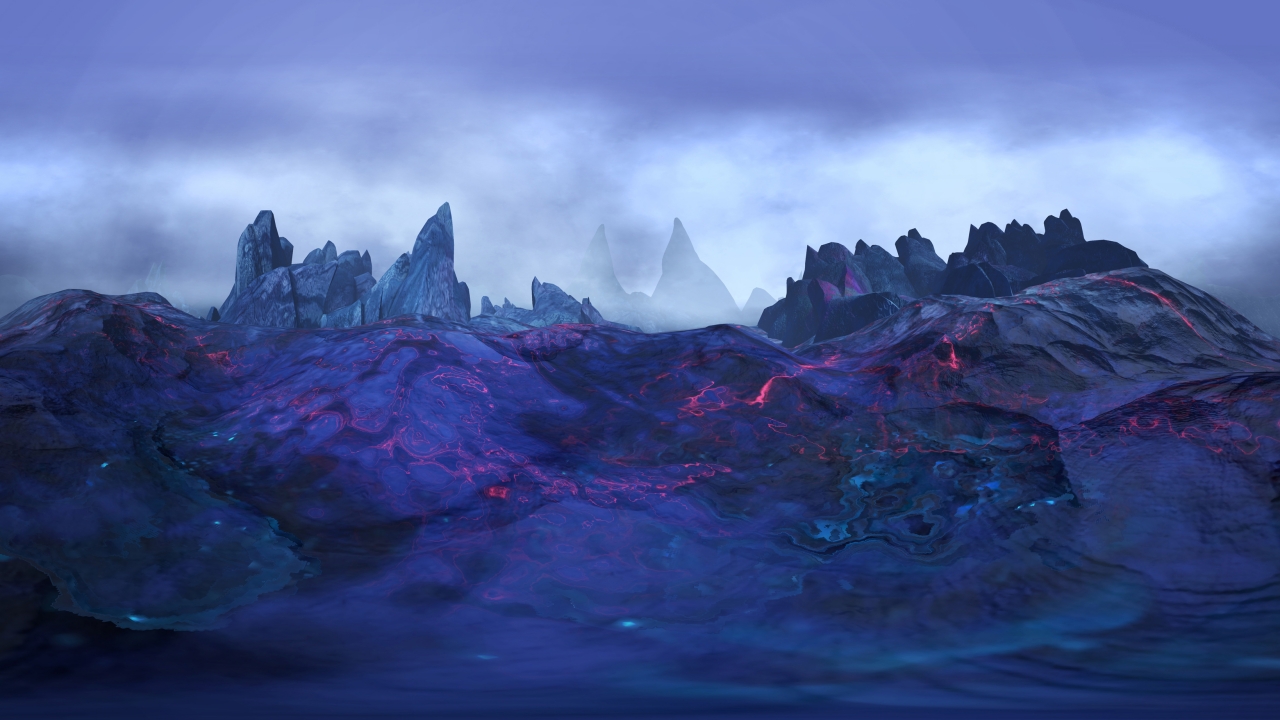
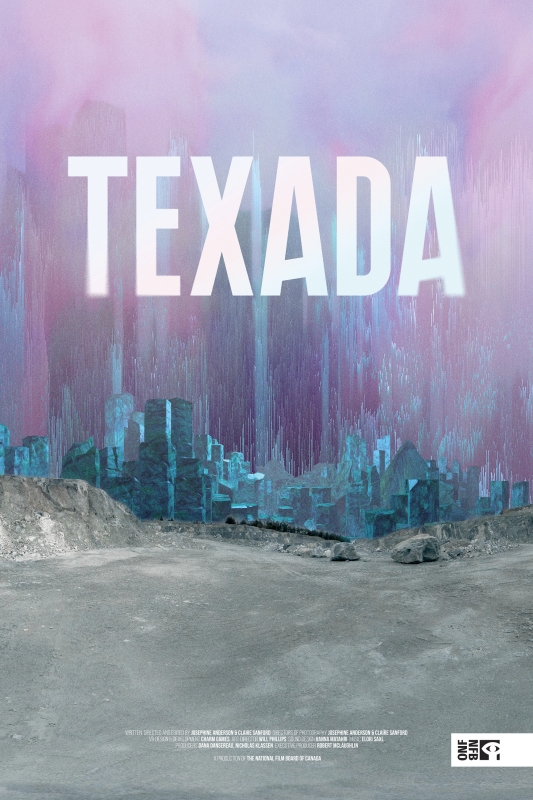
TEXADA, an IDFA DocLab 2023 selected experience, is a VR documentary that contrasts two experiences of time: the human and the geological. The human experience of time is relative, but it is nothing compared to the timescale of the limestone being excavated on the Canadian island of Texada. The film alternates between shots of the island and more abstract animations depicting the timescale of rocks while interweaving voices of mineworkers. Interview with directors Josephine Anderson and Claire Sanford.
Josephine: My name is Josephine Anderson. I’m a documentary filmmaker and I work across modes. This is my first virtual reality project, but my first project as a filmmaker was actually an interactive web documentary back in the day, and I’ve also been like lots of short films and feature film.
Claire: My name is Claire Sanford. I am the co-director of TEXADA. I’m a documentary filmmaker and cinematographer originally from British Columbia and living in Montreal for the past decade and a half.
Claire: It was around the time when the Ricoh Theta was kind of the big thing and there was just a lot of cameras coming on the market that felt accessible, finally. We wanted to work together and explore this new VR medium. In terms of narrative and storytelling, we hadn’t even gotten that far yet, but we were thinking about capturing the world and feeling yourself in the world differently because of these 360 cameras. So we decided, let’s grab a camera and do some tests on Texada, where I grew up.
Josephine: If we were going to film on Texada, is there something we want to focus on? The limestone quarries are the economic lifeblood of the island. And we started talking about what’s our connection to that.
Texada is about rocks, people and time—the head-spinning vastness of terrestrial epochs contrasted with the immediacy of day-to-day human experience. Real and imagined landscapes document a journey from the Earth’s formation to the current moment: twinned streams of existence mixing and mingling in an ever-changing flow. As geologic forces continue to unfold, the only constant is transformation. Yet amongst the great heave of history, glimpses of temporal beauty, like discovering beautiful stones on a beach, help us understand our place in the universe.
– NFB Website
Approach
Claire: We came to limestone really because it’s something I know really well having grown up on Texada. There’s always felt like there’s been a squishing of ideas together. This island is completely covered in nature and feels at some parts untouched and filled with animals. You can sort of understand how you can live in harmony with nature. And then there’s an explosion and we’re mining the island and shipping the top of it off to serve the needs of our modern society––some of it for positive, wonderful reasons like connection and transportation and services that let people live modern lives.
Josephine: We were interested in philosophizing around time and people and nature and the earth. It all collides. We started to think about, well, maybe there’s a reference point for the smallness of humans and the way we’re approaching humanity from a more humble place that can use the mines that we have access to.
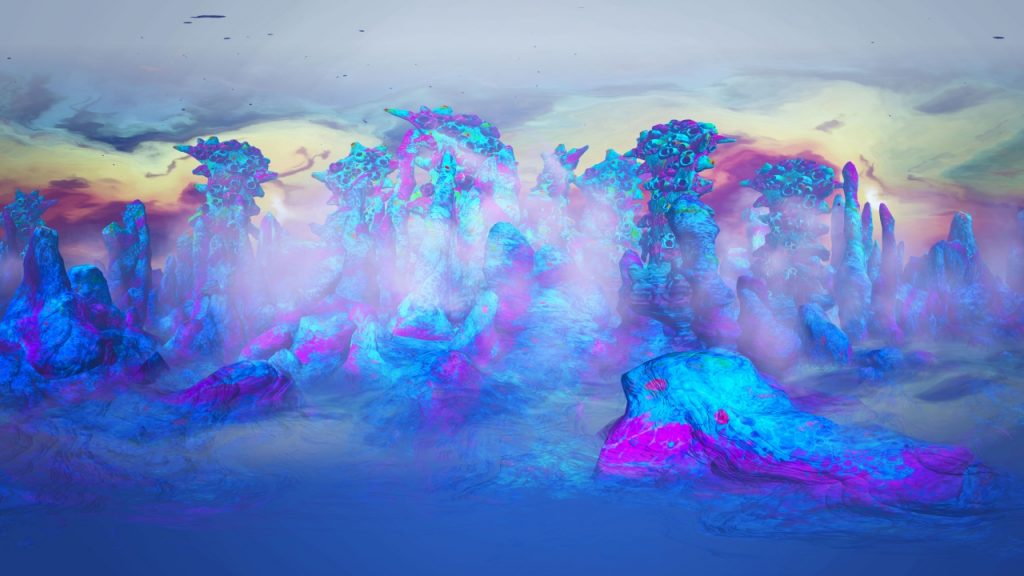
Claire: We really felt that there was so many timescales represented in the process of mining the limestone, our engagement with it, and how it was made. From the depths of the formation of our planet to this minute right now, there’s this very clear engagement we have with this rock that shows us that we’re both so little and small in the big scheme of things, but so big and so important in our own minds. And the rock really is our access point to those big juxtapositions.
Claire: We wanted to give impressions and not necessarily settle on characters that you’ll follow that have some kind of arc. We wanted to go away from that idea that that’s how you have to tell a story.
Claire: We could explore limestone in part through the point of view of mine workers, in the sense that we all have to figure out what we do with our bodies, what we decide is our purpose, what’s a worthwhile way to spend our time every single day. So allowing the project to kind of take on that perspective at certain points and then contrasting that against this kind of infinite sense of geologic time, it was very interesting to us.
Mixing 360 and Animation
Josephine: TEXADA feels almost like there’s a central thematic exploration and then all these different accents in the experience and that’s why VR fits in such an amazing way, because you don’t need to have just one direct character arc. You can offer the user a multitude of sensory inputs. And just allow them to all dance together.
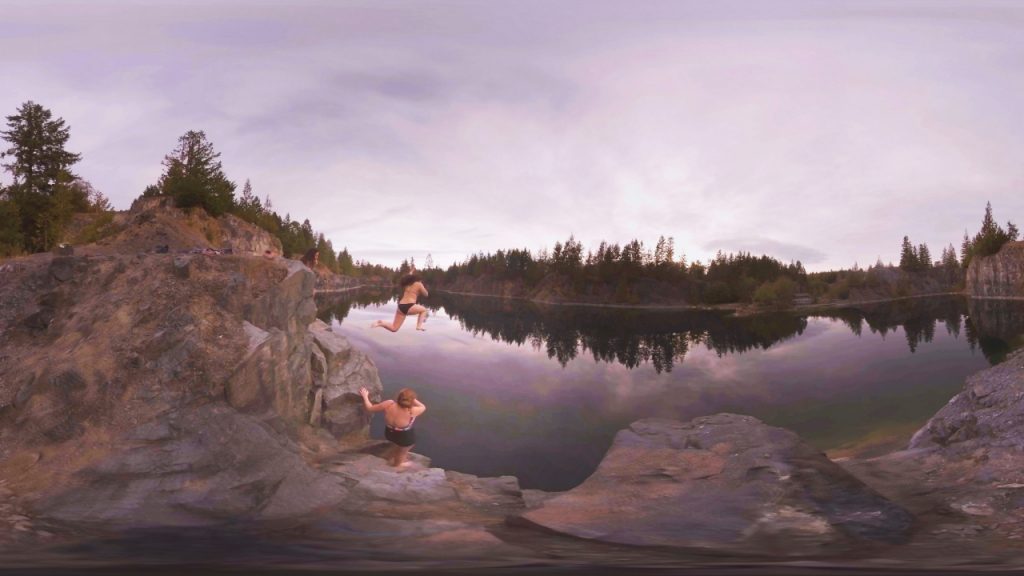
Josephine: We knew we wanted to have a combination of 360 and animation. We knew we wanted to push the real into the beyond real and the beyond human. Animation seemed like the best way to do that.
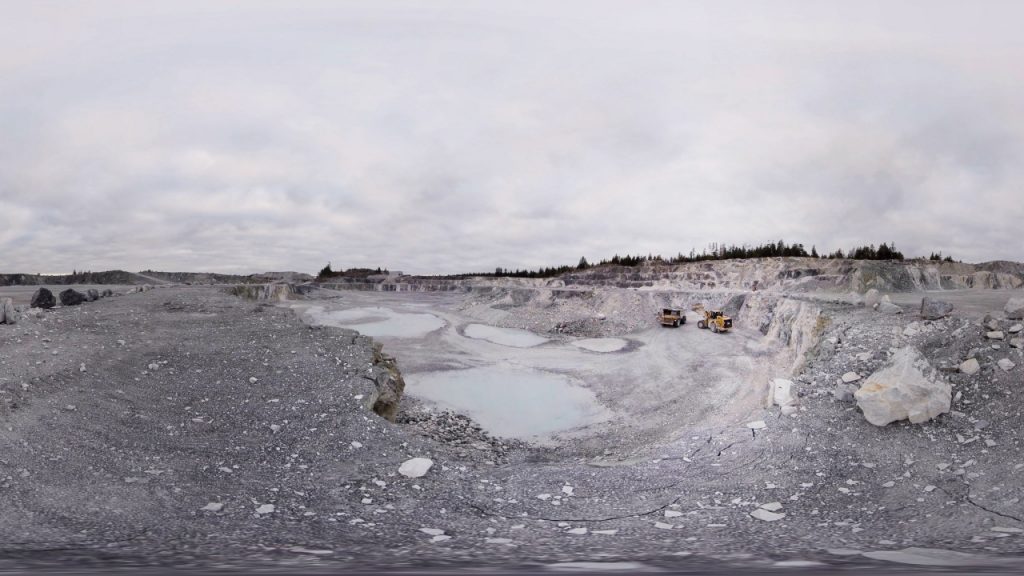
Josephine: The film starts with the animated sequences and 360 video as separated scenes. Then there is a gradual merging of the worlds. Towards the end of the experience you actually see both the animation and 360 video woven together at the same time. We wanted to have this central intention of trying to find ways to feel like the real world and imagined world are blending.
Claire: That’s the part I love about the VR medium is that it’s an exercise in giving up control. As directors, we are all about control. Even in documentaries where you’re observing, you’re making choices constantly to turn toward or to turn away, to allow people to see it or to take that away from them. In VR you have to give up that control. You don’t know where people are going to focus. But you just have to give up control. And that was so freeing and liberating.
Leave a Reply
You must be logged in to post a comment.