Realcast is a French startup dedicated to creating mixed reality experiences for museums and other cultural venues. The co-founders have put their background in video games to good use in understanding how to interact with audiences on these new interfaces. Interview with co-founder Nino Sapina, on the occasion of the presentation of their new experience at Hangar Y.
From AAA video games to Realcast
Nino Sapina – The Realcast adventure began in 2017. With my partner Diego Fernandez, we’ve already had several professional experiences together in video games (notably Ubisoft on LES LAPINS CRÉTINS or JUST DANCE) and robotics. And it’s worth pointing out that these have been formative periods as entrepreneurs in new technologies or on mass-market video game projects. The arrival of immersion was almost a logical meeting of minds, more on the side of augmented and mixed reality. We immediately saw the possibility of adding layers of virtuality to reality, while keeping one foot in the physical world. So we started thinking about the storytelling and interaction processes that could be integrated…
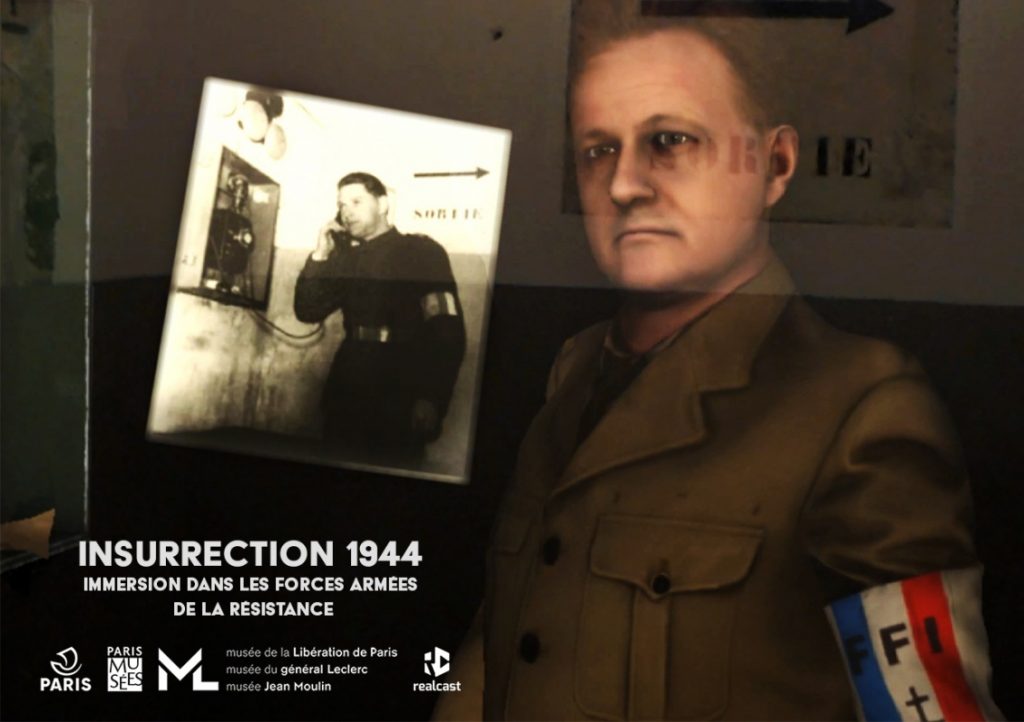
N. S. – VR already existed, but there were few titles – and few headsets. But with the aim of reaching out to the general public (a real priority for us), reaching out to museums and institutions seemed a logical step. Not without its challenges and issues, but logical! We wanted to offer a collective experience, and chose Microsoft’s HoloLens headset, which was the most modular at the time. Our first game, in the form of an escape game, was a historical immersion in the Middle Ages. It’s a niche we’re still in today, with several titles available in places like the Musée de la Libération in Paris, where you can accompany the Resistance through the end of the Second World War.
Imagining mixed reality in the service of heritage
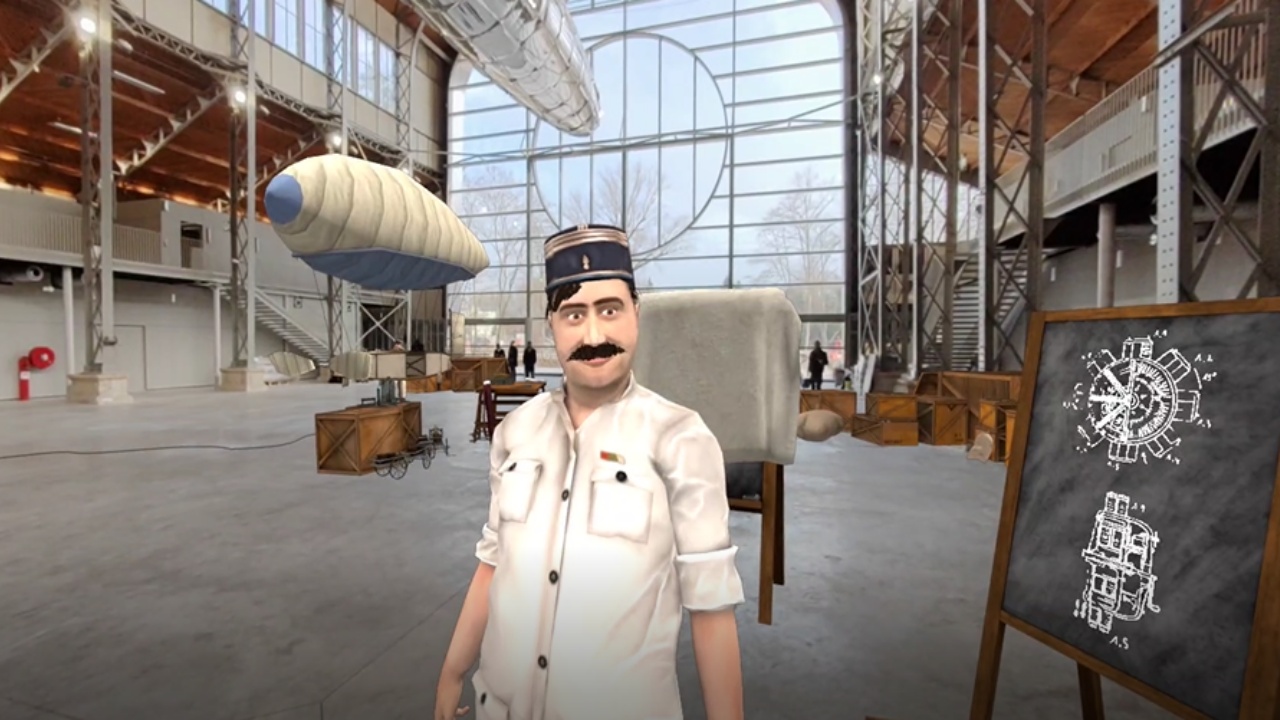
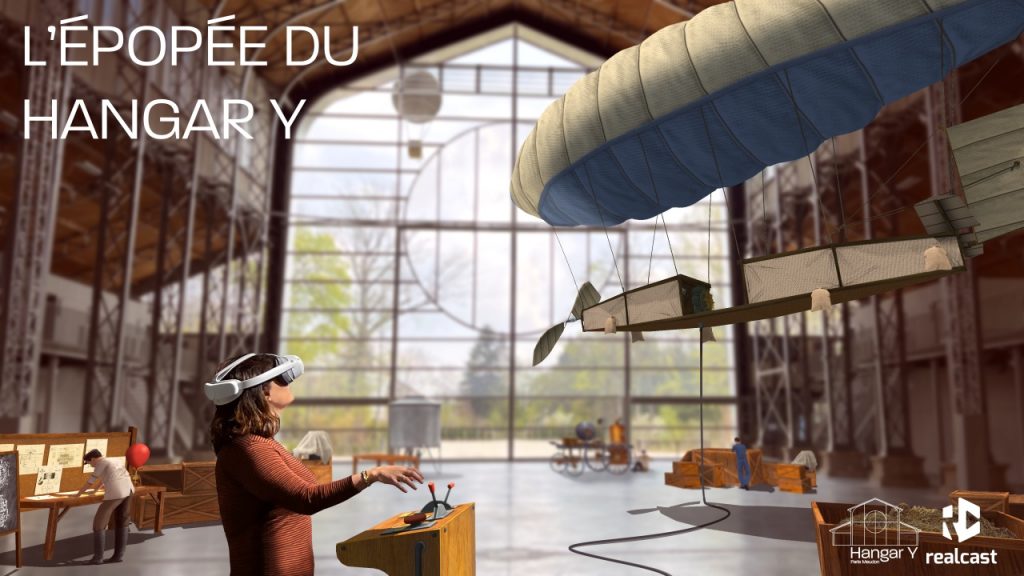
N. S. – Experiments in heritage and history remain our trademark. It’s a field of investigation, but also a personal passion that resonates with the public. Our latest experiment has just been released for the inauguration of Hangar Y in Meudon (France), a new cultural venue on the outskirts of Paris. The hangar is a former airship factory built over 130 years ago, which has now been rehabilitated as a discovery space for the public. It was particularly stimulating to imagine an MR experience based on the history of the site, the airship and the engineers who built it. The scenario strikes the right balance between historical and educational content, and the playful side.
N. S. – Mixed reality, like augmented reality, promises to retain the emotion and richness of the real thing. There’s no cheating, as with virtual reality, with which you can reconstruct everything and play with it. For us, the objective is to be able to blend layers of narrative to build the most immersive experience possible. And we can use everything: duration, rhythm, sound design… And for the user (or visitor), it has to remain invisible! The promise only works if he or she is involved, without thinking about what is virtual and what is not. Technically, everything is very precisely parameterized – including spatialization. In the end, VR has fewer constraints!
Produce an Mixed Reality experience
N. S. – Our work begins as soon as we visit a site. Even if we can do a short demonstration to test things out, it’s the physicality of the space that guides our approach. We also immerse ourselves in the historical and social elements, and then develop a narrative and artistic proposal. The technical side, akin to a video game or computer-generated film, takes a back seat. It’s the subject that guides the rest, and we spend a lot of time talking to the locations.
N. S. – Since our creation, we’ve made great strides on the interaction front. You can of course use joysticks, with pointers to grab objects and so on. But it’s the arrival of hand-tracking that has changed a lot for us. It’s natural for our visitors to use their hands, and it’s almost a reflex to want to grab certain objects in the scenery. It’s an element that reinforces immersion and storytelling. Our experiences last an average of 15 to 30 minutes, and these new technologies contribute to the fluidity of our stories without adding too much hardware and onboarding. And on our side, it opens up new possibilities!
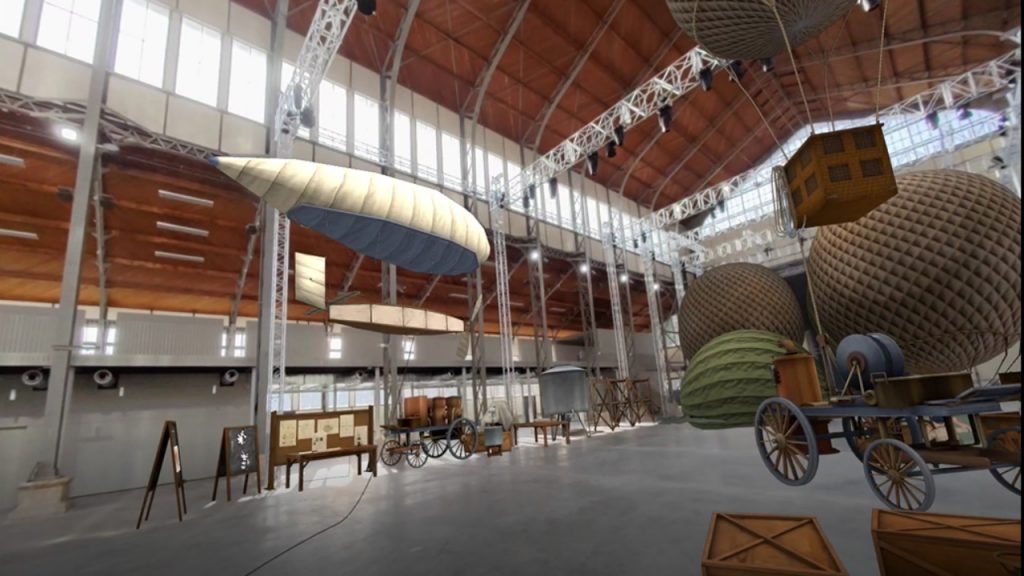
N. S. – The evolution of technology is bringing MR to the center of the game. The latest headsets (HoloLens 2, Pico 4, Quest 2….) are very promising. VR headsets have integrated passthrough and mixed-reality possibilities that interest us. On Hangar Y, we’re using PICO headsets – and that’s a minor revolution, because it’s still a closed headset that uses its cameras to capture reality. It also responds to a concrete problem: light! An exceptional venue can be a very bright one. The new helmets are therefore more practical in such cases.
N. S. – MR offers richer environments, but is not opposed to VR. It’s all about choosing the right technology for the right subject and the right needs, and pushing the virtuality slider according to what you’re looking for and where you’re living the experience. For cultural institutions, the aim remains to enhance the value of their premises. And with projects that can be experienced away from home!
Open up new fields of possibility (VR, AR, MR)
N. S. – Since the COVID, we’ve wanted to diversify and try out different things for gaming, at a time when headset sales are taking off. We’ve released a basketball title, JUST HOOPS, using hand-tracking, for the widest possible audience. It’s a return to our passion for video games! An online version is available. And these are all opportunities to test certain technologies for our heritage projects. We recently joined a team of students with an original game project, HIDE THE CORPS, at Laval Virtual – a trade show where we’ll have a strong presence with several of our projects.

N. S. – In addition to the Musée de la Libération and Hangar Y, we have another Citéco experience in the form of an immersion in the Hôtel Gaillard, in which we play the role of composer Frédéric Chopin, who has come to visit the former owner of the premises, Emile Gaillard, for a rather unusual seance…