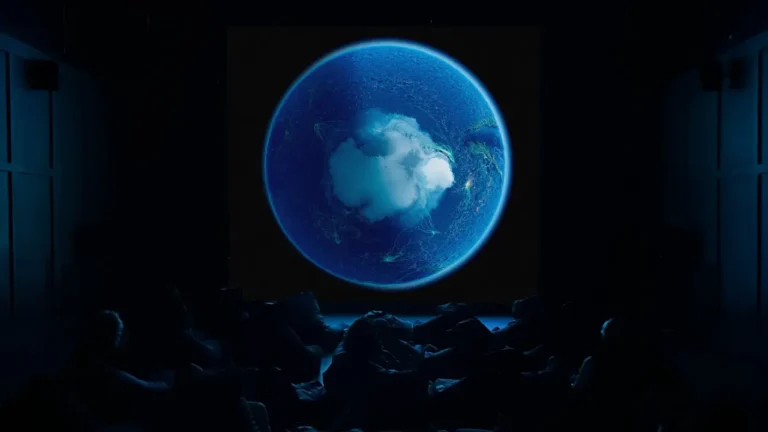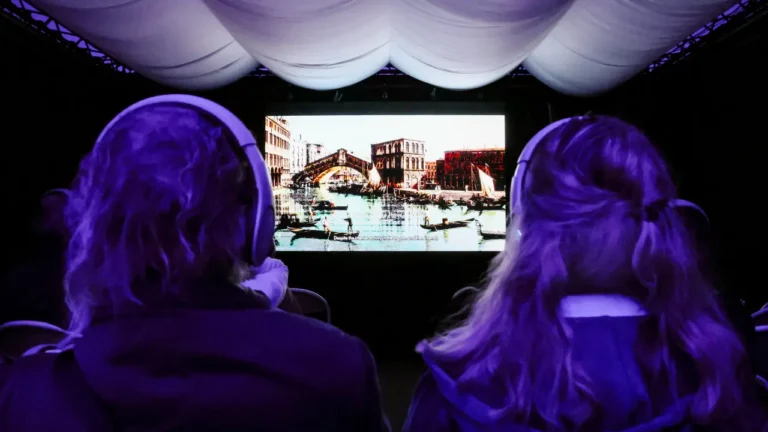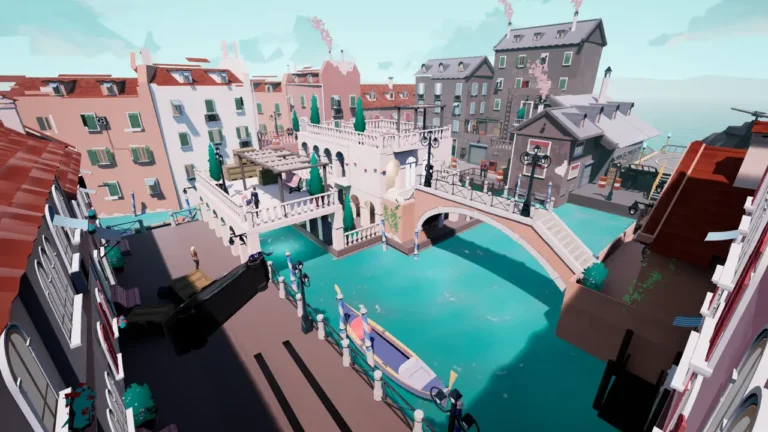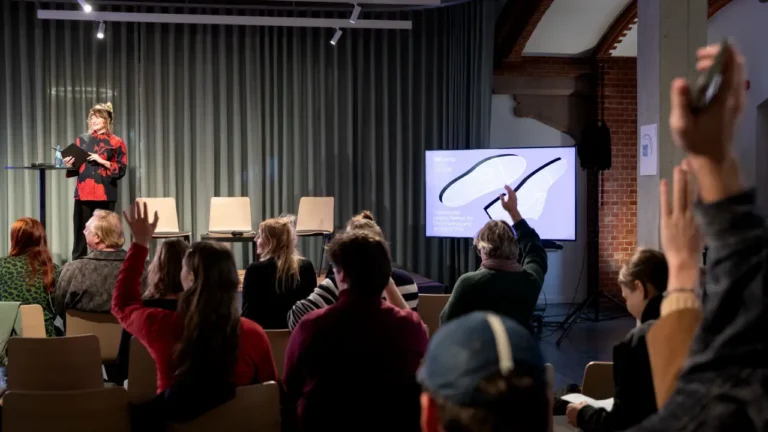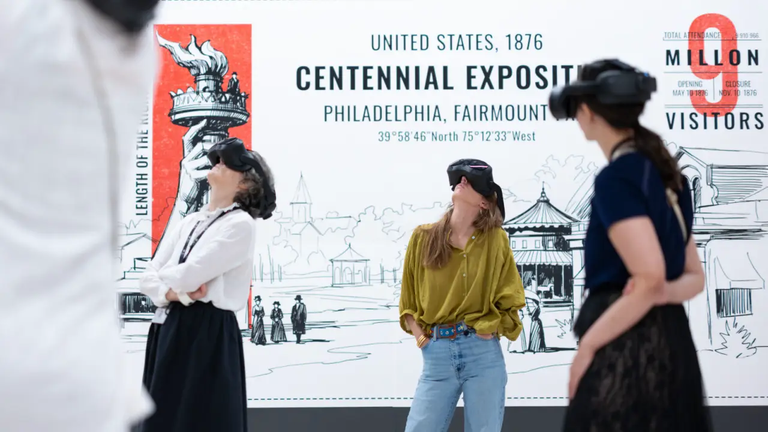
With its two key pillars — an immersive selection and a market bringing together international professionals — the third edition of the Immersive Competition confirms the growing role of immersive creation within the cultural and creative industries. This year, the Festival took another step forward with a hybrid exhibition model designed to accommodate both VR works and projection-based formats. The setup demonstrates that these two forms, often associated with separate distribution circuits, can now coexist within the same curatorial and professional framework. A look back at the 2026 edition.
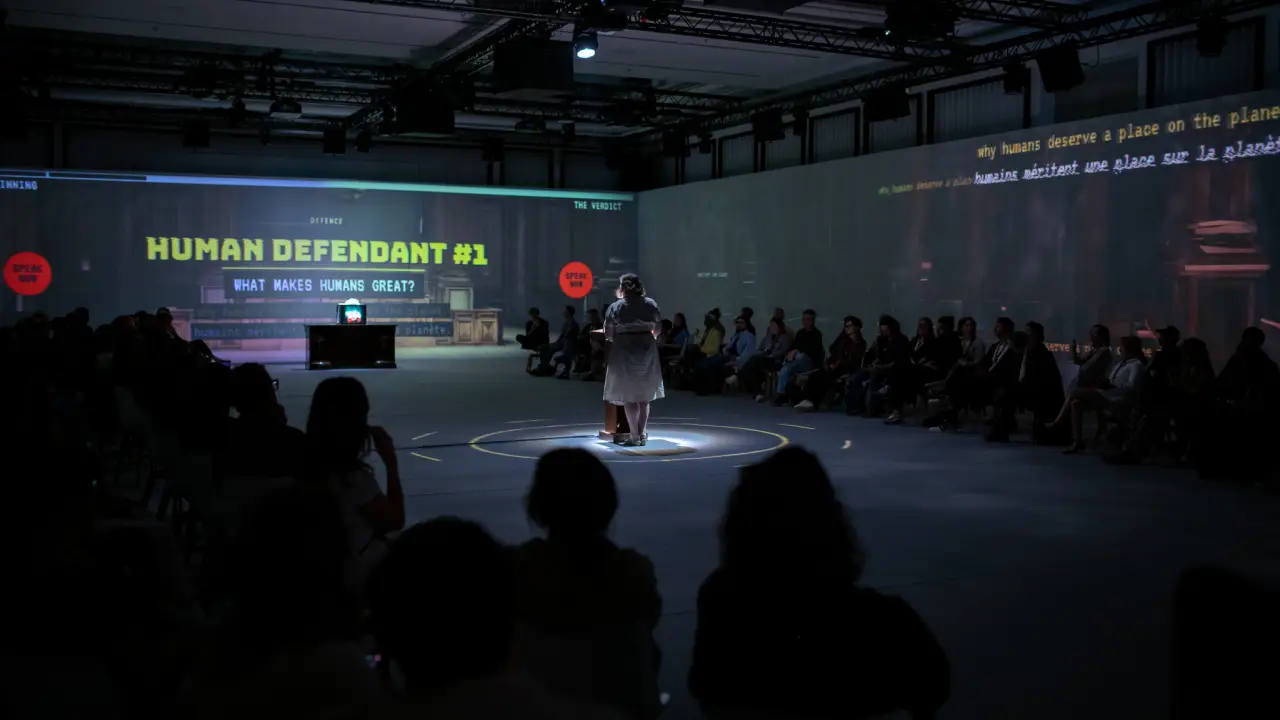
Cover:GAWD v. The People 📸 Copyright: Michaël Jan / Marché du Film
The Festival de Cannes may seem to enjoy an immutable image: its beaches, its red carpet, its Palme d’Or. Yet since 2024, following ten years of exploration within the Marché du Film through initiatives such as Cannes XR, the event has begun a quiet revolution by opening a competitive section dedicated to immersive technologies. Its ambition is clear: to show how these technologies can contribute to the writing of new forms of narrative. The 2026 Immersive Competition therefore featured not only a selection of works, but also ten days of market activity, bringing together curators, producers and distributors to support the emergence of this sector. “On site, we have representatives from nearly 80 exhibition venues across North and Latin America, Europe and Asia. In the end, this will represent around 1,300 professional meetings. It is a strong indicator of professional interest and of the vitality of the market,” says Élie Levasseur, Head of Immersive at the Festival de Cannes. Up to this point, the combination of selection and market remains close to the model used by other international festivals. But this year, regular attendees of the Immersive Competition quickly noticed a major change: all events were brought together inside the Carlton, in a large 450-square-metre room.
All-in-one setup and new perspectives
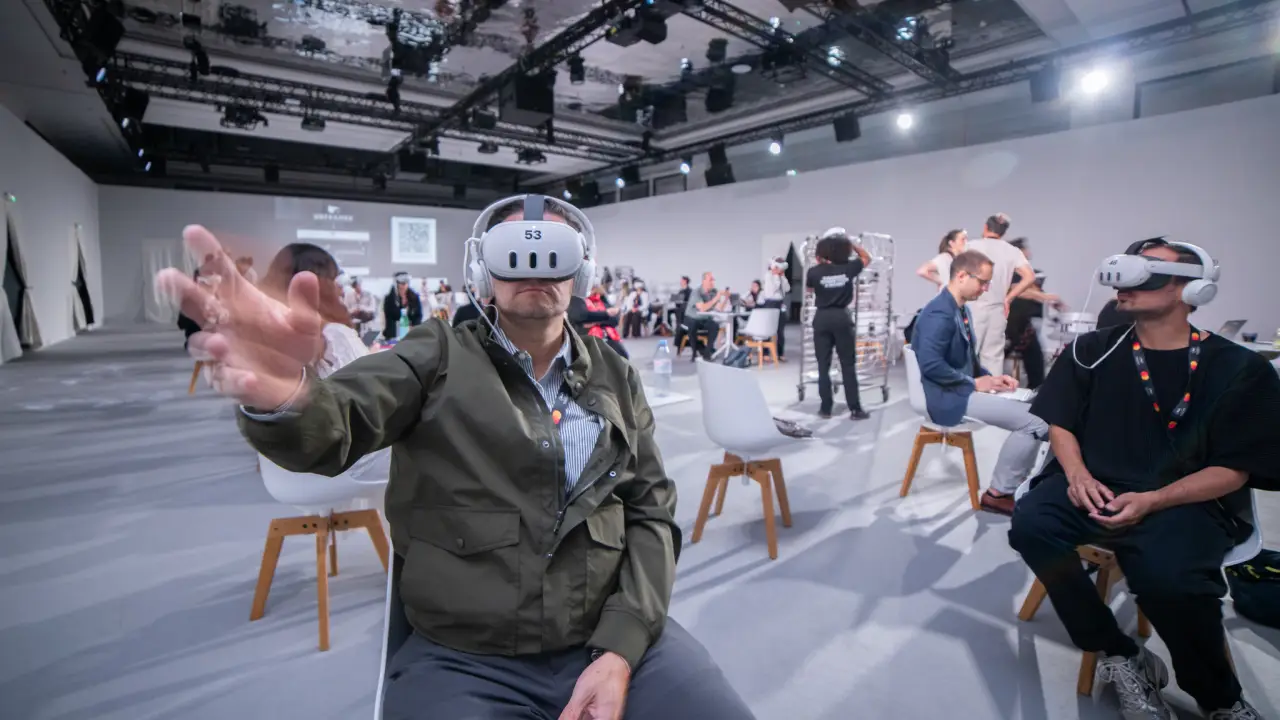
This white cube is far from anecdotal. It profoundly changes the way immersive works are presented. Most festivals still rely on a conventional exhibition format: a space divided into separate booths according to the number of works being shown. Visitors move through them to experience each piece one by one. Yet this model has clear limitations. First, because of limited capacity, which sits uneasily with a business model increasingly oriented towards large-scale deployment. Second, because immersive formats, particularly in LBE, now attract audiences looking for collective experiences. “A spectator on their own has a hard time sharing their experience. What audiences are looking for are shared emotions: laughing together, being moved together, and talking about what they have just experienced,” observes Élie Levasseur. Finally, there is one last challenge, and a crucial one for a market: convincing industry players of the exploitation potential of these immersive works. At the Festival de Cannes, the approach changes radically: a single large room hosts the installations, alternating between video projections and free-roaming VR. “With our set-up, we show that this configuration can accommodate different formats and switch from one to another in just a few minutes,” explains Élie Levasseur.
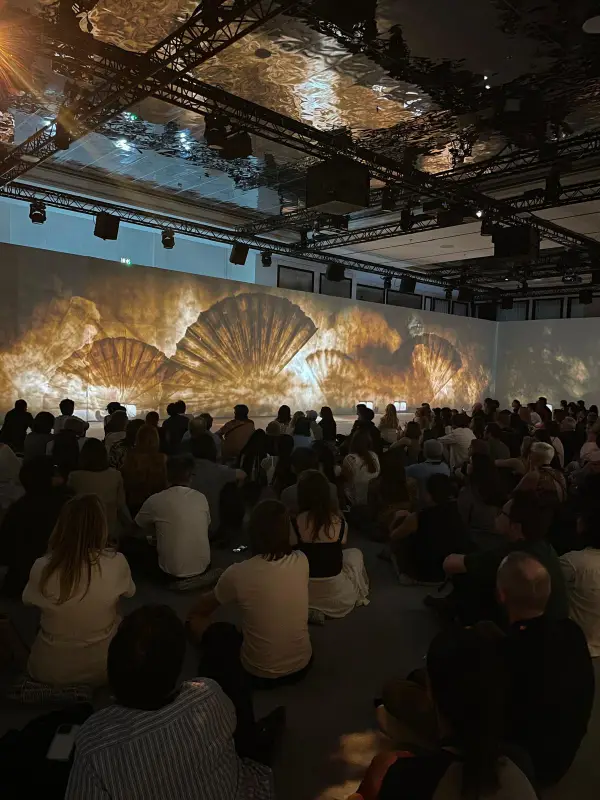
Behind the scenes, on an innovative set up designed and tested by the Spanish team at Univrse, Diversion oversees the changeovers for the virtual reality experiences, with Artcom Diffusion handling the lighting and 4J ÉVÉNEMENTS the sound, while the experiences are operated from a single control station. This limits the need for multiple control rooms and therefore reduces installation costs. Nearly 350 headsets, combining Meta, Pico and HTC devices, can be deployed depending on the experience. This hybrid presentation suddenly becomes a real argument for the professionals in attendance. “Until now, video mapping was more advanced in terms of business model and distribution, unlike VR venues, which remain relatively few in number,” continues Élie Levasseur. “Now, we are showing that the same venue can host both formats.” At a time when distribution remains one of the immersive sector’s main challenges, this type of configuration opens up new perspectives for cultural venues: museums, art centres and festivals can now approach the programming of these works with greater confidence. “A venue with a large room equipped with video projectors can host these works. I believe many professionals are now realising that it is possible.”
The selection of immersive works
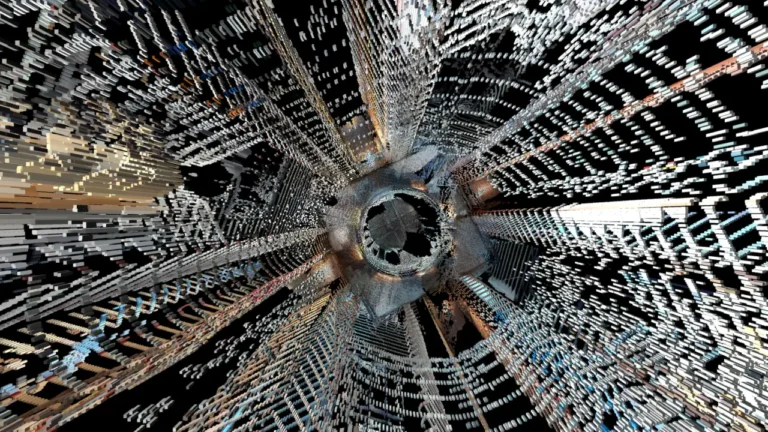
It is probably no coincidence that choreographer Blanca Li chaired the jury of this year’s immersive selection. “In her own creations, LE BAL DE PARIS DE BLANCA LI and THE SHADOW, Blanca Li has always sought to welcome as many spectators as possible. She perfectly embodies the project we are defending this year,” says Élie Levasseur. In total, nine works were presented this year, including six in VR and three projection-based pieces. KATABASIS, the free-roaming VR journey into the underground depths of New York by French artist Ugo Arsac, received the award for Best Immersive Work for its “deeply human, authentic and emotionally powerful quality, allowing us to reconnect with what unites seemingly ordinary human beings,” in the words of Blanca Li. The selection also stood out for its strong European presence — with Alter Agent from Italy, COLA Animation from Portugal, Nilor Studio from the United Kingdom, and Atlas V and Zorba from France — confirming the continent’s central role in the creation and production of virtual reality works.
Despite the quality of the artistic proposals, some voices in the corridors pointed out — as is only fair — the limitations of certain works. But Élie Levasseur prefers to refocus the discussion: “The first selection criterion is narrative. We prioritise works with strong narrative potential, even if they are technically imperfect.” Between the lines, it becomes clear that VR works, and especially projection-based pieces, which are often more advanced aesthetically and technically, will now be assessed through the lens of their narrative potential. Building a genuine market also depends on this deliberate choice. “Cinema was not built in a day.” He goes further on the conditions of production: “If we want more accomplished works, we need larger budgets. It is not fair to compare these works with cinema films. If we want larger technical teams or star voice-overs — as with Jane Perry on RED PLANET 3009 — then we need the means to support them.” This brings us back to the starting point: distribution and its financial returns remain at the heart of the equation. In this context, the Festival de Cannes is moving along a carefully balanced line. The demonstration set-up plays a central role, optimising distribution while pooling formats.
Building a sustainable model for the Immersive Competition
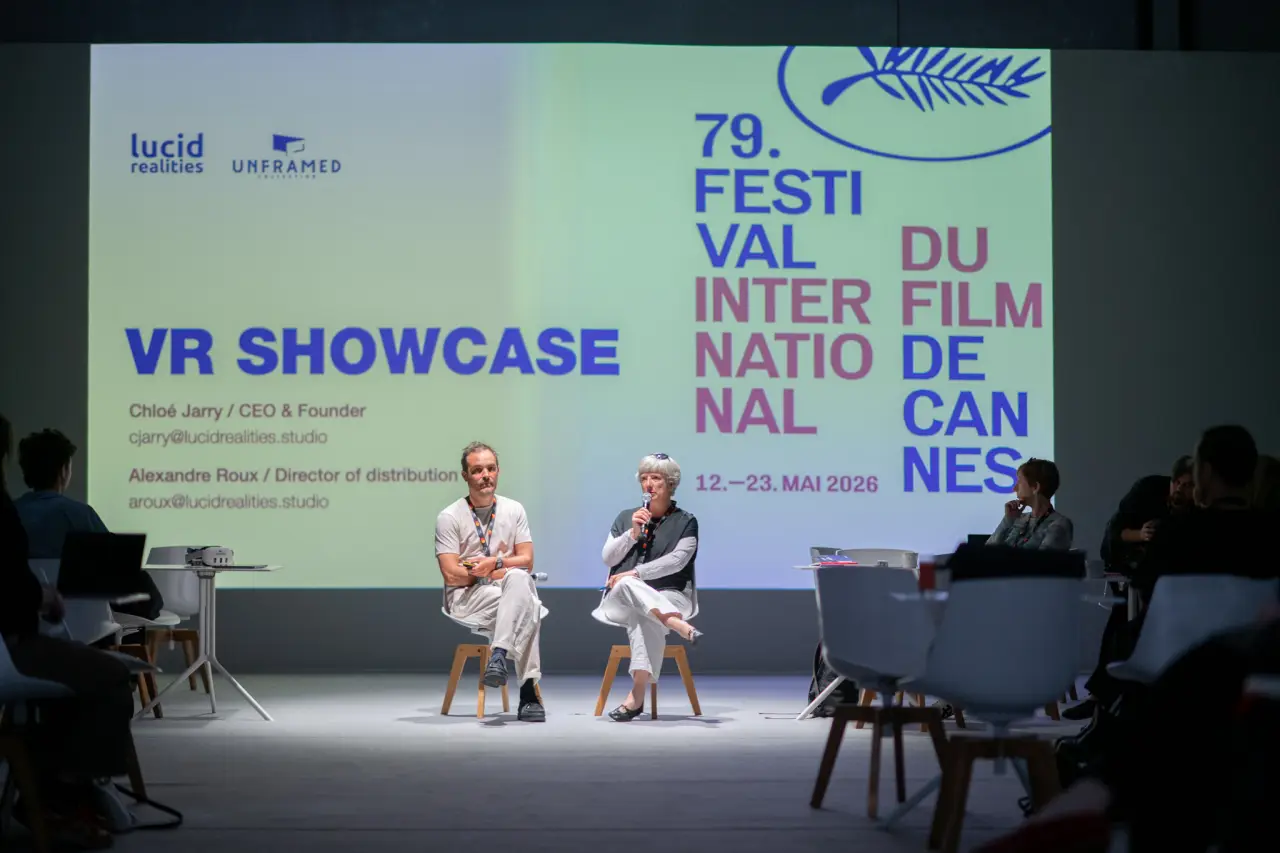
Ultimately, the 2026 Immersive Competition appears to show signs of maturity on several levels. First, on the market side, the professional meetings met expectations, and several studios were even able to benefit from dedicated demonstration time. Each morning, a 50-minute slot allowed a work to be presented using the available technical set-up. “With immersive works, producers need to pitch, but also to show the actual experience. Under these conditions, deals are more likely to happen,” sums up Élie Levasseur. Players such as Atlas V, Unframed Collection and the Immersive Center Alliance (ICA) network, including Kunstkraftwerk Leipzig, OASIS Immersion, MINA and Signal notably, were therefore able to present demonstrations. It is worth noting that, out of the ten demos, nine were projection-based and only one was in VR.
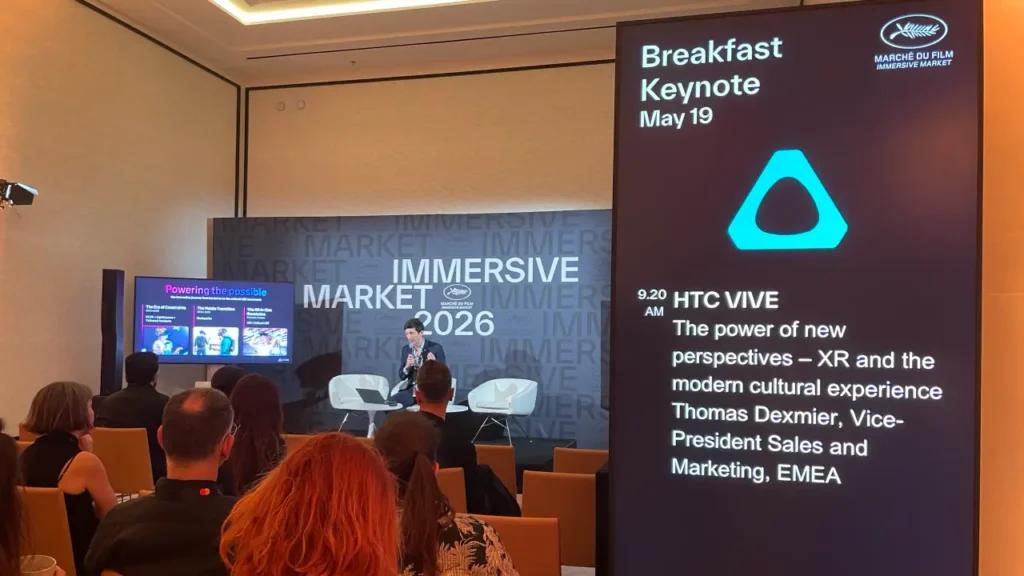
The Festival is also considering ways to facilitate the circulation of the selected works and support their international distribution. “International venues are saying they want to host the immersive selection. With a configuration that solves many of the usual constraints, this becomes concrete,” explains Élie Levasseur. Partnerships with exhibition venues, based on a precise set of requirements, particularly around technical standards and audience management, may be under consideration. The Festival could also envisage support for installation. “We can imagine our team helping with the set-up and training local professionals on site,” he adds. With all these new developments, the 2026 edition seems to have reached a strong consensus. “The feedback has been very positive. Next year, I don’t think we will change the set-up very much, but we will keep improving what already exists,” concludes Élie Levasseur. Could this become a source of inspiration for other international events? Time will tell.
Disclaimer — Editorial Note
This interview was conducted and written by an independent journalist for XRMust. It focuses on the Cannes Immersive Competition and its recent development. For full editorial transparency, we note that Mathieu Gayet, XRMust’s Publishing Director, also collaborates with the Marché du Film – Festival de Cannes on the development of the Immersive Market. This role did not influence the interview process or the editorial content of the article, which were entrusted to an external writer.