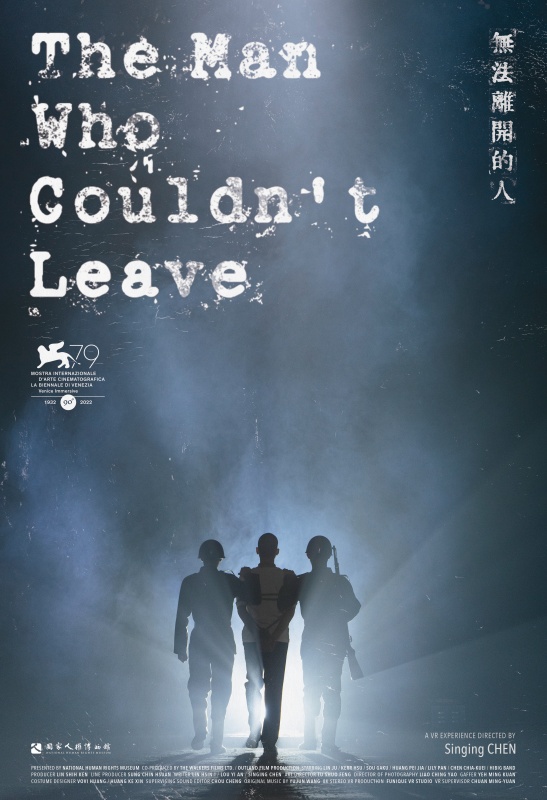
Noticed in selection at Venice Immersive 2022, THE MAN WHO COULDN’T LEAVE is one of the three Taiwanese works in Competition. A second VR film for filmmaker Chen Singing (AFTERIMAGE FOR TOMORROW) who fully embraces the medium to revisit the White Terror, a period of persecution that shook Taiwan in the 1950s. Visually and thematically impressive for 35 minutes, this is undoubtedly one of the biggest sensations of the festival. We discussed it with the director.
The Man Who Couldn’t Leave (2022)
Afterimage for Tomorrow (2018)
Mastering a second VR film: THE MAN WHO COULDN’T LEAVE
Chen Singing – I first became interested in virtual reality in 2018, at the invitation of the Kaohsiung Film Archive (link), which offered me a first project, AFTERIMAGE FOR TOMORROW. Through my work on feature films as a director, screenwriter, and documentary producer, I was eager to try my hand at this new medium. I see in VR experiences a rapprochement between cinema and theatre, and a work on space that is particularly interesting. Following this first project, the team of the National Human Rights Museum (Taiwan – link) contacted me. We had a discussion about the relevance of the medium to explore history, to revisit historical facts and to use these tools for the preservation of our memories. This is how THE MAN WHO COULDN’T LEAVE came about, around the period of White Terror in Taiwan from 1947-1987 – the story background of the film is from the 50’.
C. S. – When I first started making VR, I did a lot of research – and saw a lot of virtual reality films to get a feel for the medium, which is largely made up of interactive video games. The share of narrative works remains very small in comparison. That’s why, coming from cinema, I wanted to push the limits of the genre and especially of the 360 film to tell my stories. This was a real challenge in itself. First of all, it was necessary to represent as faithfully as possible the physicality of the situations, and the people, in VR. Then, the writing was complex because we had to never forget the viewer’s point of view and position. And when I speak of point of view, it is both the viewer’s gaze as a physical person but also his psychological state. What he can see, feel in that space…
The influence of theatre in the immersive field
C. S. – One of the difficulties during the production was to find the balance between the reality of the facts and what had to be imagined for the fiction in terms of staging. The approach of the theatre is interesting here to propose very powerful images, settings that spread the story without always being particularly realistic. During the writing process, I consider several “elevations” (A,B,C…) according to the elements of the story I want to put forward. This allows me to set the scene, and to build the realisation right after.
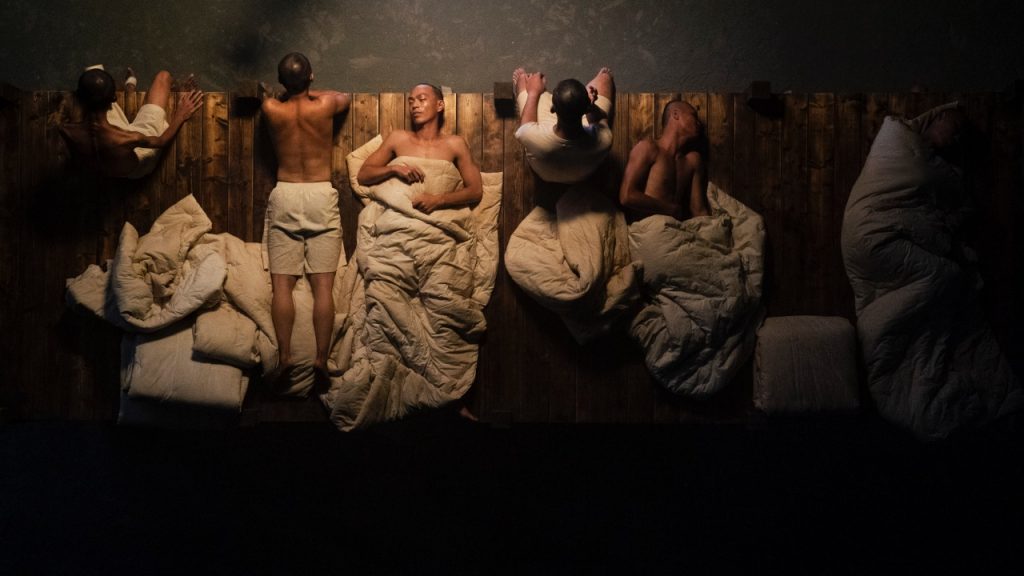
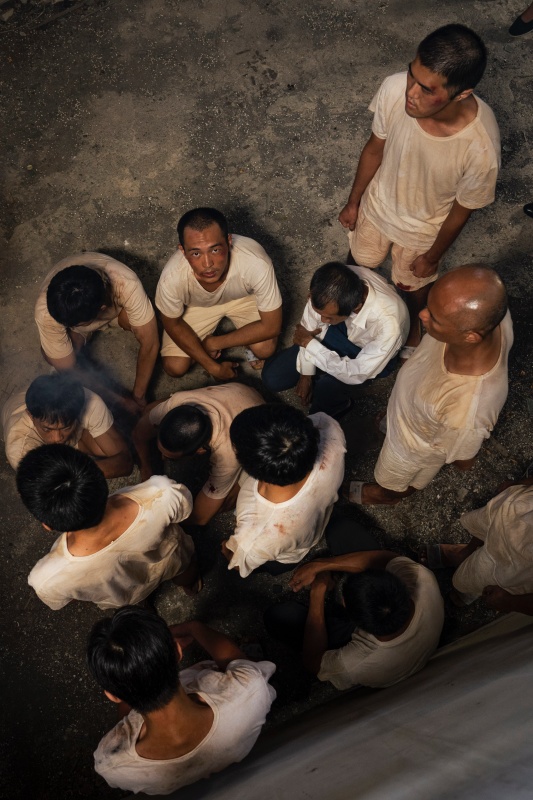
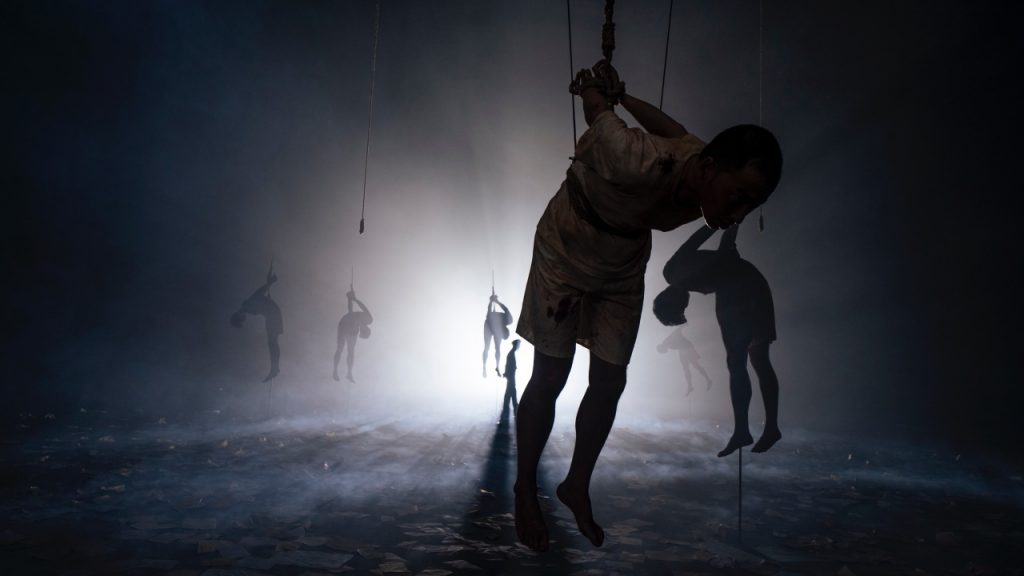
C. S. – You have to have an eye for the staging from the writing stage, and be able to imagine the sequences to anticipate the problems of dramaturgy. With THE MAN WHO COULDN’T LEAVE, I was enormously inspired by reality, by existing settings, by testimonies and I wanted to integrate them into a 360 film. There is a very strong basis of truth in what you see. The sequence where we see men hanged, tortured, is extremely realistic, reconstructed from interviews with survivors. I then wanted to represent this for VR in a 360 setting with the constraints of spatialization. It is a story that navigates between the world of today and the 1950s. It can incorporate elements of narrative that are ultimately very universal, a common emotion through these flashbacks or portraits presented. The viewer is given an experience that is shared, and I hope they can enjoy it fully.
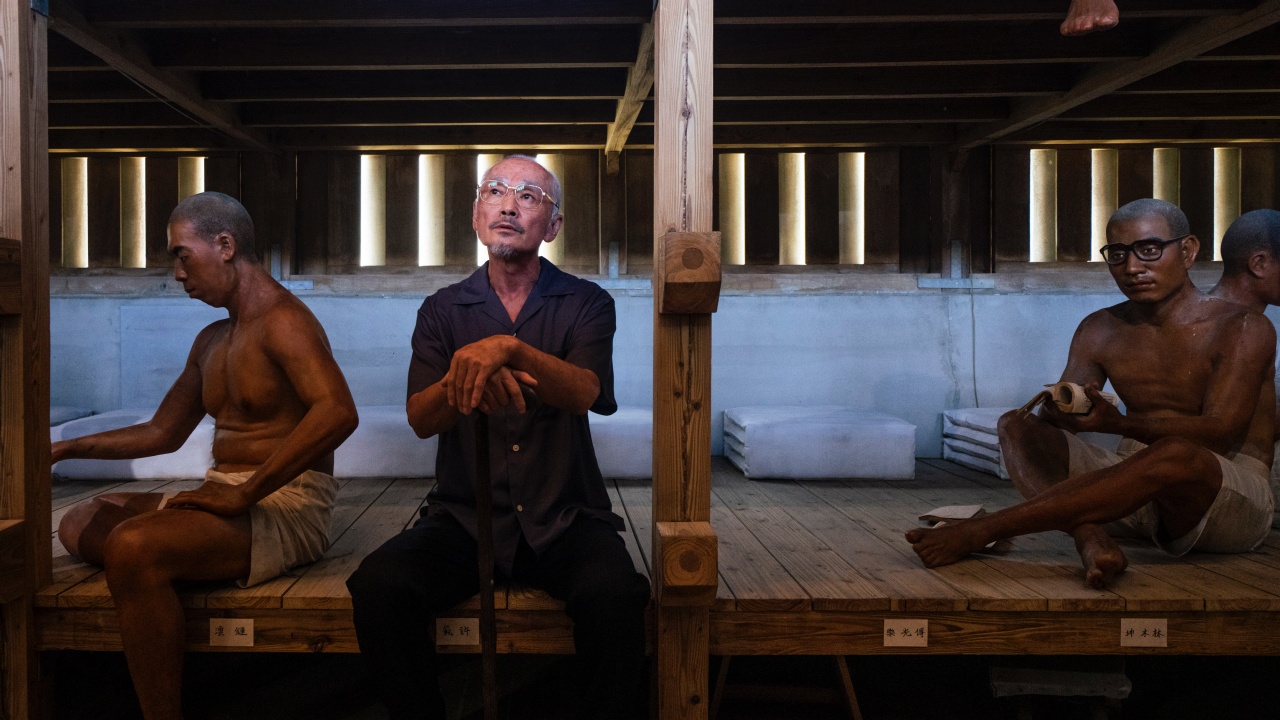
C. S. – I really enjoy working with actors. For THE MAN WHO COULDN’T LEAVE, I divided this work into three parts. First of all, I called upon theatre actors with whom I had already collaborated. For certain sequences, particularly musical ones, this allowed me to have a real notion of the collective, of a group. Then, for the central character, I asked a well-known artist from Taiwan – who went through the White Terror era – to come and play the modern version of the main character. Finally, for the prison sequences, I operated via a casting of young actors. We then made them very aware of the story being told, in particular by going together to the places where it happened, by organising meetings with victims of political repression.
Representing History in a 360 film
C. S. – It’s an important topic in Taiwan, and our job was to adapt it for a medium that can involve people. It’s very historical, very emotional. One detail is important: working on the subtitles to make the narration as smooth as possible was one of our subjects in production. This is the first festival for THE MAN WHO COULDN’T LEAVE, which has its world premiere at Venice Immersive. We hope to distribute the film as widely as possible of course, and accompany it in the coming months to other events such as the Kaohsiung Film Festival in October.