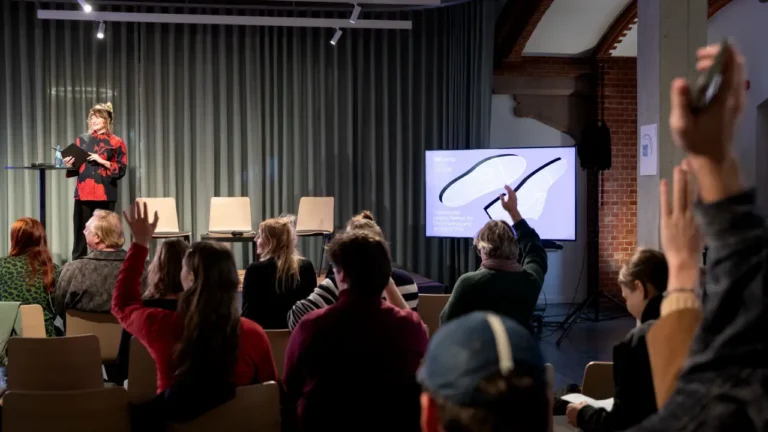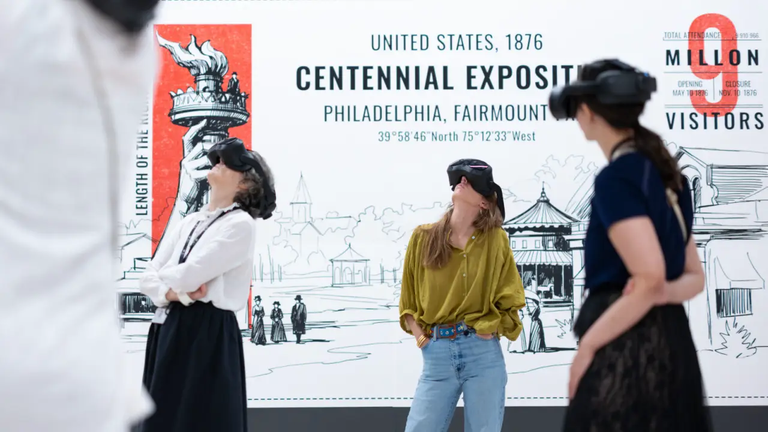
If you go to any lab or feedback session these days, one consistent question is “where do you see this going?” or “how will you distribute this piece?” On one hand, it seems a premature question, considering many of the works in discussion haven’t even finalized the vision of what they actually will be. But in this seemingly unsolvable conundrum of XR distribution, it’s perhaps necessary to start thinking about it from the outset of every production.
This consideration of distribution as part of the creative process is a key component of the recent IDFA DocLab/MIT Open Documentary Lab’s XR Distribution Pipelines report*, which includes a section of questions for artists and venues to ponder and weave into the development and production. The report notes that it was “widely acknowledged that distribution functions as part of the creative presentation of the project inextricable from its design,” which does place the first level of distribution discourse within the production process. With artists also doing a lot of the leg work to promote or distribute their own pieces, thinking over these terms early on is helpful.
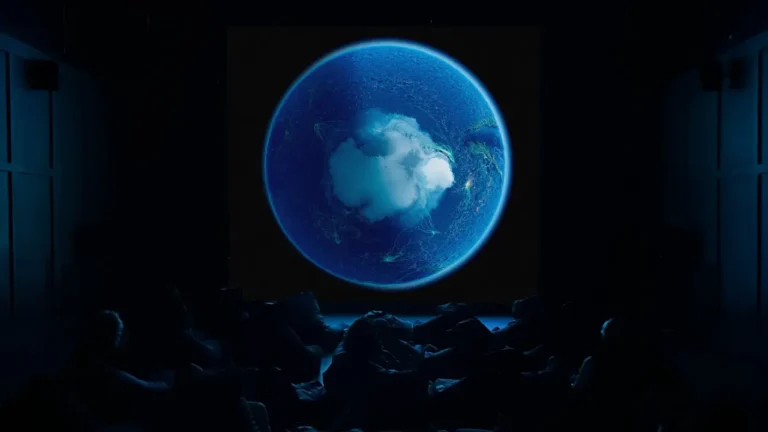
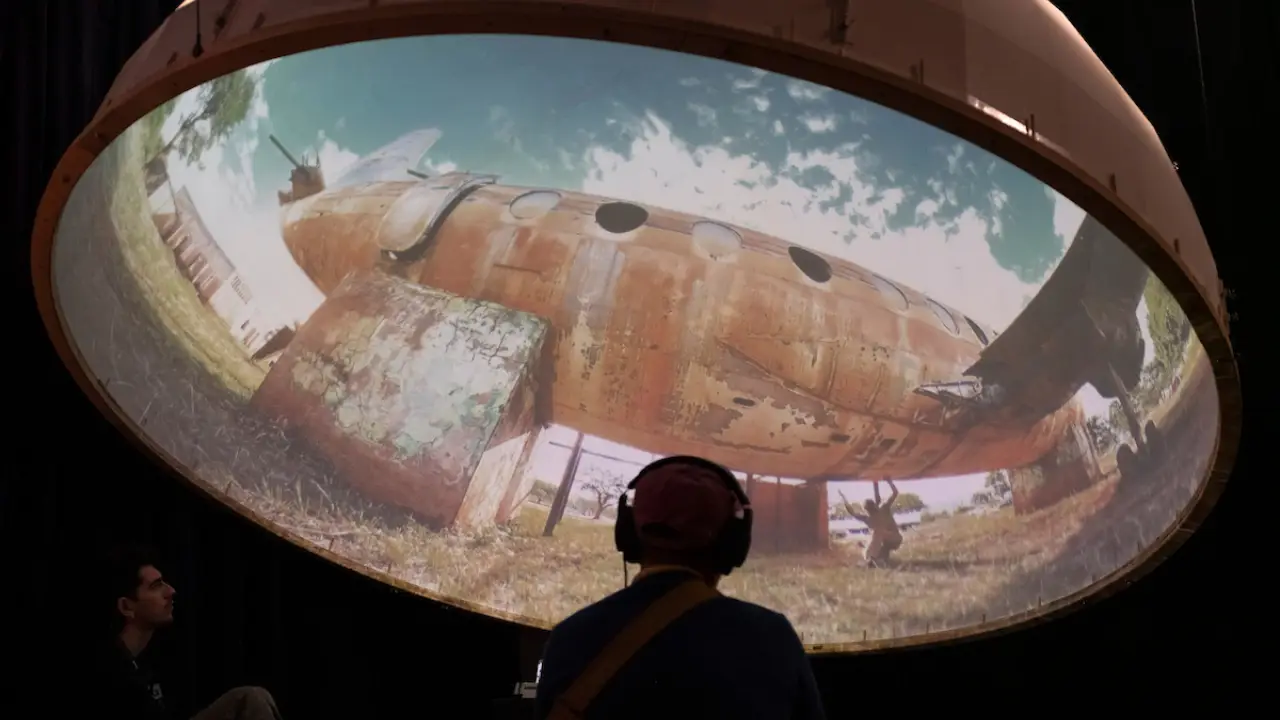
Cover: A mini version of The Rift at IDFA DocLab 2025 📸 Roger Cremers, IDFA DocLab
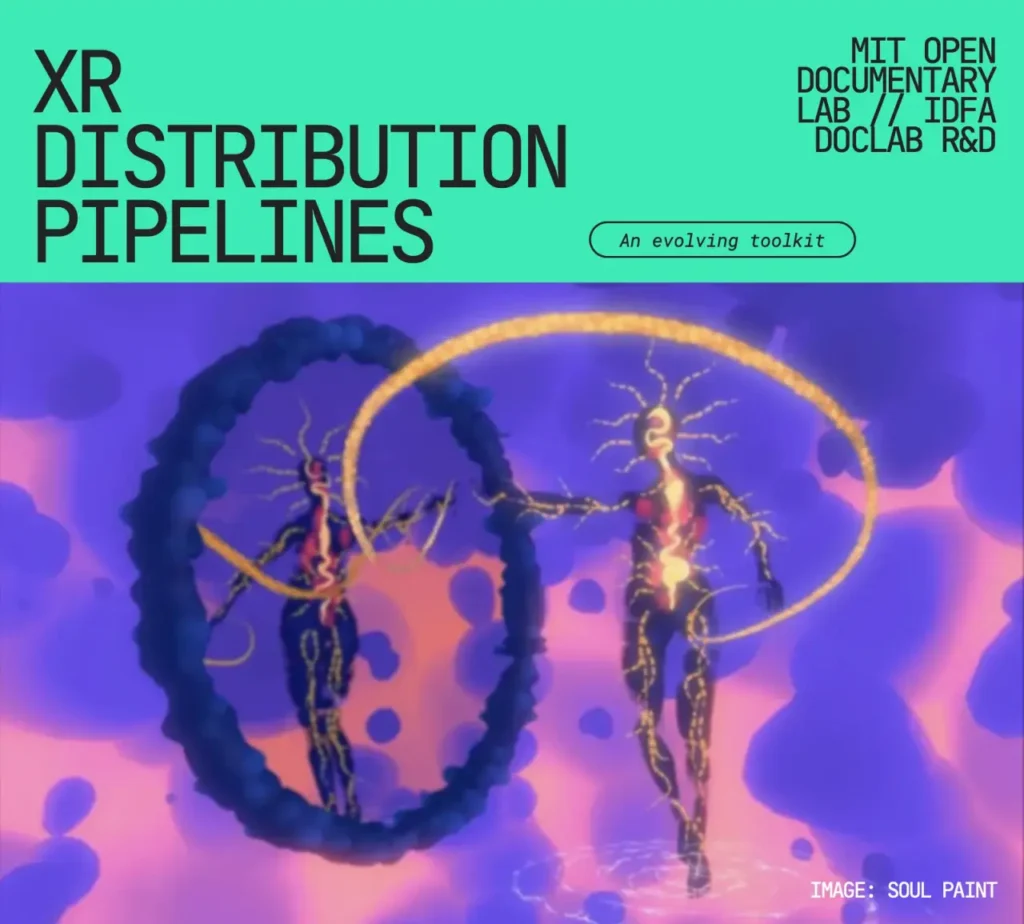
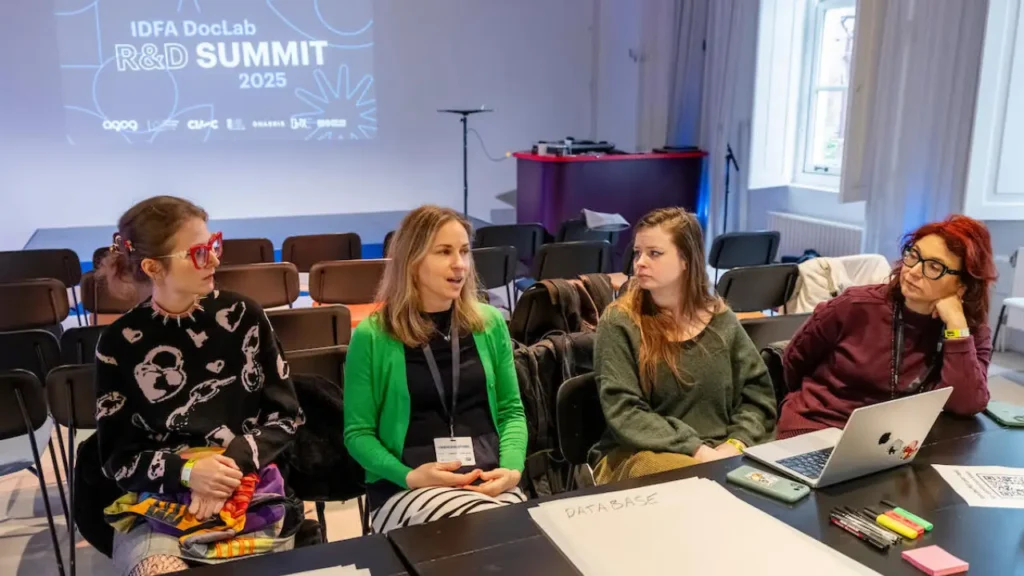
The research that fed into this report explored “what are the possible trajectories that different projects might take on their journey to finding audiences?”, and, in addition to the section of guiding questions, other outcomes are a pipelines mapping diagram that visualises possible pathways, a network of advisors (the Independent XR Distribution Coalition – IXRDC) and a living database of platforms and venues that program XR work.
The main challenge for tackling the distribution problem – stated right up front – is the diversity of work; what makes XR so exciting and transforming and fresh is exactly what makes its distribution so difficult. There is a wide variety of styles and formats, and the initiative aims to identify pipelines for as many as possible.
Below are some of my main takeaways, as well as some further insights from the report’s author Julia Scott-Stevenson.
Distribution as a Creative Constraint
The report puts a lot of focus on makers, a small amount on venues, and a bit from the perspective of distributors. While the report acknowledges distribution is a system wide issue, the guiding questions are mostly for artists. (There is simultaneous research happening that looks more on the venue/distributor side of the industry, vis a vis the IXRDC and the interactive database, which has just been released.) Exploring these questions from the artist’s side made me very curious to know more about what distributors are envisioning when they take on pieces and what possibilities they see as viable options.
The guiding questions are mostly about format, mode of interaction, spatial needs, and what the core and non-negotiable technical and conceptual elements of the project are, versus “what’s in the ‘nice to have’ or ‘if we can afford it’ basket.” The questions continue around audience and impact, raising the obvious – who is your audience – but then goes beyond to ask how will they find the piece and what does success look like. (More on both of these below.) It then poses that artists think about their dream platforms, if their work will align (or could be re-versioned?) and how to go about making that connection happen.
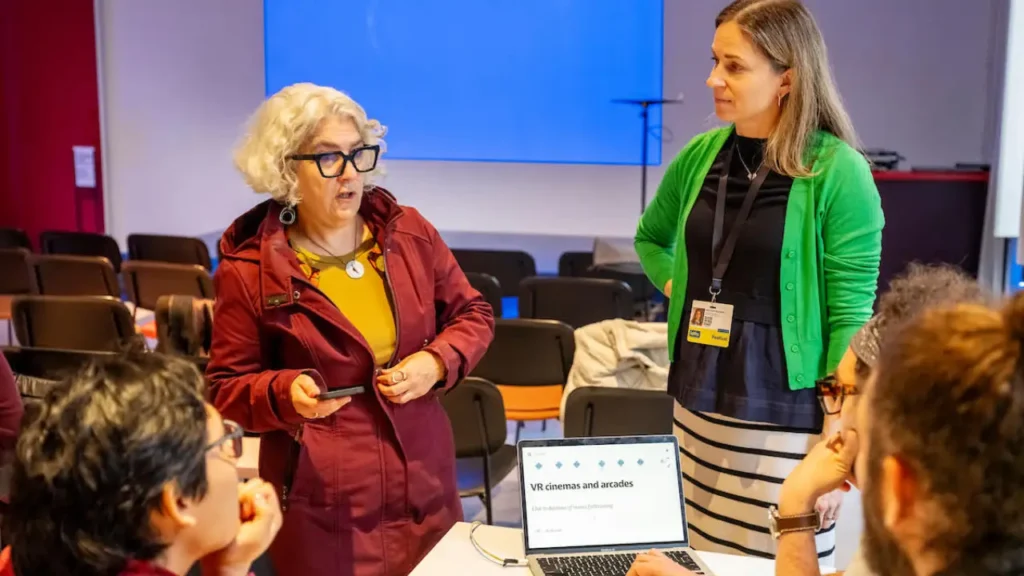
The report also poses some general field questions for the entire ecosystem, which reflect many of the main takeaways of the report.
- To map pipelines, one needs to define pathways. But as we know, XR’s multi-disciplinary nature means it often doesn’t fit into one box. Sometimes people can’t figure out how to place it or describe it, which makes it harder to pitch or market to audiences. For example, the report’s three interviews with makers** (from diverse ends of the XR spectrum –– illustrating just how broad our field is) tease out different modalities of distribution. All three of their works have a level or component on top the regular XR experience/artwork, giving specific possibilities to their sharing, but also making their defined “home” ambiguous.
- What does success look like? Scott-Stevenson says one surprising thing that emerged from the conversations and think tanks was how many different versions of success there were. It might be audience bodies, impact, number of venues, etc…, but like XR pieces, there is no one definition of success, and therefore hard to collect data on it. In addition, “you would assume it would be either biggest audience numbers or ticket sales, but people come into this space for very different reasons.”
- Without more developed infrastructures, festivals still play a big role. Scott-Stevenson notes they serve as curators, gatherers, distributors, connectors, but that other networks are emerging (for example, the UK immersive network and a full dome network in the USA).
From Pathways to Pipelines: Mapping an Unstable Field
In looking at the different pipelines, however, the report observed another connector: the interstitial producer. This is a layer of independent producers who sit between artists and venues and support XR distribution through various efforts such as tour producers, curators, technical consultants, impact producers, etc… This a ripe area for exploration, both for research and also for industry development. Without the layers of institutional bureaucracies or the creative energies artists need to preserve, the interstitial producer can have more freedom to explore, connect and fill in the gaps.
But in general, relationships are very important in all areas of distribution, which also fed into transparency. There remains friction between venues and makers in terms of what knowledge gets shared and how much standardization there is. If artists are being asked to consider distribution in the production process, then they need to know what space and equipment they might be working with, what kind of budgets they need to think about, etc… It is very hard to get that data unless you’re already connected. “What artists really need to know is to they take direct submissions, do they have public calls, how often do they curate exhibitions, do they take individual projects,” Scott-Stevenson says. “We took a middle ground for the database, to try to share the information artists need, but also to keep in mind that the database could get out of date very quickly.”
Transparency, Relationships and the Missing Infrastructure
In that realm, the lack of data is still notable, especially from online platforms. How many people are watching? What are people getting paid? What are venues offering and under what terms? “People want that data, they want some kind of licensing standardization,” says Scott-Stevenson. “You don’t want too much standardization, but more transparency would be fantastic.” This goes back to relationships and trust. People are generally open, but maybe there is not yet a big knowledge sharing of best practices.
- The difficulty of defining XR also leads to a difficulty to market it, a challenge for artists and venues alike. Discoverability is also still a big issue. Before getting someone to experience XR, where do they even find out about new (or old) work? There is a big role for specialized press (like XRMust) to continued exploring and highlighting immersive work, but also for other media sectors to make space for coverage of the industry.
- The report and database focus more on the Global North, which can be attributed to lack of data, lack of venues, lack of industries, lack of research knowledge, etc… But acknowledging the gap in the report at least opens up the conversation and an opportunity to gather knowledge and map other parts of the world. Operating in a landscape that is not as defined or funded calls for creative approaches to exhibition and distribution, which can serve as useful and inspirational practices from which to learn.
- There are some best practice takeaways we can see – and gaps that could be filled by new initiatives. For example, AI+Me making a full tech rider and package, often shipping its own technology and equipment, which ends up cheaper, but then facing issues with customs (meaning a bigger hurdle outside of Europe). Or Ancestors finding a home in non-traditional business and conference settings. Or the Rift prototyping a dome piece with audiences. The rising discourse around “Impact” could provide possibilities for a work’s post-festival life that is targeted to specific audiences, communities and fields that bring the works to non-traditional spaces. While not in the report, Scott-Stevenson notes that the increasing attention to “impact” opens up new possibilities – not just in audience but also in tools.
- There’s not so much in the report itself from the distribution side, where distributors sit in the landscape – what do they want out of work, do their ideas of distribution involve galleries, schools or seeking other community connections? But the report’s appendix summarizes discussions from the Distribution Roundtables at IDFA 2024 that uncover some interesting insights from the non-artist side of the industry.
Distribution puts a lot of pressure on the artists, calling them to be “scrappy” and do a lot of work above and beyond that of the art-making. Often, this doesn’t pay or can be put in a budget. (Film funds usually pay for development or production, but less so in the last mile of exhibition. There are some examples of touring grants.) Visualizing the pipelines and having a database to search venues, festivals and other opportunities can help demystify and inspire options for distribution.
To explore the full report, click here.
* This report was authored by Dr Julia Scott-Stevenson, University of Technology Sydney for MIT Open Documentary Lab. MIT Co-investigator is Sarah Wolozin, MIT Open Documentary Lab. Scarlett Kim, Center for Unclassifiable Technologies & Experiences(C.U.T.E.), contributed research and strategy. Published in May 2026. Professor Ceasar McDowell is the principal investigator for MIT Open Documentary Lab. Special thanks to the Independent XR Distribution Coalition advisors who contributed knowledge and insights that informed our research. Research supported by MIT Open Documentary Lab and IDFA DocLab, with thanks to Caspar Sonnen and Jenni Tuovinen.
** (Sarah Ticho, Soul Paint, Idris Brewster, Kinfolk; Steye Hallema, Ancestors)