
For its 10th edition, Venice Immersive (part of the Biennale Cinema) could have chosen the comfort of a retrospective. Ten years is long enough to revisit landmark works, trace the emergence of a community, and celebrate the role the section has played in giving immersive creation an international stage. Liz Rosenthal and Michel Reilhac have chosen another route.
“We’re not going to be celebrating the past,” says Michel Reilhac. “We’re entirely focused on the next 10 years.” The statement sets the tone. This anniversary edition is not designed as a museum of the first decade, but as a reading of what may come next.
That choice also responds to the current mood around immersive media. Financing has become harder for creative, non-game and non-LBE projects. Some platforms have stepped back. The wider media conversation around VR has often turned negative. Michel Reilhac does not deny the transition, but he describes it differently. “What we are seeing is the end of a first wave,” he says. “The Meta wave is dying. But it doesn’t mean that immersive is dying. It’s the exact opposite.”
For Liz Rosenthal, this year’s selection confirms that shift. “We really feel we’re in the next wave of what this whole immersive medium, or mediums, mean,” she says. Venice Immersive received more submissions than ever this year, a sign that the field is not disappearing, but moving into a different configuration.
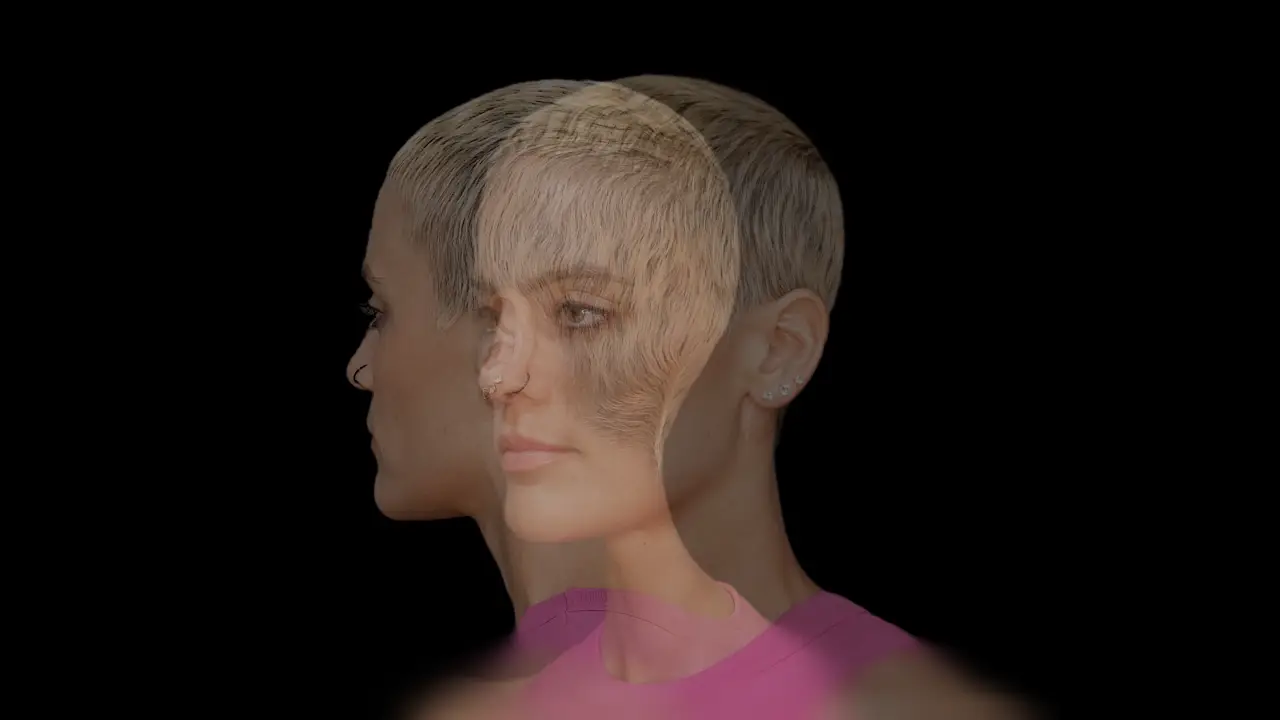
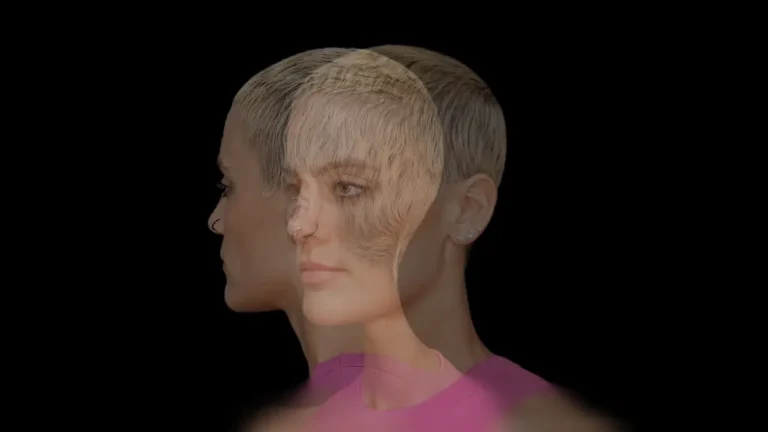
Cover: BEING IN YOU by MICHAŁ STANKIEWICZ
New devices, new formats, same question: what can immersive become?
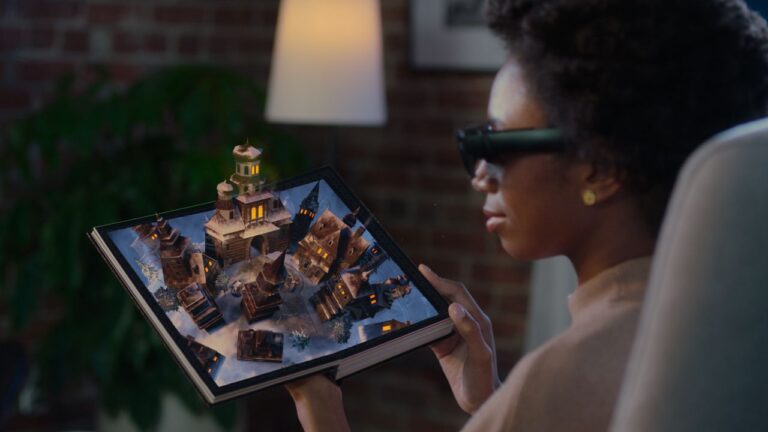
One of the strongest signals this year is the arrival of connected glasses as a serious creative platform. Venice Immersive will present two major projects on Google and Xreal’s Project Aura glasses: NEVATARS, directed by Andy Serkis, with Daisy Ridley and Kathleen Turner, and EXPLORE GALÁPAGOS, from Atlantic Productions, voiced by Margot Robbie.
For Liz Rosenthal, the symbolic point is important. “The fact that they have chosen to premiere these works in Venice and not show these devices in a tech conference is significant,” she says. What matters is not the technology alone, but the type of creative work already possible on these devices. “These are very sophisticated, interactive pieces of high-end storytelling. I think a lot of people will be surprised how fast this has moved forward.”
Michel Reilhac sees connected glasses as a possible step toward broader access. “The fact that immersive content can now be accessed through a device that is just glasses and no longer a headset is something we’ve been waiting for,” he says. To mark this shift, Venice Immersive will also host, with Agog, a focus on the newest glasses, including a “petting zoo” where visitors can test devices during the opening days.

Liz Rosenthal is careful not to frame this as the death of VR. “It’s not a matter of VR being dead,” she says. “It’s evolving into something else.” Many of the creators working with new devices are precisely the artists and studios who developed their language inside VR over the past decade.
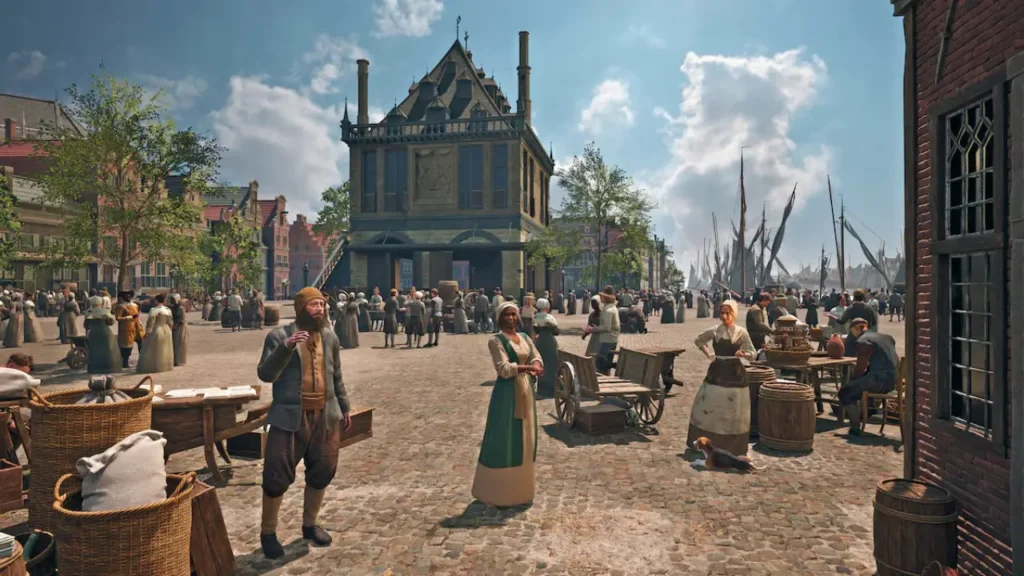
The same idea of evolution runs through location-based entertainment. Venice Immersive will present several large multiplayer works that Liz Rosenthal and Michel Reilhac see as signs of a more mature LBE language: AMSTERDAM 1652 directed by Nienke Huitenga ( an ENTR production, co-produced by Backlight), SMITHSONIAN STARSTRUCK: THE IMMERSIVE EXPERIENCE by Fever and EVEREST 1953 by Small Creative.
Liz Rosenthal describes AMSTERDAM 1652 as “one of the most meticulously executed, multiplayer historical experiences they have seen, with several characters to follow and more freedom inside the environment. SMITHSONIAN STARSTRUCK: AN IMMERSIVE EXPERIENCE turns real astrophysical data into a group journey through telescopes such as Hubble and James Webb. EVEREST 1953 revisits the 1953 expedition with more drama, interaction and attention to the Sherpa perspective.
For Michel Reilhac, these works indicate “the next step” for a format that had become too repetitive. “It’s more complex, more realistic and better documented,” he says. The question is no longer only how to gather a group inside a headset, but how to build narrative, agency and staging into that shared experience.
Less demonstration, more emotional precision
Beyond devices and formats, Liz Rosenthal and Michel Reilhac keep returning to storytelling. “We’re not interested in technology,” says Liz Rosenthal. “We’re interested in stories that engage and that you have an emotional reaction to.”
That line helps explain several choices in the selection. For Michel Reilhac, BEING IN YOU, a mixed reality piece from Poland, is one of the clearest examples. The work is built around the voice of a singer who knew she was dying and prepared her family and friends for her absence. “It’s the most touching piece,” says Michel Reilhac. “It’s very simple, with very few effects.”
For Michel Reilhac, the strength of the piece lies in its restraint. It does not try to display technical virtuosity. It uses immersive media to extend a voice, a presence, a relationship. “There’s no longer any need to show off with technical savviness,” he says.
Liz Rosenthal sees a similar maturity in TOMORI, a mixed reality work by a Chinese artist based in Japan. Set inside a hypnotherapist’s office, the piece invites the viewer to move through space and discover fragments of memory through windows and openings. “It’s very sophisticated but very simple at the same time,” says Liz Rosenthal.
This shift is also visible in works from Asia. Michel Reilhac notes that Venice Immersive has often received spectacular, visually grandiose projects from Japan, Korea and China. This year, he also sees artists “who are no longer trying to show off.” THE PIGEON RING, from China, uses advanced spatial capture for a modest family story. ULRICA, by a young Chinese pianist and composer based in the US, turns giant transparent spheres into projection surfaces for underwater images and music. ANOKHYA, from India, moves in another direction, with a large mythological quest, high-profile talent and a spectacular formal ambition.
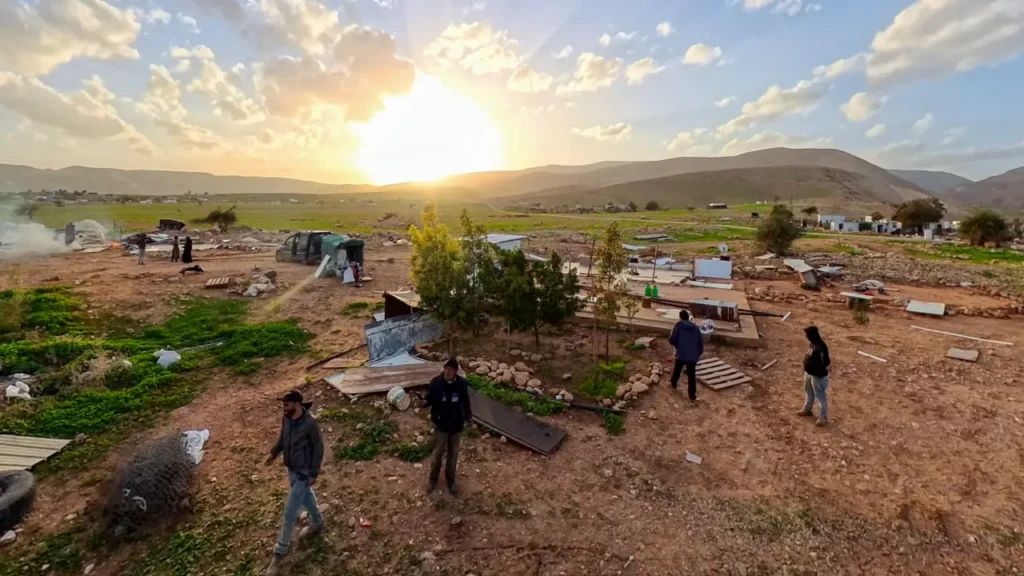
Documentary remains present, but with different approaches. Nonny de la Peña returns with OUT OF THE ASHES, on the Los Angeles fires that she co-directed with Rory Mitchell. “They went out straight after the fires and captured what was lost, what remained and what it means to rebuild,” says Liz Rosenthal. SOLWATA, by Gayatri Parameswaran and Felix Gaedtke (Nowhere Media), looks at climate refugees in the Solomon Islands, with Mark Ruffalo as narrator. RAJ’IN, produced between Israeli and Palestinian voices, places viewers in the West Bank. Michel Reilhac describes it as “very simple, no frills,” but powerful in the way spatial cinema can place the viewer inside a difficult environment.
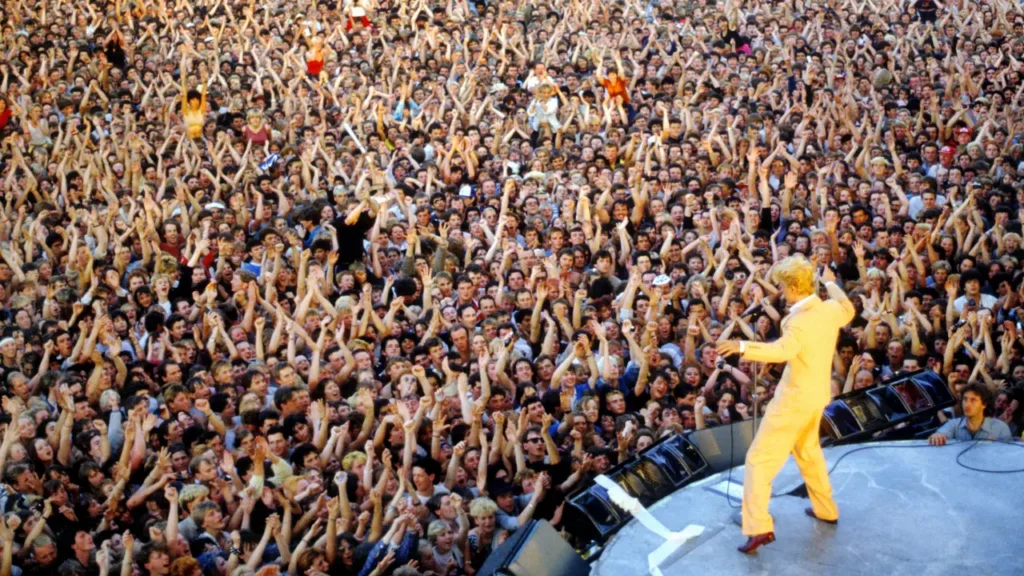
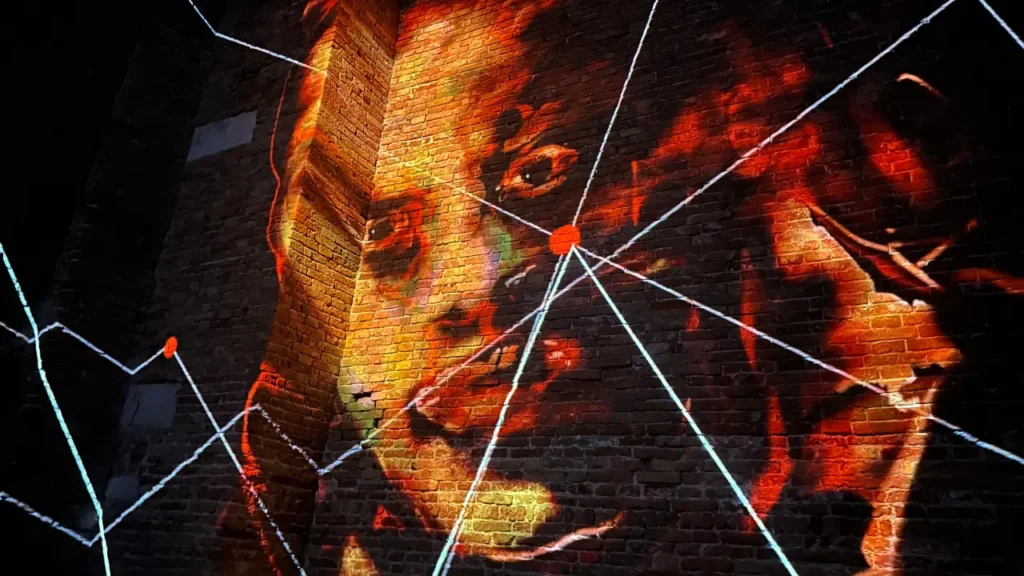
Other works continue to expand what Venice Immersive can include. BOWIE: UNSEEN UNHEARD uses rare photographs by Dennis O’Regan, spatial sound by L Acoustics and multiple screens to build an intimate portrait of David Bowie. “We seem to know David Bowie,” says Michel Reilhac. “What is absolutely remarkable with this project is that all of the pictures used in the show are new.” Liz Rosenthal describes the piece as “very visceral,” driven by sound and by O’Regan’s personal relationship with Bowie.
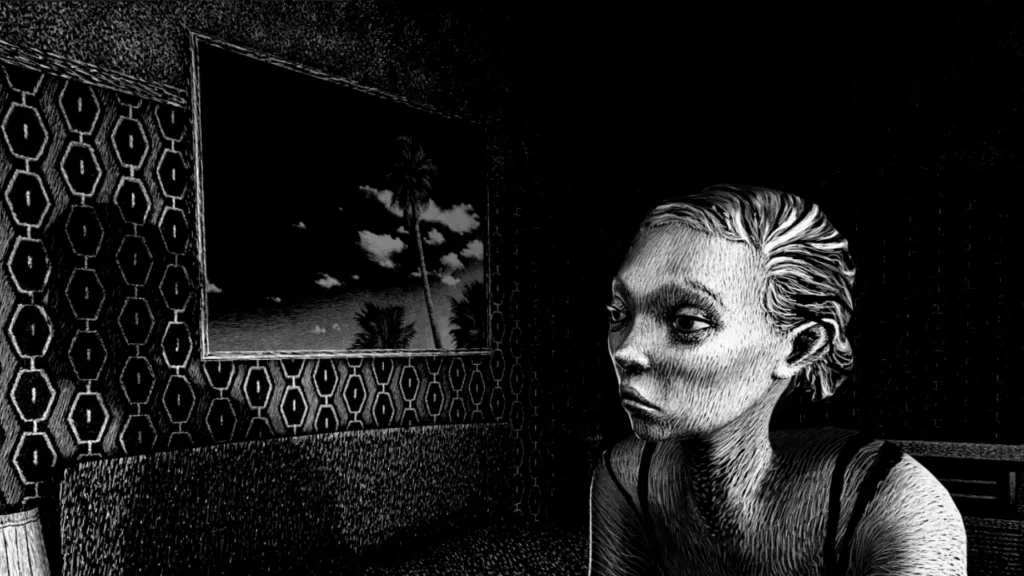
SUNSET MOTEL, the new work by Gilles Jobin with illustrator Thomas Ott, brings motion capture into a black-and-white narrative world. NOTHING TO SEE HERE, by Céline Daemen, takes the form of an interactive viewing box placed near the entrance, where passers-by become part of the work. These projects do not point to one future. They suggest that immersive is becoming more confident in its own plurality.
A community, not a closed circle
After 10 editions, Venice Immersive has helped shape a community. Some artists have returned several times. Others first found international visibility on the island. Michel Reilhac mentions Craig Quintero, whose work ALL THAT REMAINS came to Venice before circulating more widely.
But Michel Reilhac is clear: returning to Venice Immersive is not automatic. “It’s not a given,” he says. “Every time we really look at the work.” Some artists have become close to the curators over the years, which can make refusals difficult. “But in the end, it’s the work that counts.”
Liz Rosenthal also insists on balance. This year includes major brands, Hollywood names and large-scale works, but also new makers and independent voices. “We have many completely new artists,” says Liz Rosenthal. “This year has a real indie feel as well as the more blockbuster projects.”
For Michel Reilhac, that renewal is essential. “A community needs a constant influx of new people,” he says. Venice Immersive is not only selecting works; it is bringing together VRChat creators, filmmakers, visual artists, performers, game designers, documentary makers, sound companies, institutions and technology partners.
The link with Biennale College Cinema – Immersive also matters. Michel Reilhac explains that many tutors come from the Venice Immersive ecosystem, and that the programme is being redesigned after its own first decade. “There are no manuals,” he says. “There’s no bible to go by to learn how to make an immersive film.” The next phase will involve more hands-on coaching and more active testing of methodologies.
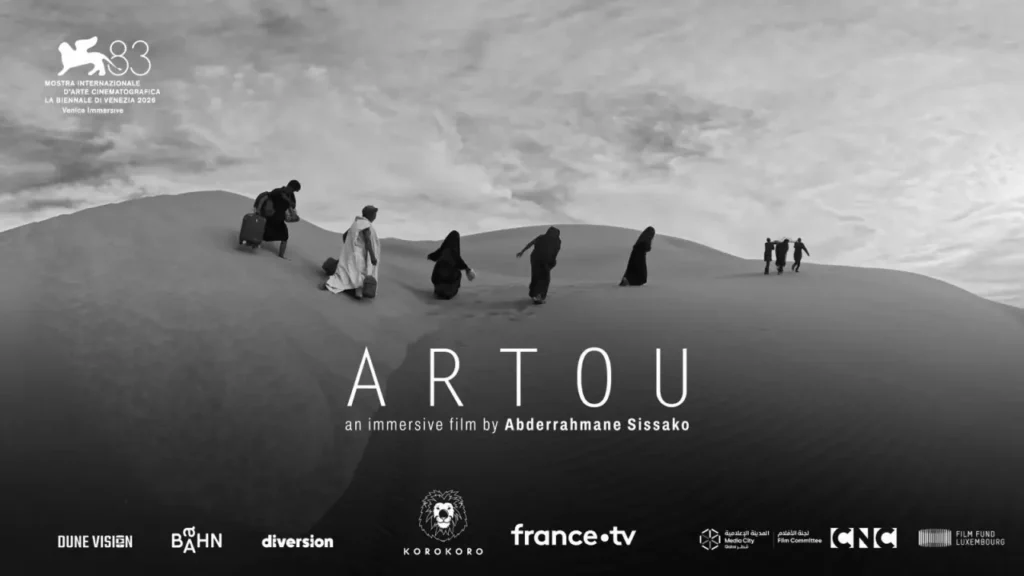
The bridge with the cinema remains open, but carefully framed. Venice Immersive can encourage filmmakers to explore immersive media, but it cannot become a production structure. One example this year is ARTOU, the first VR experience by Abderrahmane Sissako, produced by Omar Sy and shot in Mauritania. Michel Reilhac describes it as “a poem,” connected to origin, death and belonging.
Exhibiting this diversity is still complex. With 68 titles, Venice Immersive benefits from the island, but space, sound, installation scale, budget and audience flow remain constraints. For Michel Reilhac, giving works their own space is part of the curatorial mission: it helps immersive be perceived as a full-fledged art form, not a technical demo.
For first-time visitors, Liz Rosenthal gives direct advice: take enough time. Not only to see the works, but to meet people and compare impressions. Michel Reilhac adds a practical warning: do not underestimate travel time in Venice. Every year, people miss sessions because they miscalculate the journey to the island.
Ten years in, that may be the right image for Venice Immersive: a place that requires time, attention and movement. Liz Rosenthal and Michel Reilhac do not describe immersive creation as a completed story. They describe a field leaving its first cycle behind — still fragile, still uneven, but clearly not finished.



[…] an XRMust interview, Venice Immersive curators Liz Rosenthal and Michel Reilhac say the festival will present two major […]