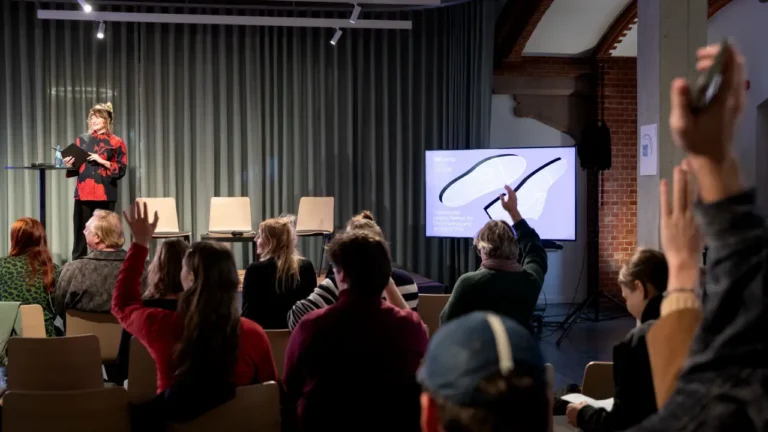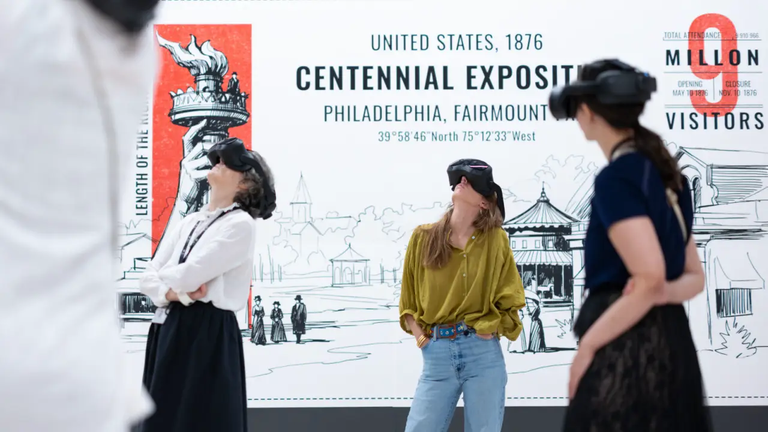
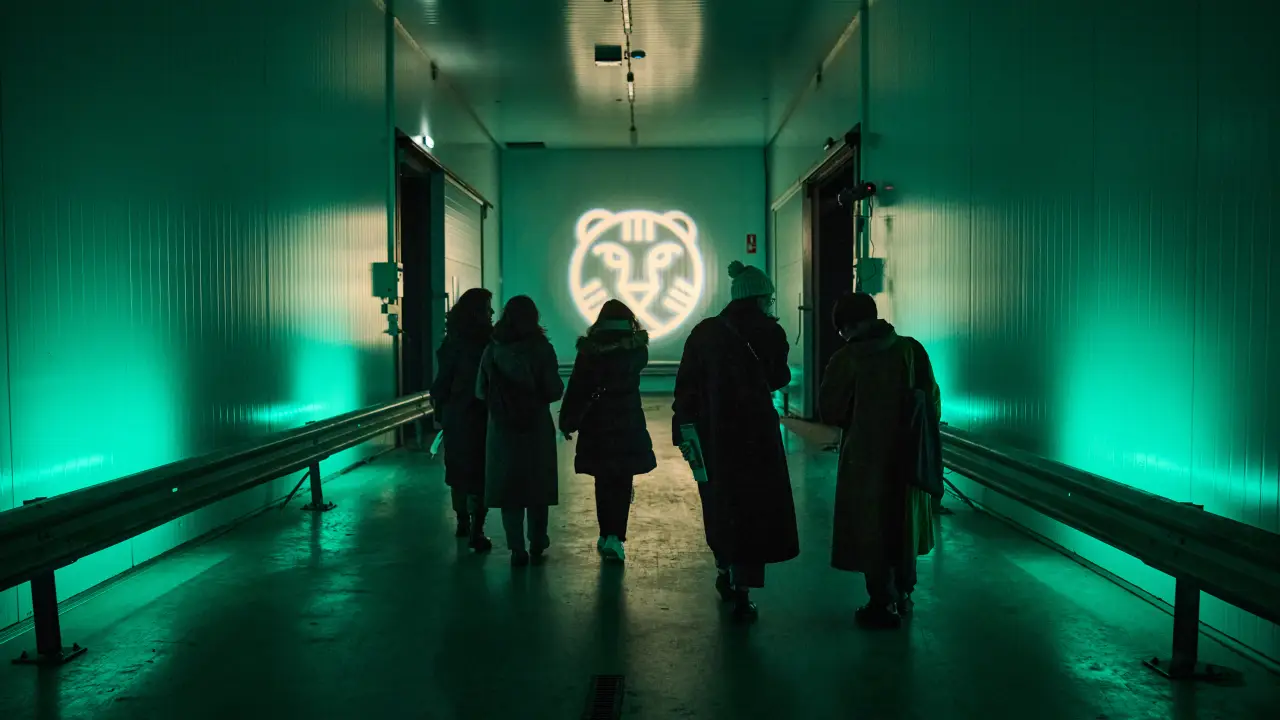
Following our visit to Rotterdam this winter, IFFR’s position in immersive and expanded moving-image culture feels increasingly clear. The festival is not adding XR, installations or live audiovisual forms as a decorative layer around cinema. It is giving them a place inside its own history. In 2026, Art Directions celebrated its 30th anniversary. Three decades after IFFR began opening parts of its programme to works beyond the traditional screening room, the section now sits at the centre of one of the major questions facing festivals today: what happens to cinema when moving images are no longer confined to a screen?
In Rotterdam, the answer is not theoretical. It is spatial, curatorial and professional. With Art Directions installed at Katoenhuis, the launch of Lightroom as a new industry platform, with development projects included, and the opening of submissions for the 2027 edition, IFFR is building a clearer framework for artists working between cinema, visual arts, performance, sound and immersive media. We talked with curator Eva Langerak about the 2026 edition.
Cover: IFFR @ Katoenhuis
This article is part of our French XR in Benelux coverage, a 2026 initiative in partnership with Institut français in the Netherlands, the French Embassy in Belgium, and Institut français du Luxembourg, to promote the dynamism of local ecosystems dedicated to immersive creation. https://xrinbenelux.fr
Thirty years outside the screening room
Art Directions was born from IFFR’s appetite for forms that sit at the edges of cinema. Over the years, the programme has welcomed installations, performances, live music, audiovisual experiments, immersive media and other formats that do not belong comfortably in a theatre. For its 30th anniversary, the section did not turn into a heritage celebration. It used the moment to show why this line of work still matters.
The moving image has changed radically since Art Directions first emerged. The screen is no longer its only destination. Images now circulate through headsets, rooms, stages, museums, public spaces, game engines and projection environments. Artists move between film, choreography, installation, documentary, visual arts and code. Audiences no longer only sit in front of works; they enter them, move through them, listen from within, activate them, or negotiate their own position inside them.
IFFR’s response has been to let these forms sit inside the festival rather than beside it. Art Directions does not ask expanded works to prove that they are “cinema enough”. It starts from another premise: cinema has always been an unstable language, and its future may well be found where it touches other disciplines.
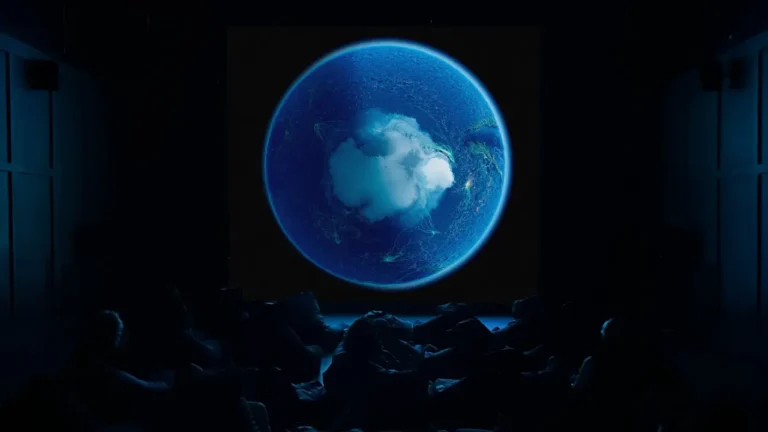
That spirit was visible in Rotterdam. The programme did not operate as a technology showcase. It was not built around the newest headset or the loudest immersive effect. It brought together works that explored space, sound, duration, presence, performance and spectatorship. Some were close to visual art. Others extended cinematic storytelling into new environments. Others worked through installation, live activation or sensory encounter.
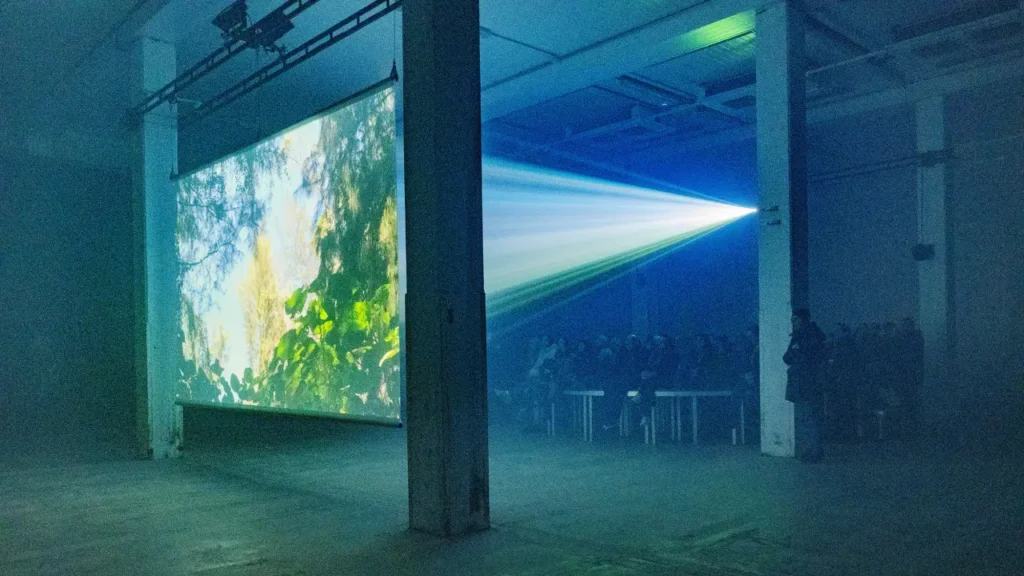
This is where the festival’s history counts. Art Directions has been asking versions of that question for 30 years. The current focus on immersive and expanded media is not a sudden pivot. It is the continuation of a long line of research, made more urgent by today’s tools, expectations and production methods.
Katoenhuis, Lightroom and Darkroom: building a chain
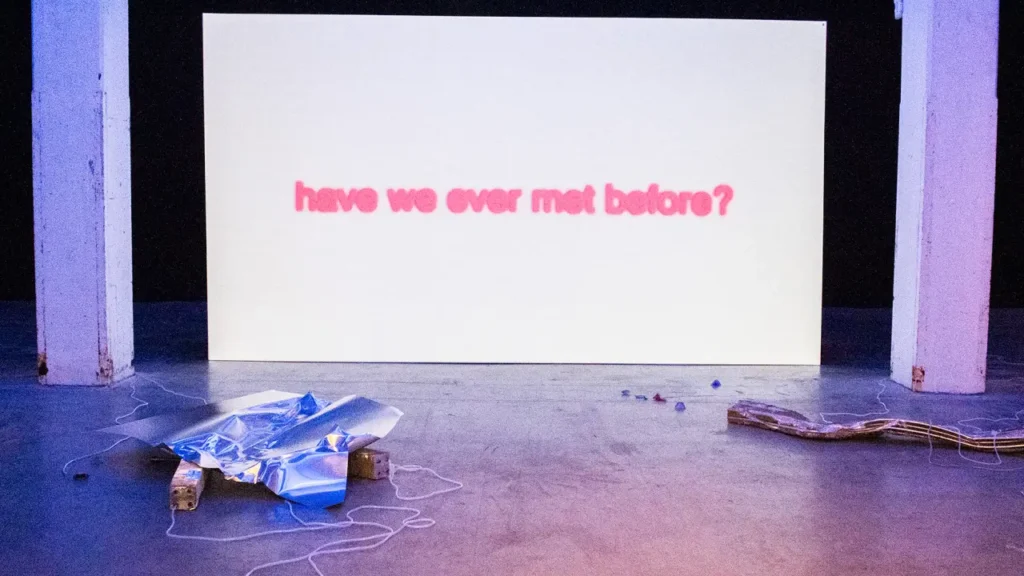
The move to Katoenhuis gave Art Directions a new scale. Located in Rotterdam’s M4H district, the venue changed the way the programme could be experienced. This was not simply a matter of square metres. For works that depend on space, architecture and movement, the building becomes part of the curatorial choice.
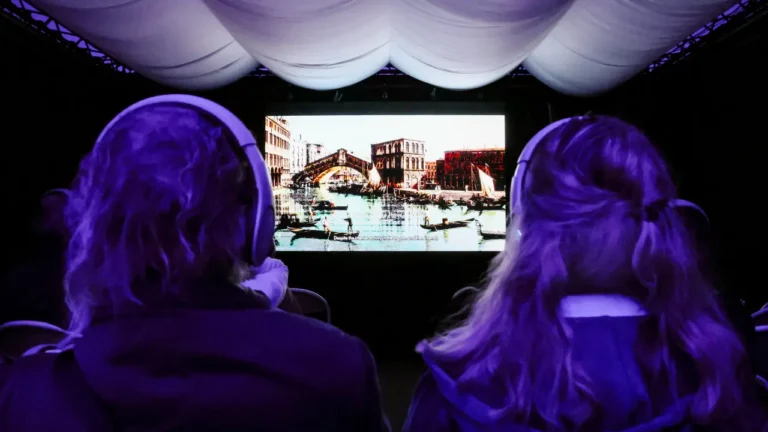
Katoenhuis allowed IFFR to move away from the logic of booths and isolated viewing stations. The industrial setting gave the programme room to create an exhibition environment, with different works placed in relation to one another. Visitors did not move from one cinema slot to the next; they entered a site, crossed distances, shifted attention, and encountered works through a different rhythm.
That was not a neutral decision. IFFR has always been strongly tied to Rotterdam’s city centre and to the proximity of its venues. Taking a major part of the programme to a less central district was a risk. But it also gave Art Directions something it clearly needed: a place where immersive and spatial works could be treated as spatial works.
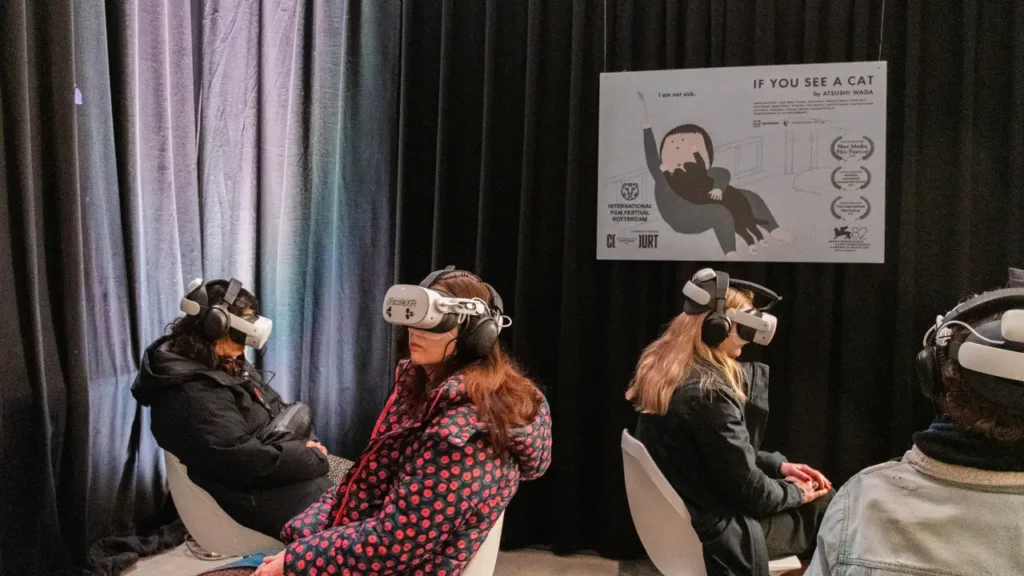
The 2026 edition also marked the launch of Lightroom, IFFR’s new industry platform for immersive storytelling. Its arrival is important because it connects the public exhibition of works with the professional conditions that make them possible. Immersive and expanded works rarely follow the production path of a conventional film. They need early tests, spatial trials, technical conversations, curatorial feedback, venue partners and often a long period of adjustment before they can circulate.
Lightroom gives IFFR a clearer role in that process. By linking Art Directions more directly with IFFR Pro, the festival creates a place where artists, producers, curators, funders and institutions can meet around projects being developed or positioned for future circulation. It also allows the festival to avoid one of the weaknesses of immersive showcases: presenting works without building enough professional continuity around them.
Darkroom remains another key piece of this architecture. As a work-in-progress environment within IFFR Pro, it supports immersive and expanded projects before they are fully finished. In a field where production decisions can determine the future life of a work, this stage is crucial. Development is not only about financing. It is also about form: how the audience enters, how long the experience lasts, what is technically essential, what kind of venue can host it, and how much mediation it requires.
By bringing Art Directions, Lightroom and Darkroom closer together, IFFR is gradually building a chain: development, professional exchange, public presentation. That continuity is still rare. Too often, immersive works move from one showcase to another without enough structural support between them. IFFR’s model suggests a more coherent pathway.
Opening the frame for 2027
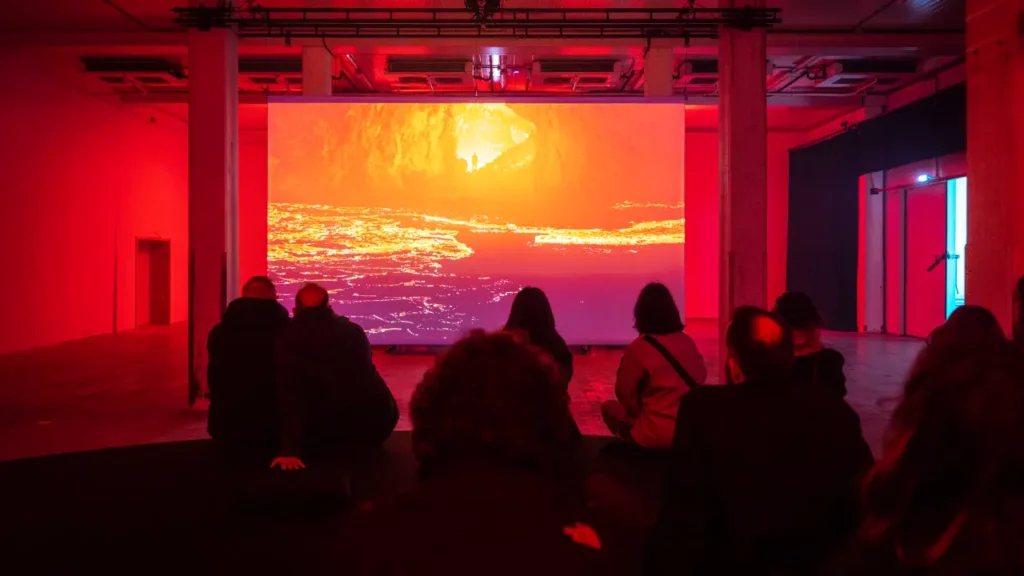
One of the strongest aspects of IFFR’s current direction is its refusal to separate formats too cleanly. Art Directions is not a VR section. It is not an installation section. It is not a performance sidebar. It is a place for works that cross those lines.
That matters because the most interesting pieces in the field often do not fit the vocabulary used to describe them. A headset work can behave like an installation. A performance can be driven by real-time images. A film artist can enter XR without abandoning cinema. A visual artist can use cinematic grammar without making a film. The categories may help with logistics, but they rarely explain the work.
IFFR’s 2026 edition seemed to understand that. The programme placed different practices side by side without forcing them into a single identity. What connected them was not a format, but a question: how can moving images produce an experience when they leave the standard frame?
The opening of submissions for IFFR 2027 extends this direction. The next festival will take place from 28 January to 7 February 2027. For Art Directions, the call welcomes works across immersive media, XR, interactive installations, sound//vision and other expanded forms. The deadlines are already set: sound//vision submissions close on 7 August 2026, while immersive media submissions close on 14 August 2026.
2027 Submissions
Art Directions is the space where the festival steps out of the screening room and pushes the limits of what cinema can be. We welcome submissions of immersive media, interactive installations, performances, live music and visual art.Art Directions: sound//vision – Audiovisual live performances are invited to apply in this section. Final submission deadline: 7 August 2026
Art Directions: immersive media – Immersive media projects, XR experiences and interactive installations are invited to apply in this section. Final submission deadline: 14 August 2026
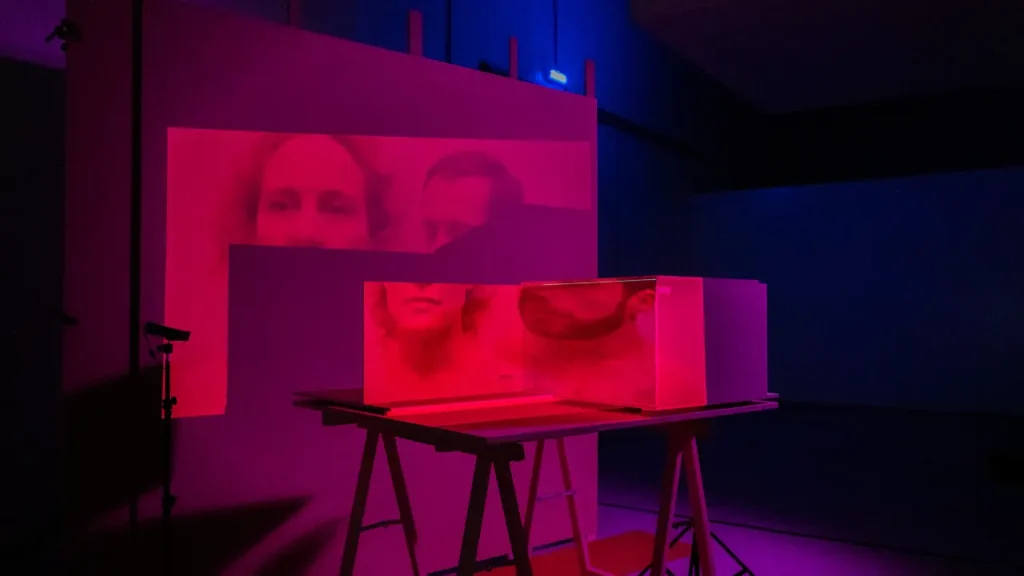
The call is not aimed at works that simply follow a fashionable format. It is looking for projects that push moving-image culture into new conditions of presentation and experience. For artists and producers working across disciplines, the signal is useful: IFFR is opening the frame rather than narrowing it.
Projects do not need to fit a rigid definition of XR or installation to be relevant. What matters is how they use image, space, sound, interaction, audience presence or live elements to expand the language of cinema. This is particularly important at a time when many creators are questioning where their work can circulate. Festivals remain essential, but they are no longer enough on their own. Museums, digital art centres, cultural venues, public spaces and location-based operators are all part of the wider future of immersive and expanded works.
The anniversary of Art Directions could have been treated as a retrospective moment. Instead, it underlined the programme’s present usefulness. Thirty years on, the questions it raises are no longer peripheral. They sit at the centre of how festivals, museums and cultural institutions are rethinking the moving image.
IFFR’s current work around Art Directions, Lightroom and Darkroom shows a festival trying to build more than a showcase. It is shaping an environment where expanded cinema can be exhibited, discussed, developed and connected to future partners. After 30 years, Art Directions has not settled into heritage status. It has become one of the places where the festival can test what cinema may become next.
Update: IFFR Pro is strengthening its commitment to immersive and non-linear storytelling with Lightroom, its industry platform connecting XR, VR, interactive and large-scale installation projects with the wider IFFR Pro and Art Directions ecosystem. Launched in 2026, Lightroom was designed as a bridge between artistic experimentation, professional exchange and future circulation, bringing immersive projects into a clearer market and development framework at IFFR. Within this platform, IFFR now opens submissions for Lightroom Expanded, a new development programme aimed at artistic projects that seek to reach larger, shared audiences. Developed with IFFR, UPscaleXR and DASHXR, Lightroom Expanded supports creators and producers working with VR, AR, MR, 360°/180° video, location-based experiences, WebXR and other spatial-media formats, with tailored guidance on storytelling, audience design, technical and production choices, audience flow, touring and distribution. The call is open internationally to projects in development, pre-production or production, as well as existing works being substantially adapted for a new presentation or touring model. The final deadline to apply is 15 September 2026, 23:59 CEST.