Andrés Jarach is a long-term narrative creator, who has explored many formats and directs – often with his lifelong accomplice Gordon – immersive experiences or – solo – traditional documentaries. Looking at a young but energetic creative industry, he became in 2019 curator of the Smart section of FIPADOC in Biarritz (France), a television and documentary festival. A few weeks before their announcement for the 2021 edition, we took a look back with Andrés at this crossroad between the now established audiovisual world and the XR new media.
Update: New dates, 12-17 Juin 2021
FIPADOC: a relaunched Smart section
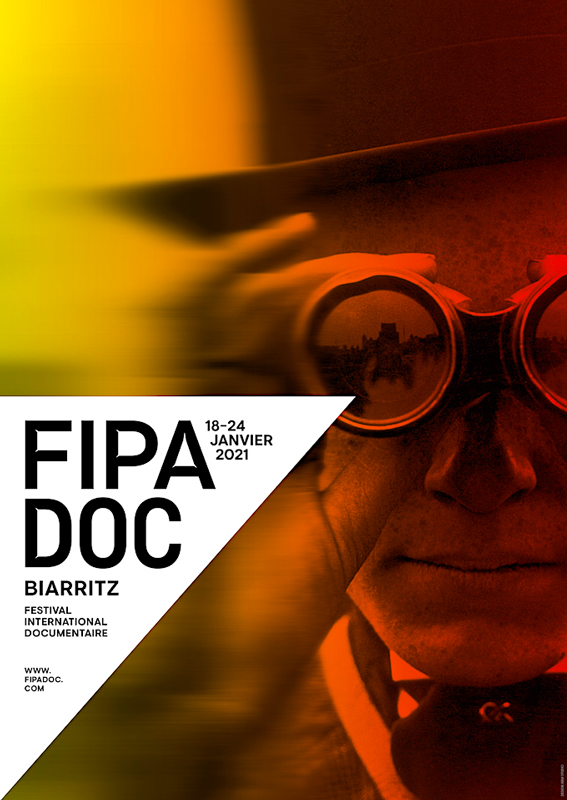
Andrés Jarach – Unless there is new restrictions from the french government in January, we would like to see our event FIPADOC take place in real conditions. The festival will announce all this on December 10. The FIPADOC Biarritz (January 18-24) exists since 1987, but was taken up in 2018 by a new team: Anne Georget and Christine Camdessus, who gave a new direction around all documentary forms. I joined them in 2019 to take charge of the new media Smart section – that previously existed. We especially wanted to set up a competitive section, with a real reward. It is important to really consider new media works and their authors – I had made this point before when I was on the Scam comitee.
A. J. – With our work at Smart, it is above all a matter of offering a competitive section, but accessible to a general public and to audiovisual professionals who don’t know anything about immersive contents. The idea was therefore to offer a real best-of of recent experiences, without competing with major european and worldwide events already established such as IDFA in Amsterdam, Sundance, Tribeca… I make my selection through a call for projects, but also my own viewings. We work on the quality of the works presented, and their ability to reach an uninitiated audience. My final objective is really the meeting between the audiovisual industry who visits the festival, and new formats. Some are obviously already acquired, like Arte and in a more “fluctuating” way France Télévisions.
A. J. – We also offer meetings and workshops, including the Smart Lab (link). And it’s almost a meeting created for people who want to start, not necessarily expert digital producers! For the Lab we really select projects in their early stages of development, with at least an author – producer duo.
Working on the role of the audiovisual broadcaster
A. J. – The audiovisual sector, in terms of broadcasters but also a large number of producers and directors, may still have an archaic vision of digital creation. It is limited to the web series most of the time. This is why our work in festivals is important to make them aware of all the possibilities that may exist. In supporting our industry, Arte has really matured on the subject, and I hope they will move forward with new things – especially after they closed their Arte360 app.
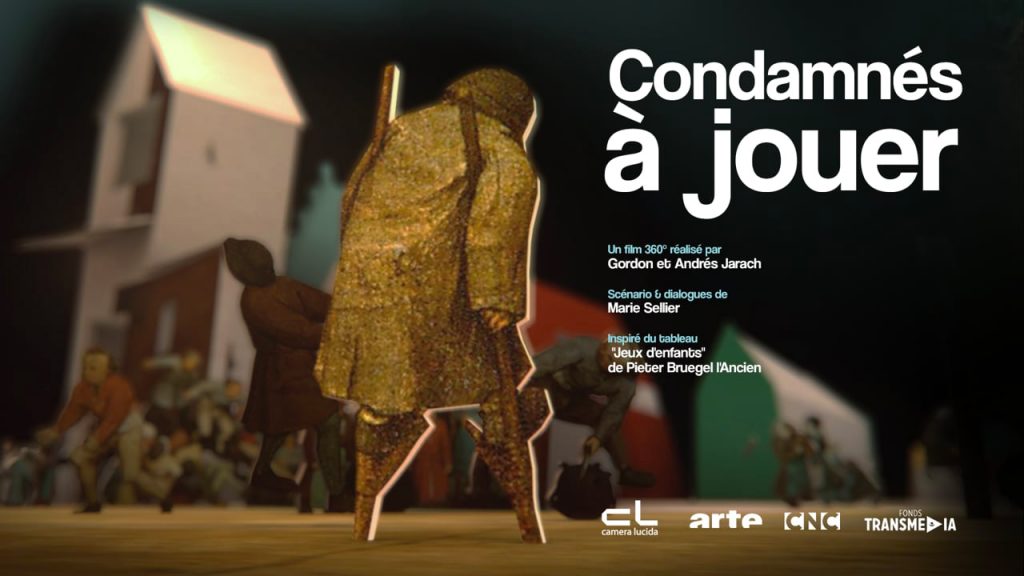
A. J. – France Télévisions is more on a research and development process – and the new role of Jeanne Marchalot there will undoubtedly revive new ideas for them – the discussion with her is fascinating. We can also try things with the Slash platform, of course, or documentaries at France Télévisions, where they have a real availability to experiment with forms.
A. J. – In France we are very lucky to be able to be founded by the CNC (link) and by broadcasters. But above all, television manages its own thing, traditional TV programs. I do not yet see any real mutation towards digital creation – except Arte. There are people in charge in audiovisual groups who obviously try things out, and are real experts in new media, but it remains on the margins. We are now setting up projects with broadcasters and many institutions, with real interest from everyone. But you have to move on to mainstream distribution to ensure XR’s long-term life.
Creating for a real audience
A. J. – As a creator, I have experienced several eras of storytelling, notably the emergence of interactive web documentaries which were thought to endure at the time. We had an enormous ambition, of research, forgetting to speak to the public.
A. J. – Today I look at existing formats without thinking about revolutionizing them. For example, with my creative partner Gordon and Marie Blondiaux at Red Corner – and France Télévisions – we are developing an AR app project for libraries called BIBLIOQUETE. It will be a series, the first episode of which starts from Timothée de Fombelle, who tells us about his youthful readings. From there the public will be invited to find the works cited in a library and bring the characters to life in AR. We want to deploy the universe of an author, his own works.
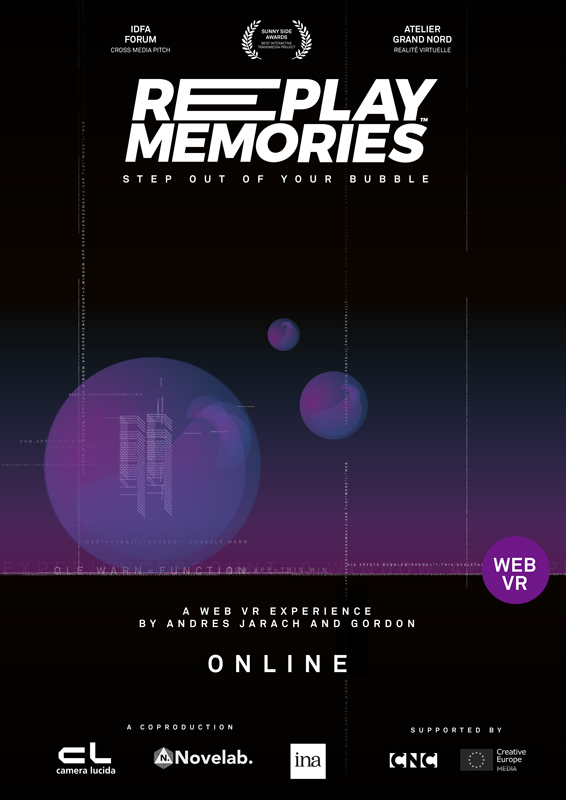
A. J. – In XR, there will always be cutting-the-edge authors who will be looking for new narrative tracks – such as Pierre Zandrowicz, Céline Tricart, Charles Ayats or Mathias Chelebourg in France – but for my part, I want above all to find a way to discuss with the public, and perpetuate the new forms. This is also my approach at FIPADOC, as a curator.
A. J. – I don’t want to think about the market that might exist, because there are no rules per se. With Gordon, we often think about where we could show our work first – not the support. BIBLIOQUETE is a good example of our approach, meeting our desire to create and question an already existing audience. We must not exhaust new writings with innovative projects that stay research & development products.
Sustaining the role of the festivals
A. J. – A creative festival is essential in reaching out to the public for us. We were lucky to have this year NewImages, which has taken on a real international scope. We must welcome real reflections around the juries – as at FIPADOC – which are more and more relevant, curious and come from other creative industries. This is an important element in creating real feedback on our selections – event in the composition of financing commissions, for example (especially in 2014 for the CNC with the appointment of Céline Sciamma as chair of the new media commission). Award-winning films seem more likely to speak to the general public, in my opinion.
A. J. – We see the arrival of many players interested in innovation and creation: institutions, museums (notably with the success of immersive exhibitions like POMPÉI in Paris, or the creation of a VR space at the Natural History Museum) etc. Very clearly they are also turning into real and long-terms help for our industry. With their interests, real financing must develop – perhaps at an international level. In all of this, the support of broadcasters remains decisive.
More information about FIPADOC 2021 on December, 10!