PAPER BEAST is an independent video games that managed to have a real life in festivals in a few months… And online! The new creation of Eric Chahi (ANOTHER WORLD, HEART OF DARKNESS, FROM DUST), multi award-winning at Les Ailleurs 2021 festival or Raindance 2020, offers a poetic journey but not without pitfalls. For the gamers, and for the others too.
From 8-bit to virtual reality
Eric Chahi – I started working in the video game industry in the 80’s, with 8-bit machines, Amstrad… And I always kept a strong, independent author role, to develop my own creations. Even if I took a big break at one point, I always knew that video games were my field of choice. In 2016 I created Pixel Reef, a production structure based in Montpellier (France) where I freely led a small team of about 15 people to create my first virtual reality game, PAPER BEAST.
E. C. – In the 90’s, I had already tested the arcades in London that played games like DACTYL NIGHTMARE, and I was intrigued by it – even if I don’t do the same thing. I was already fascinated by the 3D images; at the end of HEART OF DARKNESS you could see some sequences in anaglyph. Then there was the Virtual Boy, other interesting immersive devices. If I work today with HTC headsets, I can see that the Oculus Quest headsets are greatly democratizing VR. The PSVR is not to be ignored either, especially because it is very comfortable!
E. C. – PAPER BEAST was conceived from the start as a VR work, under Unity. Virtual reality seduced me for the immersion in a tangible space, but also for the interaction possibilities of the first Vive – and today the Valve Index. It’s very different to develop for VR, especially for technical reasons. And the creative potential of virtual worlds is barely scratched the surface. Video game tools – like Unity, Unreal – are not yet optimized for this use.
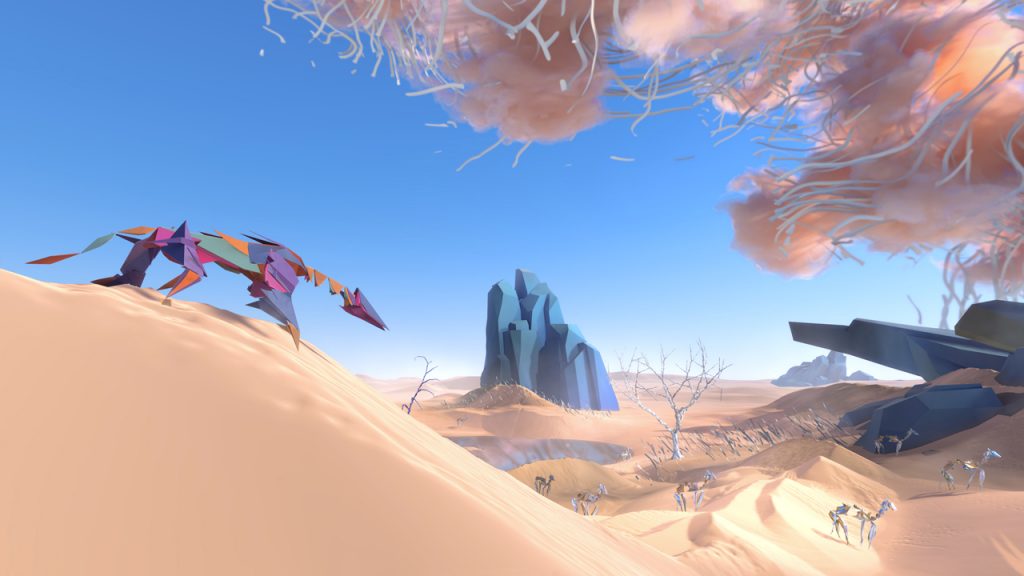
PAPER BEAST : the time of development
E. C. – PAPER BEAST is a progressive amalgam of ideas, with a starting point in terms of theme: creating a game about life, about movement. It’s something that fascinates me. The passage of time, the changing landscape, the leaves of a tree… I wanted to deal with this kind of sensations that evolve with the context, not to mention of course the animals in the game, their own way of moving. And then one day I discovered the Boston Dynamics robots, with these adaptive but disturbing autonomous quadrupeds – not like in PAPER BEAST. It’s something that inspired me in terms of gestures and movement. So I created a 2D prototype with a physical engine of segments.
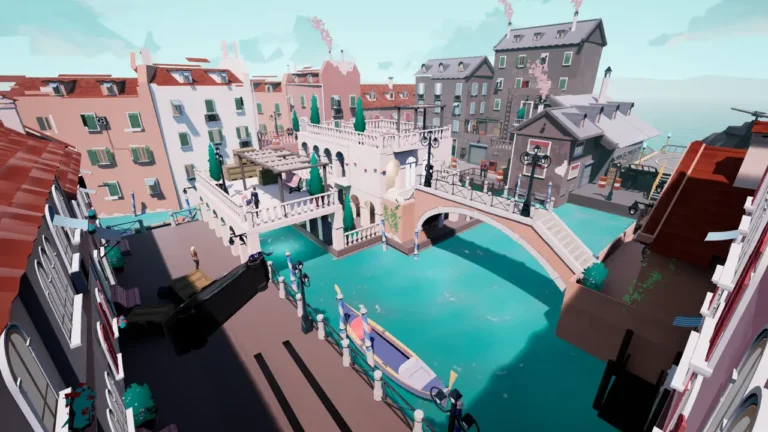
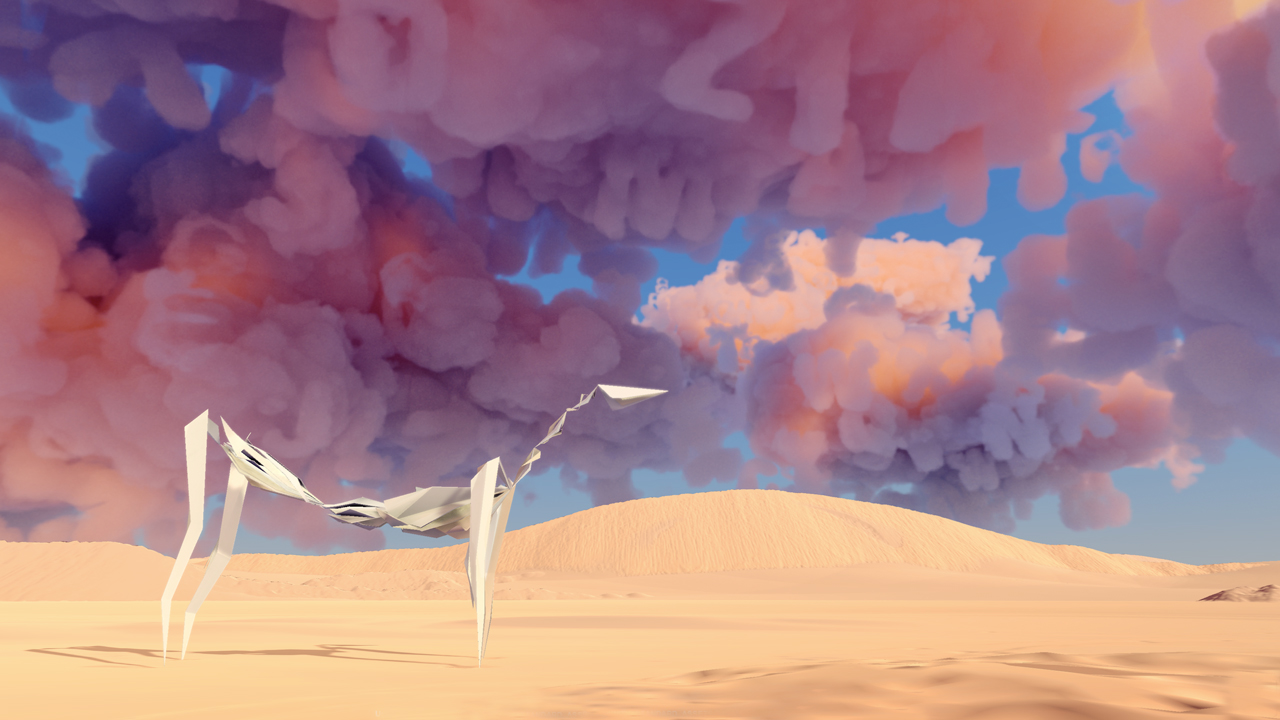
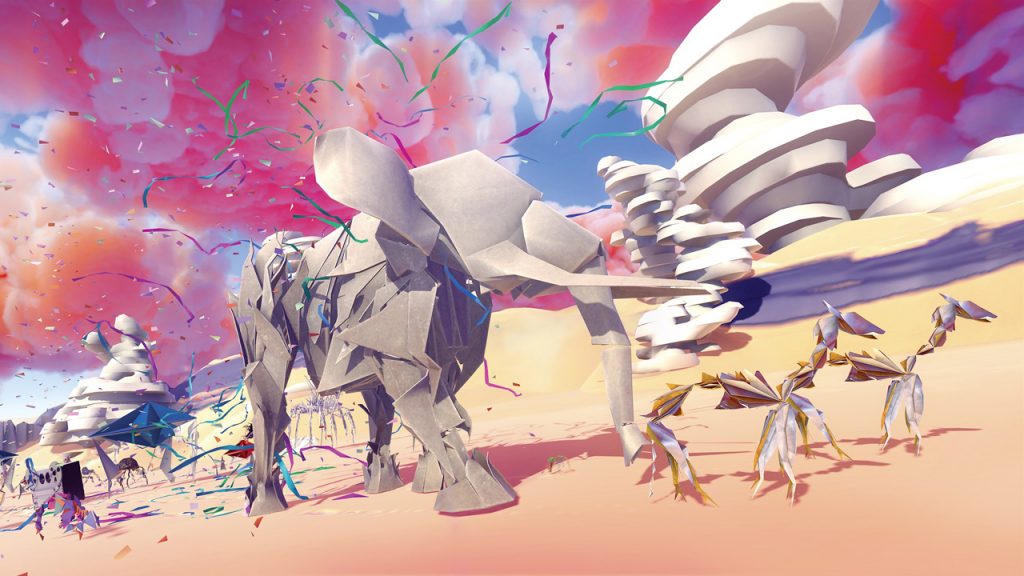
E. C. – In the meantime I developed another interactive project for the Cité du Volcan in Reunion Island, a volcano simulator. Only then, once the team was formed, I took the prototype and imagined its real form. We quickly chose paper as the material to explore, because of its physical and visual faculties. We free ourselves from a realism that can trap and disappoint. Our choice of visual style had an impact on the animals’ skeletons, with very particular movements. And aesthetically, it was very convincing.
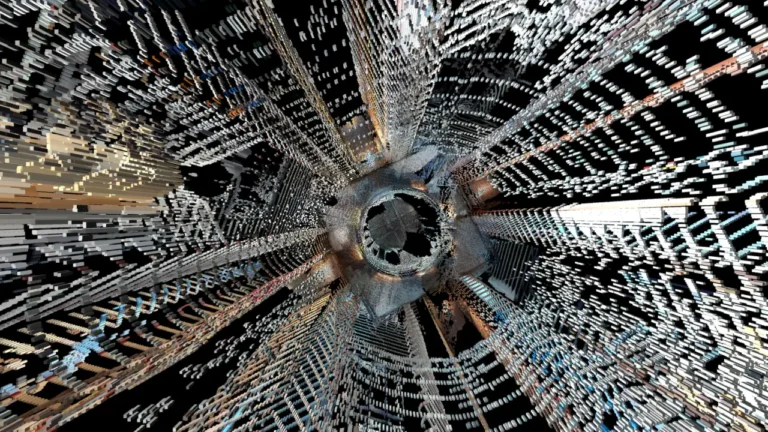
E. C. – After six months, I had another idea: to create a hybrid world between this will of life, of fauna and flora, with the data. As if it existed in a phantasmagorical datacenter… I also wanted to talk about information, data – a bridge between real and artificial. The universe then crystallized, and our path became quite clear. I had the idea, the chapters, some strong images in mind (the cage at the beginning, with the red curtains, for example). But the creative process was not an obvious straight line.
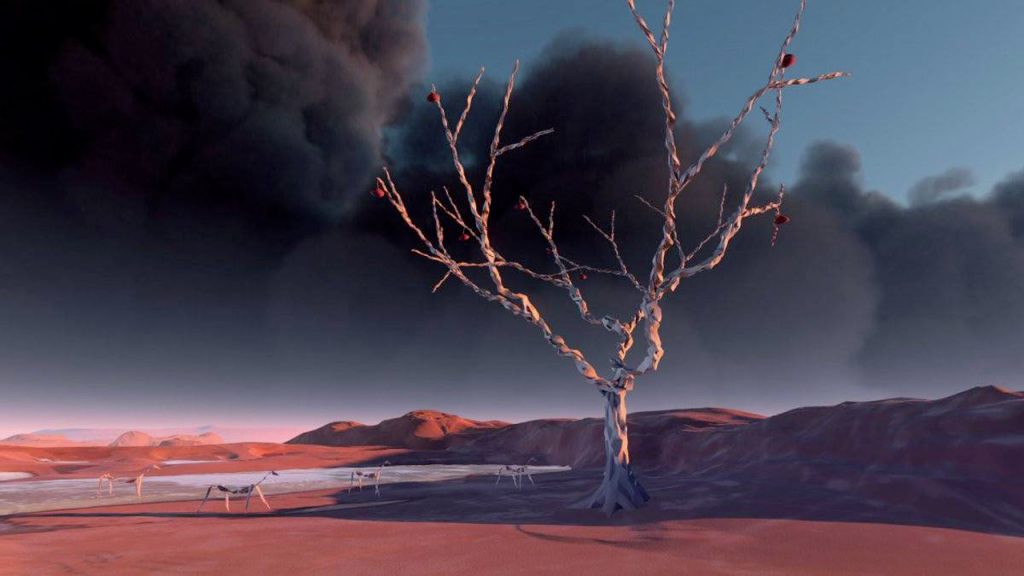
Bind the player to the proposed universe
E. C. – I wanted the narrative to be centered on the relationship between the player and the animals, in a totally changing environment. There are surreal moments in this long journey. The art director even went beyond the concept of paper animals, while keeping the physiognomies simple, minimalist. This is probably what gives PAPER BEAST this poetic, joyful aspect.
E. C. – The creatures are fragile. We spent a year balancing their interactions, and finding the right sensitivity. Their animation is parameterized, directed by algorithms that were designed and tuned to find that emotion. The physical events of the world move the story forward, like a paper storm for example. The purpose is above all poetic, surrealist. And if we can propose artistic paintings in each sequence, in the background we find the notion of datas, of codes.
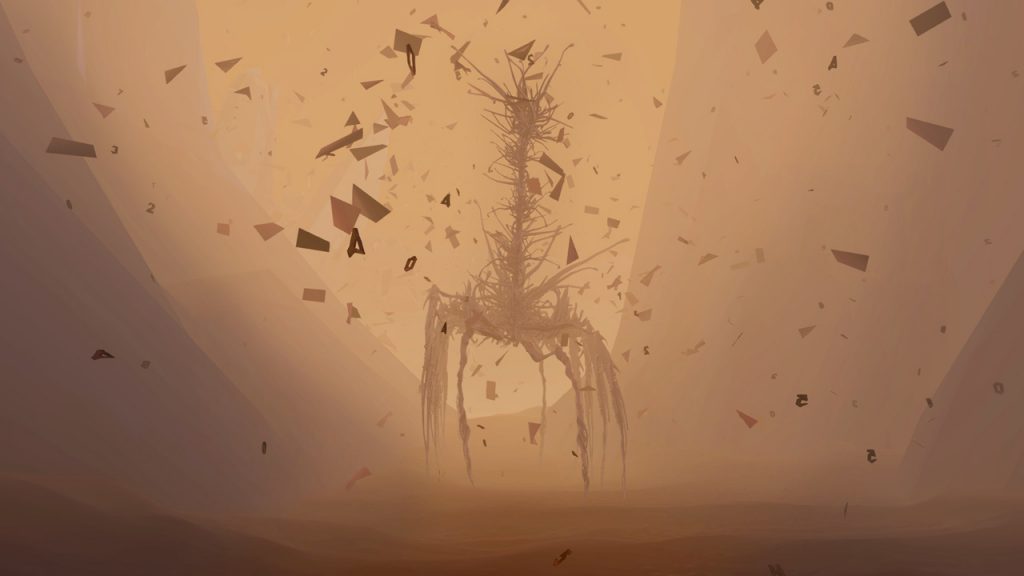
VR and interactivity: a future to discover
E. C. – Video game engines are widely used for their attractive visual possibilities. For my part, I remain a little frustrated with the interactions. To manage them, to code the behaviors, there are different computer languages according to the platforms – we can adapt but it’s a pity not to manage the interactions in a more intuitive way. It’s the poor relation of the development, whereas we could go much further – the visual evolution of the engines is more important comparatively. I chose a more algorithmic approach to work on PAPER BEAST, and propose a form of freedom to the viewer and interactions that are not imposed.
E. C. – It is what is happening in the world that guides the viewer, without providing too obvious reference points. This is the opposite of the current trend in video games. But I wanted to open up the imagination, to let the viewer decide. There are certainly unavoidable moments, but the narrative unfolds at the pace you want. We channel rather than impose. In the end, the feedback from seasoned players and beginners was similar, and very positive, on our proposal. The experience was a memorable one for many.