
“You immerse yourself as a spectator, then you become a participant” – Michelle Kranot (THE HANGMAN AT HOME)
When we discussed THE HANGMAN AT HOME with its co-creator Michelle Kranot, it was only one of 2 projects produced by the french company Floréal Films on competition at Venice VR Expanded. Since then, it won the Grand Prix Prize! We spoke with Michelle about the construction and emotions which are at the core of this experience inspired by Carl Sandburg’s poem.

Developing THE HANGMAN AT HOME – From 1 poem to 3 stories

Michelle Kranot – The piece that we showed at Venice VR Expanded, THE HANGMAN AT HOME VR, is a single user experience. One of the challenges we have with this project is that it is also a multi-users installation AND an animated short film! They all have different aspects, even the animation is different. We realized how difficult it is to describe this to people around us, and to the media. Virtual reality is often perceived as a technology, but I see it as a body of work, an interdisciplinary – artistic – conversation. With THE HANGMAN, all 3 parts of the projects are born from one single poem, but now exist separately.

M. K. – We came across Carl Sandburg’s poem many years ago. He is a very influential literary figure in the USA, and more and more in Europe. I think people are really interested to see how artists react in time of change, during a revolution. From the beginning we started to imagine the 3-parts of the project. Our last film was a VR project, SONGBIRD, but before that we did NOTHINGS HAPPENS which was an animated film first. Then we adapted it into VR. With THE HANGMAN AT HOME it was a different process. It was born at the same time in 3 ideas of exploration of Sandburg’s work.

A story of sequences – Building an immersive story

M. K. – The film – which has not been released yet – is not linear. It has a very formalistic approach but we wanted the different stories (some you don’t see in the VR film) to unfold from beginning to end. In VR, you’re the one that can choose when to step in or not. With our animation technique which is quite unique to this medium – a 2D hand painted frame by frame animation – its adaptation to a 3D immersive environment needed more a theater approach. We basically put ourselves into a theater piece, with a headset. We designed it as a stage you can interact with. We’re not gamers, we didn’t know where the technology would go when we started this – we had a great team to understand that. It’s more about the story itself.

M. K. – We did expand the original story for the short film and the VR experiences. We worked around the essence of the poem, with the main question in mind – and a visual interpretation of it. Moving from one medium to another, we had to keep that in mind to work around the layers of the story. The VR demands an interaction, and the story expands naturally to work around an immersive space. We create few things the user can do (lighting a fire…), very easy to use, very mundane actions. It has to keep the user busy, but also to reflect on our own insignificant actions everyday. And what are the implications of all these small interactions? We had to find a way to express all these questions. And through all these interactions, you follow the story, you understand it chapter by chapter. You immerse yourself as a spectator, and with few call-of-actions you become a participant. For us it’s great to create a playground for everyone to be part of.

M. K. – Editing was part of the fun! It’s one of the things that we can do as directors in an immersive environment. We have new tools to use in VR. Again, we had experiences before in the animation industry, live performances as well. How do you edit when you’re on stage? This is what scenography is all about. Dramaturgy. Very basic questions are coming from these creative fields, and we need to adapt them in virtual reality.

Hand painting the virtual reality

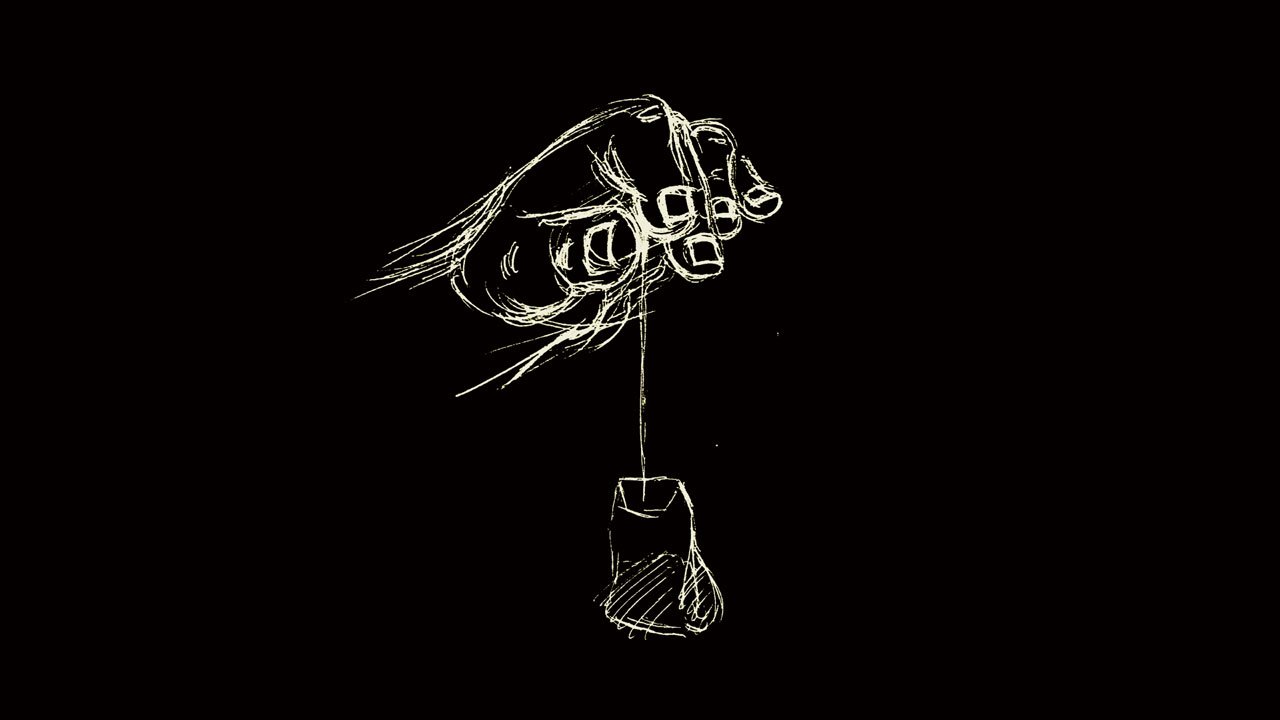
M. K. – Like SONGBIRD, THE HANGMAN AT HOME is hand painted. It can be very technical, but mostly it’s something we love to do. It’s quite messy, which is something you don’t usually find in a digital experience. I like to paint. And it’s a real challenge to adapt it into the VR world. Especially with animation, it’s hard to create emotions that way. With special effects, animated films, you end up connecting with strange characters and big eyes. How do I relate to that? It’s one of the storytelling barriers we have to overcome. And with the hand painting look, it’s even harder. Here we don’t pretend to be real. The glamour of realism is important in our project. It helps to get to the truth of it – and at the same times to remove you from it.

M. K. – The dioramas are hand painted animated sequences, based on real paintings. But the characters were actors and performers. We shot them on a green screen. Then printed, painted frame by frame with acrylic paint. Finally it was digitized in clean, and went through a TV paint pipeline and hand painted digitally to add contours and textures. The film and VR are made both with all these small human gestures. We thought that hands and heads were very important, so we worked them a lot with an idea of cartoon look. All done in France (with Miyu Productions) and Denmark.

Going back to Venice

M. K. – I’m very pleased to be in Venice again, after NOTHING HAPPENS. I do hope that, with the film which will be released later, we’ll have next year the visibility we deserve. It’s quite a good start for the VR chapter! With the festival solo version, and the installation, we have more people to connect with. Even at home at some point! I’m sorry we didn’t get a chance to go and meet people, of course. THE HANGMAN talks somehow about this, the way we consume content and connect.

Leave a Reply

@ Magazine

“To open up an environment that encourages debate and discussion and experimentation” – Lance Weiler, Char Simpson (PROJECT IMMERSE)

Project Immerse is a virtual experience that revolutionizes our use of classic tools like Zoom to touch new frontiers of storytelling What is innovation? There is an open debate around this word moved by the new possibilities offered by the

OZ Experience by BackLight is heading to AREA15

BackLight studio opens its first Virtual Reality park in Las Vegas’ brand new experiential entertainment center: ​AREA15. As a centerpiece for its international expansion, this physical location allows the Parisian studio to show off the French colors of digital creation

“I think the XR industry is on the right track now” – Antony Vitillo (SkarredGhost.com)

Antony Vitillo is mostly known in the XR community as @SkarredGhost, a Torino-based influencer and developer who just celebrated 5 years of blogging on immersive topics. And this year, he joined Louis Cacciuttolo’s VRrOOm company to work on more virtual

“We decided to create an experience on the need to get rid of prejudices as humanity” – İrem Çoban (SIGIL)

Despite the growing sense within me that creative XR is dominated by a few particularly indulgent markets, a compelling case can be made that the sector has never been more internationally represented and inclusive. Perhaps as a sustainable result of

“Coming from traditional animation, I had to learn a new creative vocabulary” – Sunghwan Lee (IHYANGJEONG: CARVING WITH MEMORIES)

South Korean XR production company GiiÖii and Studio Shelter present at SXSW 2022 their latest project, IHYANGJEONG: CARVING WITH MEMORIES. A unique take on exploring our heritage through the story of a 300-year-old old house that descended from Sunghwan Lee’s

“LE BAL DE PARIS DE BLANCA LI is a multi-user live show in virtual reality” – Jonathan Tamene (BackLight)

There’s no stopping BackLight! The French studio spread its wings despite Covid, installing one of its OZ rooms in Las Vegas (and soon in Europe) and taking BLANCA LI’s PARIS BAL to Venice for the Biennale – where the project