
XR Backstory: SPACE EXPLORERS: THE ISS EXPERIENCE, by Félix & Paul Studios
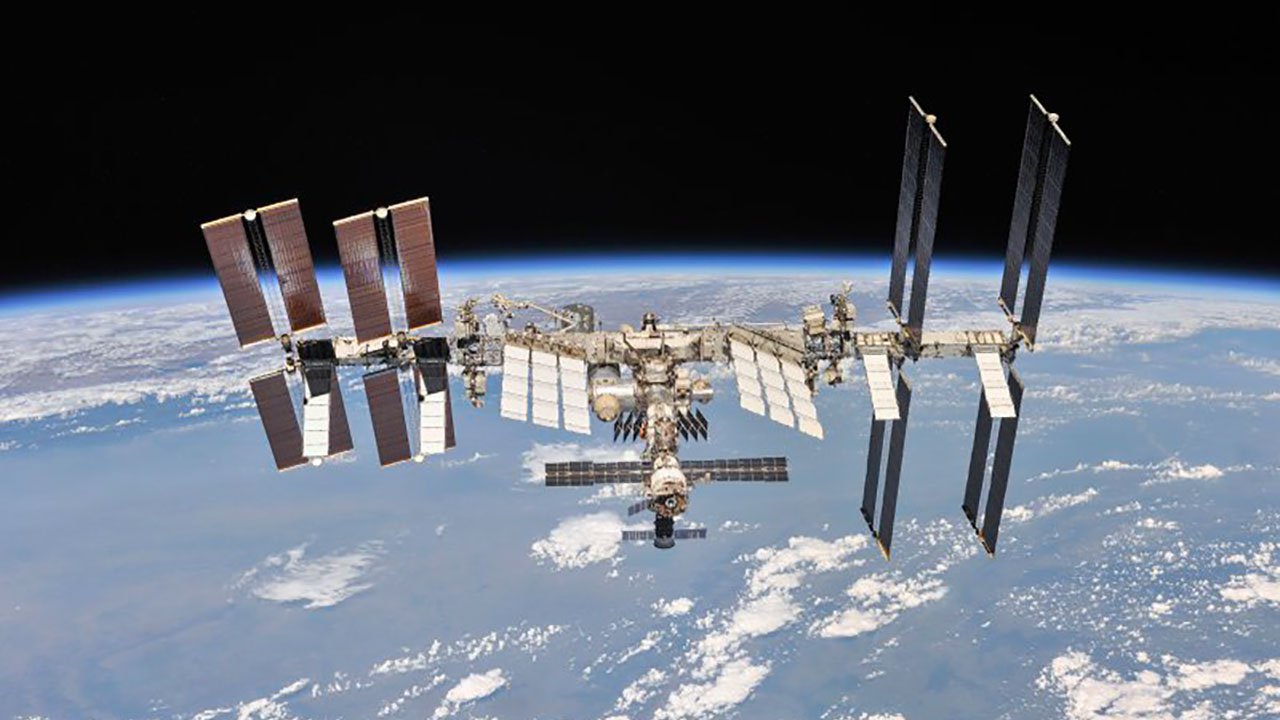
The SPACE EXPLORERS series from Montreal studio Félix & Paul was born from a crazy idea: to follow through on one of VR’s promises, that is to allow us to access distant, fantastic or simply inaccessible worlds. What could be better than space to fulfill this promise?

Following the success of the series’ first two experiments (A New Dawn and Taking Flight), the studio will launch a new album in the fall of 2020 called The ISS Experience. With its collaboration with NASA and its access to the International Space Station (ISS), the experiment pushes back the technical and narrative boundaries of the medium. This is the first time that such filming has taken place on board the SSI, especially with such a large number of hours allocated to media filming on board the station.

In an article signed by Jeffrey Kluger, TIME magazine, partner of the project, we can learn more about the creation of the project. In addition to slipping a word on the camera that the Montreal studio sent to the SSI – a stereoscopic and 360 ° device based on Z-cam Pro cameras – the article tells us more about the specifics of filming. Indeed, since it is impossible to send a film crew to the scene, it was the astronauts themselves who had to be trained to operate the device and take care of the filming.

Canadian astronaut David Saint-Jacques was the first to assemble the camera: “The virtual reality camera is different from all the other cameras on board […] because of its technology of course, since it is a 360 ° camera. But from a psychological point of view as a crew member, it feels like you’re talking to someone ”(“ “The virtual reality camera differs from every other camera we have on board,” he said to TIME, “mainly because of its technology of course, being a three hundred and sixty degree camera. But from a psychological point of view as a crew member, it feels like you are talking to someone.” ”)

Sky is not the limit

“Today, we’ve been filming in the station for a year. We completed around 90% of the shooting, ”says enthusiastic Stéphane Rituit. The work, he says, necessarily evolved along the way.

After three years immersed in working on this project, the studio learned to accept constraints, to embrace political challenges, and to gain maximum knowledge from NASA teams. If the crew members are responsible for filming, the Montreal studio still enjoys privileged access to the station through a unique control center and communication channels direct with astronauts. The objective, however, has remained the same: to tell one of the greatest human experiences, and to offer the general public the famous “overview effect”. David Saint-Jacques, whose mission aptly takes the name of “overview”, describes this effect as the grandiose vertigo that comes when you can see the Earth from orbit. It is a change of perspective that produces a unique psychological effect in the few who are lucky enough to leave Earth.

Looking at the Earth from space is really awe-inspiring.

However, several obstacles must be overcome to achieve this end. “For this project, sending a camera into space was a constraint in itself,” says Stéphane Rituit. “Let us add that it is the astronauts themselves who are the cameramen, that we must manage a large volume of data from the different space agencies, that there are security issues …” Every minute counts and the costs add up quickly: in other words, the only way to do this is to plan very far in advance, because every minute counts.

No plan B

As of this writing, the production team is about to send a second camera to the SSI. This will allow filming for the first time in the history of spacewalks and filming outside the station.

Filming inside the station is a feat in itself. But filming outdoors in space requires titanic efforts.

“Imagine a VR camera system that must withstand more than 200 ° C on the sun side, then minus -100 ° C on the” deep space “side, without any atmospheric pressure to manage the heat”, specifies Stéphane Rituit.

For this type of large-scale project, the technique cannot fail. “There isn’t really a plan B. Plan B is that it works,” says Stéphane Rituit.

Given the craze, the work is intended to be widely disseminated in its immersive VR format, but Félix & Paul Studios are also exploring other formats. The latest news is that the VR experience should start touring festivals in 2020. From autumn 2020, The ISS Experience should also be available in a format for domes and even in a classic 2D format for television. . The studio has also just opened a subsidiary, Félix & Paul Studios Space, which allows it to market their expertise.

Interview by Xavier Kronström Richard for Quebec / Canada XR. Written by Xavier Kronström Richard and Philippe Bédard.
Interview with Stéphane Rituit, producer and co-founder of Félix & Paul Studios.

In partnership with Québec/Canada XR (link) – The original article can be found here in french (link).

Leave a Reply

@ Magazine

“A focus on cross-arts programming, with immersive being the sixth art form” – Luke Kemp (Barbican Immersive)

As we await the opening of an exciting new exhibition at London’s Barbican Centre, titled Feel the Sound (May 22 – August 31), we had the chance to speak with Luke Kemp, Head of Creative Programme, Immersive. Our conversation was

Review⎪From Synthesizers to Synthetic Reality: Jean-Michel Jarre and XR Studio VRrOOm achieve the impossible for Hyper Weekend Festival

After the hugely successful Notre Dame VR experience, legendary artist & producer Jean-Michel Jarre returned with VR studio and metaverse architects VRrOOm for “OXYMORE” as a part of Hyper Weekend Festival (France). The hybrid event took place simultaneously at the

“We want to explore our creative universes to the maximum, on many supports” – Antoine Cayrol (Atlas V)

A very active figure in the XR industry, Antoine Cayrol is the co-founder of Atlas V studio (and before that of OKIO STUDIO). Production, distribution, networking… He seems to be present on all fronts, and has not reduced his presence

“There is a real desire for the public to discover inaccessible environments like Space” – Amaury Solignac (Orbital Views)

Specialist in extreme environments, psychologist by training, Amaury Solignac has been running for more than 8 years a production company of ultra-realistic experiences, Orbital Views, whose goal is to completely immerse professionals (but also the general public) in unknown universes

“It’s very positive to see that storytelling is first” – Sebastien Lefebvre (360 Film Festival)

Paris-based event SATIS-Screen4All (new merger between 37-years old SATIS and Screen4All Forum) is a 2-days show dedicated to creation (...)

“I want to reach people outside of the XR community” – Tom Ffiske (Virtual Perceptions)

He is one of the voices of the new immersive creation in Europe. Based in England, Tom Ffiske writes a newsletter twice a week (Wednesdays and Sundays) dedicated to XR news. Also a consultant and marketing specialist, he accompanies various