
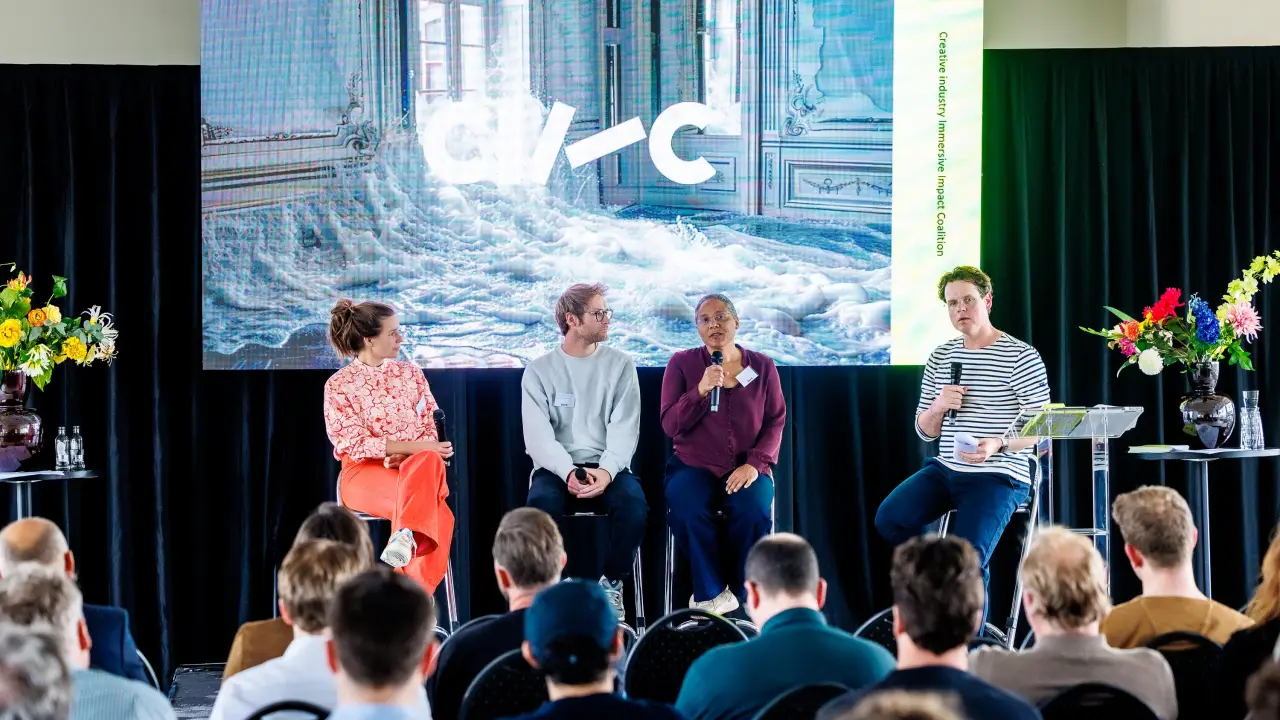
In the context of the international structuring of XR, the Netherlands has, in recent months, set up a national program dedicated to accelerating immersive applications: XR, augmented reality, mixed reality, etc. Entitled CIIIC (Creative Industries Immersive Impact Coalition), it aims to make the country a champion of immersion in Europe. Presentation of the CIIIC roadmap.
Cover: 📸 Ben Houdijk
At a time when immersive technologies are being adopted by many economic sectors, the Netherlands has decided to support its ecosystem with a major national program. The ure. Creative Industries Immersive Impact Coalition (CIIIC) brings together a wide range of players: creators, developers, producers, researchers, companies, public organizations, and investors. “Our first challenge lies in bringing together very different worlds. Everyone speaks a different language and we have to learn to work together,” says Heleen Rouw, program director. Indeed, CIIIC aims to bring these different components together to accelerate the deployment of immersive experiences in cross-cutting contexts such as health, education, industry, but also culture and entertainment. “We take a broad approach to immersion, which can involve anything from a smartphone to virtual reality,” explains Heleen Rouw. “What interests us is how we immerse ourselves in an experience.”
CIIIC was created based on a shared observation by players in the creative industries in the Netherlands: while immersive technologies offer clear economic potential, their development remains hampered by several obstacles. These include a lack of training and specialized skills, a lack of dedicated infrastructure, and an ecosystem that remains highly fragmented. The program is funded by the National Growth Funds, with the Ministry of Culture, Education, and Science as the initiator and leader of the program. “The program ultimately secured €200 million for five years. The project was gradually developed between 2022 and 2024, and we actually launched the first actions in April 2025,” she explains. In addition to this budget, there are various co-financing mechanisms, including private investments required by certain schemes, bringing the total budget to around €275 million.
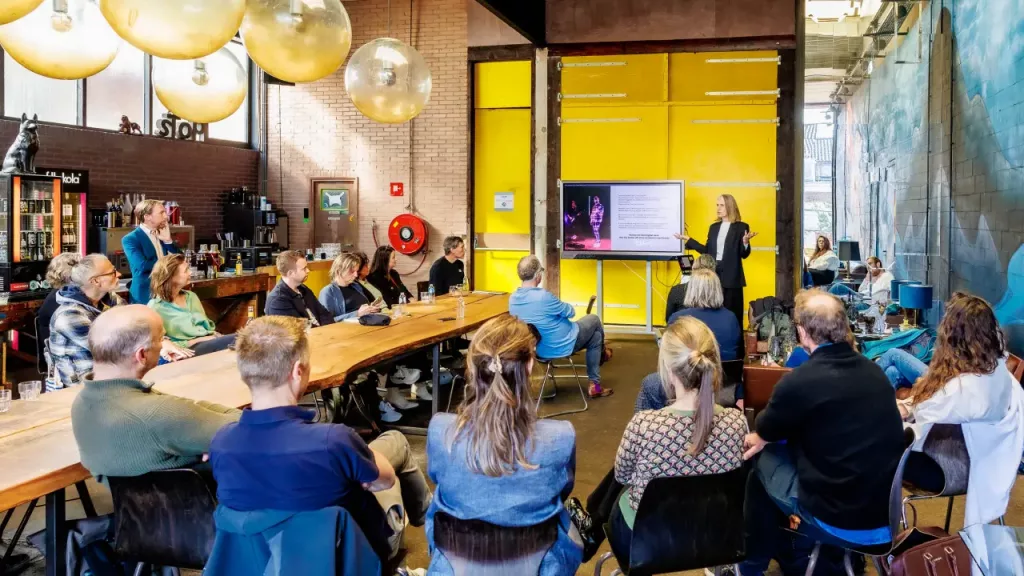
This article is part of our French XR in Benelux coverage, a 2026 initiative in partnership with Institut français in the Netherlands, the French Embassy in Belgium, and Institut français du Luxembourg, to promote the dynamism of local ecosystems dedicated to immersive creation. https://xrinbenelux.fr
CIIIC: Program guidelines
The CIIIC is based on several structural pillars: research, infrastructure, training, and innovation. The budget is spread over five years, with approximately $100 million allocated during the first three years, followed by an additional $100 million over the next two years. Several types of projects are supported. The program primarily funds applied research projects aimed at developing methods, tools, and conceptual frameworks for designing immersive experiences. It also supports learning communities, in which universities, creators, and institutions collaborate to devise new training programs tailored to the emerging needs of the sector.
Finally, the program plans to develop a network of regional laboratories, designed as experimental spaces open to the entire ecosystem. “The labs are, in a way, the foundation of the program. They are experimental spaces where people can test, prototype, and collaborate. They must form a national network capable of supporting the entire ecosystem. The laboratories are still being selected, but they will play a key role in the future development of the program,” explains Heleen Rouw. With a few exceptions, these initiatives, which are open via calls for projects, are based on co-financing. “For infrastructure, training, or research, partner participation is necessary; only prototyping projects are fully funded,” comments Heleen Rouw. At the same time, the program’s Innovation Agenda will aim to identify societal challenges to which immersive technologies could contribute: urban planning, citizen participation, professional training, and organizational transformation.
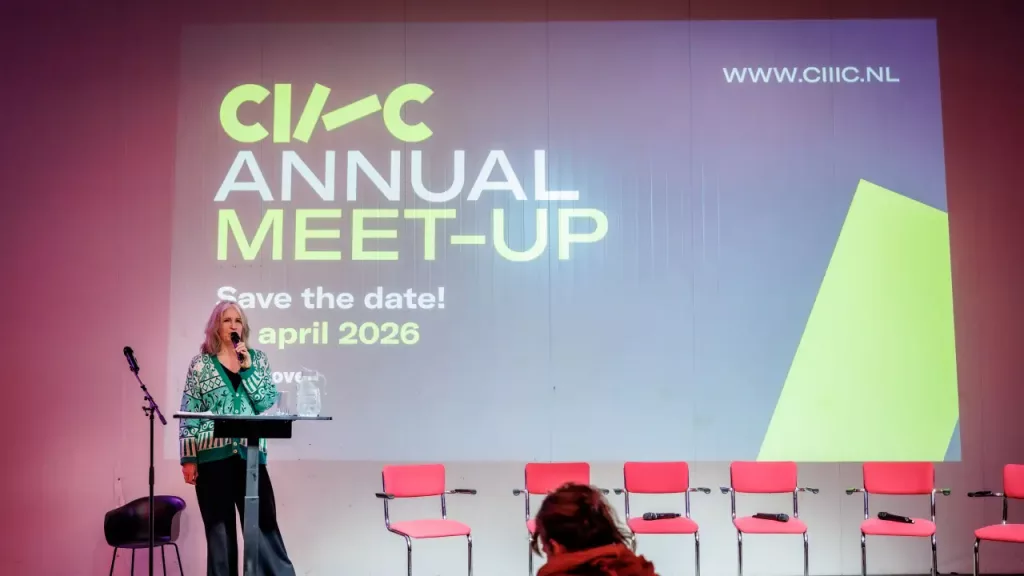
Creation and immersive experiences
Creators play an important role in the CIIIC program. First, because immersive forms—mixed reality, XR, or interactive installations—have become essential in the production of cultural experiences. Secondly, because the creative uses imagined by artists can also be applied to other sectors of activity. The program’s role is therefore to support these creators, while putting them in touch with sponsors: public institutions, companies, or organizations likely to entrust them with projects. In this sense, the CIIIC team, consisting of around six people, helps to remove the structural obstacles that hinder digital innovation. “We believe it is essential not to compartmentalize fields. Many studios constantly navigate between artistic creation and practical applications. For example, the Amsterdam-based studio Scopic Labs created the immersive work Shelter, which was presented at the SXSW festival in Austin. But the same studio also develops training modules for the Dutch police,” explains Heleen Rouw.
This type of hybridization is actually quite common: creative studios create works and work in parallel on immersive applications in fields as diverse as health, education, and industry. While the production of immersive works is intensifying, their distribution remains one of the main challenges facing the sector today. This strategy of diversifying activities therefore helps to balance the business model. This approach ultimately resonates with the reality of the Dutch economic fabric: “We also have a very strong creative sector, particularly in design, but also in the arts, video games, and digital media. Universities also play an important role. However, our market remains very small, so we need to promote collaboration, encourage diversification of activities, and support the distribution of these experiences,” adds Heleen Rouw.
Supporting the Dutch ecosystem internationally
In this context, the program automatically becomes part of a dynamic that transcends national borders. Two approaches structure this international openness. The first consists of integrating into European networks dedicated to immersive technologies, such as XR4Europe and the Virtual Worlds Association, which enable Dutch players to connect with other ecosystems. The second approach is based on observing the strategies implemented in different countries in order to learn from them. France (notably through the France 2030 program’s call for projects on Immersive Culture and the Metaverse), Finland, Belgium, Ireland, and the United Kingdom are among the territories studied. “Each country takes a different approach: some focus on audiovisual media, others on industry or digital creativity. Terminology and priorities vary greatly, which sometimes makes it difficult to find common ground. This is precisely one of the major challenges of our international strategy,” concludes Heleen Rouw.
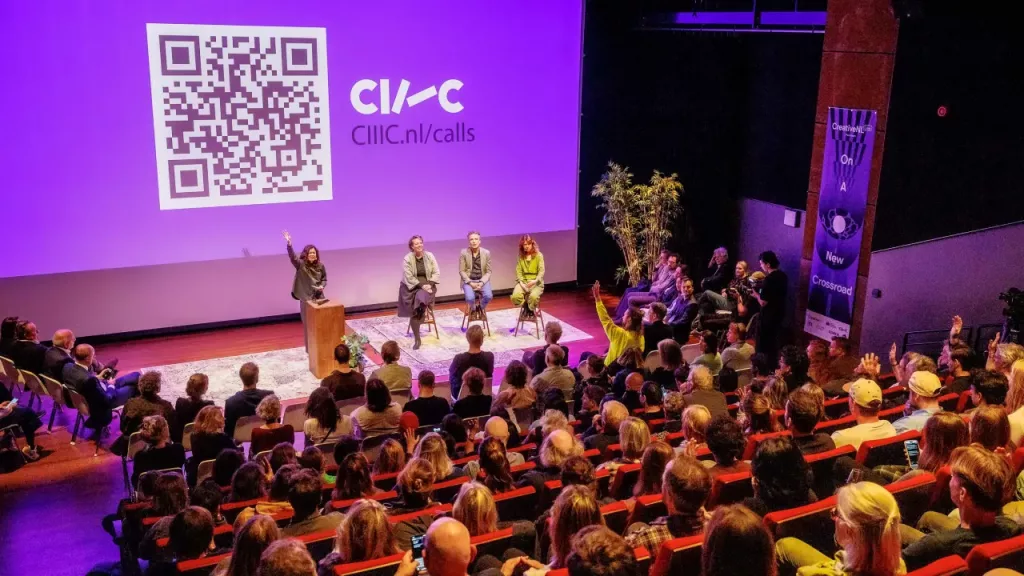
With the CIIIC program, the Netherlands aims to consolidate its position in a rapidly changing international sector and help establish European leadership in immersion and digital technology. It remains to be seen how these intentions will translate into tangible and measurable applications in the coming years.
Leave a Reply
You must be logged in to post a comment.