

For thirty years, Tarantula has occupied a special place in Luxembourg’s audiovisual landscape: that of an independent producer deeply rooted in auteur cinema, capable of seeking out social, political and sensitive stories and giving them international reach. Founded in 1995 by Donato Rotunno, the company first made a name for itself with its short films, documentaries and feature films. But in recent years, it has also been exploring immersive formats, in a logical extension of its DNA.
For Fernand De Amorin, producer at Tarantula in Luxembourg, the consistency is total: ‘It’s always the story that engages us first.’ VR is not seen as a technological gadget, but as an additional narrative space, capable of embodying inner states or complex realities with an intensity that cannot be achieved otherwise. This approach explains why the XR works produced by Tarantula remain deeply rooted in reality: UNDER THE SKIN by João Inada, FLOATING WITH SPIRITS by Juanita Onzaga and, more recently, A LONG GOODBYE by Kate Voet and Victor Maes, which won an award at Venice Immersive.
This article is part of our French XR in Benelux coverage, a 2026 initiative in partnership with Institut français in the Netherlands, the French Embassy in Belgium, and Institut français du Luxembourg, to promote the dynamism of local ecosystems dedicated to immersive creation. https://xrinbenelux.fr
Cover: FLOATING WITH SPIRITS by Juanita Onzaga
XR projects born out of encounters and artistic affinities
At no point has Tarantula sought to position itself strategically in the VR market. Immersive projects come about because they naturally fit into the studio’s workflow, often as a result of a chance encounter or a compelling editorial project. ‘For us, VR isn’t about projects that keep the company going. It’s more about following our hearts,’ sums up Fernand De Amorin. This was the case for FLOATING WITH SPIRITS, co-produced with Timescapes, which stood out for its ritualistic and community-oriented dimension.
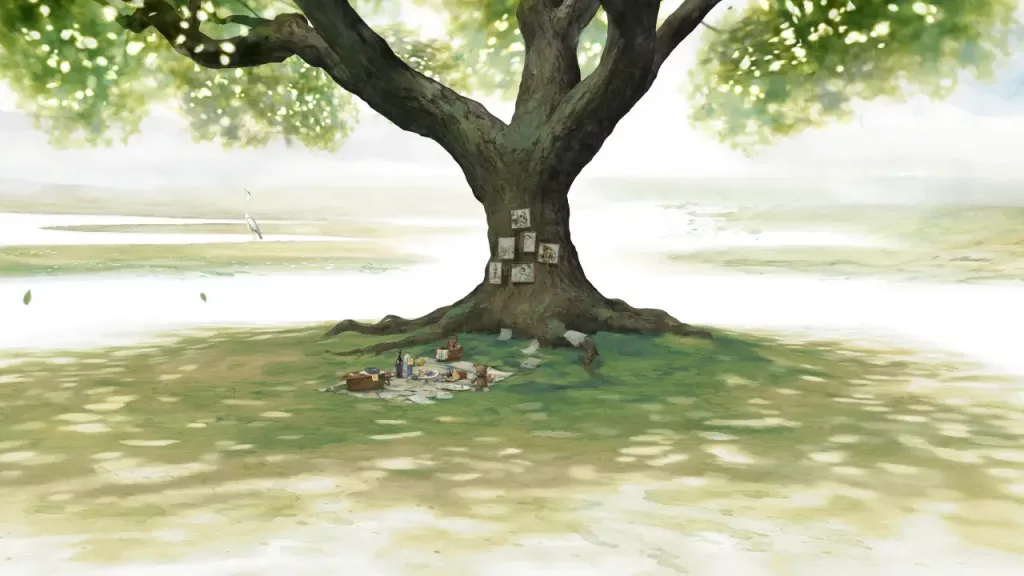
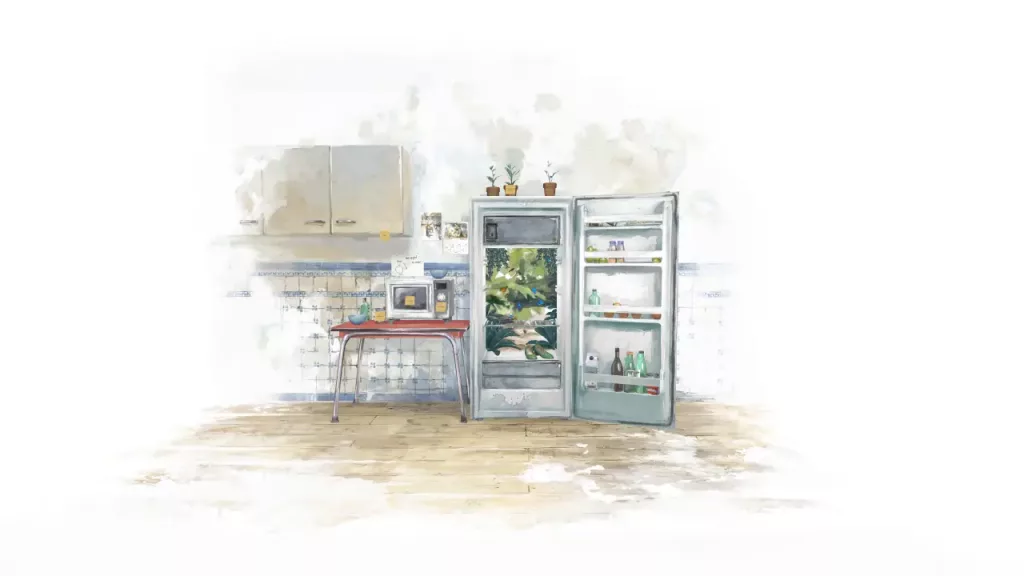
The collaboration with An Oost created a dynamic of trust that naturally led to A LONG GOODBYE, an even more delicate project exploring the experience of Alzheimer’s disease through immersive animation. ‘Asking someone to experience a moment of Alzheimer’s is not an easy pitch. But VR allows for a very subtle empathy that a traditional film would provoke in a different way,’ notes Fernand De Amorin.
This approach to VR, driven by affinity and artistic necessity, gives Tarantula’s XR works a rare consistency. They all demonstrate the same social commitment, extend the studio’s documentary sensibility, and systematically avoid the temptation to showcase technology.
The Luxembourg model: a clear system, genuine involvement in manufacturing
Immersive production in Luxembourg is based on a unique framework: a single point of contact, the Film Fund Luxembourg, finances fiction, documentaries and VR works. The principle is simple: every euro invested must be spent within the country. This mechanism, often praised for its efficiency, also requires real technical involvement in projects. ‘We are never involved in pure financial co-production. We make a real commitment to the production process,’ explains Fernand De Amorin.
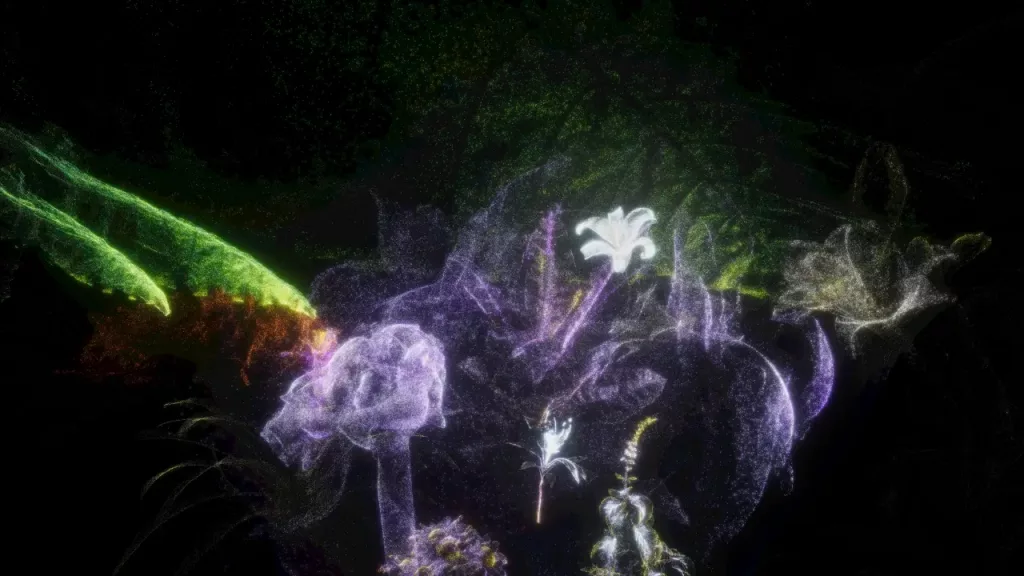
Velvet Flare studio produced all the animation for A LONG GOODBYE. Tarantula was responsible for the sound on FLOATING WITH SPIRITS and sent an engineer on assignment to Mexico, proving that the country is involved at every stage. The producer raises an important point: the idea that VR is advancing rapidly but remains a medium still searching for maturity. ‘We still accept flaws in VR that we would no longer accept in fiction,’ he notes. In the producer’s view, this is neither a hindrance nor a criticism; it is a lucid observation about an industry under construction, where technical standards are still stabilising.
This rapid movement, which can be seen in particular at the Immersive Pavilion at the Luxembourg City Film Festival every spring or at major festivals, is nevertheless showing steady progress. What motivates Tarantula to support this type of creation is precisely the possibility of making people feel rather than showing them, of giving access to intimate states that would otherwise remain out of reach.
Luxembourg: a small country with a growing interest in immersive experiences
In practice, XR distribution remains a major challenge. Luxembourg is a small country with few venues, and the Immersive Pavilion plays a central role in raising the profile of co-produced works (the next edition will take place from 5 to 15 March 2026). ‘Without this event, we would have very few places to present our projects, even in Luxembourg,’ acknowledges Fernand De Amorin. The market is not yet structured, XR exhibition spaces remain rare at the local level, and the ecosystem is largely dependent on international festivals and initiatives.
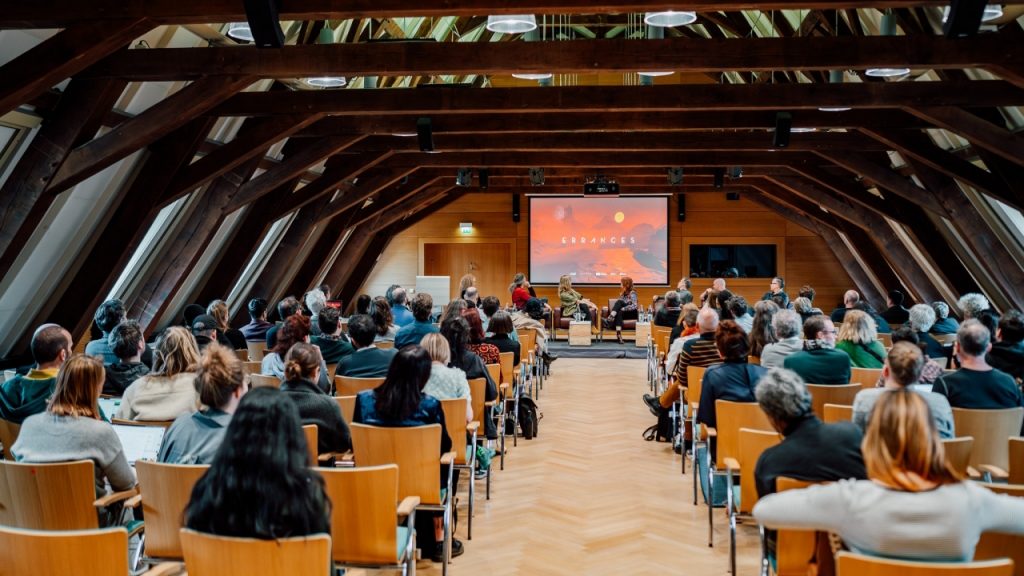
However, Tarantula observes a dynamic shift underway: the opening of new venues, the rise of immersive markets in Venice, Cannes and Geneva, and institutional efforts to consolidate XR networks in Europe. These weak signals point to a more structured future for distribution, in which Luxembourg will be able to play a part thanks to its expertise and experience in co-production.
The strategic importance of European alliances
International collaborations are at the heart of Tarantula’s strategy, and VR is no exception. The relationship with Timescapes has demonstrated the importance of building strong partnerships based on a shared vision. Two projects have already been completed together, with a third under consideration, showing that the European XR ecosystem is being built on editorial affinities rather than industrial logic.
Fernand De Amorin also mentions new projects initiated by Dutch producers he met in Venice, proof that XR co-production now circulates on the same networks as arthouse cinema. In this context, he extends a very clear invitation to French producers: don’t hesitate to approach them. ‘It all starts with a story, a script that grabs you. The rest follows.’ This openness reflects a resolutely European mindset, in which VR is a space for collective experimentation rather than a competitive market.
Tarantula, a coherent approach for a medium with great promise
When talking to Fernand De Amorin, one thing becomes clear: Tarantula approaches VR with the same high standards as its films. Projects are never chosen to follow a trend, but to meet a narrative and human need. The company has a clear vision: if a story is worth telling, immersive technology can become its natural medium, provided that the production is up to scratch and artistic consistency is maintained.
In an XR ecosystem undergoing consolidation, this approach serves as a compass. And with the international success of A LONG GOODBYE, Tarantula confirms that it is possible to incorporate immersive technology into an auteur’s trajectory without sacrificing the integrity of the stories or giving in to spectacle. This is an important signal for a European industry that is gradually taking shape around producers who choose to believe in it with lucidity, rigour and conviction.
Leave a Reply
You must be logged in to post a comment.