
Meeting Dutch producer–director Richard Valk is a sharp way to read the Dutch landscape. Through Valk Productions, founded in the late 1990s, he has built a bridge between auteur animation, documentary and immersive work – and his trajectory captures how the Netherlands has become a small but very active hub for XR creation and co-production.
This article is part of our French XR in Benelux coverage, a 2026 initiative in partnership with Institut français in the Netherlands, the French Embassy in Belgium, and Institut français du Luxembourg, to promote the dynamism of local ecosystems dedicated to immersive creation. https://xrinbenelux.fr
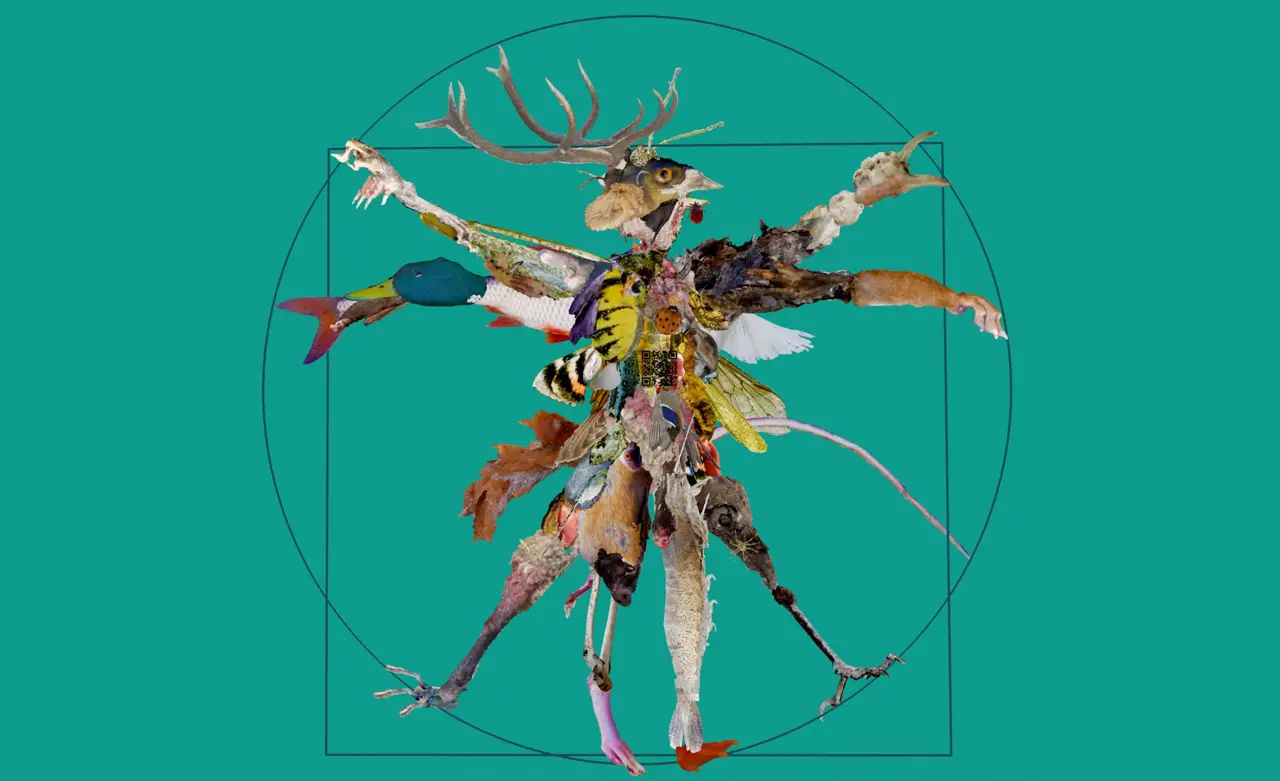
Cover: WE ARE DEAD ANIMALS by Tote Tiere Maarten
A producer at the crossroads of animation, documentary and XR
For more than two decades, Dutch producer–director Richard Valk has been moving along the edges of cinema, art and technology. Through his company Valk Productions, he has built a body of work that runs from experimental documentaries to auteur animation and, more recently, immersive projects. That trajectory says a lot about how the Netherlands has quietly become one of Europe’s most agile hubs for XR creation and international co-production.
Valk started as a filmmaker in the mid-1990s, shooting and editing his own documentaries and shorts. Producing came almost by necessity: if he wanted certain kinds of singular, graphically bold work to exist, someone had to take responsibility for the whole journey – development, financing, festivals, distribution. “In the end I realised that what I was doing was producing,” he says in our conversation. The label arrived late; the job had been there all along.
Over the years Valk Productions has become a home for artists who don’t quite fit into conventional film or TV boxes. Animation directors with adult, auteur visions. Documentary makers tempted by hybrid forms. Visual artists for whom moving images are just one element of a larger installation. This mix turned out to be an excellent starting point when VR and immersive technologies entered the picture.
From early VR experiments to festival-driven XR
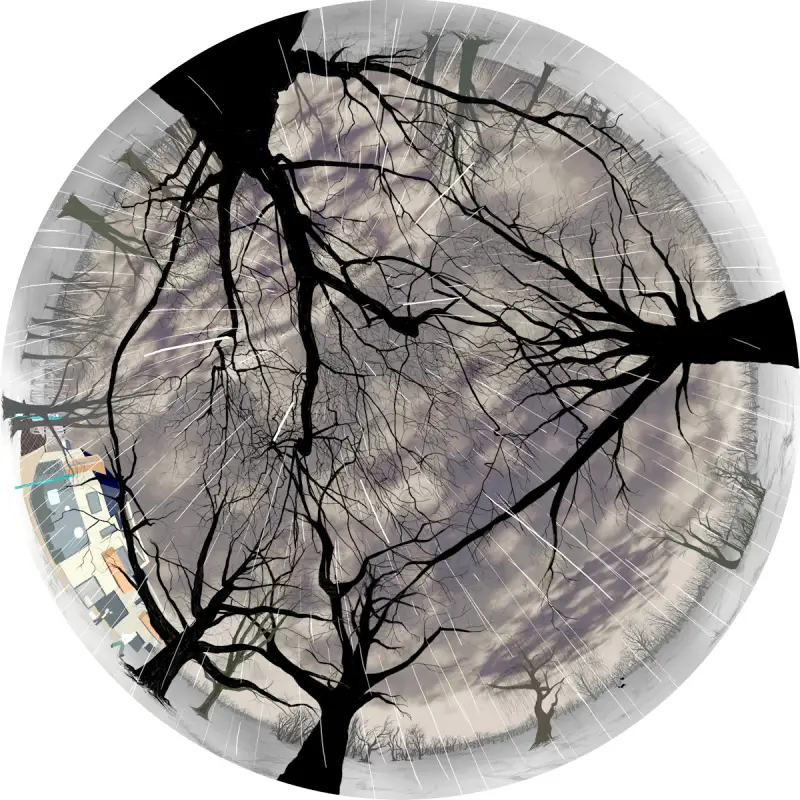
Valk’s first foray into VR came around 2015, at a moment when headsets were still heavy, pipelines fragile and fewer festivals had dedicated XR sections. The project – FEBRUAR, a 360 panoramic experiment by Maarten Isaäk de Heer – felt, in his words, “like working in the stone age of VR”. But that fragility came with a sense of experimentation he recognised from earlier periods in Dutch animation: small teams, improvised workflows, and a lot of curiosity.
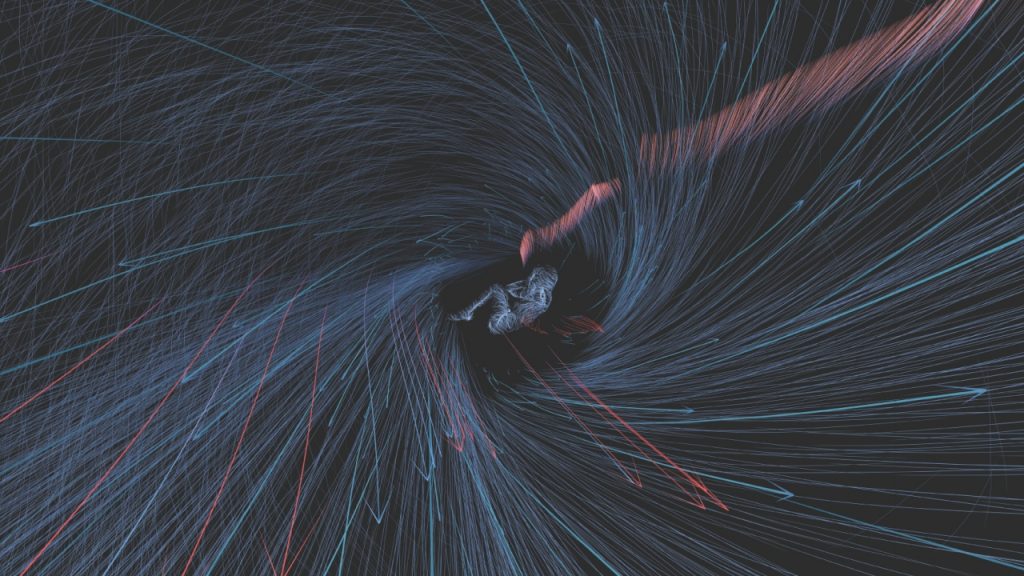
The real turning point arrived when immersive work began to travel alongside films on the festival circuit. Projects like FLOW, directed by Adriaan Lokman, were conceived from the outset in multiple versions: a linear animated short and a VR experience built around the same core idea. In VR, the audience is literally carried inside clouds of air, following fragments of a life through the invisible movements of breath and wind. Together with French partner Lucid Realities, Valk helped steer the project to Venice Immersive, where it won a Special Jury Prize, and then on to other festivals and exhibition venues.
That success confirmed a pattern: many of Valk’s XR projects are born where disciplines overlap. Animated VR piece A LONG GOODBYE by Kate Voet and Victor Maes – about an elderly pianist slipping into dementia – plays with the delicate texture of hand-painted images and simple interaction to mirror the instability of memory. This Belgian-Dutch-Luxembourgish coproduction also won at Venice Immersive 2025 the Achievement Prize.
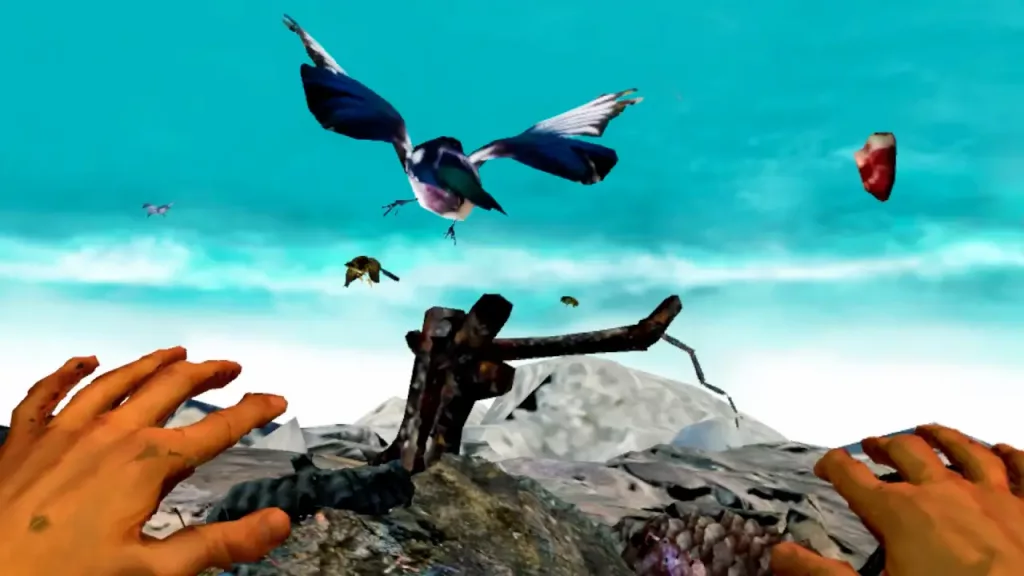
The latest project, WE ARE DEAD ANIMALS by Tote Tiere Maarten, selected at IDFA 2025, invites visitors to “re-animate” scanned animal bodies in a strange, poetic landscape, extending earlier work on roadkill and ecology into an immersive installation. In both cases, XR is not treated as a tech showcase but as a way of placing viewers inside emotional and conceptual spaces that cinema alone would struggle to reach.
A tight-knit Dutch ecosystem for immersive storytelling
Behind these individual works lies a Dutch ecosystem that is compact but highly interconnected. Public funds have deliberately positioned themselves at the meeting point of film, design and digital culture. Cross-over schemes encourage creators to think beyond rigid categories and to propose projects that can exist as both films and interactive works, or as gallery installations that also speak to festivals and broadcasters.
Festivals and institutions are central to this ecosystem. IFFR in Rotterdam, IDFA DocLab in Amsterdam, Kaboom in Utrecht and Amsterdam, museums such as Eye Filmmuseum and new venues devoted to digital art all provide different entry points for XR. They function simultaneously as launchpads, testing grounds and informal markets. It is often in these spaces that an international producer first encounters a Dutch project at an early prototype stage, long before it becomes a finished work.
Valk notes that a new wave of national initiatives is now focusing on immersive experiences more systematically, from research labs and training programmes to support for distribution and exhibition. In advisory roles, he has been vocal about one point: these efforts only make sense if independent creators and smaller studios can access them directly alongside larger institutions. The goal, as he sees it, is not just to build more hardware or spectacular venues, but to sustain a pipeline of distinctive projects that can hold their own internationally.
Physical infrastructure is evolving too. In Amsterdam, Valk is involved in the development of MINT, an immersive art space in a central location designed to host XR works year-round. The venue has already welcomed projects like FLOW in exhibition form and aims to become a regular site for installations that might otherwise live only for a handful of festival days. For immersive producers, that kind of continuity – a place where works can be shown, tested and refined outside a premiere context – is increasingly strategic.
International co-production as a creative engine
If Valk’s career traces the rise of Dutch XR, it also illustrates how international co-production has become the engine of this sector. Many of his recent projects are international by design: developed with Dutch creators, co-produced with partners in France, Belgium, Luxembourg or elsewhere, and built to travel across festivals, cultural institutions and location-based venues.
France is a particularly active partner, thanks to a dense network of CNC schemes, regional funds and cultural institutions that now recognise immersive work as a field in its own right. On projects like FLOW, French co-producers have brought not only financing but also access to specialised XR know-how, distribution circuits and a strong festival and museum ecosystem. In return, Dutch partners contribute to a long tradition of experimental animation, a culture of visual innovation and tight links with events like IFFR and IDFA DocLab.
But Valk is keen to stress that this is not a one-directional relationship. On some projects, a foreign producer comes to him with a concept or script in need of an immersive angle, and he helps to build the Dutch side: connecting to animators, sound designers, interactive studios, or positioning the project within Dutch funding and festival landscapes. On others, he initiates the work in the Netherlands and invites international partners to expand its scope and reach. The result is a web of collaborations in which creative responsibilities and benefits are shared, not simply split along financial lines.
In his view, the most productive partnerships arise when creators arrive early, before formats are fixed. “If you come with a very closed package, there’s less room to think about what the immersive version could be,” he suggests. When conversations begin at the concept stage, it becomes possible to imagine different configurations: a VR piece alongside a short film, a museum installation that can also play in a dome, a live element added to a gallery work. Each version becomes a way of reaching different audiences and funding sources, while preserving a coherent artistic vision.
Reading the Dutch landscape
Taken together, Valk’s trajectory offers a useful lens on the Dutch immersive landscape. This is a country where animation, documentary and art have long intersected; where festivals and institutions are used to working with hybrid forms; and where XR has been woven into existing structures rather than treated as a separate, experimental appendage.
For international producers, the message is encouraging. The Netherlands offers access to highly skilled animators and designers, an ecosystem of festivals and venues that take immersive work seriously, and public instruments that actively support cross-border collaboration. At the same time, there is a clear appetite – embodied by producers like Valk – for projects that reach beyond national borders and conventional formats.
In that sense, Dutch XR is less a self-contained “scene” than a set of bridges: between cinema and installation, between documentary and speculative worlds, between local stories and international conversations. For those looking to build ambitious immersive works in partnership with European creators, it is a landscape worth reading closely – and one in which Valk Productions has already helped many distinctive projects find their way.
Leave a Reply
You must be logged in to post a comment.