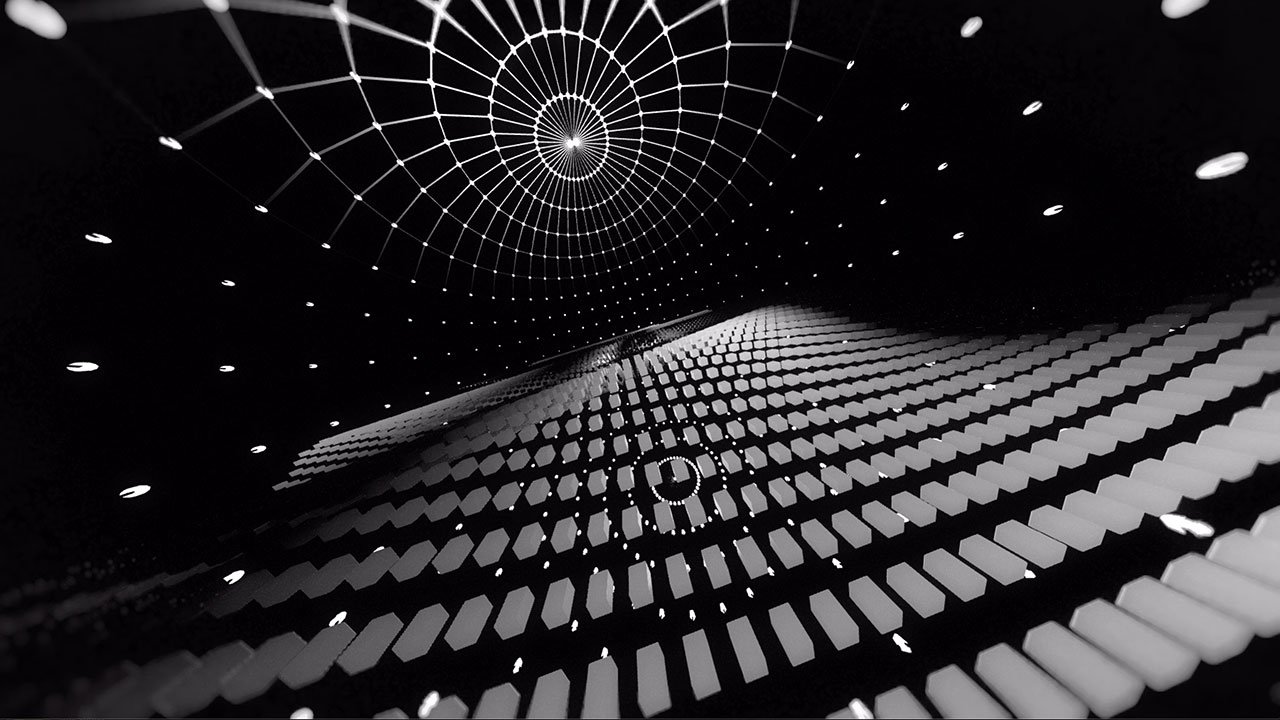
We had a chance to discuss immersive storytelling and more with artist Tupac Martir last year after Venice VR (see the interview by the great Agnese Pietrobon). As Creative director of the London-based company Satore Studio, Martir is not only working on interactive installations but also on brand content and live events – pushing forward our imagination with technology. We recently chatted with him about all of this and his collaboration with English electronic artist Vaal.
Working around realities
Tupac Martir – Satore comes from live entertainment: doing fashion shows, music concerts, museum installations, ballet, theatre or opera. The amount of work that we do in live entertainment is quite big, outside of virtual reality projects. Alongside this we also have architectural lighting expertise within the studio; due to the amount of buildings we were lighting! And then we have all these other experiences, the virtual reality side of things. It’s a really rare thing that we actually started, not talking about realities first because we work in different layers of realities, every step of the way. I think that’s how I would define Satore Studio. When we’re working on a building and performances, that’s a physical reality. If we’re doing it in virtual, augmented, extended or mixed, that’s a digital reality. But at the end of day, they’re all realities.
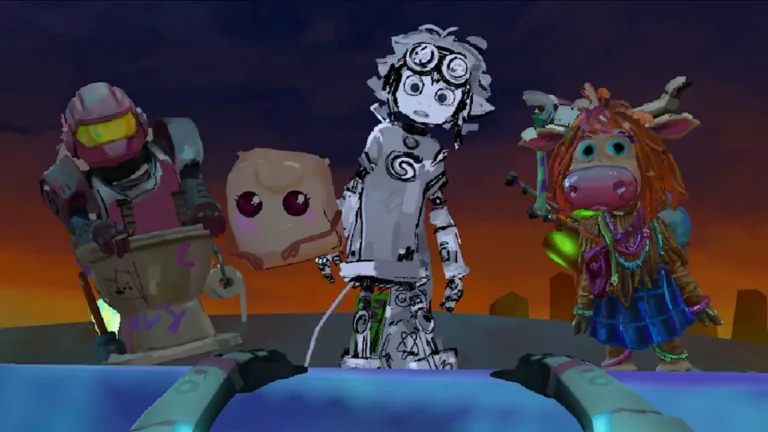
T. M. – It’s our starting point to understand how to engage our audiences. The way that we actually perform, the things we create based on those realities. Now we’re trying to map out what are the realities that we are trying to work on. Once we decide those realities and those layers, we start to understand which elements we need to create something. This is where I’m really excited about a project like COSMOS WITHIN US, because it’s something that became very, very interesting as a creator. You have a virtual reality and a physical reality, and you need to decide where the juxtaposition of both of them is, and how things are getting developed. It’s clearly very exciting for me and the studio to explore these universes. From this point, there are a lot of questions involving the storytelling process and how to tell a story for every point of view. At Venice, there was only 4 audience members, then in London there was an audience of 10 people. In Amsterdam, 115 and in New York, 150. We proved that the model can work.
Vaal x Satore: live interactive gig
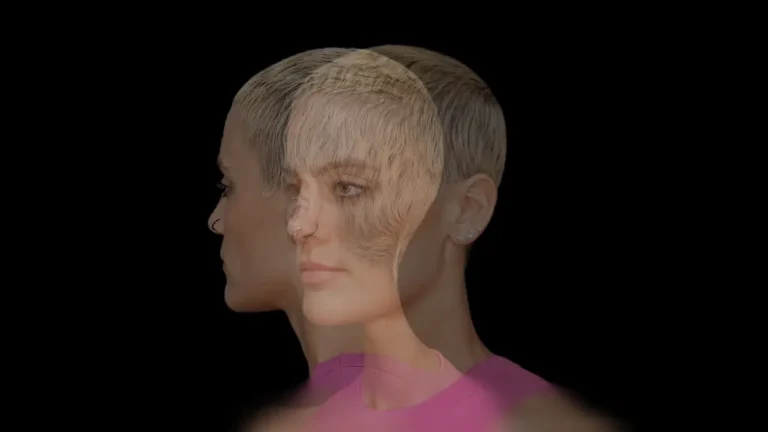
T. M. – The collaboration with Vaal aka Eliot Sumner came from a long time ago. I got tired of DJ’s playing live from their bedroom in front of a camera. As an electronic music lover myself, I knew we could do better than that! When you’re creative people, you’re full of creative friends. Why are you not more involved in our music and live performances? If don’t want to see another person playing a guitar on a sofa in their underpants.
T. M. – In the studio we started trying to see what we could do that would make a difference using all the techniques we are currently developing within different realities. What can I bring from here? What can I take from that? Well, what if we do it as a show? What if we actually produced it and created it as a show with all the techniques that we know from live entertainment and programming the lighting of course. More than that, operating the lighting in real time, with cameras and green screens, being able to cut them, using depth cameras, etc. So, yes, it could make a difference.
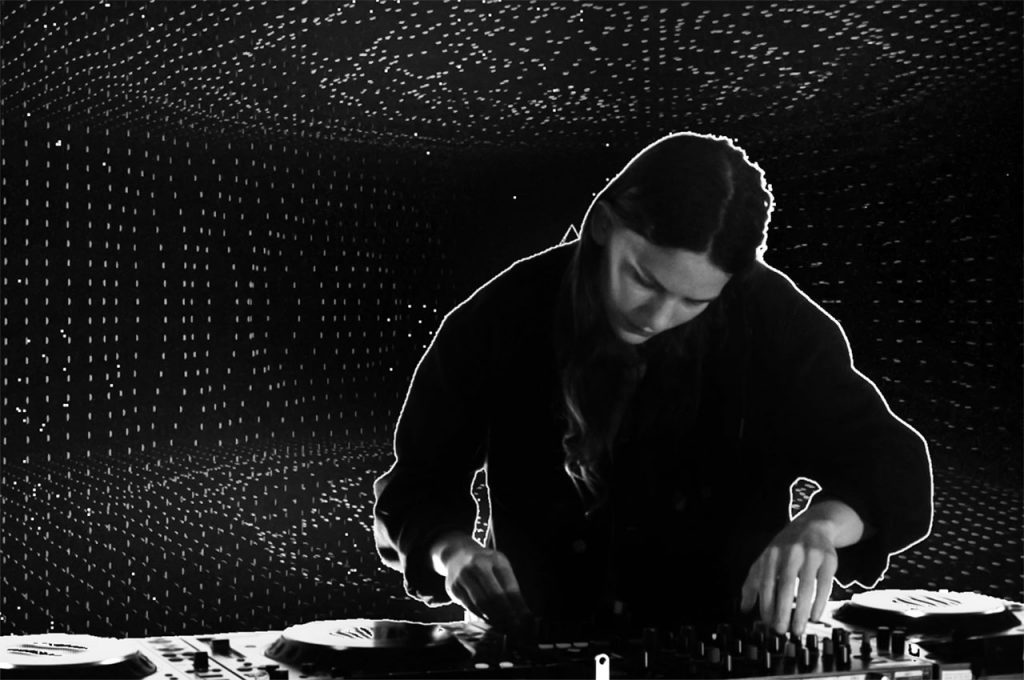
T. M. – But then… Why do I need to keep to a single engine? Can I have multiple engines that allow me to do different things? Based on what I’m trying to achieve, because at the end of day, we wanted to do a show. How do you build a show? There are all these other things people are trying to do, mimicking reality. Why do I want to be in a sweatbox? Why do I need a ceiling? Why do I need to be contained to what my life is in here? Of course, I am bound by the same laws of physics as any other human being but in electronic music, all these disconnected amazing worlds, you have all these interconnected feelings around rhythm and visuals elements. It’s all about creating a synergetic piece. That was our mission.
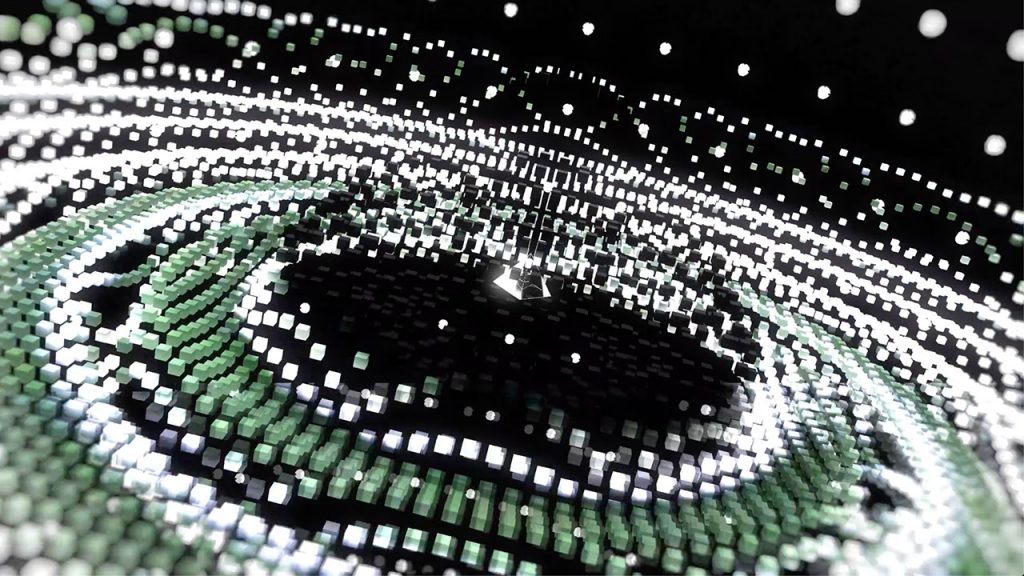
T. M. – Here everything is based on the music and the synergy comes from it. In our live performance with Vaal (streamed online on June 20th on Facebook and Youtube), our camera movement followed the music. There’s a great moment where the shot lasts about a minute and a half during the show – that we operated live. And it’s a long shot around one visual idea. There’s so much connectivity between what the music and the visual are, the way that you think that they are truly matched together. By using Notch and Unreal at the same time, we were able to combine these things and decide when each one of them needed to take control of the space. Then you have the camera and green screens which allowed us to cut Eliot into this space. All of this was really exciting – and scary – because we were bold enough to operate everything as a live show!
Live virtual performances: a future?
T. M. – I want to do more of these. This is exciting, especially as Elliot was really in the project from the beginning. She trusted us all the way in, starting seven or eight years ago when we first discussed possible works together. This live performance was in fact a really simple project to build. We’re super happy about how everything came out and how it looks. We learned a lot of course, as you always do, on the little things that we will put into the next show. But the workflows that we’ve created are now here. The understanding on how we mix our live entertainment world with our digital engine world, is also here. We’re ready to start again! We have our little lab in the studio, with green screens and lightings that we can program directly for this kind of project.
T. M. – And from our background, we want to take it even further in live concerts, etc. What we are experiencing now, what we’re trying to achieve with these virtual production techniques and digital engines, it was never a reaction to cope. It was always stuff that was in our production pipeline. We’ve been working into this space now for over 18 months. And we’ve been working in VR for four to six years now. There’s an entire set of languages, rules and things that we’ve learned from the six years of being in this immersive world and then you have the 20 years we bring from doing shows for a living. We want connectivity between people, to link the real and the virtual. Depending on your age and friends, you will want to go to a live concert, performance or just stay at home trying to enjoy virtual productions on Youtube or a VR headset. Even for artists sometimes touring is hard, you leave home for months. It’s brutal, so we can provide solutions to organize powerful virtual concerts that could match the feeling of being in a room with the band on social platforms. For Vaal it was a real show – in front of our crew, yes, but she was not alone in her living room playing in front of screens.
T. M. – As for VR events, we are currently in the middle of R&D to take 10 to 15 minutes of the experience and actually put it into VR, as one full hour would be quite intense! Once again, we are working on three different engines, you can’t really bring everything into VR easily. It’s all about bringing various elements into one single application that we can broadcast on many platforms including VR, that could work with venues or festivals (Sonar in Barcelona, Ars Electronica…) to help them go virtual.
What is next for Satore (and the VR industry)
T. M. – We are preparing a new piece which kind of takes more broadcasts into consideration… and bringing Vaal into VR! Another piece we’re working on is basically COSMOS WITHIN US on steroids – and that is the only way I can put it! It lands more on the contemporary art world rather than on the narrative musical, that kind of thing. We are also writing ideas and concepts, and seeing how technology keeps them developing. I have that one piece I wrote down in 2005, and I waited until the technology was ready. We’re just starting to scratch the surface of what it needs. I’m very excited about it because I’m hoping that by next year, I will be able to finally begin production on it. I feel very much like I am in the 2000’!
T. M. – I’m waiting to see what the next Sundance Festival will be. Venice Film Festival is going online, and it seems Tribeca did great with their line-up on Oculus, which is great in terms of content being out. Of course, it’s not great for pieces like ours that are truly trying to create this boundary of what is real, what’s physical, what’s virtual and what’s augmented but I’m hopeful for what is coming, next year will be full of opportunities.