For its 20th edition, held in Amsterdam from 12 to 22 November 2026, IDFA DocLab has chosen not to stage a retrospective. The new media programme of the International Documentary Film Festival Amsterdam is using its anniversary as a starting point instead, bringing back landmark works lost to obsolete technologies and asking how interactive and immersive art can keep reaching audiences. Its founder and curator, Caspar Sonnen, looks back on two decades of experimentation, from websites shown next to the box office to multi-user VR, and on the questions that will shape the next five years.
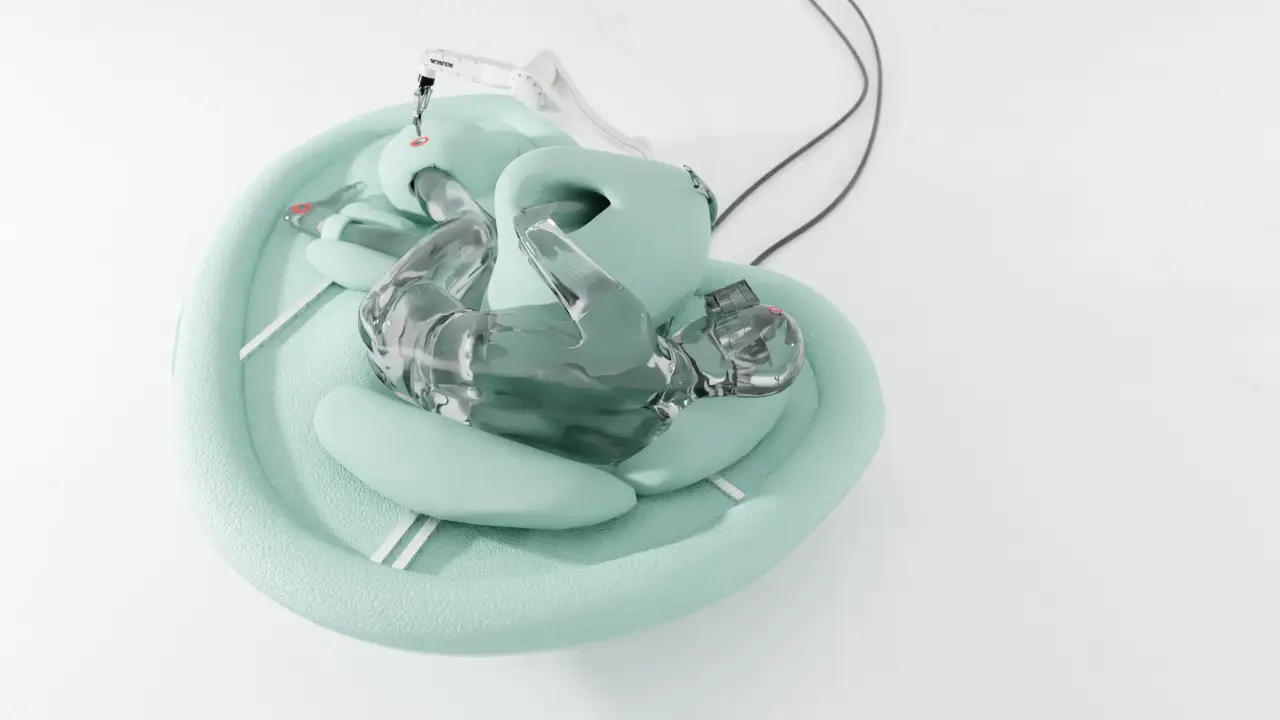
Cover: IDFA DocLab 2026: MICROBIOME RESTAURANT: PLURAL TASTINGS, by POLYMORF
An anniversary turned towards the future
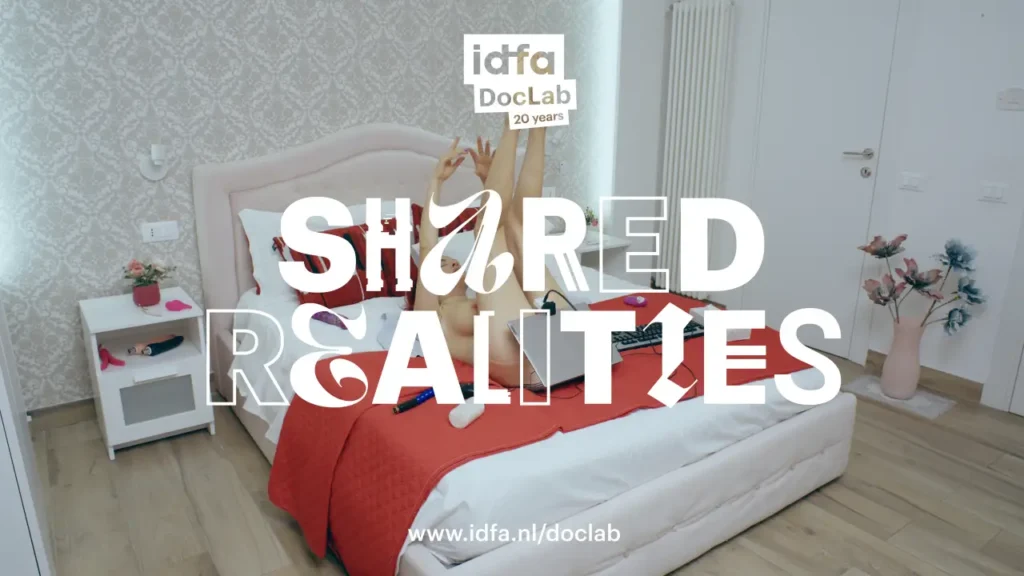
Shared Realities is both the 2026 theme and the CIIIC consortium that IDFA leads. This theme fits, because IDFA DocLab’s guiding force has always been exploring (and experimenting with) the myriad ways people experience reality, and the relationships between new art forms, viewers and the community.
Caspar Sonnen: After 20 years, we’ve seen the rise of interactive media and storytelling, the rise of social media, VR, and then the backlash to those technologies. Resistance is on the rise from the general public against things that years ago interactive artists were already reflecting on and challenging. A lot of those conversations of the past 20 years around privacy, about ownership, around agency of the human body versus the wider technological and power systems are happening now at a much broader scale.
What does it mean to be not just an individual in society, fulfilling our own ambitions, but to be part of a larger whole? What does solidarity mean? This is what we’re looking at in our Shared Realities programme.
Sonnen and co-curator Nina van Doorn discussed using a term like “new media”. “There’s the obsession with the new, the next big thing, that we always try to push back on,” he explains.
Sonnen: DocLab’s programme is about now. We don’t know where we’re headed. DocLab is a celebration of the most beautiful things we stumbled upon, or that found us, this year. But the 20th anniversary became a moment where we’re more interested in the future than we’ve ever been. What do we want the next 20 years to be about?
Every year, we want to make a beautiful annual programme, but also want to acknowledge that there is an amazing industry of connected, disconnected, interdisciplinary artists and thinkers and tinkerers that are making things that are of today, but also show us a larger story in the long run.
Rescuing a canon written in dead technologies
That story starts with the works themselves. A new Archival Arcade brings together pieces that had stopped working because the technologies they relied on disappeared. WeMakeVR, a partner in the Shared Realities consortium, has developed Impress, an archival assistant designed to future-proof VR experiences across multiple hardware setups. DocLab handed it a harder challenge: Flash, the platform on which a decade of interactive documentary was built. “All of those projects are now lost. We said: if you can handle something as difficult as multiple hardware setups for different headsets, could you also do it for a dead technology like Flash?”
As a provocation, DocLab connected WeMakeVR’s Avinash Changa with Upian, the production company behind THANATORAMA, the very first interactive documentary DocLab selected in 2007, when it was still an online programme. Changa managed to bring it back to life. “Funny enough, THANATORAMA is a project about what happens when you die, and the project itself died,” Sonnen notes. “It’s of a different era, but at the same time it feels incredibly relevant, poignant, funny and clever today. Seeing it again felt like meeting an old friend, remembering how I navigated it the first time and how certain things surprised me.”
The same logic applies to NOTES ON BLINDNESS, which turns ten this year and had recently stopped working on mobile headsets. Through Impress, Changa has made the project future-proof, Atlas V has rebuilt the mobile version, and DocLab and ARTIS-Planetarium have produced a shorter dome version, both with support from Agog. The Arcade is completed by NATALIE’S TRIFECTA, Natalie Paneng’s award-winning piece, while a reading room revives some of the book-based experiences DocLab has shown over the years, including A REST GUIDE FOR A TIRED NIGERIAN ARTIST by Rahima Gambo, one of the programme’s favourite commissions.
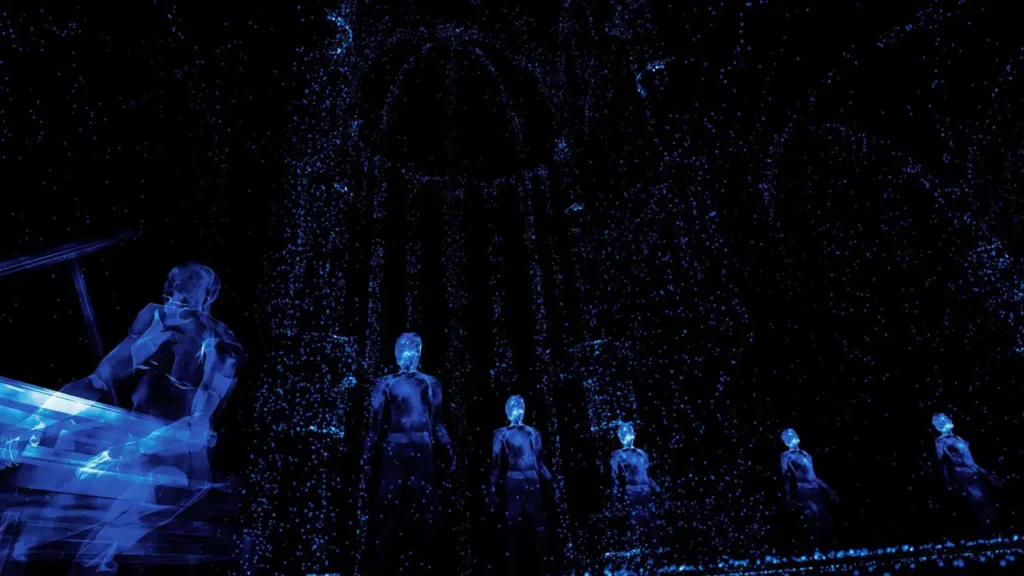
For Sonnen, restoring these works matters beyond nostalgia: it gives artists access to a shared language and history. “There are so many works that haven’t been seen by many people, and that are part of our language. When we started working with young and established artists in new media, I was shocked by how few works from the canon they had actually seen. Seeing something from the canon is a great way to say: that didn’t work for me, or that’s great, but I’m going to do something completely different.” Taken together, these pieces also reveal how global this culture of creation has always been.
Sonnen wants to move the conversation from preservation itself to presentation: how and where these works can continue to be shown. IN PURSUIT OF REPETITIVE BEATS, one of DocLab’s highlights of the past 20 years, returns as a light multi-user version, developed with Changa, at ENTR VR Museum, a new Amsterdam venue dedicated to VR. “We’re showing it there to see how the multi-user version is, in many ways, a better version than the single-user one. Some of the venues we spoke to five years ago were excited to bring it, but the business model or the presentation costs were a hurdle. This could make it possible.”
Presentation, DocLab’s founding question
Having works in the programme in multiple forms is not unusual for DocLab.
Sonnen: The story does change from form to form, which is interesting for curators and artists to reflect on, but I think the most interesting thing is how we take individual experiences and turn them into something that people can share together. That’s why it was called DocLAB – initially it was mostly about how we present these things in a collective physical environment.
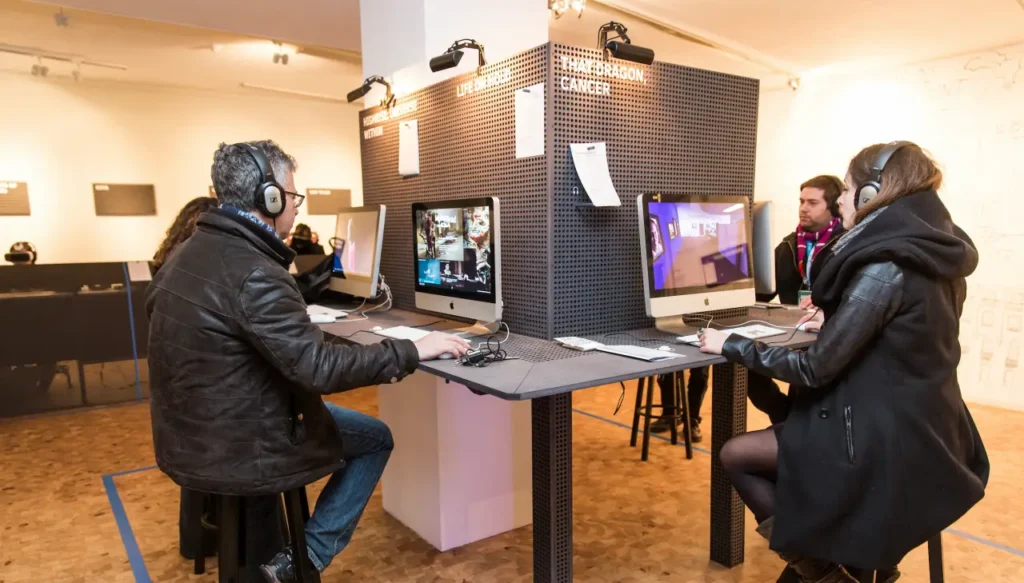
From day one, we have been about exploring what’s possible. We started with digital interactive online experiences on the IDFA website. That first year was a pilot, and in 2008, when we got funding to do four years of DocLab, we started thinking about what it means physically and collectively to show these works. We put computers near the box offices.
Then artists showed up to the festival to celebrate their work that we were showing on the website! We realized the power of the festival is bringing audiences and artists together, so we should figure out how to show these works in a collective physical way.
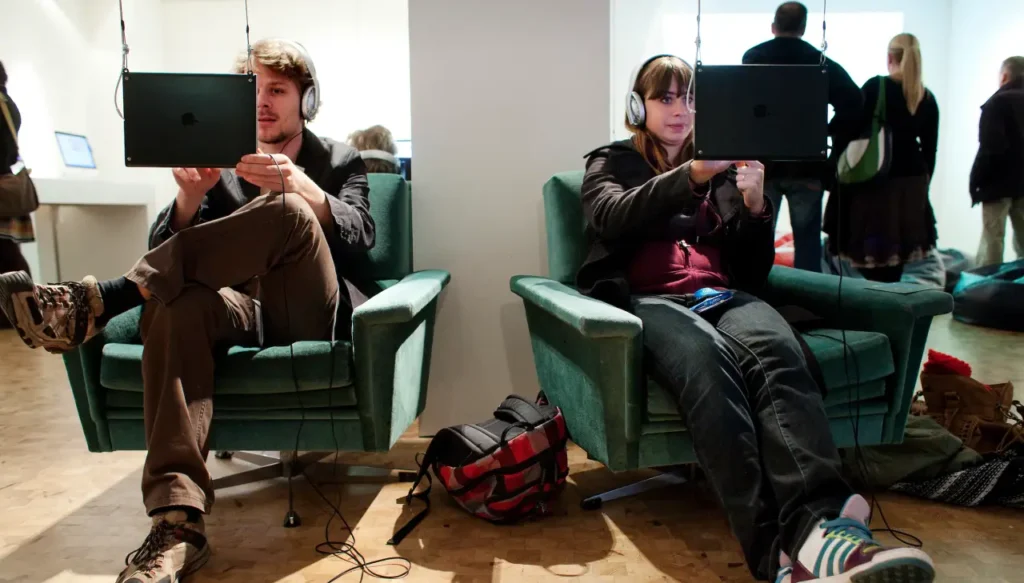
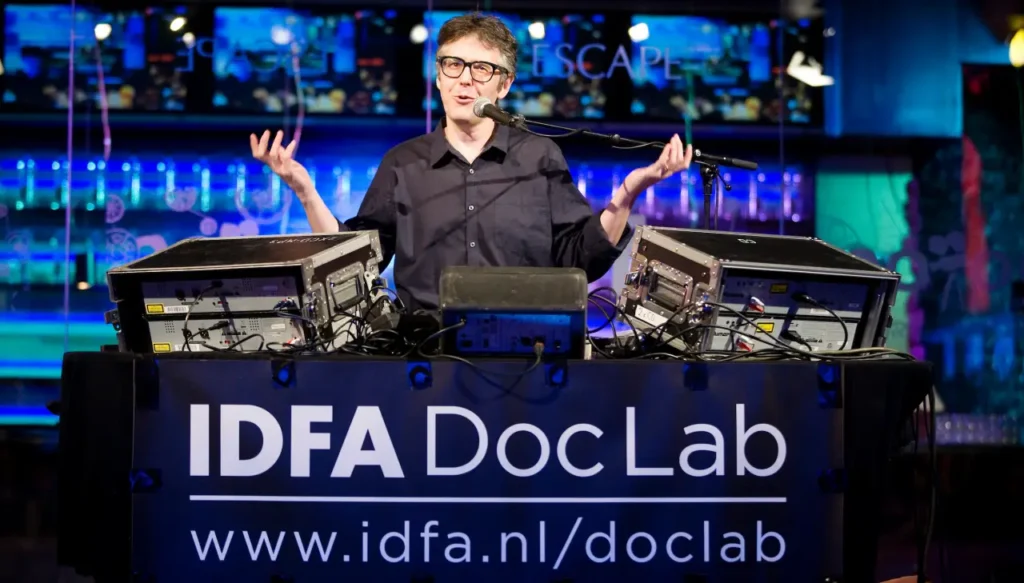
Another provocation, from the film department: there was room in the cinema and we should find a way to feature the amazing work we were showing to festival audiences. The answer? Directors’ navigations.
Sonnen: THANATORAMA was the first director’s navigation we ever did in a cinema, with the makers navigating it live, creating a linear filmic experience of an interactive documentary. It was terrifying because who was going to buy a ticket to see a website that was available for free online, and not even play it themselves, but watch someone else? There were so many levels of ‘this doesn’t compute’, and then it worked beautifully. It was a sold-out show, a standing ovation. It says a lot about the taste for adventure our community has that they are even open to doing these formal experiments.
Exploring how to collectively and physically present interactive immersive and digital creations has been at the core of DocLab from the beginning, and now has become a focus for the future.
Sonnen: We do a lot of research and talk about these distribution and presentation challenges, but for 20 years we’ve also had opportunities to play and explore and experiment with how we can actually do it. As an industry, it is important that we ask ourselves when we create something, how can we show it in a sustainable way? From cinema to theater to poetry to opera to gaming to museum installations – these are all very different formats, business models and exhibition cultures. We like to play with as many of those within the freedom that a festival context provides, to see what works and what could travel after the festival.
IDFA has other programmes celebrating experimentation in the documentary form – its Paradocs strain, which launched a few years before DocLab, looks at the place where art and documentary meet. DocLab adds new media technology to make the triangle that is the frame for their work, and has extensive debates within the team about what is documentary and what makes something useful or fitting for the programme.
Sonnen: Documentary has been such an interesting lens through which to look at immersive and interactive art. That first year, the question was: What will be our curatorial brief? What will we be looking for and showcasing at a documentary film festival? Initially, we tried to connect it to something cinematic, or other definitions or categories. But then there was [John] Grierson’s classic definition: documentary as “the creative treatment of actuality”. There is actually not a mention of the medium or the format there.
So we decided to focus on the creative treatment of actuality across different media, specifically interactive media, digital media, internet-based media or internet-inspired media. With the rise of VR and immersive media, live performance events, everything became more spatial and physical because it required an installation.
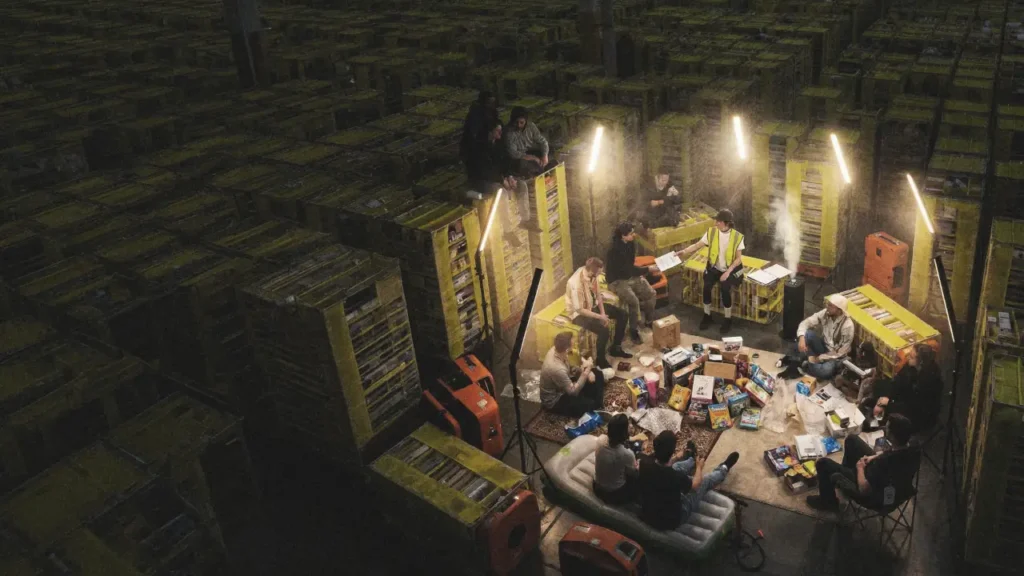
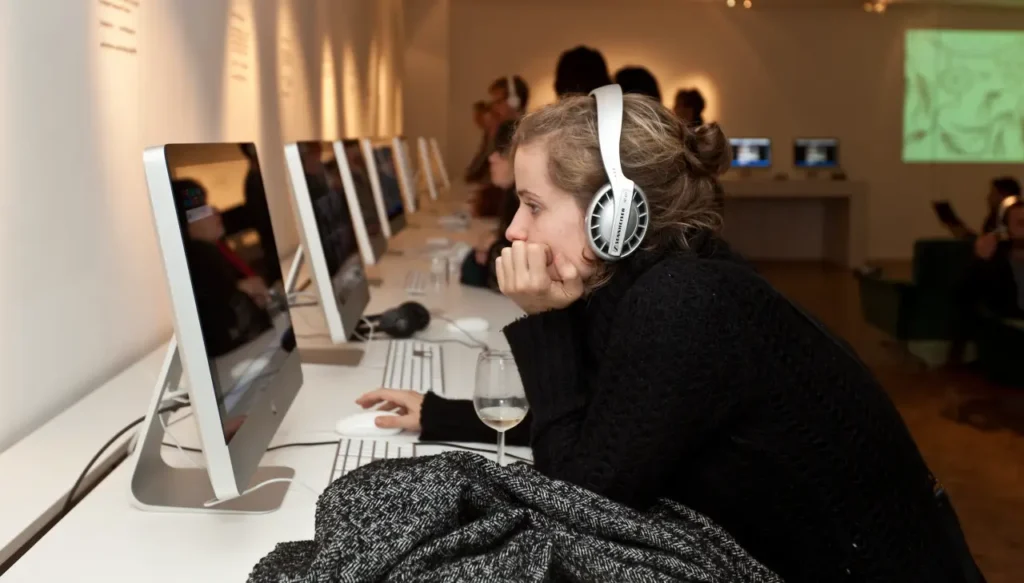
After COVID, the traditional media disciplines looked at digital creation and immersive in a new way, “which brought a beautiful pressure cooker moment of all these hybrid mixes of theater makers and filmmakers and storytellers and performers converging within open world gaming engines or online VR chat platforms and websites,” Sonnen believes. “I think that led us to the point where we are now, where we’re trying to reclaim physical space, but using all the affordances of the technologies that have emerged.”
Sonnen: At the same time, over the 20 years, those digital technologies have really changed what reality is. That has always been the parallel line that came through the works that we selected: artists reflecting on what is this technology doing to us as human beings? What is it doing to our behavior? What is it doing to the ways that we communicate, to the ways that we make love, the ways we reflect, the way we remember, the way we think about the future?
A new generation crossing disciplines
Looking through the archive from the last 20 years, many of the tensions, examinations and themes – like human vs. technology, our bodies, privacy, etc. – feel familiar and contemporarily relevant. Similar patterns are reflected in this year’s programme, and the retrospective pieces feel present and timely. But some of the new work brings those themes into uncharted territory. DocLab is going into spaces it has never been, Sonnen says, but there’s also a confidence with young or emerging artists that is really exciting.
Sonnen: They’re not just exploring the latest affordance of AI or the newest headset or technology, but taking things that were new 10–15 years ago and using them to tell their own story in a way that felt really moving. Artists are coming to us with great ideas and provocations on how to present their work, both for an individual experience, but also as collective experiences. We’re really seeing the crossing of different disciplines and different presentation forms being not just welcomed but instigated by a new generation of artists. We’re also seeing some subversive projects, artists really reflecting on the state of the world.
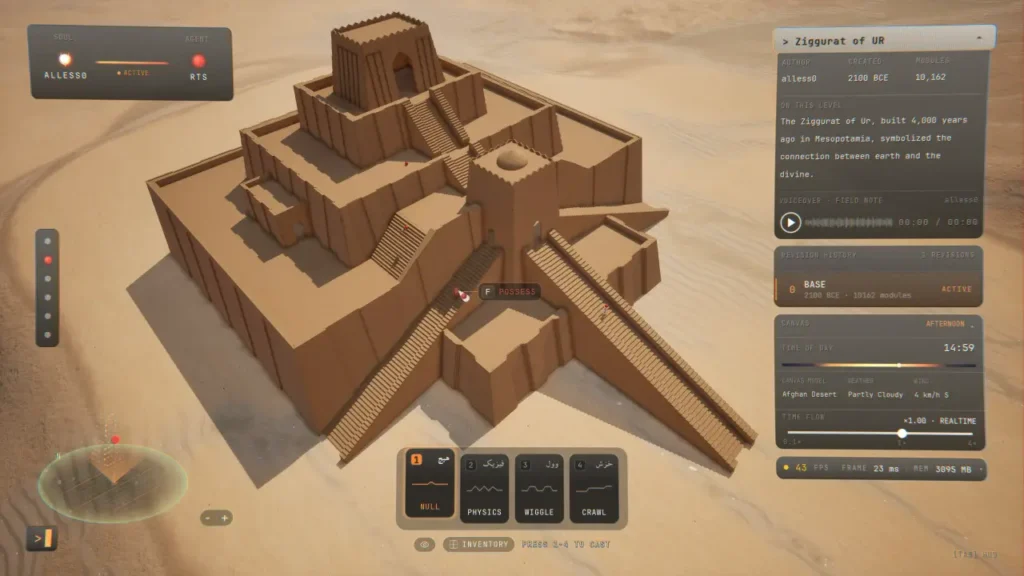
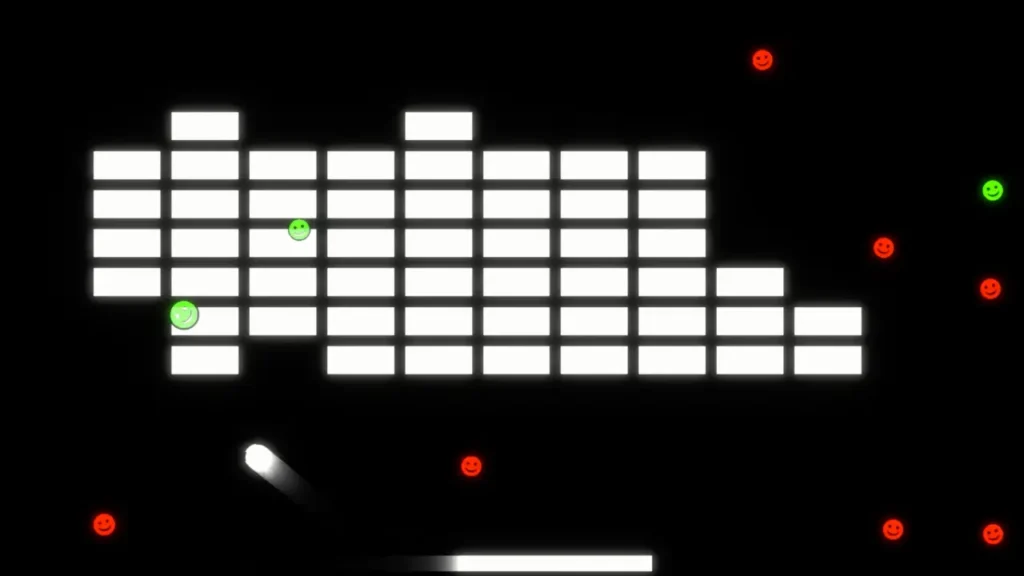
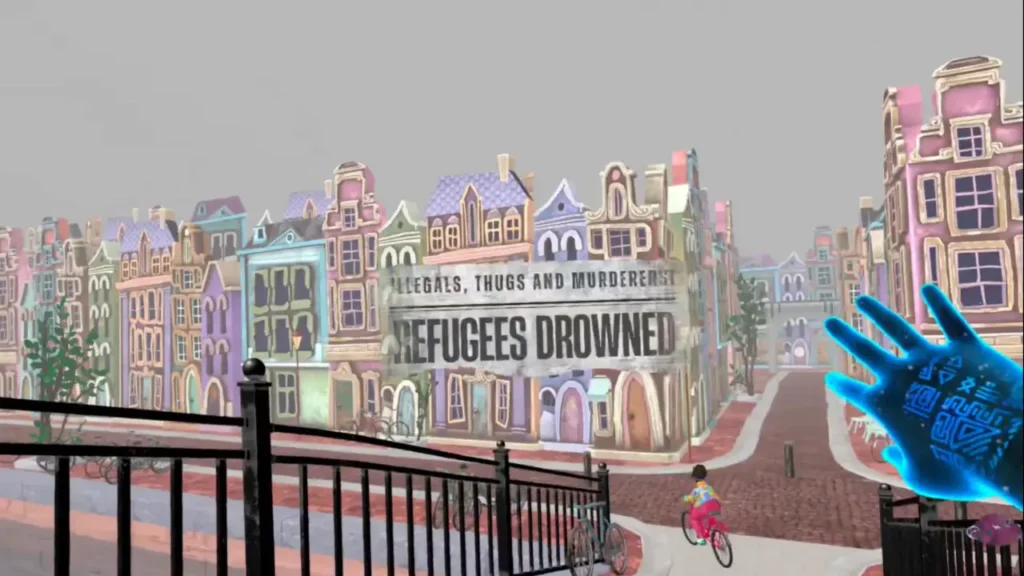
Samwell Baidu’s PLUM ROAD DREAM is essentially a documentary game, a 3½-hour experience that uses the affordances of gaming to tell a story of his heritage from Ghana and Belgium and their queer identity that is a celebration of what interactive documentary can be. He’s also developed a theatrical version that won an award at a theater festival. Lucas Rizotti’s ESCAPE THE INTERNET, having its world premiere after testing different iterations, is an audience participation experience that could travel to cinemas interested in offering new types of experiences to their audiences.
There’s PALIMPSEST (Guillaume Roux, Johan Delétang), an installation-type experience with a player and viewers, alongside ESHRAQ by Ali Eslami, someone who started out as a VR artist and who’s been working in Unreal and creating intricate iterative pieces that evolve over years.
Technology, power and the body
Ant Hampton returns with another interactive book performance, ALL THE DOWNTIME, capturing the zeitgeist and the resistance against the unbridled expansion of data centers, the hyper-capitalism of the Amazon warehouses, and what it means to be human in the context of those spaces – in a tactile, analogue form.
Kyle McDonald’s APOCALYPSE EARLY WARNING SYSTEM live-tracks private jets all across the world to get an early warning of the apocalypse. “It flips the power structure where those who own the data set know so much more about what we actually want before we know what we want,” Sonnen notes, “and then more on an emotional level of what image making means these days.” Ghazal Majidi’s TWENTY TWENTY-FIVE works as an interactive mirror, putting our body in relationship to the doom scroll images of war seen across our screens 24/7, but also turning our body into a device to actually experience these. “These projects address the impact of digital technology on reality itself,” explains Sonnen, “and then others celebrate the human flesh, physical reality and intimacy.”
ORGASMAGORIA by Dries Verhoeven, the Dutch entry to the 2026 Venice Biennale, is a provocative video installation created about and with online sex workers exploring the distorted version of reality. This is being presented in Amsterdam’s oldest live sex theater, Casa Rosso, in the Red Light District, truly opening up new spaces for interactive art.
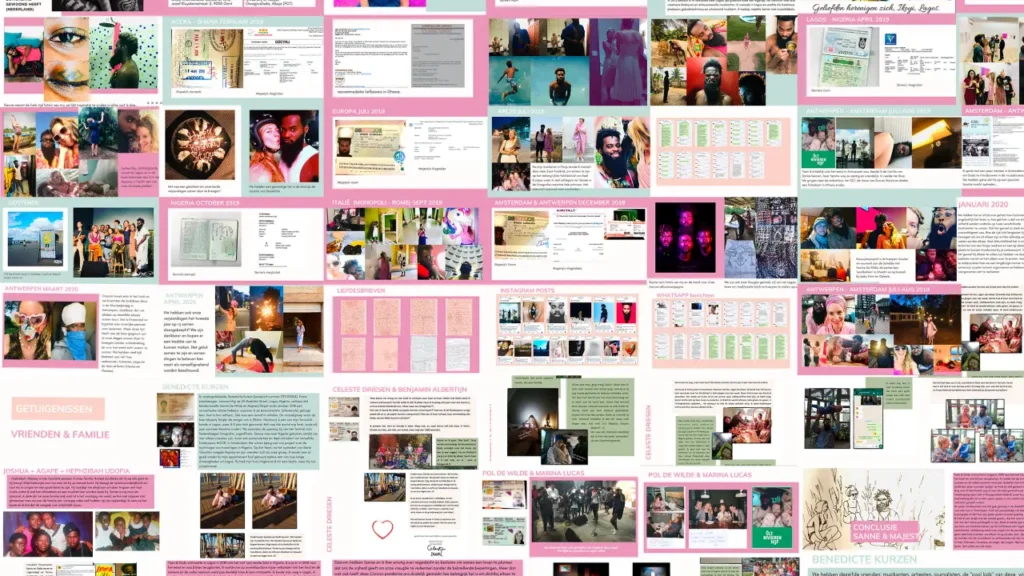
In THE LOVE FILES, Sanne De Wilde and Samir Vee have created a performative installation, a very personal one where Sanne shares the process she and her Nigerian husband went through to get a residency permit in Belgium, where you have to prove that your relationship is a real relationship. It asks the question: How can two people prove that their love is real? In Belgium, couples do so by sharing WhatsApp conversations, pictures, their digital online traces. “Sanne and Samir put you in the position of judging different love files, putting us in the shoes of the immigration officer, asking a much bigger question like what is authenticity?”
Tamara Shogaolu presents THE INVISIBLE WOMAN, telling the untold story lost in the archives of a Black woman living in Amsterdam in the 16th century. The VR opera headset version is presented along with the first taste of a physical live performance opera she’s developing together with the National Opera in the Netherlands.
WE SHALL RETURN is the most classic 360 documentary in the lineup, bringing the viewer to bear witness to the horrible reality of West Bank settler violence. Similarly, but with a completely different approach is TARTUPALUK, which takes you into Greenland and gives a sense of place told to you by the people of that place, the Inuit, in a hybrid fiction-documentary reality. UPROOTED takes you into the point of view of a plant, traveling across the globe, offering an absurd, funny, sad reality of global capitalism and its impact on nature.
The most physical and never-before-experienced-type projects are made by artists often represented at the festival, “who in many ways have shown us why this art form exists.”
“It shows that new technology can also be used not to isolate ourselves, but actually open up new ways to see ourselves.”
Anagram (May Abdalla and Barry Gene Murphy) is presenting HELLO YOU, a further development of the AMORPHOUS project they pitched at the 2024 DocLab Forum, exploring how we perceive our own bodies. The installation invites you to see yourself in a way that you’ve never seen yourself before, to play with what you like and don’t like about your body.
Taking it even further is Polymorf, exploring what it is to be not an individual, but an ecosystem of microorganisms living inside and on our bodies. Recent studies indicate many decisions we make are actually made in our guts, not our brains. Funny and provocative, MICROBIOME is also a serious research project they’ve been conducting with scientists, medical professionals and some of the best chefs to develop culinary experiences for our bodies and the microorganisms inside. PLURAL TASTING FOR TWO is a dinner experience for six people served to the person and their microorganisms, while HAUTE CUISINE FOR THE RECTUM is an experience that involves an upside-down chair and a choice of different Michelin-star menus catering to different emotions, administered both orally and anally to the participants. “This is probably the craziest thing that we’ve ever done,” Sonnen admits.
Independence, sustainability and a punk ethos
This year, Beata Calińska joined the curatorial team, bringing the perspective of a public exhibitor who has worked at Sundance New Frontier and the LA Music Center.
Sonnen: Working with Beata as co-curator really deepened and enriched the way we’ve been thinking around presenting work within a festival context, but also what it potentially could be outside of the festival, both inside our own venue in Vondelpark and beyond. How do we reflect? How do we present? How do we select? It felt like a very natural thing since we’re seeing increasing collaboration between festivals, venues and creators.
That collaboration is at the core of the Shared Realities research consortium, supported by CIIIC’s Artistic & Design Research for Immersive Experiences scheme. The consortium, led by IDFA DocLab in partnership with Amsterdam University of Applied Sciences, MIT Open Documentary Lab, WeMakeVR, ARTIS-Planetarium, Polymorf, ALLLESSS (Ali Eslami), Ado Ato Pictures (Tamara Shogaolu) and others, is also about “figuring out how we can support each other within our different roles within the field. How can we save the independence? How can we make this field more sustainable?”
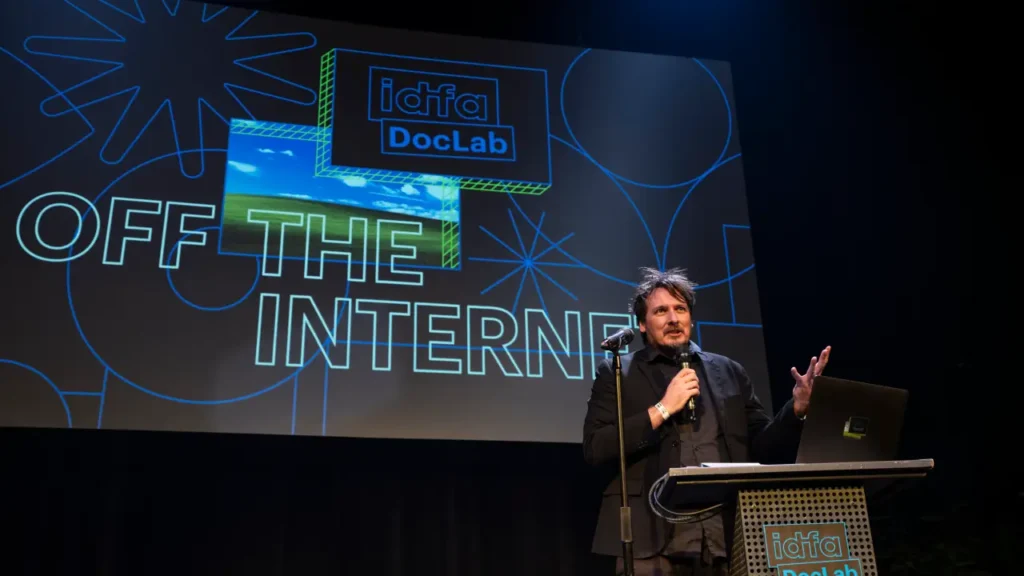
These questions will frame the day-long DocLab R&D Summit, with a focus on how artists use the affordances of interactive technology in a more sustainable, independent and ethical way, and how they design works that can still be seen in five years’ time, even as technology changes. Sonnen sees in this a spirit that has always driven DocLab. “It’s exciting to see a sort of punk ethos of ‘let’s make it work’. It’s the artists who have shaped what DocLab is, first and foremost. People like Anagram: I remember the first time they took a VR headset and two controllers and said, ‘What if we give the controllers to somebody else?’ That’s the basic idea: how do we use technology in a way it was not intended to be used?” The previous edition, Off the Internet, pushed that logic to its limit by asking what happens when artists let go of technology altogether. “We deliberately did that as the 19th edition, to give ourselves the harder challenge of deciding what we want, and what we can do, going forward.”