As part of the 51st edition of the Festival du Nouveau Cinéma de Montréal, the FNC Forum is part of a series of activities aimed at professionals in the film and audiovisual industry. Organized from 6 to 11 October 2022, the goal of the Forum is to support, “professionals in finding and sharing solutions that push the industry into the digital age”.
According to Andreina Aveledo, Head of FNC Forum, his year’s event is focused on “bold, emerging initiatives and innovation.”
In addition to the “Pitch Premières Œuvres” and the “Nouveau Marché,” two activities will be of interest to folks working in the field of XR: the panels “FNC Explore: The Future of XR Distribution in Sight” and “How Can NFTs Finance Today’s Cinema?” Read on to learn all about these stimulating discussions.
Original French version by Xn Quebec is here.
XR Distribution and Publishing
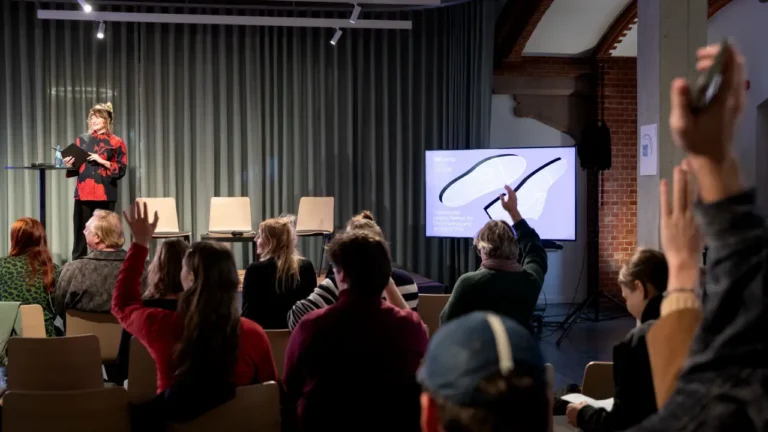
“The Future of XR Distribution” activity took place first, on Thursday, October 6, 2022. Like the discussion presented at the MUTEK Forum last August, the panel stemmed from the Crafting a Market for Independent XR study, to which the FNC contributed as a founding member of Québec/Canada XR, along with Xn Québec, MUTEK, PHI, and the Rencontres Internationales du Documentaire de Montréal (RIDM).
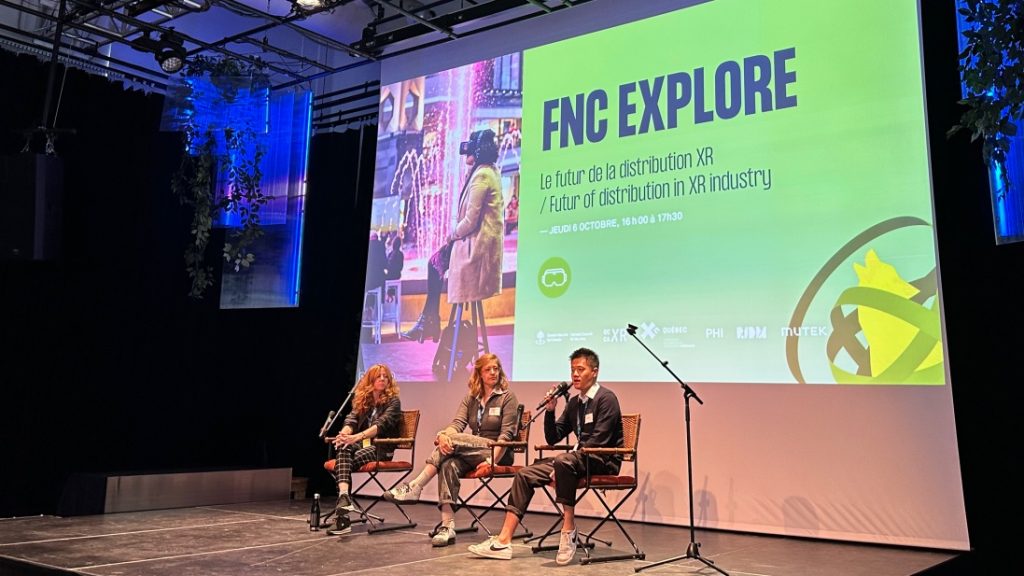
The panel was composed of Jimmy Cheng (Director of International Partnerships, Sandman Studios), Danielle Giroux (XR distribution and publishing manager, ASTREA) and Tammy Peddle (Marketing and distribution manager, National Film Board of Canada). In addition to the three panellists—all specialists in their own areas of XR distribution—moderator Katayoun Dibamehr (Head of New Media – FNC Explore) also gave the floor to members of the audience to offer another perspective on the issues discussed. These included Dana Dansereau (Producer, NFB), Marie-Pier Gauthier (Producer, NFB), Arnaud Colinart (Producer, Atlas V) and Myriam Achard (Head of New Media Partnerships and PR, PHI).
Since XR distribution is a vast subject, it would have been impossible to touch on every facet of the issue, especially in the 90 minutes allotted for the activity. Nevertheless, the discussion touched on a few elements of response that had not been addressed in so many words in the final report of the Crafting a Market study. Among these were the difference between distribution and publishing, as well as their respective challenges. On this topic, Danielle Giroux explained that it took some time before Astrea—Atlas V’s in-house distribution company— was able to build a team large enough for different people to dedicate themselves to the issues specific to each phase of the distribution pipeline.
The Chinese XR market
One of the most interesting aspects of the discussion was Jimmy Cheng’s portrait of the Chinese market. Since 2022, he has been working on international partnerships at Sandman Studio, which operates as a VR production studio, organizer of the Sandbox Immersive Festival, and more recently developer of the VAST platform (used as part of the SXSW festival and Venice Immersive in 2022). Jimmy Cheng gave us an overview of the changing landscape of XR in China, including the rapid emergence of Pico, whose latest headset is sure to bring competition to Meta Quest 2.
Still a new player on the international market, Pico is currently exploring several options in terms of licensing, making it a platform to watch. However, the panellists also noted that the habits and tastes of Chinese audiences – and Asian markets in general – are different from those in the West, requiring a targeted approach.
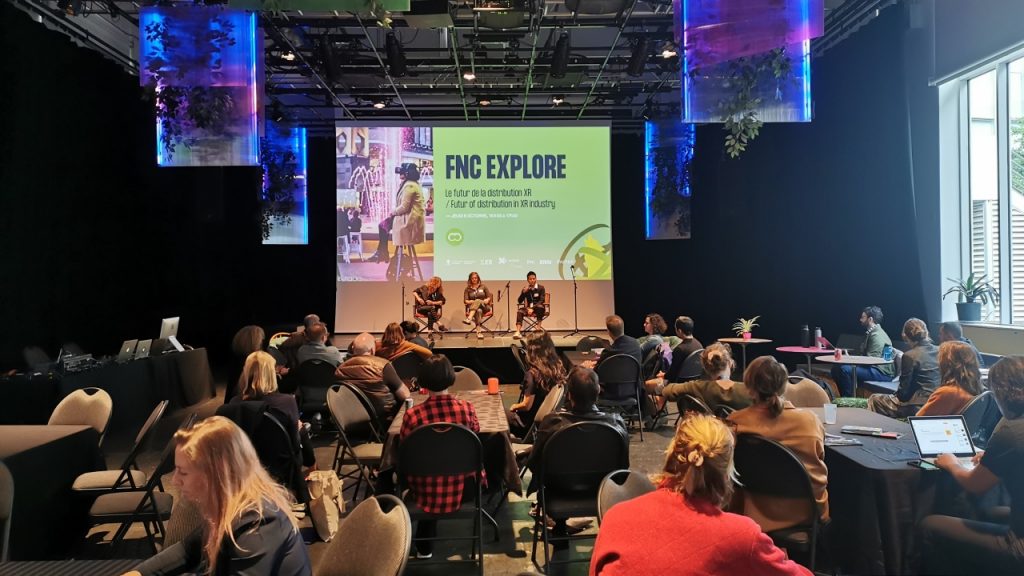
To this end, a question from the public prompted the speakers to address the importance of localizing content for audiences in the Global South, who do not necessarily speak English, or French. Jimmy Cheng noted that Chinese audiences generally prefer content in their native tongue, to which Danielle Giroux responded by emphasizing the importance of localization in Astrea’s international distribution efforts. Finally, Tammy Peddle gave as an example a number of NFB interactive productions that are distributed in several languages, sometimes even more than ten.
Community
A common question when it comes to XR distribution is how an independent narrative project can stand out from the games and apps that hog the spotlight on most platforms (Steam, Oculus, Viveport, etc). The problem is all the more visible on the Oculus store, which requires not only that the projects published on its platform be interactive, but also that they respect a minimum duration. “One of the main obstacles for VR on Meta is duration,” says Danielle Giroux. One potential solution put forward by the panel is to bring together several smaller projects into a collection that could exceed the minimum duration imposed by Meta.
This proposal recalls an idea mentioned by Michel Reilhac as part of the Crafting a Market study, namely to launch a label called the “Festival Collection” that would bring together works that have distinguished themselves on the festival circuit. They would thus benefit from greater visibility. It would also give the audience a more obvious way to find quality narrative works.
Finding the right price
One last point was unanimous among the panellists. We must learn to put an adequate price on the experiences we distribute. Jimmy Cheng says that even a symbolic prize — when licensing to a regional festival, for example — is important at this stage of market development. Danielle Giroux also recalls the negative association about a project’s worth that can come when it is free. Finally, Tammy Peddle highlights the fact that the life of a project goes far beyond its launch window, to which Danielle Giroux adds that Atlas V projects still generated revenue years after their release.
Some conclusions emerge from the panel “The future of XR distribution”: we must continue to develop new strategies, adapt to the realities of different markets and platforms, while continuing to defend the interests of independent artists. These challenges are not limited to the independent XR market. They also concern the world of cinema (the audience to which the FNC Forum is addressed first and foremost), which continues to adapt to the changes brought about by new digital technologies and the ongoing challenges of sharing content online.
NFTs to the rescue?
In response to the challenges facing the audiovisual world today, the panel “How can NFTs finance today’s cinema?” proposed an alternative approach to established methods for funding and distributing films. Unlike the “How to Navigate the Canadian Audiovisual Industry?” activity—which took place the day prior and allowed the FNC Forum audience to learn more about the sources of funding offered by various funders across the country (SODEC, Telefilm Canada, Canada Media Fund, etc.)—the present panel brought up a completely different point of view by asking whether NFTs “represent a standalone funding opportunity for the film and new media industry?”
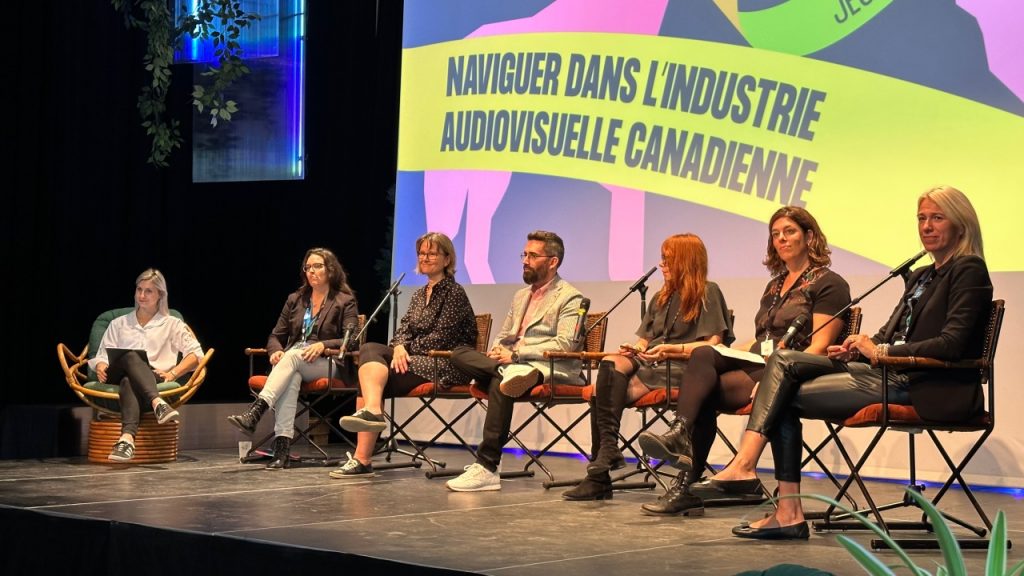
The panel got off to a good start with a TikTok video that humorously presented some common misunderstandings related to NFTs. As indicated by moderator Camille Martinez (Head of Public Financing, Festival du Nouveau Cinéma), the objective of the panel was to demystify NFTs and to see, with the help of a very specific case study, how this technology could be added to the funding toolbox of a film production. The aim was therefore not to cover the entire subject — too broad to be fully addressed in the short time allotted to the panel — but to offer an overview of some central questions: what are NFTs? Can they be used at all stages of a production? How are they different from crowdfunding? What is the ecological impact of these technologies?
This being a vast and complex subject, it should not be surprising that the panel did not answer all the questions around NFTs. Some of the most relevant issues that were discussed included the protection of intellectual property and the payment of royalties through blockchain technologies. However, as is often the case with this kind of topic (artificial intelligence, metaverse, virtual reality, etc.), the fact that knowledge of a complex set of technical concepts is required may have prevented neophytes in the room from getting the most out of the discussion.
What’s next
As summarized on the FNC Forum website, the event aims to “better understand the constantly evolving challenges of our industry […] within the new codes of inclusions, ethics, and ecology.” The two panels summarized in this report offered a beginning of an answer, but it will obviously be necessary to continue the discussion if we want to approach a more complete solution.
It is with this in mind that another panel on XR distribution will be organized as part of the next RIDM Forum, which will take place in Montreal in November 2022. Stay tuned for developments in this ongoing discussion. Also watch the Crafting a Market study website for other reflections that will follow the FNC Forum and set the stage for the RIDM Forum.
FNC Forum – Conferences
FNC EXPLORE: The future of XR distribution in sight
With :
- Jimmy Cheng, Director of International Partnership (Sandman Studios)
- Danielle Giroux, XR distribution and publishing manager (ASTREA)
- Tammy Peddle, marketing et distribution manager (National Film Board Of Canada)
How can NFTs finance today’s cinema?
Moderated by: Camille Martinez, Public funding and government relations manager (Festival du Nouveau Cinéma)
With:
- Salar Shahna, galerist NFT (SP3CE)
- Amos Rozenberg, Music Hole producer (Paramax Films)
- Michelle Munson, CEO et founder (Eluvio) – online