
Yves Ubelmann, founder and CEO of Iconem, a company specializing in heritage digitization, tells us about his teams’ work in dangerous areas, their collaboration with major technology companies such as Microsoft, and their first immersive exhibition with the Louvre.
The origins of Iconem: the Middle East
Some fifteen years ago, I worked as an architect with archaeologists from the DAFA (or French archaeological delegation in Afghanistan) in northern Afghanistan. In these remote territories, I realized that sites dating back hundreds or even thousands of years could disappear – partially or completely – from one year to the next. There are many reasons for this: wars, looting, population growth, infrastructure construction and even climate change, which can cause particularly violent weather episodes.

In fact, man-made phenomena are fairly recent. Looting, for example, is on the increase with the globalization of the heritage market. Unfortunately, despite the commitment of local archaeologists, there are few protective measures in place. Above all, many historic sites are difficult to access and uncontrollable. Our team saw the consequences of looting in northern Afghanistan, in the middle of the desert. These are areas with little surveillance.
That’s why I was initially interested in safeguarding these sites on a personal level. Physical safeguarding was out of my reach. It’s a process that requires a strong political initiative. So my aim was to protect the image of historic places, especially in war-torn countries, using digital technologies.
Cutting-edge technologies to protect world heritage
At the time, I was lucky enough to meet a researcher in artificial intelligence (AI), Jean Ponce, with whom we still work closely. Our small team was the first to adapt 3D reconstruction algorithms to archaeological study. We quickly applied them to the heritage of the Afghan sites we knew. Today, this approach is used in several fields of industry. Then we started working with drones, which had not yet been standardized, nor commercialized as we can see today. In addition, Iconem trains specialists on site to work with photogrammetry technologies and to react when heritage requires emergency action, without waiting for foreign teams.

Then, in the years 2011-2013, war broke out in Syria, Iraq and Libya. Iconem was then able to offer its know-how and methodologies to experts and scientists in the affected regions. For example, in 2015, when Daesh destroyed Palmyra. In ten years, we have seen the international community understand the importance of conserving historical heritage in war zones. This issue has entered the agenda of NGOs and global institutions, and we have been confirmed as an important player in this field. Iconem has received a form of public recognition from major organizations such as UNESCO.
Since then, our technical expertise has kept us one step ahead. We also work for major companies such as Microsoft. For them, it’s fundamental to be able to promote the positive uses of their technologies. For example, Iconem has supplied Microsoft for ambitious projects such as Le Mont Saint Michel, Olympia and Open Notre-Dame. Preservation and memorization of heritage are the very objectives that need our innovative approaches to come to fruition.
Towards immersive exhibitions
Iconem is currently developing two different activities. The first is emergency heritage rescue, which has always been at the heart of our company. It’s not the dimension that finances the company’s development, but for us it’s very important to preserve it.

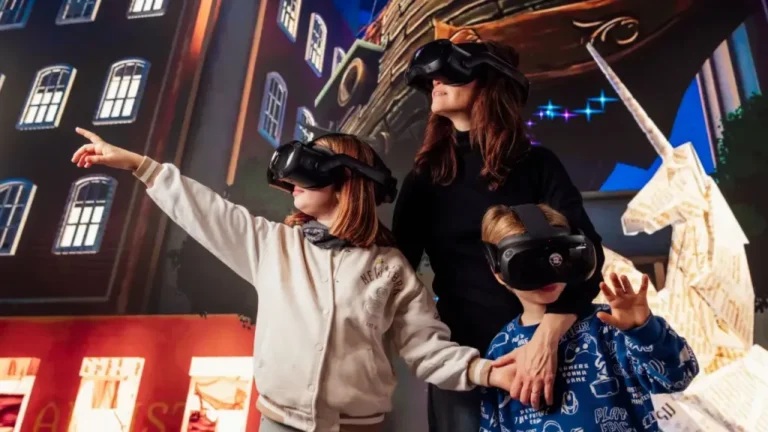
At the same time, part of our team works on audiovisual production, notably for digital exhibitions. In this context, Iconem regularly collaborates with major cultural institutions such as the Louvre, the British Museum, the Grand Palais and the Institut du Monde Arabe in Paris, or the Smithsonian in Washington. Thanks to our partners, we deploy the digital content we’ve managed to scan in museum spaces through monumental video projections.
We still apply this approach, but it all started seven years ago with a proposal from the Louvre and the Grand Palais to do an exhibition on Palmyra and the destruction of its heritage. Iconem was one of the few experts to have gone to Syria to scan the site at that complicated time. Our aim was to organize a meeting between a Parisian public, who didn’t know much about these sites and didn’t have the opportunity to visit them, and the threatened treasures of Syria and Iraq. Iconem worked on the entire production of the immersive images. In 2016, digital exhibitions didn’t exist. This was our first major experience, and it was a great success with the public. And it was also a discovery for visitors to Paris, to see a new form of exhibition with large videos all around.
Competition in heritage digitization
There are now several quality companies in France, Germany, Italy and the United States. But I know of no company that has been as active as Iconem in conflict zones. We often find ourselves working alone in these areas. There’s obviously the logic of financing this type of mission, which is difficult.
Iconem is currently preparing missions in Iraq and Libya. We are still active in Yemen. The company is working in Ukraine, notably with the Ukrainian Ministry of Culture. We are currently setting up a project in Sudan. I think this global approach and, above all, this focus on the most vulnerable and, unfortunately, least well-funded areas, is what sets us apart.

Coming soon…
Iconem plans to strengthen the rescue dimension through the creation of an NGO that will be able to work with satellite tools, as well as develop emergency actions in every country in the world. These are things we’re already doing, but at the moment the company has no dedicated funds, being obliged to self-finance its missions. We want to better support these actions through a dedicated structure, which will be better able to interact with national and international institutions.
At the same time, our aim is to expand our audiovisual activities and become more involved in the field of education, in order to arouse interest in heritage preservation, especially among younger generations. Today, our production studio works with museums, artists and TV channels to create documentaries. Our 3D models help to explain important issues to a wide audience: how monuments are built, how they were conceived, how they were realized and how, from certain ruins that remain today, we can reconstruct original states of some of these sites.