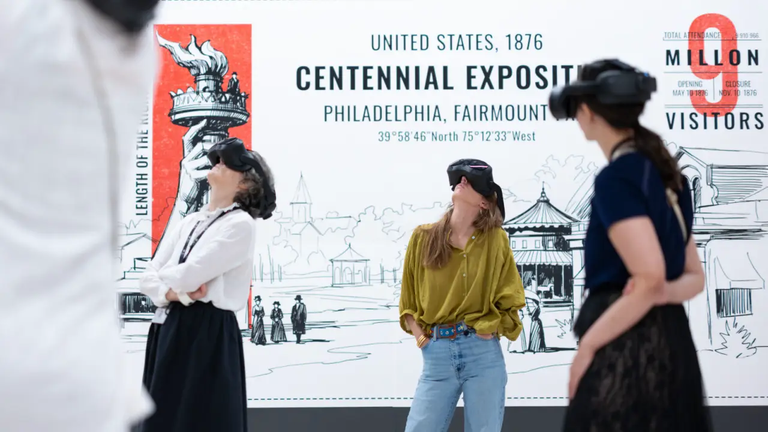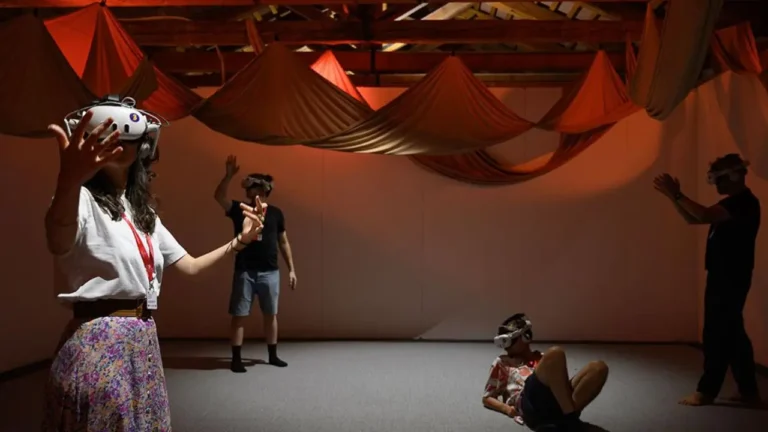
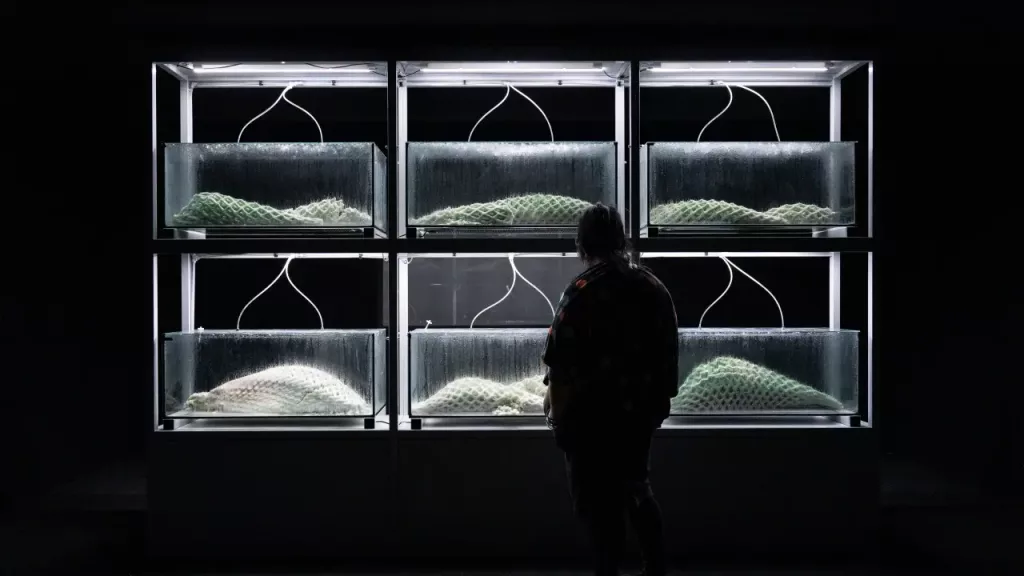
Published on September 29 by Correspondances Digitales, the white paper “Digital Creativity: Towards the Consolidation of a Rich and Diverse Ecosystem?” takes on a complex task: providing a European overview of digital creativity, its venues, producers and distribution models. A landscape that now extends well beyond the boundaries of XR.
After five years of NUMIX LAB and more than 2,300 professionals brought together across eight countries, Correspondances Digitales already had a privileged vantage point on the sector. The white paper, developed as part of the European programme supporting the 2025–2026 edition of NUMIX LAB (Toulouse, Barcelona and Madrid, from November 30 to December 4), builds on this accumulation of encounters and visits. Various studies and numerous consulting assignments have also contributed to the analysis. “We were beginning to develop a vision, in impressionistic touches, but one that was nevertheless fairly comprehensive at European level,” explains Antoine from Correspondances Digitales. The aim was to provide an initial synthesis.
The exercise begins with terminology. Digital creativity, immersive, XR: their boundaries overlap without necessarily referring to the same realities. This contributes to a fragmented understanding of the sector among decision-makers and funders, making it more difficult to design appropriate public policies. The white paper therefore adopts a broad scope: immersive exhibitions, digital installations, video mapping, fulldome, virtual, augmented and mixed reality, immersive sound and hybrid formats. This choice is deliberate, as these forms are increasingly converging: VR experiences can be hosted in large-scale immersive venues, while VR projects can be adapted for fulldome environments, among other possibilities.
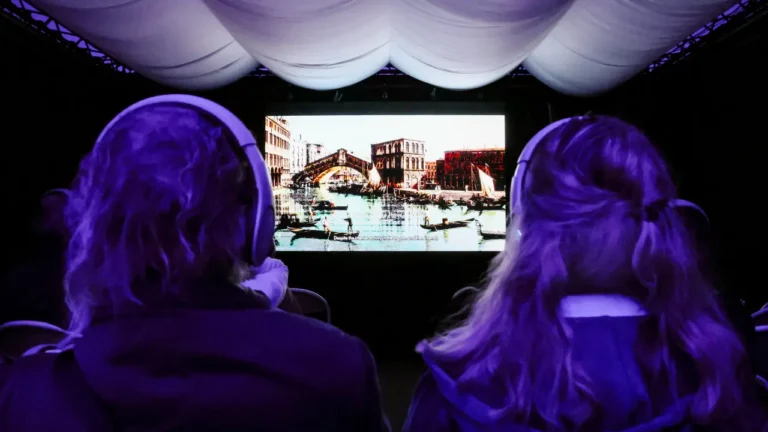
Cover: NUMIX LAB 2025 📸 Gergely Kessy
From technologies to venues: outlining a European ecosystem
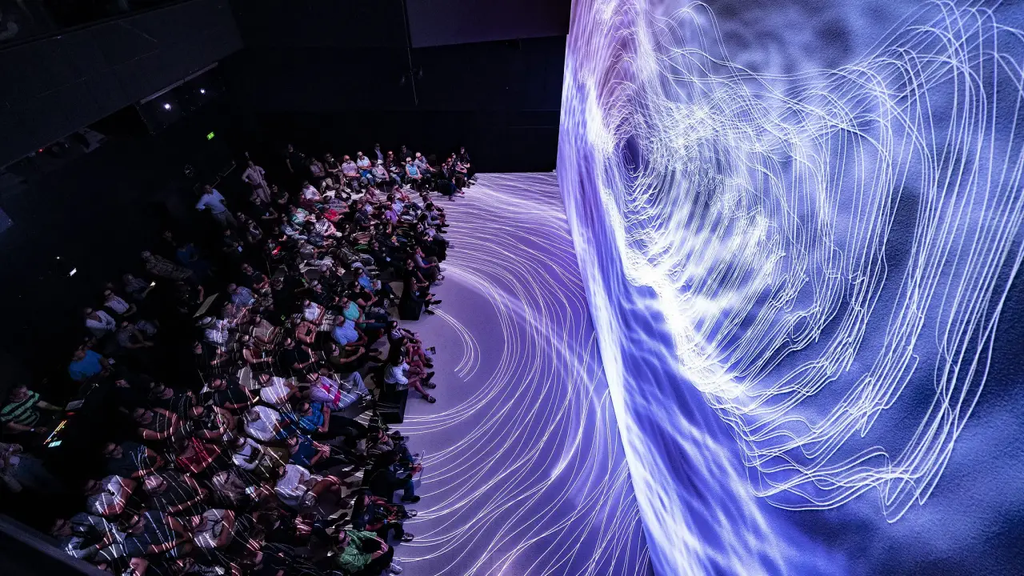
One of the report’s main approaches is to examine the sector through its exhibition and distribution spaces. Museums, heritage sites, large-scale immersive venues, digital art centres, VR venues, planetariums, festivals and temporary spaces reveal less a homogeneous market than a constellation of very different uses — but also growing opportunities for cooperation.
Immersive venues such as Kunstkraftwerk Leipzig in Germany, for example, collaborate with museums to develop immersive exhibitions, including museums in Florence, while also working with digital installation art festivals to present Brussels’ Bright Festival annually. Correspondances Digitales estimates that Europe has between 50 and 70 large-scale immersive venues, 100 to 250 centres specifically dedicated to installation-based digital art, 800 to 1,000 active planetariums and between 500 and 1,000 VR venues. These estimates should be treated with caution, as new immersive venues open every year and their engagement with digital creativity can sometimes be temporary. More importantly, simply adding these spaces together is not enough to define a market, which still needs to mature and become more structured. Despite the diversity of models, however, collaboration between venues is becoming increasingly common.
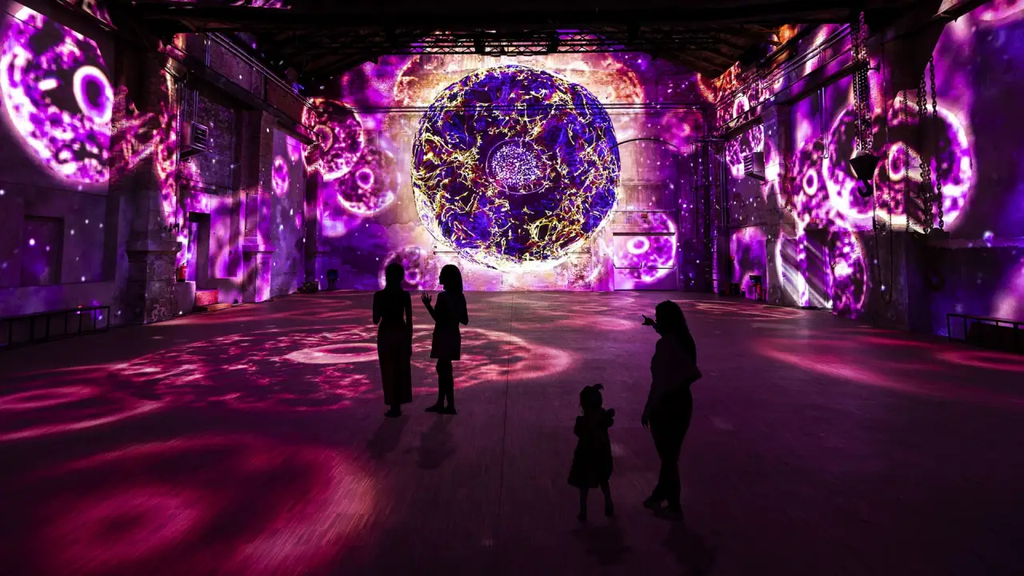
This diversity is precisely what the document seeks to make visible. “The target is moving; it changes over time and across territories,” Antoine explains. Rather than an exhaustive census, the study offers an analysis intended to outline a sector that may eventually require more dynamic mapping tools.
It also highlights changes within the venues themselves. Some are developing permanent programmes, expanding the range of formats they present and gradually adopting models closer to those of traditional cultural institutions. Projection, VR, installations, concerts and live performance can now coexist within the same programme. Three trends are emerging: the development of permanent venues, stronger networking between them and increasing hybridisation.
Technical format is therefore becoming less important than a venue’s ability to host, adapt and programme different kinds of work. For audiences themselves, the distinction between immersive, XR and digital creativity is probably far less important than it is for professionals positioning themselves within the sector.
Networking is also becoming an important lever. As Antoine puts it, “These venues exist, but they can become much stronger once they start working together.” Several networks are already exploring this direction across immersive venues, planetariums, light art and spaces sharing similar technical infrastructures. Ars Electronica’s Deep Space Network, for example, brings together venues using comparable systems, facilitating the circulation of programmes. Festivals and events are also contributing to this touring logic.
From one-off projects to the circulation of works
The report’s second major focus is on producers and business models. Here again, no single structure dominates. Correspondances Digitales identifies three broad dynamics:
- organisations that continue to operate through bespoke creation;
- those developing their own operating or distribution platforms;
- and more hybrid players working across culture, events and commercial commissions.
Behind this diversity lies a common question: how can producers avoid starting again from scratch, economically, with every new production?
Part of the sector is now building catalogues, sharing technical infrastructure or adapting the same platform to different content. Lower barriers to accessing technology and greater familiarity among audiences are supporting this shift. Putting a VR headset on a visitor no longer carries quite the same experimental dimension it did ten years ago.
That does not mean the sector has found its economic model. The difficulties recently faced by several studios are a reminder of the fragility of some structures. Artistic and technological maturity do not guarantee profitable operations, nor do they ensure that companies can absorb the risks associated with ambitious productions.
The study also stresses the need to better anticipate how these productions can reach wider audiences by building closer relationships with exhibition venues. For producers, knowing that a project can be presented across several locations can alter its economic equation. For venues, sharing works, expertise or investment can strengthen programming without requiring each organisation to carry the full cost of a new production.
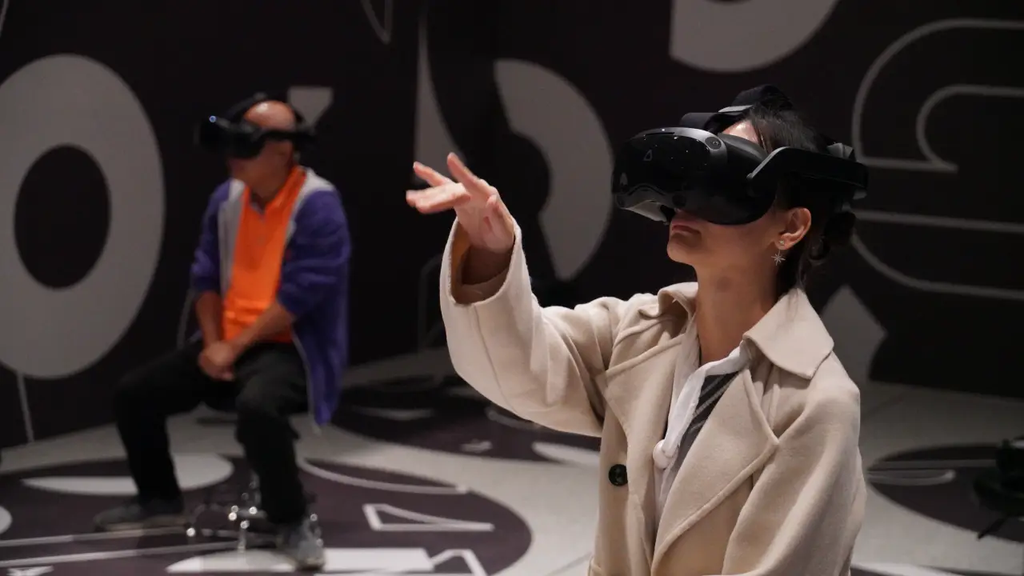
This approach is already taking shape but still needs to be consolidated. Numerous networks now bring together immersive venues, such as the Immersive Center Alliance, planetariums, including Wisdome, or light art festivals through organisations such as the International Lightart Festivals Organization. Correspondances Digitales stresses the need for continued support, particularly at European and international level, to enable these networks to work together more effectively.
A consolidation that remains difficult to measure
This consolidation leaves one major question open in the white paper: how can the sector be measured economically?
Available estimates can run into several billion euros or dollars for certain market categories, but they often combine hardware, software, gaming and uses far removed from cultural creation. At the other end of the chain, figures reported by producers and operators remain fragmented and rely on methodologies that are difficult to compare.
Yet this lack of data affects the ability of public authorities, investors and professionals to understand what is actually working. Visitor numbers, ticketing revenue, operating costs, licence fees, territories reached and the lifespan of individual works are among the indicators that still need to be developed — or at least shared more widely.
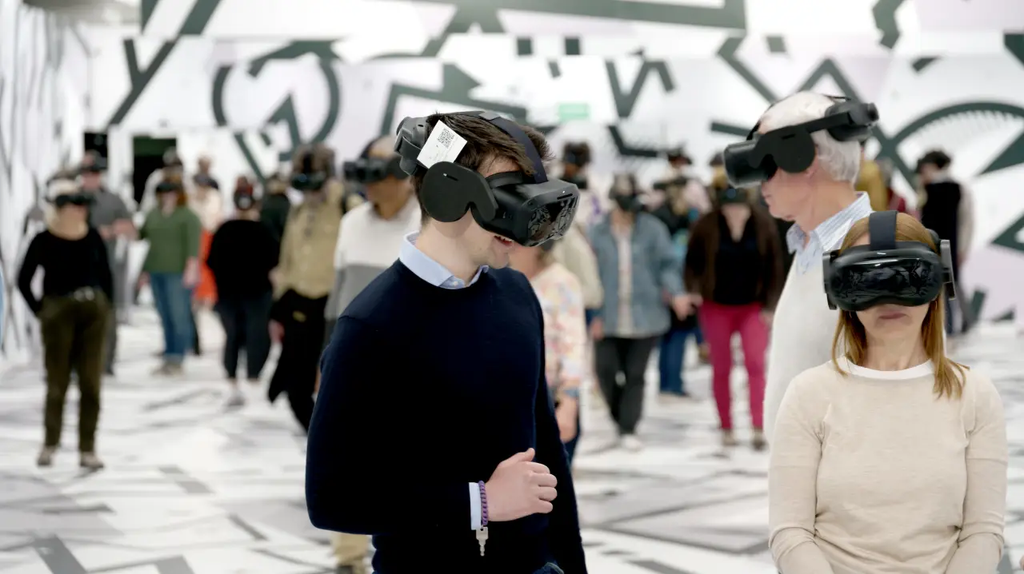
The question mark in the white paper’s title therefore matters. The document identifies signs of a more structured ecosystem without concluding that consolidation has already been achieved — a subject that will be among Correspondances Digitales’ next areas of work, in close collaboration with industry stakeholders. Audiences are increasingly familiar with these experiences, permanent venues are emerging, programmes are becoming more hybrid, producers are adapting their models and networks are gradually organising the circulation of works.
A sector can mature while still going through a difficult economic period. More venues and better command of technology do not automatically create sustainable models. Support remains important, particularly for smaller creative companies and networks seeking to operate beyond their domestic markets.
Above all, this mapping exercise looks at digital creativity as something broader than any of its individual communities. “There are still some grey areas,” Antoine acknowledges, but this cross-sector perspective can also encourage particularly fruitful collaborations.
This is where the next phase of the work begins. Having identified the players, venues and models that make up this ecosystem, there is still a need to better document what circulates between them: not only works, but also investment, revenues, audiences and risks. The report published this week provides a first common foundation for a European sector whose contours still need to become clearer — even as many challenges remain on the road towards consolidation. It is now up to all of us working across this field to contribute to that process.