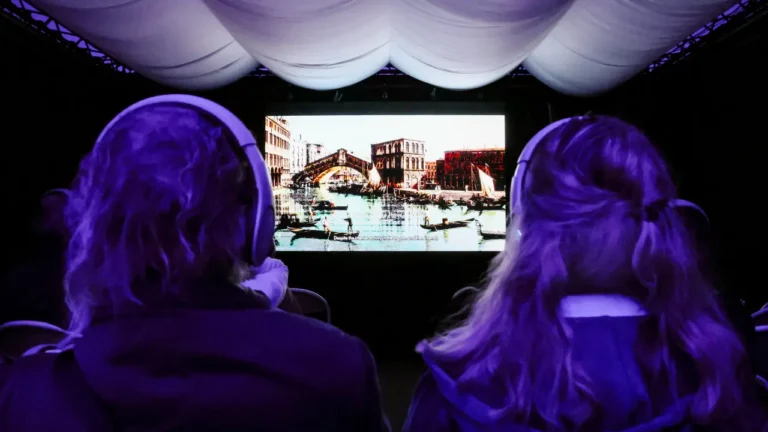
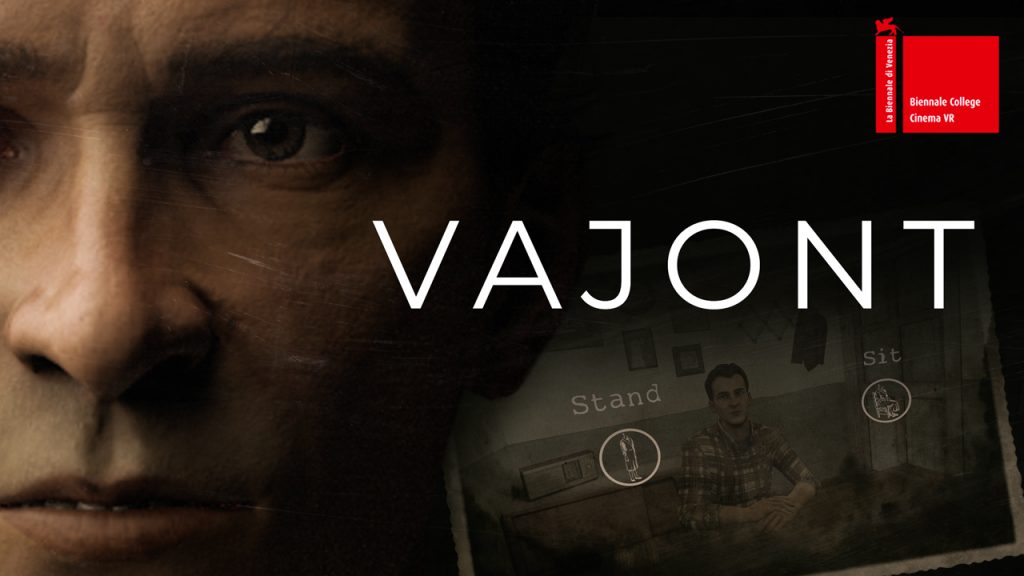
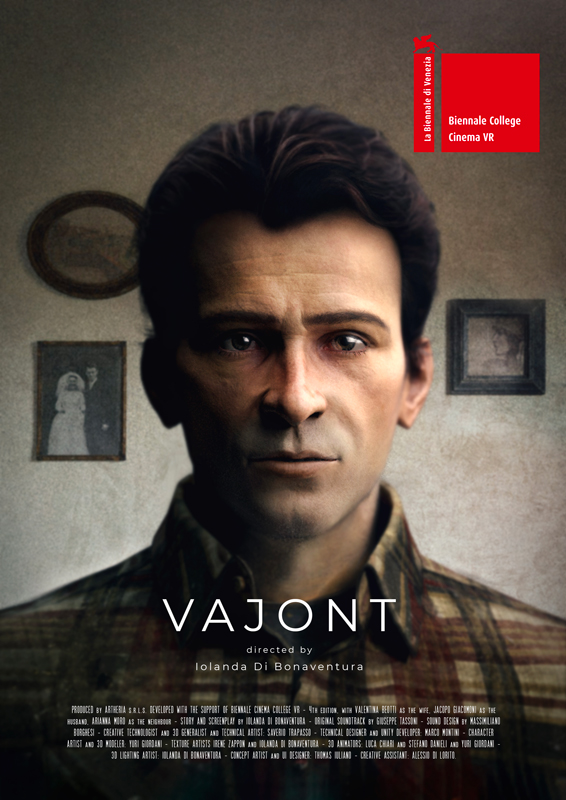
Spotted in 2020 among the projects supported by the Biennale College Cinema VR, VAJONT was then presented in the Venice VR program out of competition. On the occasion of the online release – on Oculus – of this real-time experience, we meet the Italian team of the project, the director Iolanda Di Bonaventura and the creative technologist Saverio Trapasso, currently in residence at the Phi Centre in Montreal for their next immersive project.
The real fact as a source of immersion
Iolanda Di Bonaventura – I consider myself first and foremost a visual artist and a scriptwriter. I am constantly looking for new languages to create, to imagine stories. I started with photography, and I quickly asked myself the question of how to better interact and engage the spectator.. Virtual reality imposed itself on me, and we created with Saverio a first work called THE WEIGHT OF EVERYTHING THAT IS NOT HERE, with a distribution in Italy, Sweden and UK – but no real B2C distribution yet.
Saverio Trapasso – For me, immersive creation is an exploration. I consider myself first and foremost a technician, a craftsman with as many philosophical aspects as technological ones to work on. Technology is supposed to improve the human condition; there is an interesting debate about its role when addressing emotions as in VAJONT. I see the possibility of moving forward in the construction of new creative languages.
Iolanda Di Bonaventura – Saverio and I met at a digital art school, and we had many discussions about our next project. VAJONT came to me because of its history (the mountain Toc collapses into a lake north of Venice and submerges the Vajont dam in 1963, killing 1900 people in the village of Longarone). I myself survived an earthquake about ten years ago in my hometown. And I built the VR experience not on this kind of tragedy, but on the expectation that precedes it. What choices to make? I talk about instinct, about tradition, about the choices to be made in these conditions.
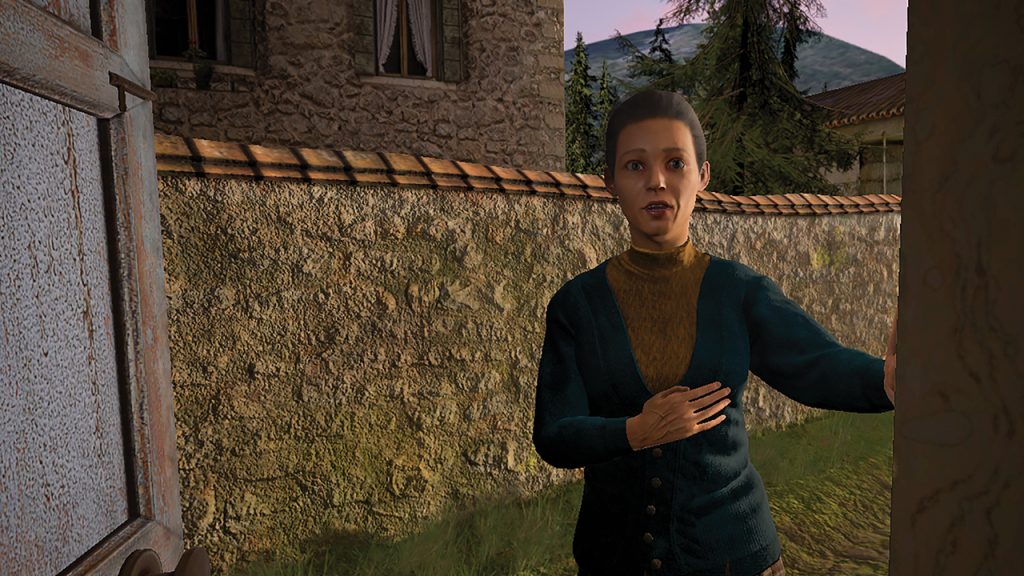
Iolanda Di Bonaventura – Virtual reality also allows me to describe this unique situation, and to put the viewer in the shoes of the protagonists who live this type of countdown. Having the perspective of being on the edge of that precipice, of that fateful moment, was what interested us. The past doesn’t matter; it’s the present that’s at stake. At the time of my earthquake experience in 2009, I shared this type of moment with my father. We had to decide whether to leave our home or stay. We stayed, feeling protective and defensive – which in itself made sense but was a bad decision. Because the house fell apart. That’s why I want to push the viewer to really choose in a limited time frame.
Iolanda Di Bonaventura – And I add a sociological study at the same time, related to Italian culture. There is a national feeling of solidarity, of family that unites us, binds us. And maybe it’s different in other countries.
Branch-based storytelling: an immersive example with VAJONT
Iolanda Di Bonaventura – The choice of a branching narrative was very simple: since I was a little girl I have been fascinated by these stories with different choices, whether in video games or literature. VAJONT allowed me to explore this. We have two different behaviours: many people – and often men – leave the experience as soon as possible. On the other hand, a majority of women try to convince the husband, and solve the situation on the spot. My role is to offer the freedom to choose, and to build a time frame for it.
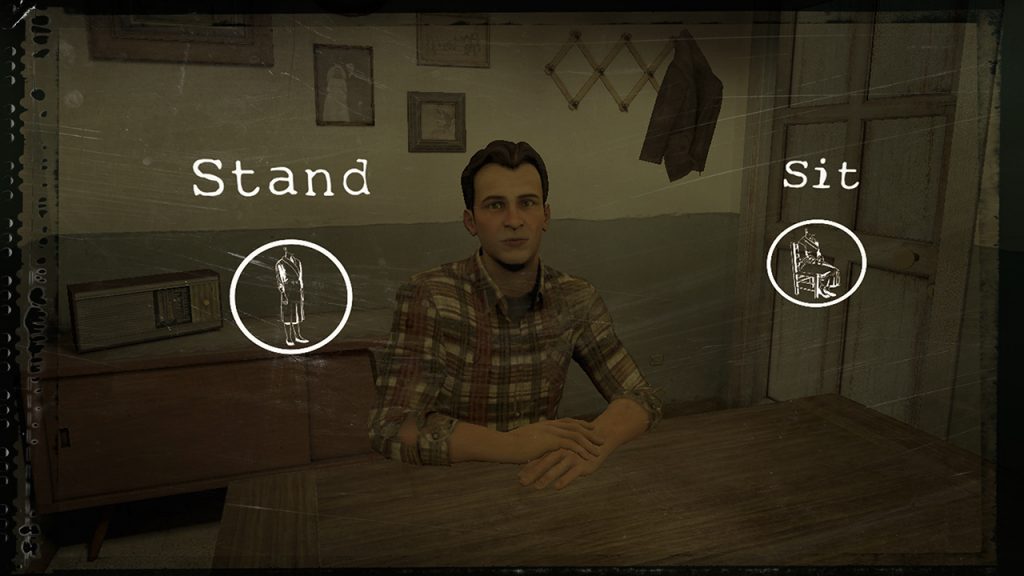
Saverio Trapasso – I also explored these forms of storytelling early on – especially in the early 90s with some RPG games, of which I was one of the first Italian modders. It’s almost archaeology now! I love this type of concept, but also the sociological study of video games and gamification. A challenge for me is to find a balance between building an interactive story and knowing your audience well. Including the user who will sabotage your story by going to explore their weak points. While my role as a designer is to be able to “control” the end user…
Iolanda Di Bonaventura – VAJONT was written in one year. I had to learn how to be a game designer. There are 52 different choices in the story. It was a lot of work! For the anecdote, we had to print all the possible narratives, and we couldn’t find a printer that could handle that… And for the Biennale College in Venice in particular, we had to explain to the mentors what we were doing: it was still very complex to illustrate everything in a single image or diagram.
Saverio Trapasso – It takes time to design this type of story, simply because you have to test each phase of the project so much. You try to identify bad habits that can corrupt the experience. The prototype took us a long time.
On the reality of the experience: a graphic design
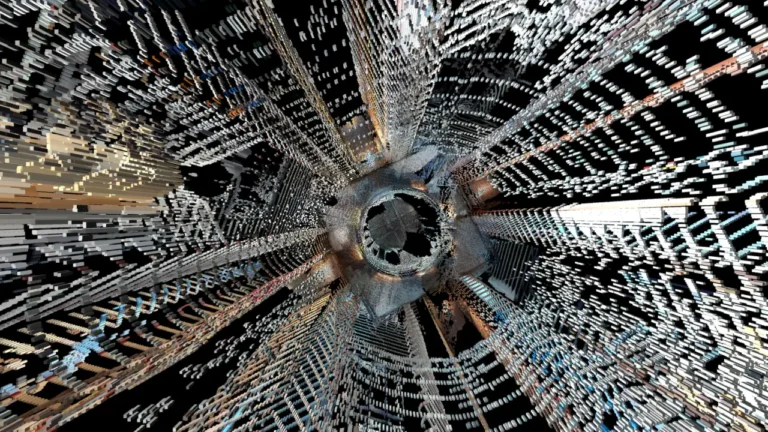
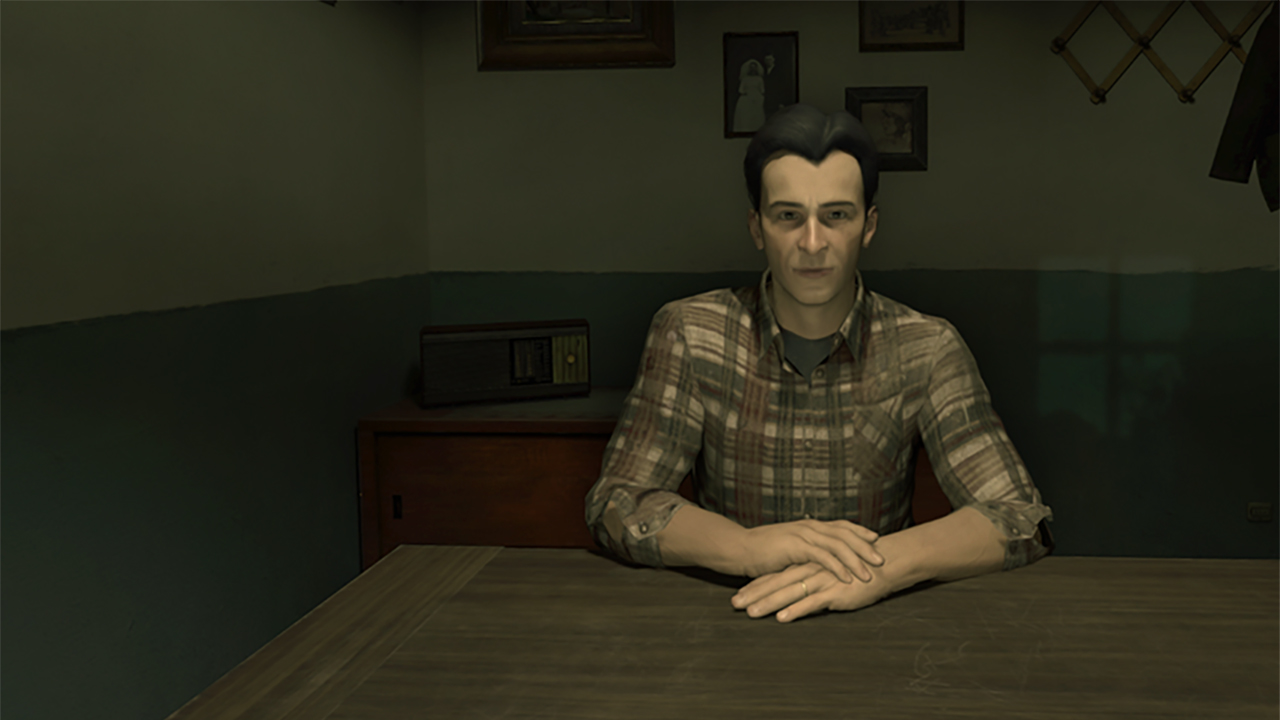
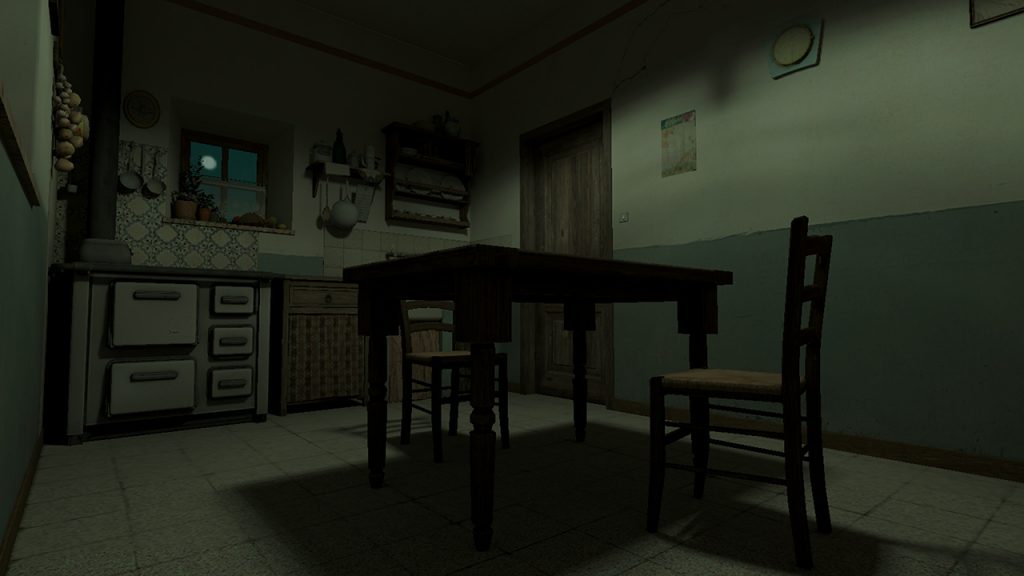
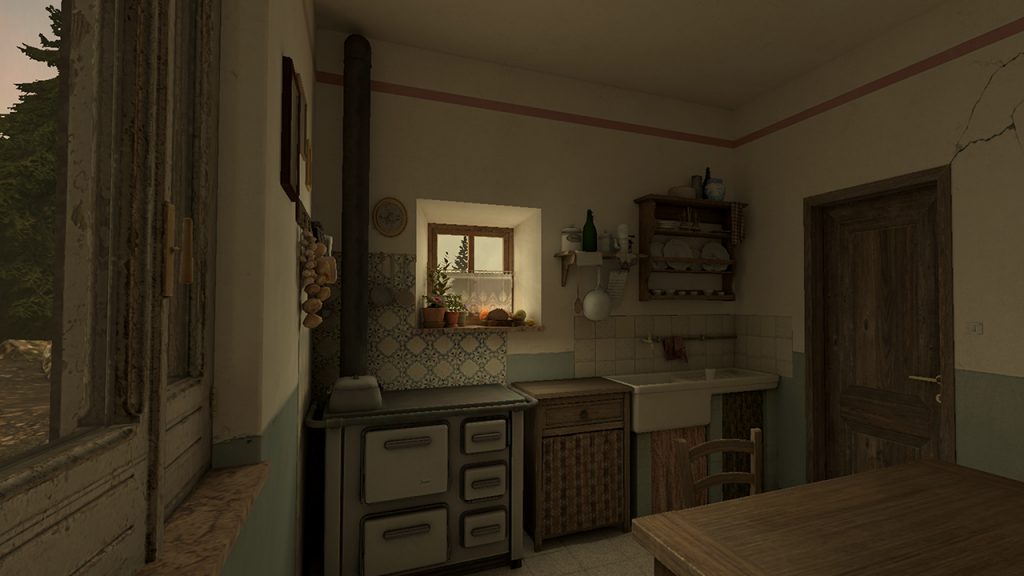
Saverio Trapasso – The work we did on VAJONT about the reality of the experience is immense. Everything was done by hand, using photographs and historical references, from objects to characters! The male character, whom we called Fernando, is modelled after Iolanda’s grandfather. We wanted to find the clothes, objects and furniture specific to that period of time. Here, too, we did scrupulous research to be as close as possible to the truth.
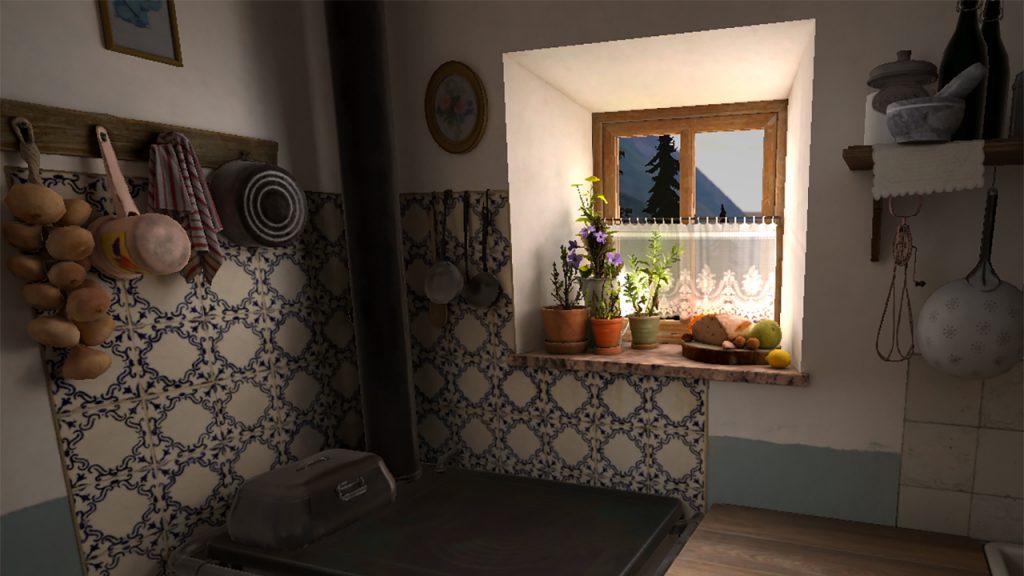
Iolanda Di Bonaventura – And it is also true concerning the architecture of the places. At that time, the most frequent photographs were of human events: weddings, births… We had to question some of our grandparents and cross-reference the information. Moreover, on the 3D design, we were only a small team on VAJONT with a maximum of 12 people.
From Biennale College to Phi Centre: the importance of artists’ residencies
Iolanda Di Bonaventura – Our participation in the Biennale College Cinema VR was a fundamental step for us, but above all a period that marked me personally. The benevolence, the trust and the presence of the team, of the other artists and professionals, changed my way of seeing things, of creating. These are environments without any judgment, but on the contrary where everyone helps each other. Although I am shy by nature, I was able to gain confidence in myself on this occasion. And improve my English!
Saverio Trapasso – The Biennale College Cinema VR is a unique place in Italy to meet with the immersive scene from all over the world. It’s a real learning experience for us, a way to take a step back on our creative process, on our project. And it’s a series of very collaborative workshops that can lead a project to evolve strongly. It’s fantastic!
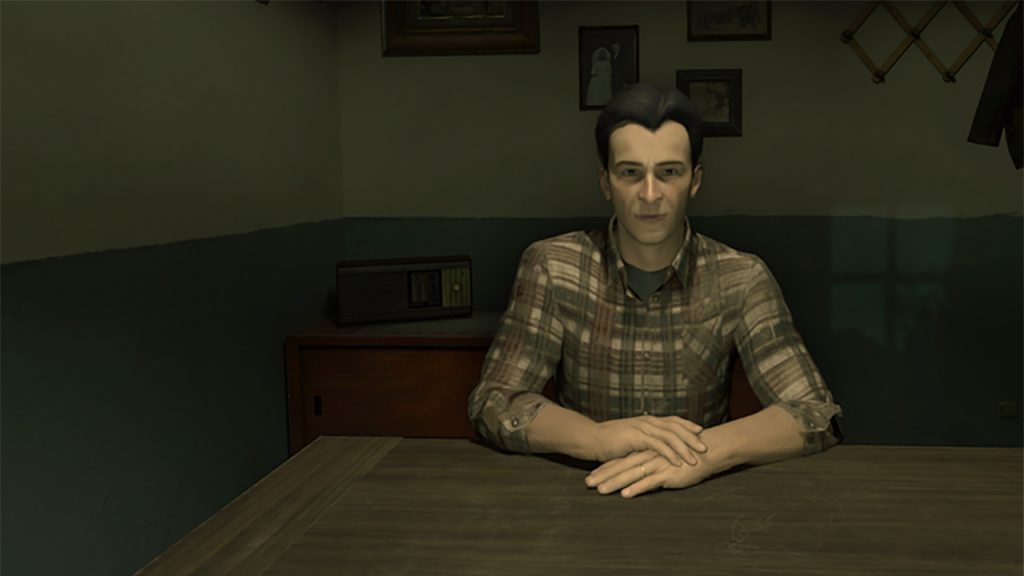
Iolanda Di Bonaventura – Afterwards, the Covid-19 pandemic came and stopped the production of the project. We managed to present VAJONT at Venice VR 2020, but the whole experience was meant to be shown in physical places (LBE) as an installation. In that form, VAJONT was never finalised… It took two years to be able to find some funds to make a complete conversion of VAJONT – from a physical installation to a complete online version, that we’re now distributing on Oculus Store. Italy at the moment doesn’t recognize Virtual Reality under the cultural label – so we ended up doing it with our own funds (via Artheria, Saverio’s company), in order to make it available for the audience (VAJONT is available since early March 2022). Today we are focusing on a new project, which we are developing through a residency at the Phi Centre in Montreal.
Saverio Trapasso – At the beginning VAJONT was an innovative installation where we worked on the presence of the spectator, the physicality of the two characters. A project in full Location-based 6DOF. Because of the Covid-19, these intentions were extinguished. Our wish is to be able to propose a version of it to the public today, with its setting on line!
More BTS articles on the project
About the “Phi Immersif” residency
PHI IMMERSIVE RESIDENCY is an eight-week residency at the PHI Centre in Montreal (Canada) dedicated to the conceptualization phase of a proposed project. The selected artists will work alongside Studio PHI specialists to develop, plan and prototype an interactive work or immersive experience. The successful artist will receive personalized support, workspace and selected resources to develop and elaborate their concept within a larger framework and potentially create a prototype for the production and fundraising stages.
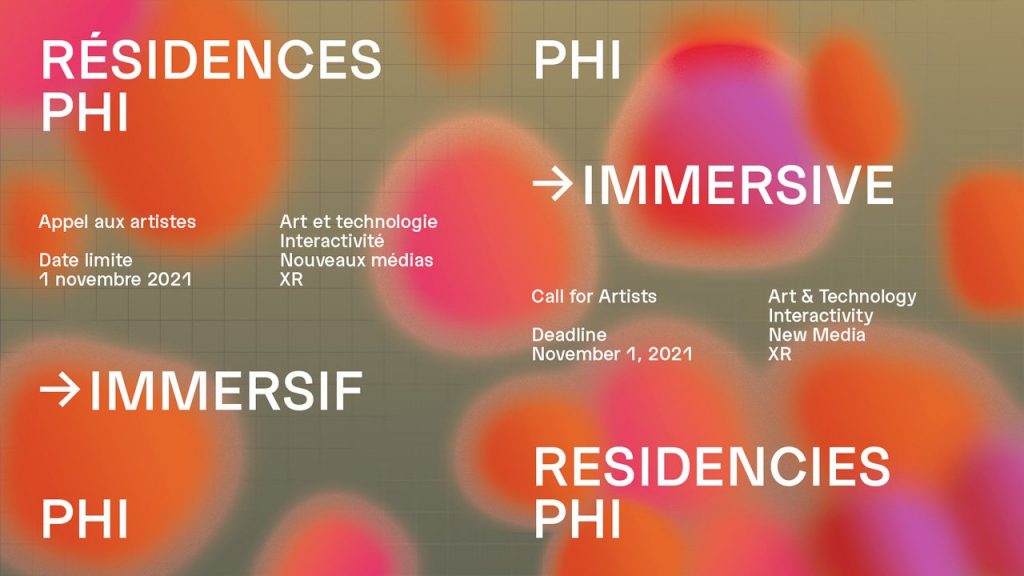
100 applications were received for the first year, and the project was selected by a jury composed of Michel Reilhac, Phoebe Greenberg, Caroline Monnet, Coline Delbaere and Myriam Achard.