The latest version of the popular VR 3D modeling software Shapelab comes with a VR and desktop mode, multiresolution, and more!
Shapelab, the premier VR modeling software, is excited to announce the launch of Shapelab 2024, which will be released on June 3rd. This new implementation allows users without VR equipment to create with Shapelab and for those who prefer sticking to VR sculpting to still have the convenience of completing some tasks that are faster on their desktop by using the classic mouse and keyboard setup. Desktop mode is just one of the many new features in Shapelab 2024, the latest version of the top-rated polygon-based VR modeling software.
Shapelab has been a favorite among 3D artists and designers for creating high-quality, detailed 3D assets. The software’s intuitive UI and industry-grade sculpting tools facilitate quick and easy blocking out of organic shapes, sculpting intricate details, and vertex painting objects to export final results with textures for use in other 3D programs and for 3D printing.
2024 marks a significant milestone for Shapelab as it has implemented major features based on extensive user feedback, particularly from professional users. The result is a software packed with highly anticipated features and UX improvements that make the user experience more intuitive than ever.
Key Features of Shapelab 2024
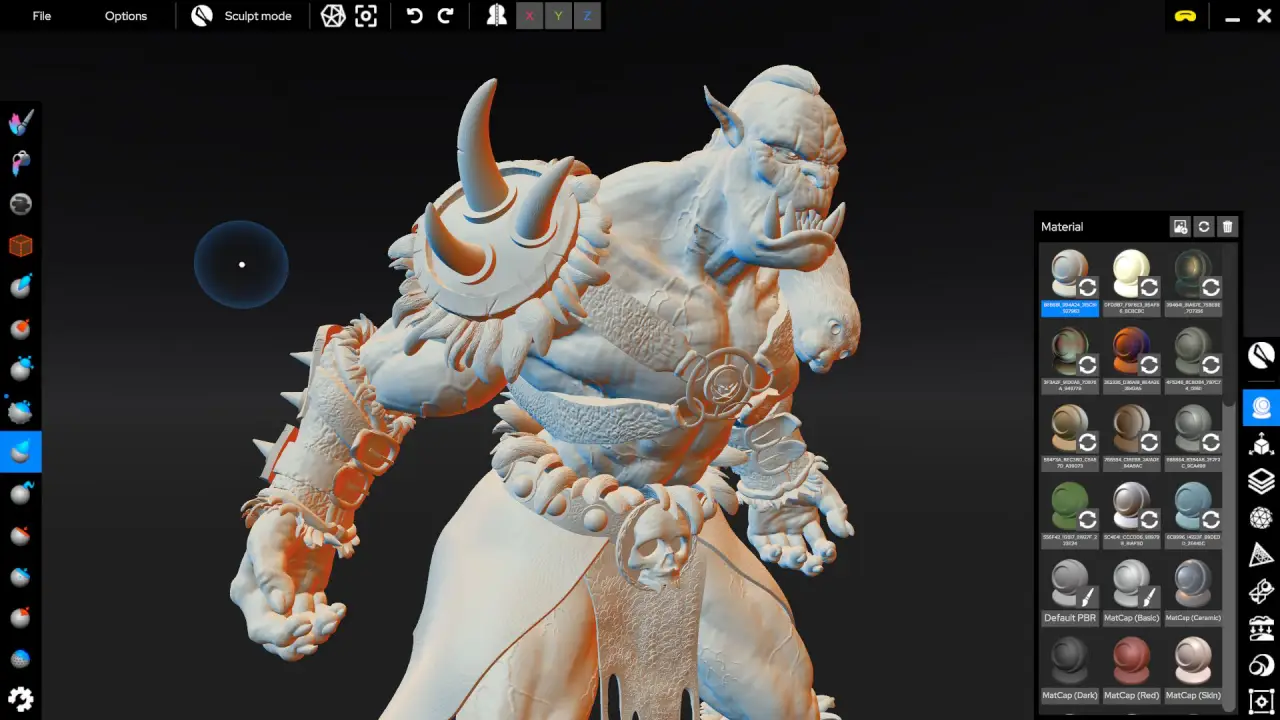
Desktop mode
The newly implemented desktop mode allows Shapelab to be used on PCs, with a feature for switching between desktop and VR modes. This will enable users without headsets to work with Shapelab while also providing VR users the convenience of completing some tasks more efficiently with a mouse and keyboard setup.

Multiresolution and Subdivision Levels
The introduction of multiresolution objects and subdivision levels revolutionizes the workflow possibilities in Shapelab. This feature allows users to subdivide meshes to create multiple resolution levels, providing several benefits:
- Working with lower subdivision levels can significantly speed up the workflow. Manipulating fewer polygons is computationally less intensive, resulting in higher frame rates, quicker manipulation, and shorter loading times.
- By starting with a basic mesh and gradually increasing the subdivision, the designer has better control over the topology of the model. This can be important for ensuring the mesh deforms correctly during animation, especially around articulated joints
- The original form of the 3D model is preserved while subdividing, which is useful in iterative design processes. Designers can make significant modifications to the model at a low subdivision level without disrupting the intricate details established at higher levels.

Quad Remeshing (AutoRetopologize)
This feature enables designers to achieve a lower-resolution, cleaner quad-based mesh. This is handy before further design steps, such as animation and manual retopology. Add subdivision levels and continue surface detailing more precisely, thanks to the uniformly distributed and sized polygons.
Detail Transfer (Projection)
Designers can transfer detailed features from a high-resolution model with a less organized topology, including triangles, to another, potentially quad-based object. Clone the original object created with dynamic topology, remesh it using quads, apply subdivision levels, and transfer the details from the original model to maintain the details while achieving a cleaner and more manageable topology. Use this feature to transition to a multi-resolution workflow.

Shapelab 2024 represents a significant leap forward in 3D modeling, making high-quality asset creation more accessible and efficient for all users. Shapelab 2024 will be available at a special launch price with a 20% discount from 3rd June. Visit shapelabvr.com for more information on pricing.