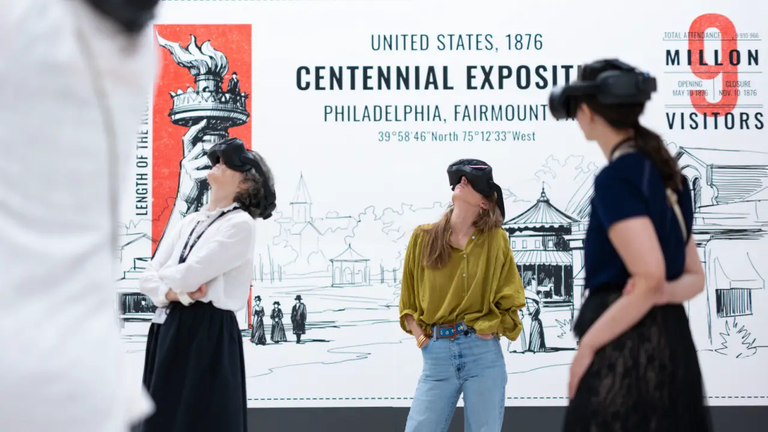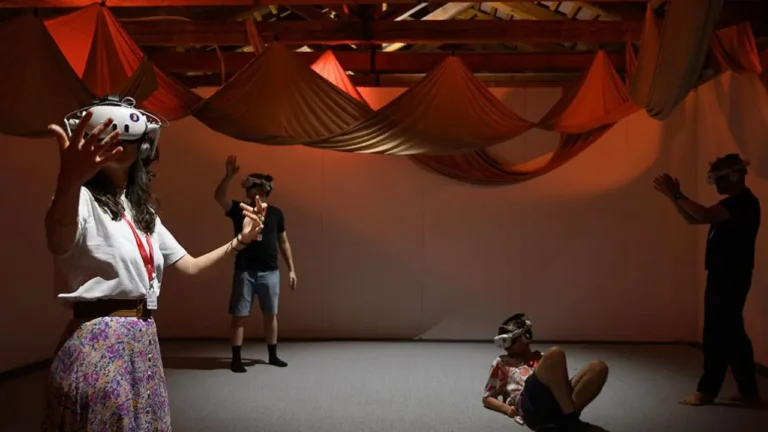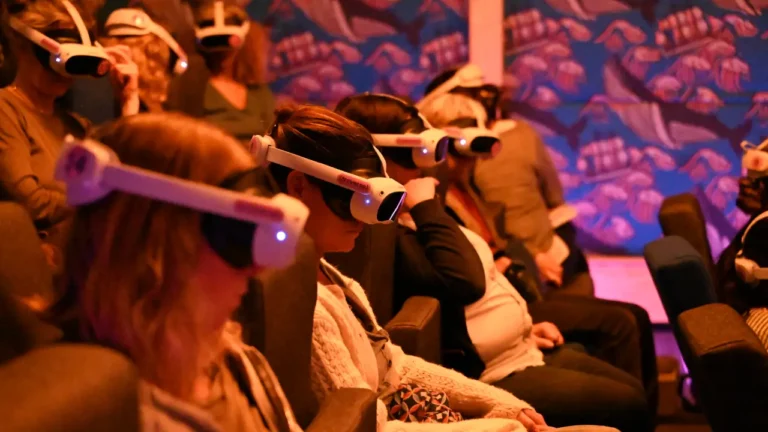
Within the increasingly dense calendar of immersive festivals and markets, DOK Leipzig has gradually carved out a position of its own. Rather than building its XR programme around a single competition or showcase, the German documentary festival now operates across several layers: DOK Neuland presents finished works to the public, while DOK Exchange XR brings together creators, producers, researchers, institutions and distributors around projects in development and broader industry questions.
For its 2026 edition, taking place from 26 October to 1 November, this structure is expanding again. DOK Exchange XR will run over two main days, preceded by a new day of encounters developed with Leipzig’s Kunstkraftwerk, while DOK Neuland will present eight works under the theme “Landslide”.
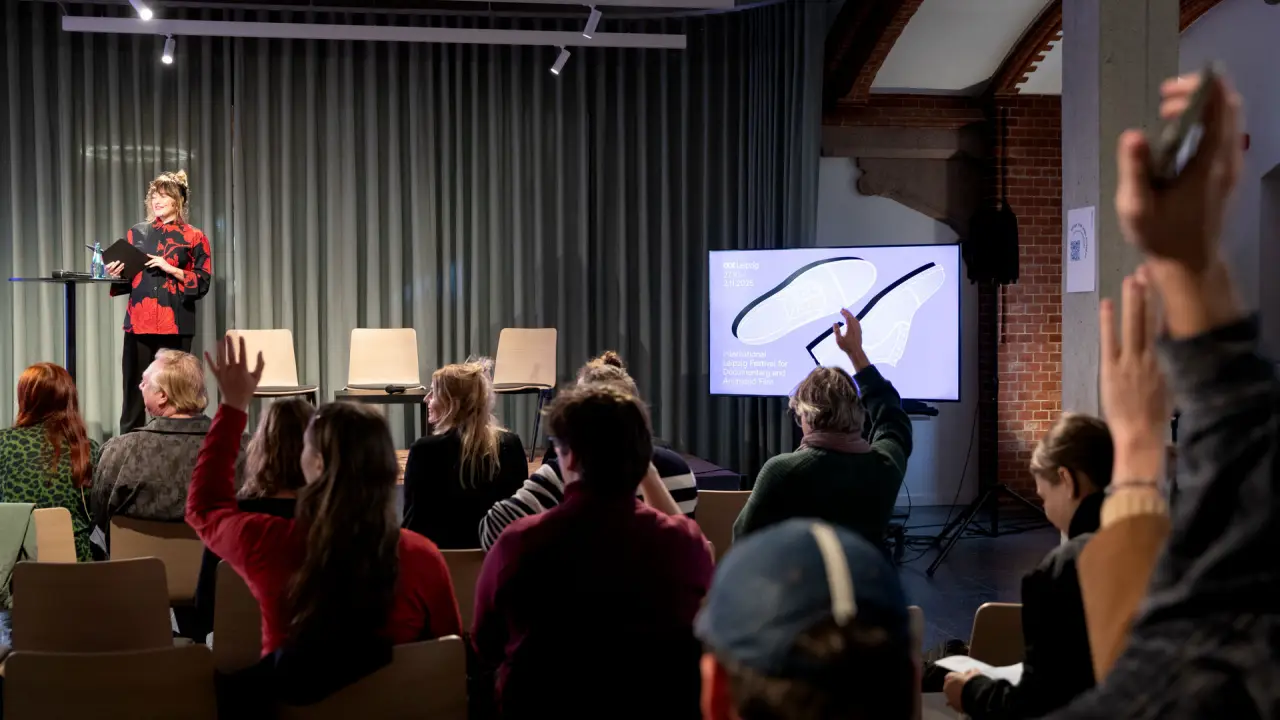
Cover: DOK Leipzig – DOK Exchange XR Conference 2025 📸 Sophie Mahler
Behind the programmes, however, lies a broader question: what role can a documentary festival play in an immersive field that is still defining its production, exhibition and preservation models? We spoke with Dana Melaver, curator of DOK Neuland, and Weronika Lewandowska, curator and coordinator of DOK Exchange XR, about a programme increasingly positioned at the intersection of artistic practice, experimentation and industry development.
From showcasing XR to building a space for exchange
DOK Exchange XR was initially developed within DOK Industry as a networking and inspiration programme for interactive and immersive storytelling. Its remit has gradually broadened: today, it connects creators not only with producers and distributors, but also with researchers, institutions, technologists and experts able to intervene at different stages of a project.
This year, the programme focuses on “Living Archives”, examining a problem that is becoming increasingly tangible for the immersive sector: how do you preserve works whose existence depends on hardware, software, operating systems and platforms that can rapidly disappear?
“We have created a lot of amazing XR pieces, but will they survive the next years?” asks Lewandowska. The issue extends beyond keeping files on a server. Preservation increasingly needs to be considered during production itself, including in budgets and business plans, while institutions must determine how works can remain accessible ten or twenty years from now.
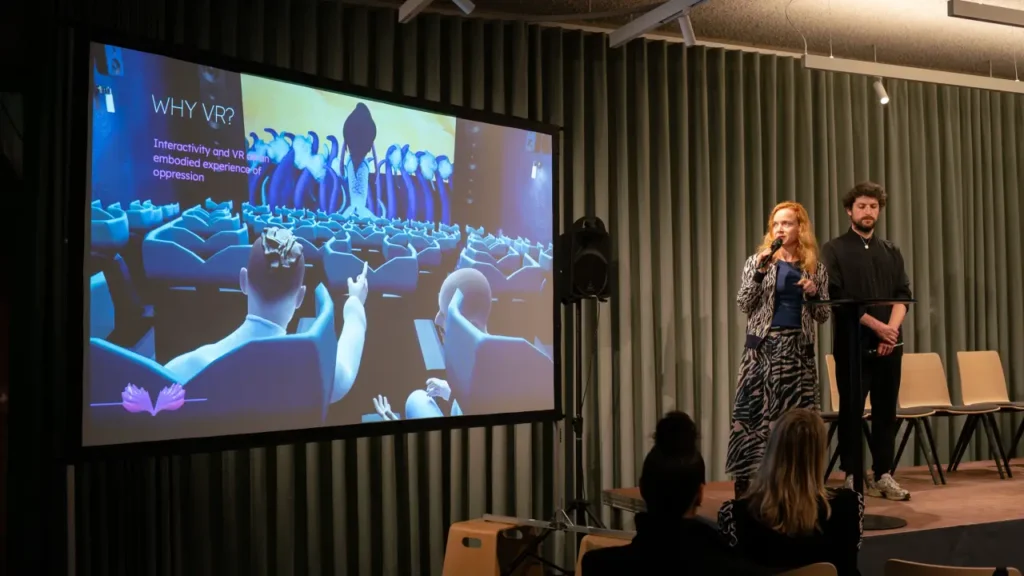
The 2026 conference approaches the subject from several directions, from existing audiovisual collections entering spatial environments to new forms of 3D archives, AI and data infrastructures. It also includes practical considerations around producing, budgeting and sustaining work over time.
A new DOK Exchange XR Encounters programme pushes this conversation further. Developed with Kunstkraftwerk Leipzig, it includes a think tank organised with CPH:DOX around “Digital Archives in Transition”, gathering experts from immersive media, film and archival institutions. The ambition is not simply to host another panel, but to produce recommendations that can circulate beyond Leipzig.
For DOK Exchange XR, this also means bringing people from outside the usual XR circuit into the discussion. Preservation, AI, digital heritage and technological obsolescence are not challenges specific to immersive production. Connecting these conversations to neighbouring sectors could ultimately prove more useful than attempting to solve them within an isolated XR community.
Prototyping as an industry tool
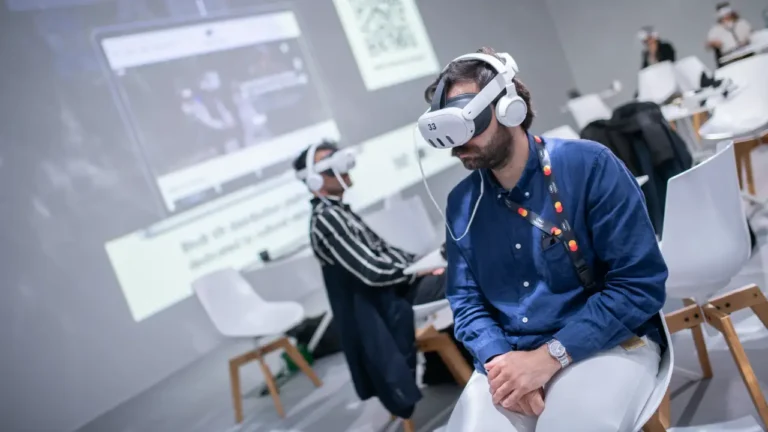
This approach is perhaps clearest in the Prototyping Zone, a deliberately small format that gives four projects the possibility to test works in development with professionals and audiences.
It occupies an unusual position in the festival landscape. Presenting a finished immersive experience is already technically demanding; creating the conditions to install unfinished projects, test interaction and collect meaningful feedback adds another layer of complexity. Yet Lewandowska considers this precisely where some of the most useful exchanges happen.
“This is really where networking is happening,” she explains. “It’s meeting artists, giving them something, receiving something. The true exchange is happening there.”
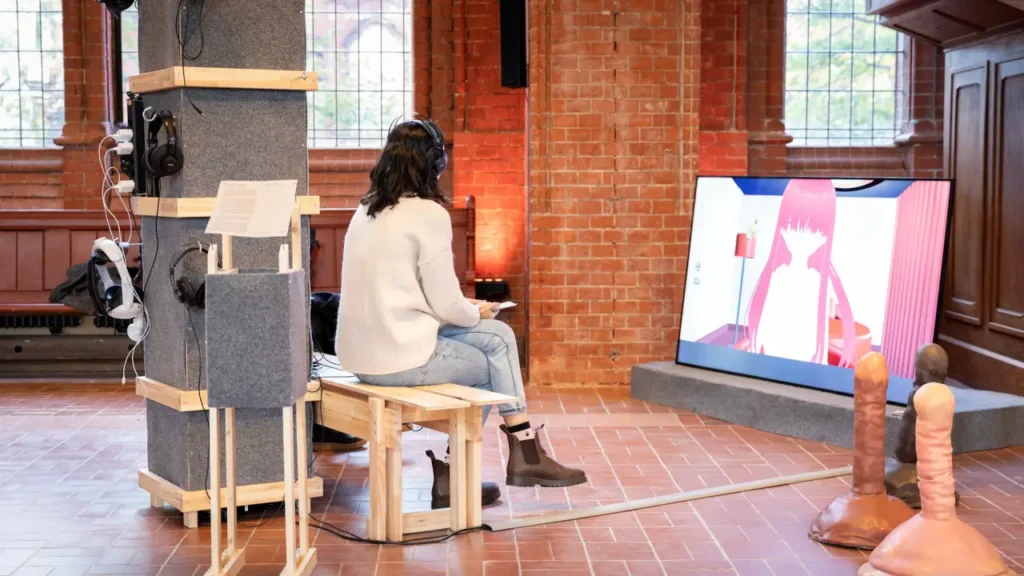
The objective is therefore not scale. With only four projects, professionals attending for two days can potentially experience the entire selection and spend time with each team. The format enables creators to test narrative choices, interaction, onboarding and exhibition conditions before finalisation — decisions that can ultimately affect both production and distribution costs.
This year’s prototypes again illustrate the widening perimeter of DOK Exchange XR, including an interactive documentary using EEG devices to modify footage according to participants’ responses and a documentary-based game drawing on traditional animation techniques. For Lewandowska, the common denominator is less a specific technology than an interest in where storytelling is heading.
The same philosophy shapes the Showcase. Projects are presented to experts across research, funding, production, distribution, art and technology, with the session conceived as collective problem-solving rather than a conventional succession of pitches.
Taken together, these formats position DOK Exchange XR somewhere between a conference, development platform and testing ground. For a still-fragmented immersive industry, this relatively compact scale can be an advantage: the aim is not to reproduce a large audiovisual market, but to create situations in which projects can confront questions they will later face in production and circulation.
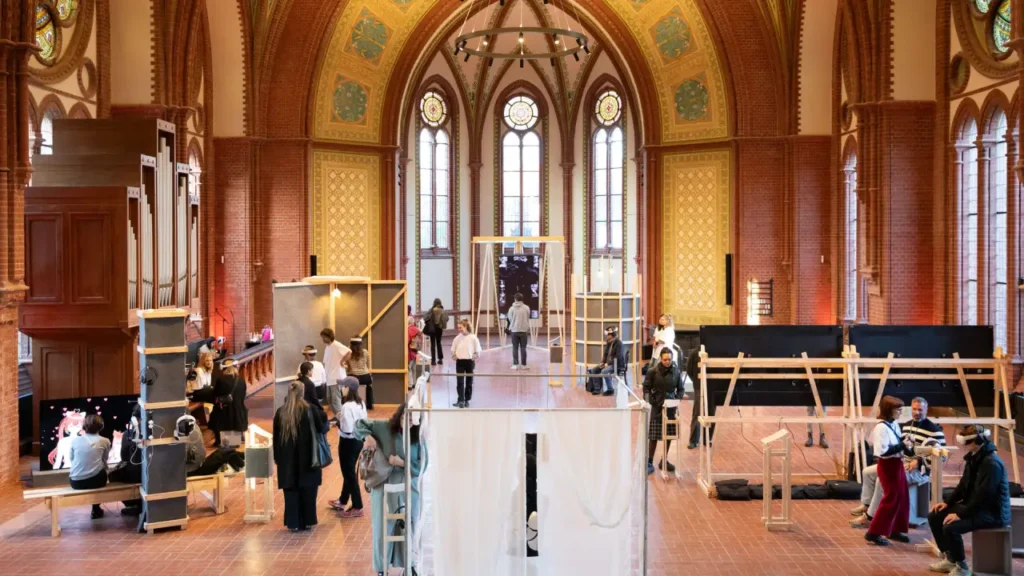
DOK Neuland: moving beyond the headset without abandoning XR
On the public side, DOK Neuland is undergoing a parallel evolution. This year’s exhibition, “Landslide”, emerged from the projects themselves rather than from a predetermined curatorial framework.
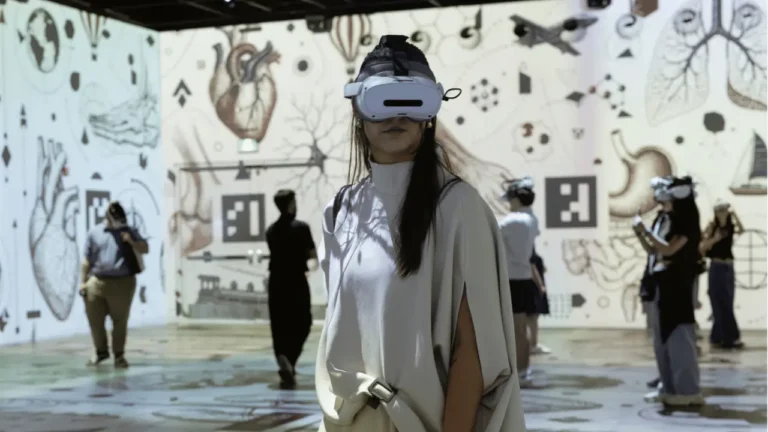
For Melaver (see her introductive 2026 editorial here), the selected works shared a feeling of instability: environmental disruption, war, displacement, technological transformation and the sense that apparently solid structures can suddenly collapse. The resulting exhibition brings together three VR/MR experiences, two 360-degree films, two mixed-media installations and a performance.
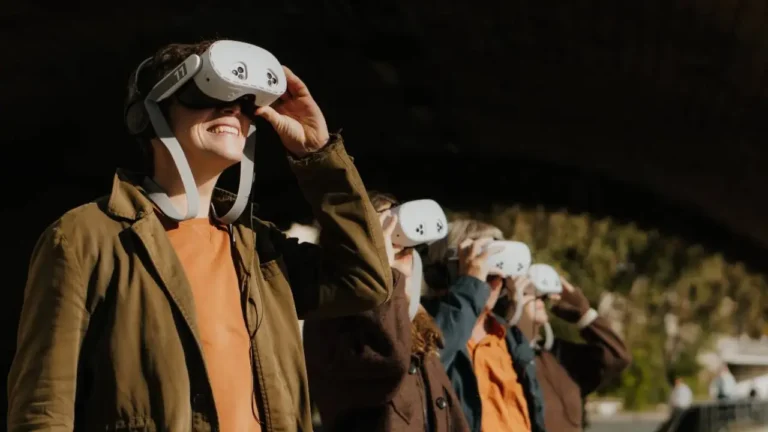
Archives unexpectedly provide a bridge with DOK Exchange XR. All six works presented in the main exhibition space engage with archives in some form, while other projects extend across the city. A performance created by Leipzig duo Hauptmeier | Recker, for example, connects medieval European music with contemporary electronic music through AI and two church organs. Another work, Nothing to See Here, is installed in Leipzig’s main train station, deliberately encountering passers-by outside the traditional festival environment.
This diversity of formats reflects an important shift in the programme. DOK Neuland remains committed to VR, but no longer treats the headset as the boundary defining immersive or expanded documentary practice.
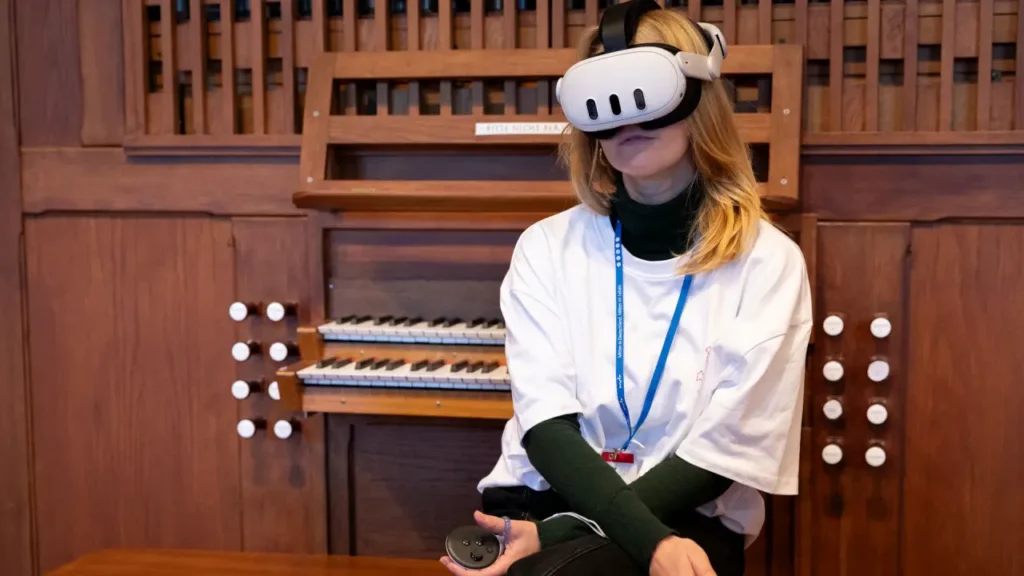
For Melaver, that openness should not be understood as moving away from XR. VR helped create space within film festivals for other forms of digital and spatial storytelling, and continues to sit alongside them. “There’s no clash,” she argues. Installations, headsets and other forms can instead “reflect on each other”, particularly when asking how documentary practice changes beyond the cinema screen.
Lewandowska describes a similar approach on the industry side: projects increasingly arrive asking whether they qualify as XR, interactive work or even documentary. The programme’s answer is deliberately flexible. What matters is whether a project uses technology to explore relevant questions and proposes a meaningful evolution in how stories can be experienced.
That position may ultimately be one of DOK Leipzig’s most useful contributions to the sector. As immersive creation becomes more hybrid, the distinction between VR, games, interactive installations, spatial computing and expanded documentary is increasingly difficult to maintain as an organising principle.
DOK Leipzig is not responding by abandoning XR, but by placing it within a wider continuum of digital storytelling. DOK Neuland provides the encounter with audiences; the Showcase introduces projects and professional perspectives; the Prototyping Zone creates room for testing; and the conference and think tank address structural issues that individual creators cannot solve alone.
It is a relatively compact ecosystem, but one increasingly designed around continuity rather than the festival moment alone. In a field where projects still struggle to move smoothly from development to exhibition — and where even preserving yesterday’s work is becoming an industry question — that connective role is becoming just as important as showing what comes next.