Documentary festivals are important meetings to contemplate the reflection of our changing societies. On the interactive side, they are both laboratories for narrative and technological experimentation, and spaces for debate. CPH:DOX (Denmark) is one of the key interactive documentary events for international creators. 1/2
We spoke with Mark Atkin, curator of CPH:DOX and co-founder of the Crossover company with Tom Millen.
Creating a Crossover community
Mark Atkin – After some experiences in Film and TV, I started my company Crossover (link) just over 10 years ago – when the possibilities for interactive storytelling were making themselves really felt. We were talking about some kind of media convergence that was happening then, which is mainly around film, TV, web and games. That really fascinated me: the possibilities of interactive storytelling. But it wasn’t really happening within the broadcasting context. Crossover was founded with an idea of getting this moving a little bit more quickly. First we created the Crossover Labs, which gathered people from those creative backgrounds, from traditional storytelling disciplines. We got them ready and along with developers and web designers, to try to get them to collaborate, to create new types of immersive and interactive storytelling projects – on an international level. Then there was the Crossover Summit, a standalone event that will get people together just before Sheffield Doc/Fest (link). We ended up doing the same thing within the festival, with an exhibition, paving the way for what would be next their Alternate Realities section!
M. A. – We started with just 5 computers in a corridor, but later on – 3 years later – we were in three massive galleries downtown. Our first exhibition was in 2014, where we selected a piece by Oscar Raby. We didn’t even know how to look at it! The only way you could show it is if he came and brought his own equipment – It’s just phenomenal how things have progressed since then. These were the first kind of immersive projects… and we never look back. We collaborated with Oculus and the BBC to do a workshop. We had people from Punchdrunk Theater and the National Theater. It was an amazing time! Then I left with Tom Millen, who’s my business partner now, and we started working with a number of different events, from CPH:DOX to Electric Dreams – which is our own thing, a festival of immersive experiences we tour with, we’ve done three different iterations of it so far. We curate or work with many other events and festivals of course, including the Silbersalz Science Festival in Germany to encourage a dialogue between the scientific community and citizens around the science that is being expressed through art works.
CPH:DOX – Exploring the Lab
M. A. – CPH:DOX in Copenhague is incredibly important and significant for us, we absolutely love it – The Festival and the Lab. Film festivals, and particularly documentary festivals, were very much the place through which the interactive/immersive industry was accelerated. Because when we were in Sheffield, the only places you could see this kind of work were obviously Sundance, IDFA or Tribeca. And because all of these events brought the international community together, inspired everyone,it created a desire to share and develop new projects. And so now, of course, it’s difficult to find a film festival that doesn’t have an immersive section.
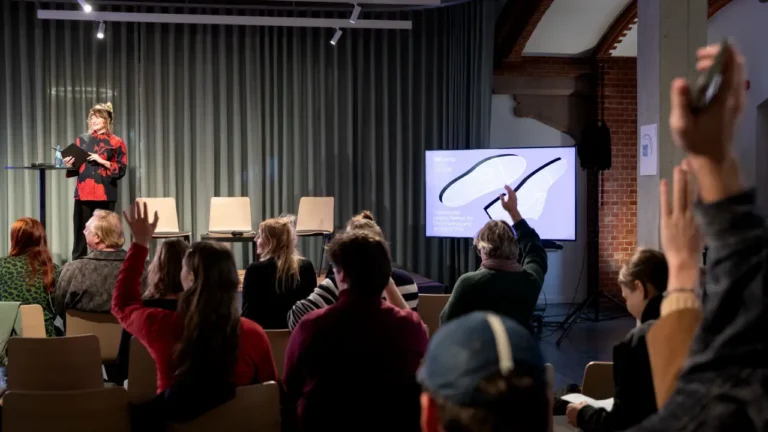
M. A. – It’s important to point out CPH:DOX stands out from other festivals in a way. The festival director, Tine Fischer, comes from the world of fine art and her sensibility somehow is imbued in the festival. We’re dedicated to encouraging civil debate with new forms of expression. I’ve been at the Lab for the last three iterations as the head of study, with a focus on technology in storytelling. How can technology help artists express themselves in new ways? And connect with the audiences. Everytime it is an experiment: we literally ask people to tell us their research question. And with all of the different mentors and other Lab participants, we work collectively to see if we can stimulate them to answer those questions. With of course the creation of a prototype. There’s two different types of prototype that you can create. One is “I don’t know if this is going to work, let’s see if we can make it work”. The second type is the version “this is what it is: I want to show you the best aspects of this so you can give me some additional funding in order to create the final version”.
M. A. – We’re very keen also on getting all of the participants to work not just on their own projects, but to also focus on the other projects for a couple of reasons. One is, of course, they’re from different backgrounds, creative disciplines, territories, with different ways of solving problems. Then we also hope that they will form lasting collaborations that will continue in the future. We’ve seen that happen already! Of course, the Lab was completely online this year, so it’s much more difficult to connect. We’ve done our best and it seems to be working to a certain extent, but it is not exactly the same as if we were all together in a room.
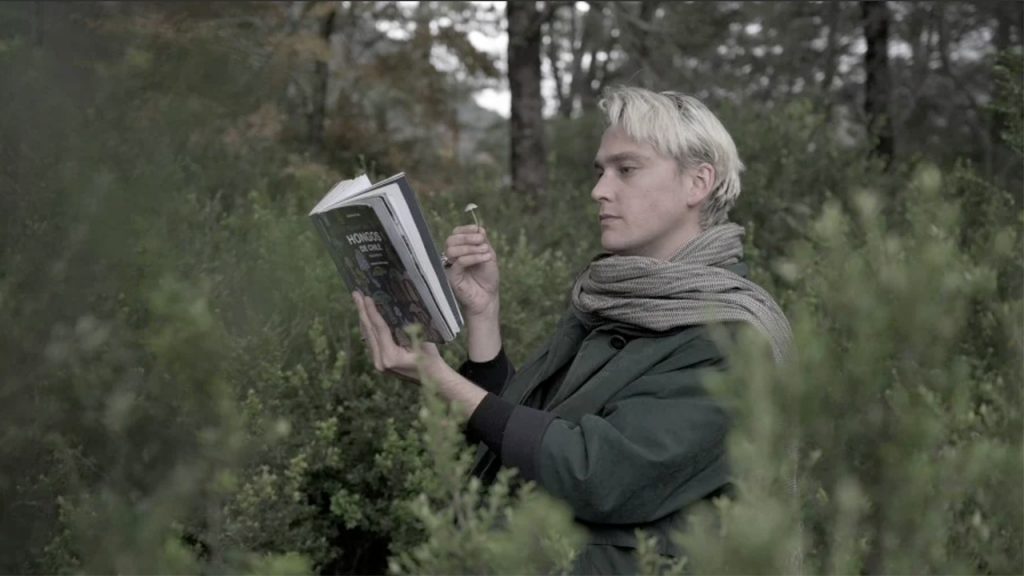
M. A. – At some point we knew that we’d have to treat the Lab differently this year. Usually we select nine projects, and we show the prototypes during the festival – looking for future development of the project, bringing them into the market essentially. This year was in fact more difficult because we had no clue what was relevant from LBE or physical installations etc. CPH:DOX was the first major film festival to go online last year; we’ve never dreamed we’d have to do it twice… We selected fewer projects, 6, with ideas of creating online environments, to imagine future worlds, playing with the metaverse. To sort of play into that sensibility and then see what came out of that. We worked around the fact that we could exhibit all 6 of them together as a collection. Which we imagined then would be a physical installation. Even if there’s no guarantee that those projects would get any kind of funding in that short timeframe (the festival) – we do hope there has to be some kind of minimum viable product at the end of it.
We miss live events (and social behaviour)
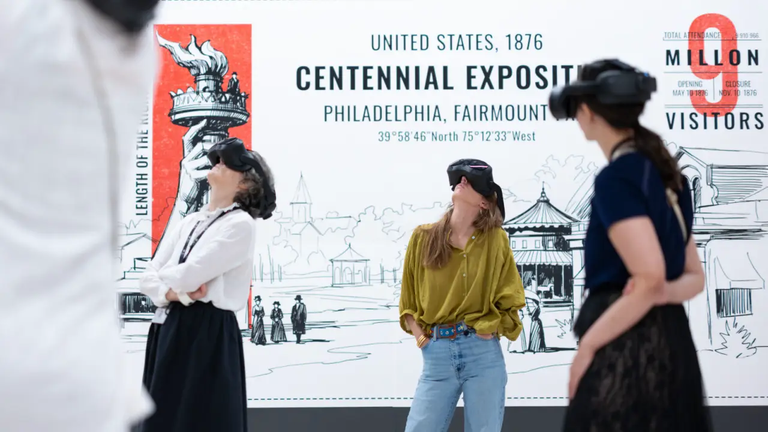
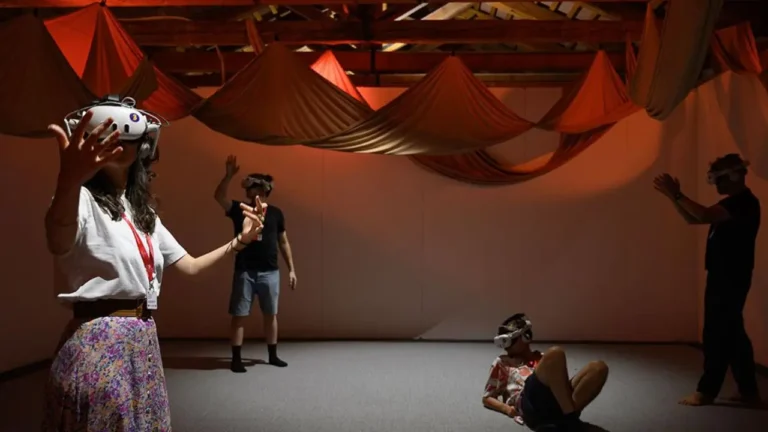
M. A. – We always thought we would have a digital component for the exhibition, but now it’s 100% of it. My experience of the last virtual events this year just makes me feel more isolated from people. VR is supposed to be incredibly social on the contrary! Lots of people criticize it for being a solitary experience, but it’s never been the way that we show experiences in festivals. It’s always been the most social space of the entire festival where people come.The interactive space is always full of people just standing around watching people in different experiences, probably waiting for their turn, but talking about the work and talking to the creators and other festival goers. It’s been one of the reasons why festivals have been so successful in moving the industry.
M. A. – So you have a festival where that doesn’t happen, it feels like you’re missing a major part of the (live) experience. I was thinking of how I could just kind of “lower the barrier” between the creators and the audience – allowing audience members to have interactions with each other. And experiences which can allow that – A dialogue. That’s the filter through which we’ve now put everything in the selection. Even if the projects are now being shown in a format that we didn’t originally anticipate. This is the beginning of a journey, with hopes some of the experiences will continue to live in different manifestations later.
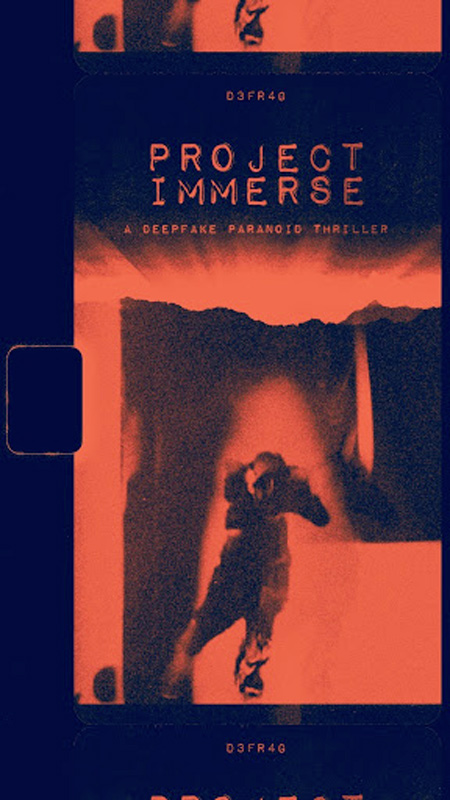
CPH:DOX Inter:Active 2021 line-up
CLIMATE CHANGE
- Anthropocene in C Major, Jamie Perera, Katharine Round, Leah Borromeo, UK
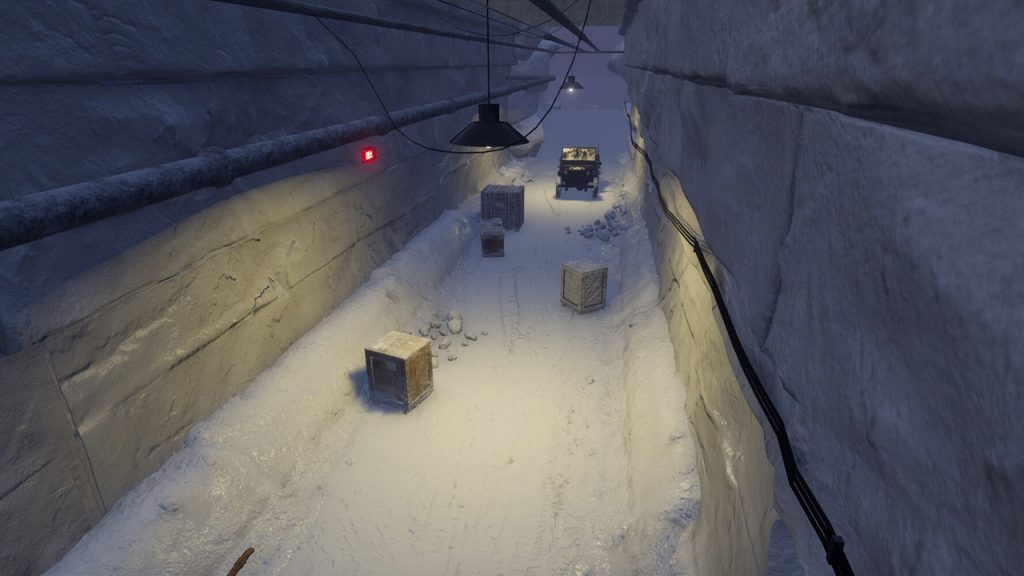
- Camp Century, Anrick Bregman, UK, Denmark
CONFINEMENT
- Exposed, Sharon Daniel, USA
- Those Left Waiting, Michael Beets, Christian Pazzaglia, Australia
DIGITAL IDENTITIES
- In My Own Skin, Illlya Szilak, Cyril Tsiboulski, Loise Braganza, Tagger Yancey IV, USA, India
- Privy To, Michelle Leddon, Julia Scott-Stevenson, Liz Steininger, Jason J.Snell, Australia, Germany, USA
- Project Immerse, Lance Weiler, USA
PROTOPIAN VISIONS
- Connections – No One Is an Island, Suvi Andrea Helminen, Ulrik Gutkin, Kasper Bøttcher, Denmark, Finland
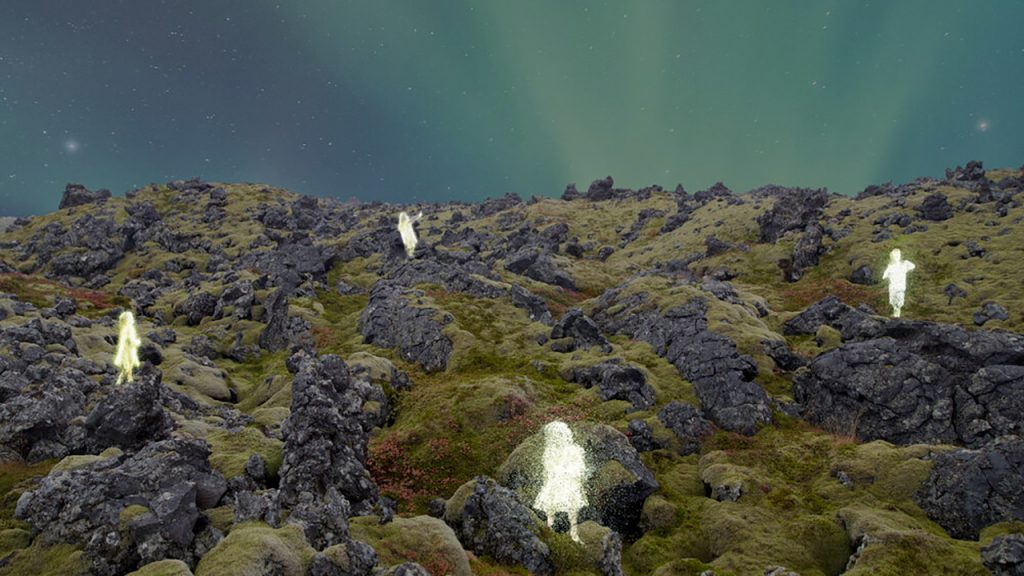
- Kvöldvaka, Dane Christensen, Carol Dalrymple, Barna Szász, Denmark, Hungary, USA
- MIMIC, Reid Hannaford, Danielle Sheli Levy, Arthur Choi, Canada, Korea, USA
- The Smallest of Worlds: A Social Landscape of Collected Privacy, Uwe Brunner, Bettina Katja Lange, Joan Soler-Adillon, Austria, Germany, Spain
- Sonic Cellumonials, Baum & Leahy, Sofie Birch, Greg Orrom Swan, Denmark, UK
- Symbiotica, Natalia Cabrera, Juan Ferrer, Sebastián González, Chile
LIVE
- The Nature of Isolation and Loneliness – A Live Experience in VR, Philip Schneider, Hans Rosenstöm, Andreas Koefoed, Denmark
More infos about CPH:DOX Inter:Active
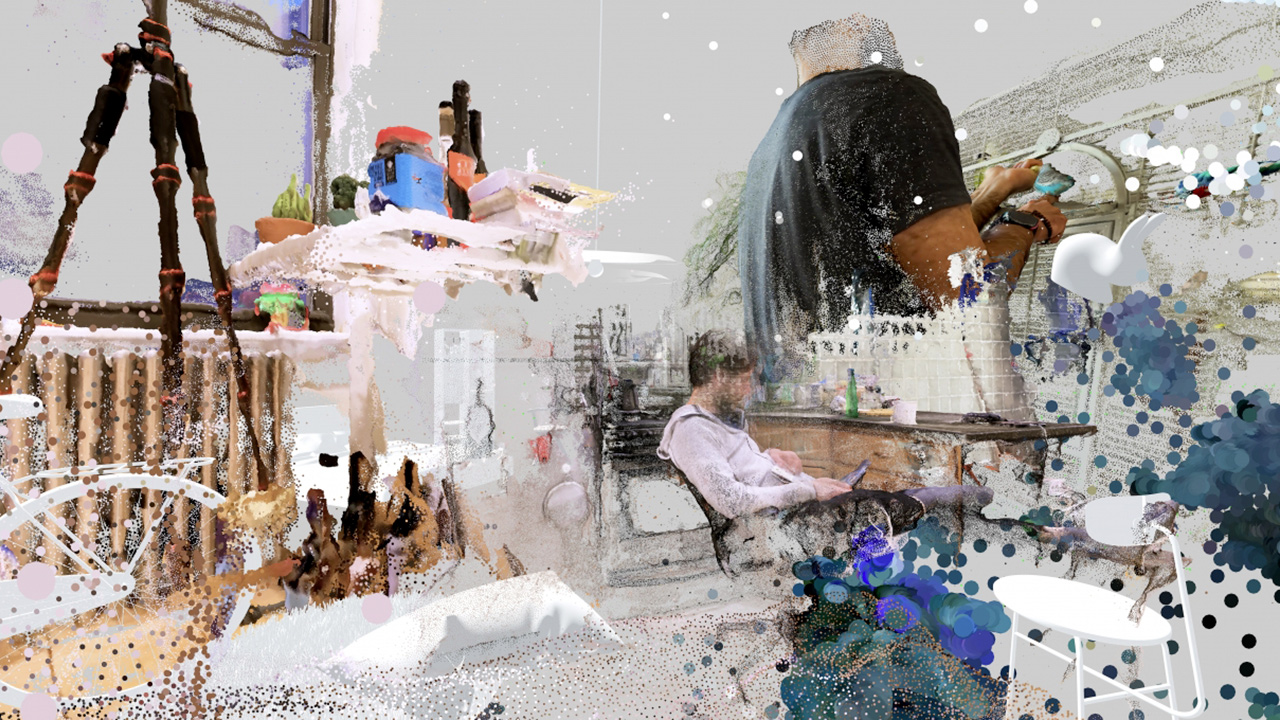
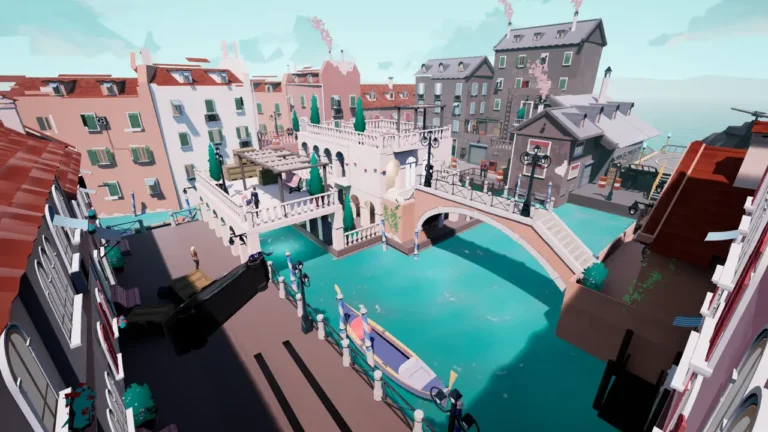
Cover: THE SMALLEST OF WORLDS: A SOCIAL LANDSCAPE OF COLLECTED PRIVACY, Uwe Brunner, Bettina Katja Lange, Joan Soler-Adillon, Austria, Germany, Spain
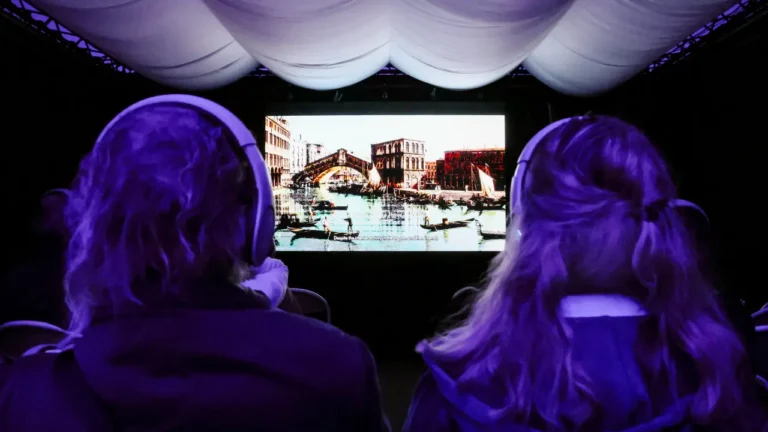
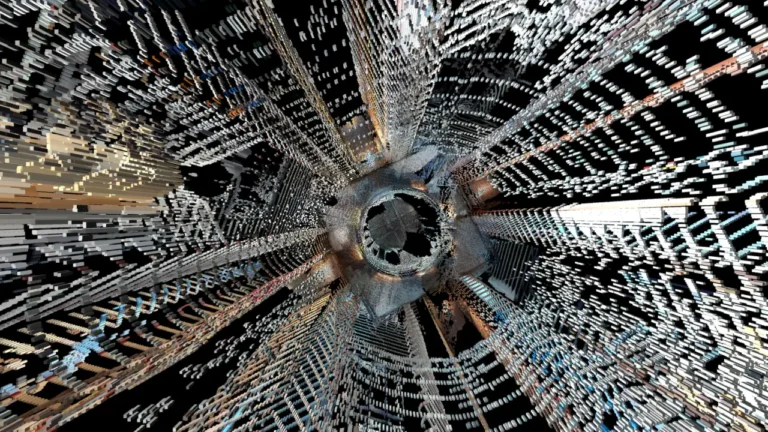
[…] This approach characterizes not only the film section but also the interactive works presented in the Inter:Active lineup, which XRMust discussed with section curator Mark Atkin. […]