Some months ago, I bumped into a review of some immersive works presented at the Sundance Film Festival and one of them caught my attention.
Its title was THE BOOK OF DISTANCE and everyone was saying enthusiastic things about it. When Cannes XR, in collaboration with Tribeca Film Festival presented this experience at Museum of Other Realities (MOR) some of the comments found on social networks by those who had tried it further reinforced my curiosity.
THE BOOK OF DISTANCE is an immersive work written and directed by artist and filmmaker Randall Okita, produced by David Oppenheim and created with the National Film Board of Canada.
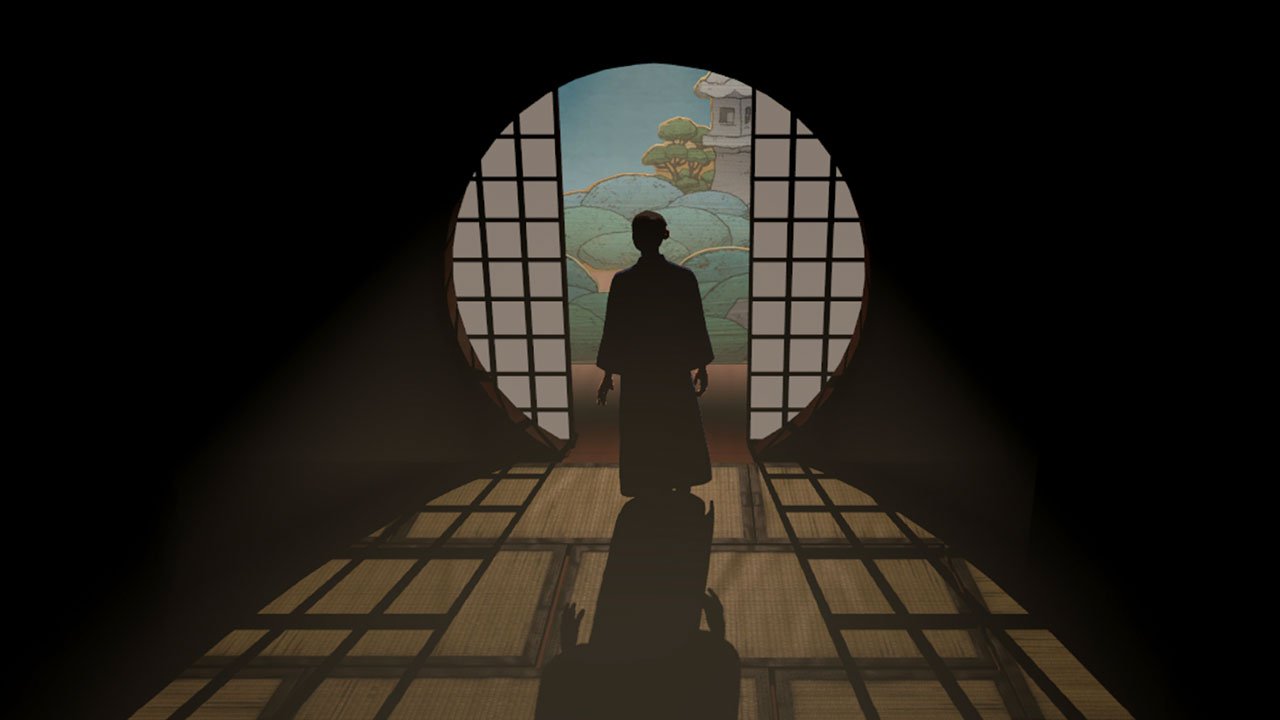
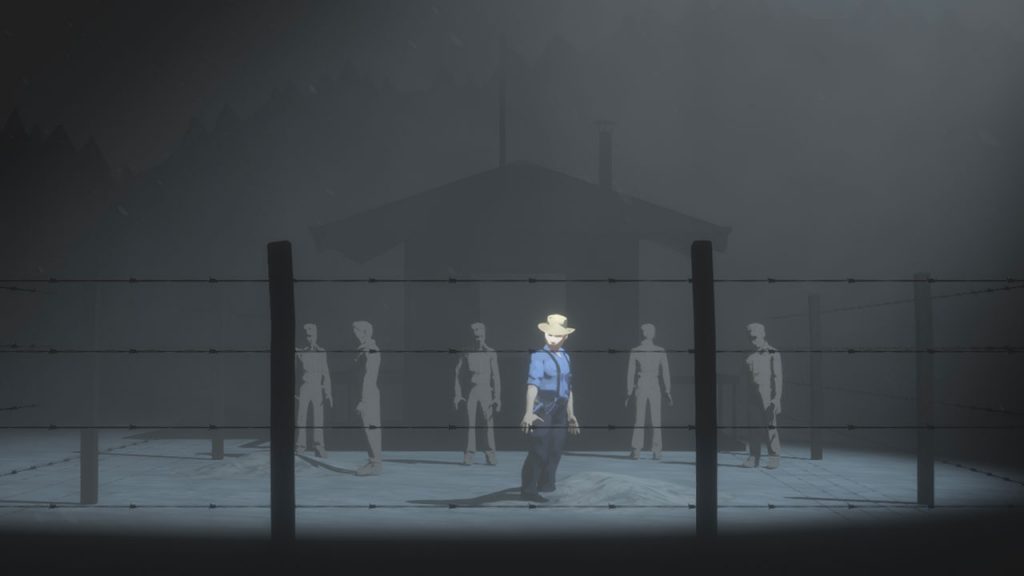
In 1935, Yonezo Okita left his home in Hiroshima, Japan, and began a new life in Canada. Then war and state-sanctioned racism changed everything—he became the enemy. Three generations later, his grandson, artist Randall Okita, leads us on an interactive virtual pilgrimage through an emotional geography of immigration and family to recover what was lost.
Synopsis
A piece filled with beauty and longing, that looks at the past to define the present. But also an insight into a historical situation we might not know much about.
During the days of Cannes XR a friend of mine told me how the story had touched her deeply, to the point of moving her to tears for its whole duration. Indeed, THE BOOK OF DISTANCE is a touching piece, not only because it shows a dramatic moment in history. It is also a journey in its creator’s memories and soul, something that makes the user feel like they’re witnessing an important moment of discovery and, somehow, closure… And something that brings you back to your own experience. No matter how different it is. It will still be deeply relatable to what you’re watching and made even more so by simple interactive moments and the contact you create with the director himself, who becomes part of the installation in surprising ways.
We talked with Randall Okita and David Oppenheim about the creative process of THE BOOK OF DISTANCE and the ethical importance of this experience. Here’s what they told us.
Closing the distance between us and our memories: the personal and universal meaning of THE BOOK OF DISTANCE
RANDALL OKITA – I have lived with the story of my grandparents my whole life, and this entailed a lot of questions, a lot of missing information, a lot of complicated feelings, and of course a lot of love. I wanted to tell this story because the questions I had are the same ones many of us have about our histories, and those questions can become the bridges to deeper connections, understanding and conversations.
DAVID OPPENHEIM – Working with Randall was a great opportunity to try and hone the natural affordances and possibilities of telling stories in VR. THE BOOK OF DISTANCE tells a strong linear story from the point of view of the director, but it does so in a way that also allows the audience to move through landscapes and physically engage with the story through moments of interactivity that deepen emotional connection.
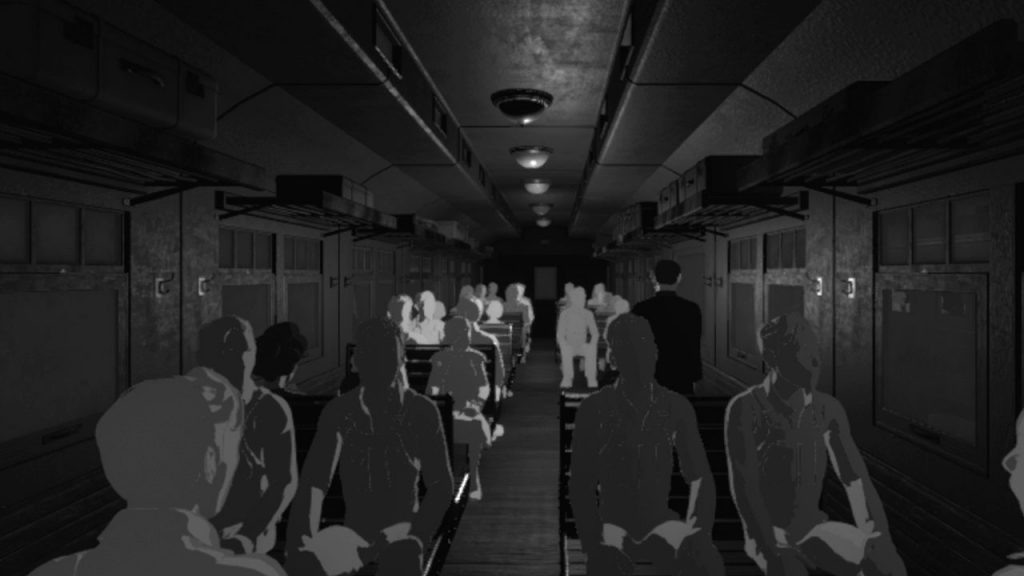
D.O. – Like any powerful work of art, it gives us the space to project onto it. Randall asks us what it might be like if we could close the distance between our memories, and ultimately, what would it feel like if we didn’t have to live in this space in-between? That’s a really enticing proposition. Even though the story is about Randall’s own family past, we end up wondering about our own.
On balancing art and storytelling with interactivity
R.O. – Making this work involved so many aspects of what I have learned working in film and art, in terms of creative approach, problem solving, and thinking about how an audience member will encounter a space or a character or an opportunity for interaction. This work really combined a lot of my experience in a wonderful way, as I was able to draw from all of it to balance the art style and the immersive experience with the story.
D.O. – Telling a good story in an interactive medium may sound simple – give the audience some choices – but it’s really difficult to balance the power of linear storytelling by an authorial voice and the power of giving the audience some agency in that telling. Randall managed to strike that balance remarkably well. Everything in the experience comes together in a very comfortable and enjoyable way – like it’s the most natural thing in the world to be seeing and interacting with these dramatic moments in the virtual space.
The role of other media in the creation of THE BOOK OF DISTANCE
R.O. – The possibilities of the technology can actually be distracting and seductive sometimes, so it was useful to have points of reference in other mediums that helped us focus on how to tell the story elegantly and effectively.
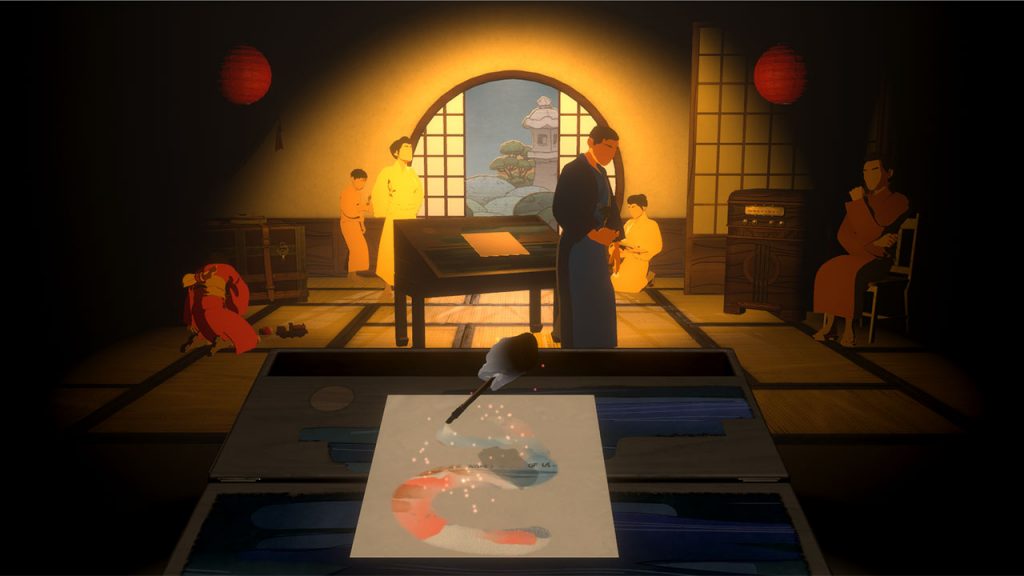
R.O. – We wanted to represent the reality of historical events with archival materials and documents that you can interact with in the piece, as well as the moments we don’t know about, the questions that we are asking. We wanted to represent these as an act of imagination. This is where the language of theatre, of play, of constructed places comes in to indicate what we don’t know, but are collectively creating.
R.O. – Working with an incredible team of artists led by Sam Javanrouh and Emma Burkeitt, we tried to find language that was immersive and emotional while still announcing to the audience that it was a construction.
Relevance of THE BOOK OF DISTANCE for the private and public sphere
R.O. – Every moment of the piece is special to me, as it really feels like a reflection of my inner world, and I really love the final scene because it brings together the different worlds and timelines of the story.
R.O. – The experience of making this piece was transformative. Wrestling with how to tell the story was incredibly powerful and now, sharing the work with an audience is adding a whole other layer of transformation. Giving voice to my family’s history, particularly one that involves discrimination and shame, changes the way that we hold that history in our bodies, and how we carry it forward.
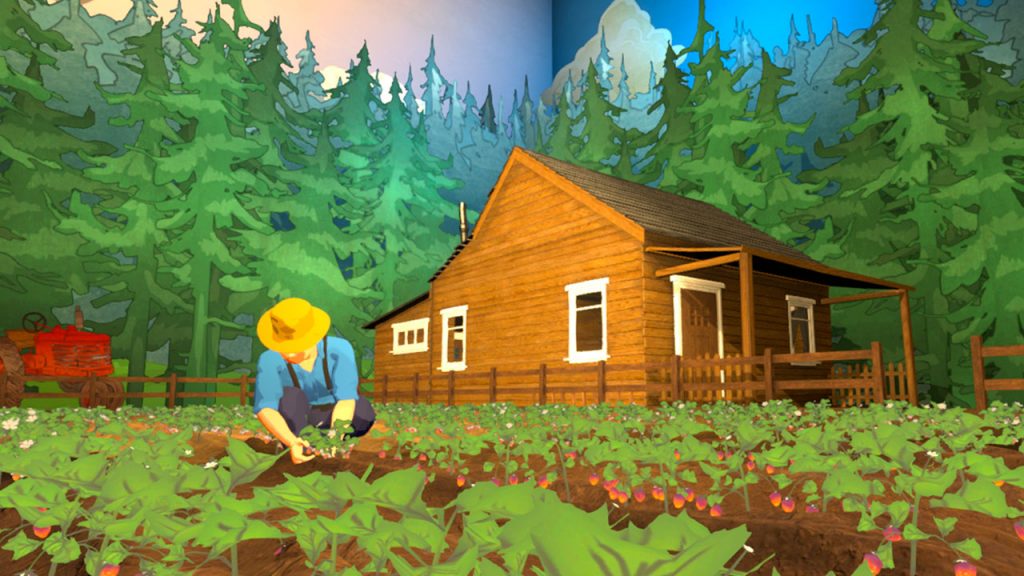
D.O. – I’m not sure what the ultimate potential is for VR in general – as a species we tend to get that kind of prediction wrong – but as far as THE BOOK OF DISTANCE goes, Randall telling his story is an attempt to reclaim the stories that were lost through the silencing of a community (Japanese Canadians) and will, hopefully, create more space for the right conversations to occur.
On the experience at MOR and the future of THE BOOK OF DISTANCE
R.O. – It was a great experience. It was different, but I was surprised and made hopeful by how natural it was to adjust to some of the activities, to watching panels online and then meeting people and talking about work in VR. It made me excited about how we can adapt our human need to share stories. There are things we need to figure out, irreplaceable things, but it made me feel hopeful, and I was able to meet and talk and make some new friends.
D.O. – As for the NFB’s plans for THE BOOK OF DISTANCE, well, we’re working on a strategy to bring the story to Canadians and then international audiences and we’re looking for a few partners to put the final pieces of the puzzle in place. I think the piece is both artful and really accessible for people who might not have experienced virtual reality storytelling before, and we think it can be a bit of a breakout in terms of longer-form narrative VR.
R.O. – Often people share with me some of their own family stories, which I absolutely love to hear. One new friend made at MOR said that THE BOOK OF DISTANCE reminded her of her own grandfather, who used to write her a letter each year on her birthday, and that she thought of him as she was holding the letter in our story. This kind of reaction, this kind of conversation, really means the world to me, because I happily get to share these stories with my family. I consider all of this, each bit of it, an extended conversation with them, and with my grandfather too.
THE BOOK OF DISTANCE was in these official selections:
- Official Selection – VR Competition Ottawa International Animation Festival, Ottawa, Canada (2020)
- Official Selection Sundance Film Festival – New Frontier, Park City, Utah, USA (2020)
- Official Selection Tribeca Film Festival – Tribeca Immersive (2020)
- Official Selection Hot Docs Canadian International Documentary Festival – DocX (2020)
- Official Selection Tribeca Virtual Arcade @ Cannes XR (2020)
- Official Selection Bucheon International Fantastic Film Festival (BIFAN) – Beyond Reality 2020 edition
It will be released online this fall, but in the meantime you can experience it at Venice VR Expanded, the online section of the 77th Venice Film Festival, or in one of the lounges of the festival located all over the world. Here you can find a complete list and some general indications.
You can read more about this work on its official page on the National Film Board of Canada website. Also, check out this Voices of VR podcast to know more about the innovations that THE BOOK OF DISTANCE brings to immersive storytelling.