Four editions in, ART*VR is beginning to move beyond the question of simply establishing an immersive festival in Prague. The event has gradually expanded its territory, from its international VR selection to industry activities and, since last year, a fulldome programme at the Prague Planetarium.
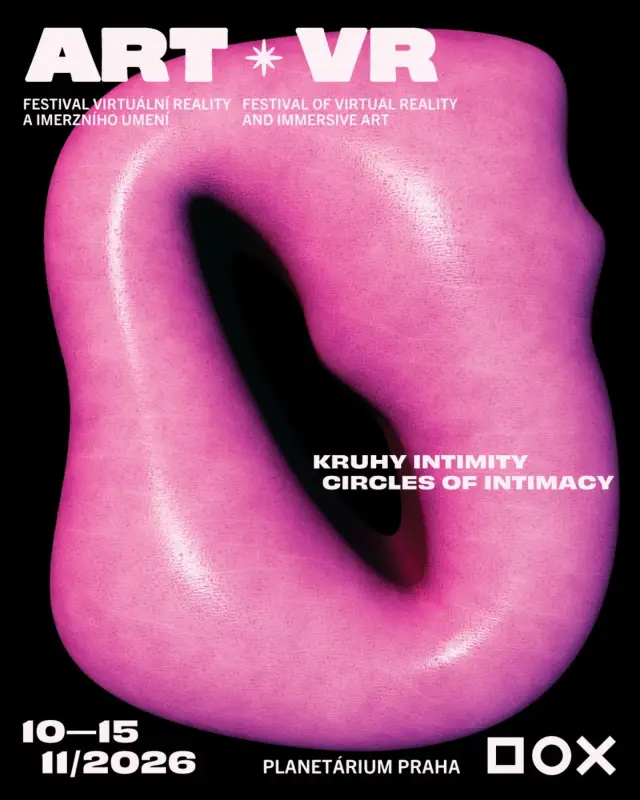
For 2026, ART*VR continues that evolution while embracing a potentially more challenging curatorial theme. With Circles of Intimacy, the festival intends to explore sexuality and relationships, but also bodies, birth, menopause and other experiences that immersive media can approach from unusually personal perspectives.
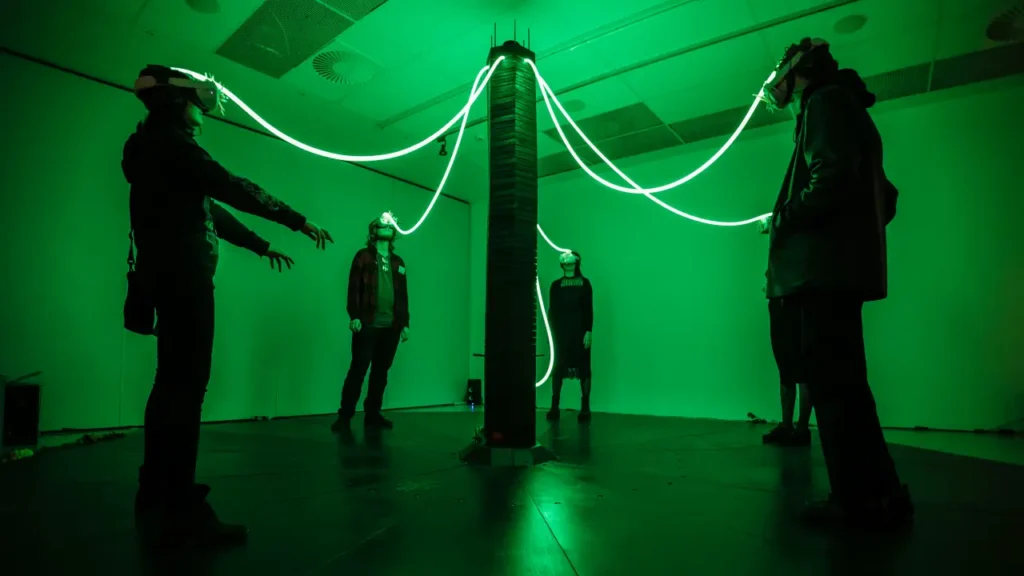
Cover: Art*VR 2025
We caught up with artistic director Ondřej Nagy Moravec during Venice Immersive to discuss a festival that is becoming broader in its formats, while perhaps more precise in what it wants to question.
Exploring intimacy — and accepting some provocation
“This is our fourth edition. In terms of programming, our biggest expansion happened last year when we launched the fulldome programme, which was a great success,” explains Ondřej Moravec. The collaboration with the Prague Planetarium will therefore continue in 2026, alongside ART*VR’s established programme.
But the most distinctive development this year may be curatorial rather than technological. Circles of Intimacy takes a subject that immersive creation has regularly approached through individual works and attempts to turn it into a broader conversation.
“Intimacy is something immersive media have always tempted us to explore,” Nagy Moravec says. Sexuality is inevitably part of that discussion. VR in particular has long generated fantasies about how presence and embodiment could transform sexual experiences — with results that have not necessarily lived up to those expectations.
For ART*VR, however, the objective is not to build a programme around sexuality alone. “What interests us is how sexuality and intimacy can actually be perceived and questioned through immersive media from an artistic perspective.”
Some of the selected works may consequently be explicit, while others will explore the body through very different experiences. “We are interested in things like birth — what does it mean to give birth? — or menopause, for example.”
There is also an intentional element of provocation in choosing such a theme. Moravec sees intimacy as a subject deeply connected to immersive media, yet one that the industry often approaches indirectly and with hesitation.
“We decided to be a little provocative this year. Everybody is still stepping around it. We speak about specific projects dealing with different kinds of intimacy, but we wanted to embrace it and speak about it as a normal thing — and show that there are really multiple ways to approach it.”
The challenge will also be to confront that curatorial proposition with ART*VR’s increasingly diverse audience. DOX Centre for Contemporary Art attracts adults, younger visitors and families, while the festival itself has gradually broadened its public.
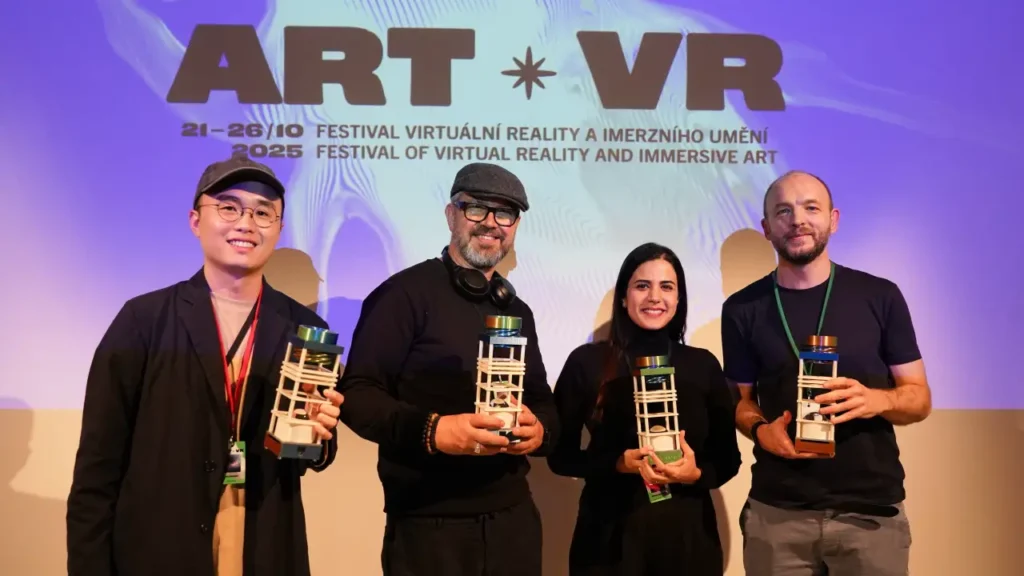
Moravec is curious to see the response. The intimacy programme will only represent one part of ART*VR: the International Competition will offer a wider range of experiences, the AsteRisk* section launched last year continues its focus on human rights and social issues, while the fulldome programme has proved particularly popular with younger audiences.
Rather than redefining the entire festival around one provocative subject, Circles of Intimacy therefore becomes an opportunity to see whether ART*VR can create more complex conversations with the audience it has spent its first editions building.
From VR to fulldome, installations and immersive rooms
ART*VR’s other evolution is happening through formats. The introduction of fulldome works in 2025 was a significant step beyond the headset, and the collaboration with the Prague Planetarium continues to reveal how different immersive technologies require their own creative approaches.
The Planetarium’s LED dome is particularly interesting in that aspect. Artists are generally accustomed to produce projection-based domes, but LED fundamentally change the visual environment.
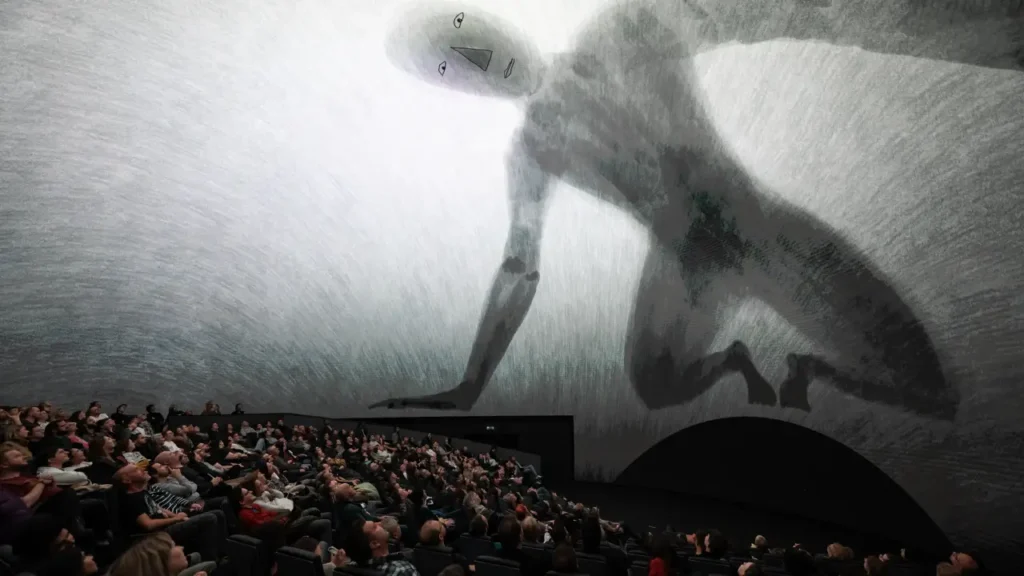
Nagy Moravec gives the seemingly simple example of white. “Normally, when you have a projection dome, it’s okay. But on LED, when you have something blinking into white, it’s killing you, basically.”
ART*VR has consequently been discussing adaptations with several artists whose works were initially conceived for traditional domes. For Moravec, these conversations demonstrate that LED cannot simply be considered a brighter or more recent replacement for projection. It becomes a different display technology with its own artistic constraints.
At the same time, the borders between creative communities are becoming increasingly porous. Artists previously selected at ART*VR with VR projects are now returning with fulldome adaptations of their work.
“For us, it’s the same broader package of immersive media. Not the same medium exactly, but there are overlaps already.”
That creates an interesting programming dilemma. ART*VR wants to follow artists as they explore different formats, but a festival also needs to introduce new works rather than repeatedly presenting adaptations of projects already shown. One possible answer could be a longer-term programme with the Planetarium, allowing some of these works to be presented outside the festival itself.
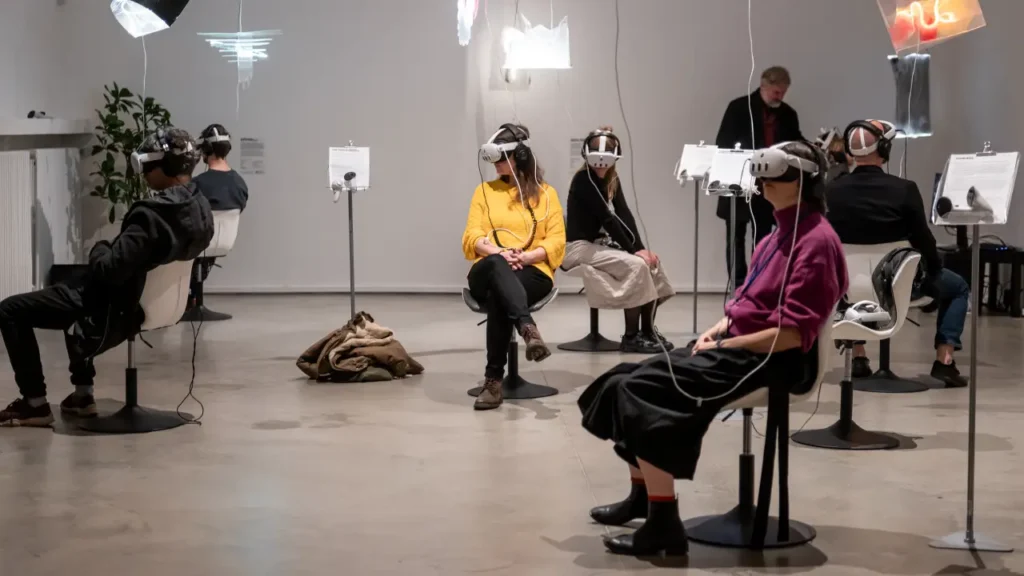
The exploration is already extending further. Signal Space, the new Prague gallery developed by the team behind Signal Festival, is confirmed as a new venue for ART*VR. The festival will introduce Untamed Realities, a category combining VR projects with interactive installations and opening the programme to a broader range of immersive formats. Looking ahead, ART*VR also intends to further explore immersive rooms, continuing its expansion beyond headset-based experiences.
In the longer term, he also wants ART*VR to accommodate another increasingly common format: the immersive room.
“One of our goals is to build an actual immersive room, to have it as one more format that can be shown.”
That ambition belongs to a future edition, but it illustrates how ART*VR’s definition of immersive creation is changing. VR remains important, yet the festival increasingly appears interested in the circulation of artists and ideas between headsets, domes, installations and spatial environments rather than in defending one particular technology.
Building an international community — and connecting it back to Prague
This expansion comes with another question: how large should ART*VR become?
Prague itself offers an increasingly active environment for digital creation, notably through the Signal Festival and new spaces such as Signal Space. But Moravec remains cautious about presenting ART*VR as the centre of a rapidly emerging immersive hub.
“We are trying to embrace it in a way which will be big enough, but I also said to myself that we need to stop growing at some point.”
Part of that caution is personal. Moravec remains an artist alongside his role at ART*VR and continues developing his own projects. The festival’s organisation has therefore evolved as it has grown, with Daniela Hanusová taking over as festival director while Moravec focuses on the artistic direction.
Rather than expansion for its own sake, he repeatedly returns to another objective: ART*VR as a community space.
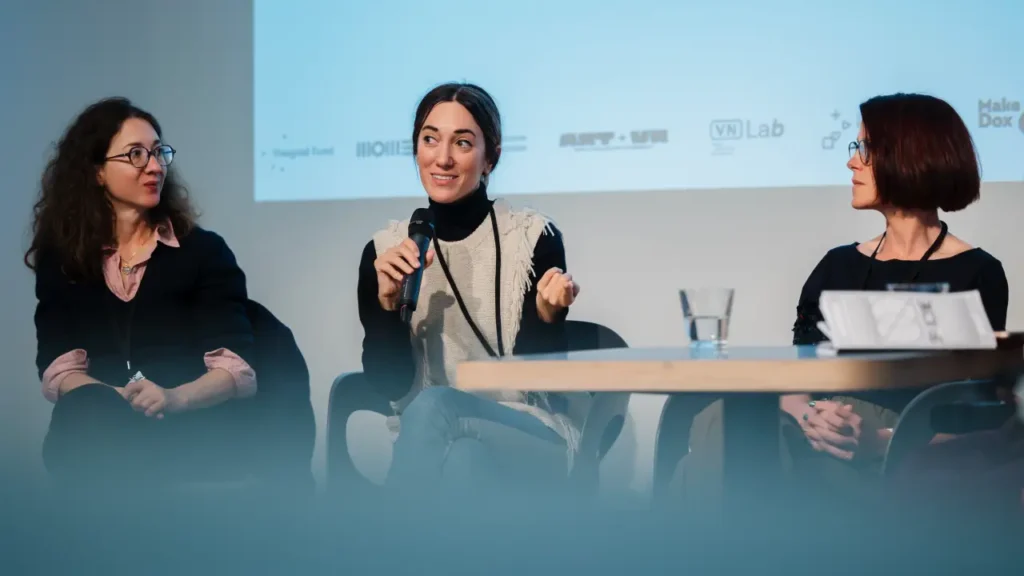
He recalls meeting an artist in Venice who told him that ART*VR had been the first festival where he really started getting to know people from the immersive community. “That’s where he rooted himself. And it’s so nice to hear that.”
The industry programme contributes to that role. ART*VR already combines its public programme with a conference and annual Pitching Forum, although Moravec believes there is significantly more potential to develop this professional dimension.
The objective, however, is not simply to reproduce the structures already found at larger immersive festivals and markets. The team is considering how industry activities could work differently, although these ideas will probably become more concrete for the next edition.
There remains a paradox. ART*VR has succeeded in attracting an international community to Prague, but Nagy Moravec feels that Czech artists themselves remain relatively distant from immersive creation.
“We are quite a big international event, but on the other hand the local artists are still kind of cold about it.”
Here again, the festival is thinking beyond its annual dates. Discussions are underway with a Prague’s Academy of Arts, Architecture and Design working in interactive design, with the possibility of students creating works around ART*VR’s themes for 2027.
After four editions, this may ultimately define the festival’s next stage. ART*VR no longer needs simply to demonstrate that an international immersive festival can exist in Prague. The question is increasingly what can be built around it: connections between artistic formats, a stronger professional community and, eventually, more opportunities for Czech creators themselves to become part of that ecosystem.
ART∗VR Festival 2026 – Selections
International Competition
10–15 November 2026, DOX Centre for Contemporary Art
- A LONG GOODBYE (2025) – Kate Voet, Victor Maes (see our interview)
- BEING IN YOU (2026) – Michał Stankiewicz
- HONEYBOYS (2026) – Nemo Vos (Tibor de Jong & Doris Konings)
- HOTEL INFINITY (2026) – William Chyr
- NAZAR (2025) – Lara Habib Kobeissi
- NOISE (2026) – Krzysztof Grudziński
- NOX (2026) – Rio Nakada (see our interview)
- SOLWATA (2026) – Felix Gaedtke, Gayatri Parameswaran
- SUNSET MOTEL (2026) – Gilles Jobin, Thomas Ott
- THE LINE (2026) – Naho Kamimura
- THE MARCH (2026) – Leo Erken, Frieda Gustavs & Olga Starostina
- THE PIGEON RING (2026) – Yuqi Zhang, Shixin Tao
- VOLUME (2025) – Niklas Poweleit
- VOOOOOO—PEEEEEE— (2025) – Hyeunjoo Woo, Jiyun Park
Circles of Intimacy
10 November – 13 December 2026, DOX Centre for Contemporary Art
- ARTIFICIAL SEX (EP. 1 & 2) (2025) – Anan Fries
- DARK ROOMS (2026) – Mads Damsbo, Laurits Flensted Jensen, Anne Sofie Steen Sverdrup (see our interview)
- HAUNTS (2026) – Lucy Hammond & Tom Chetwode Barton
- IN THE CURRENT OF BEING (2025) – Cameron Kostopoulos (see our interview)
- IN THE MIST (2021) – Tung-yen Chou (see our interview)
- LESBIAN SIMULATOR (2025) – Iris van der Meule
- LÚCIDO (2026) – Vier
- PERINATAL DREAMING – UNDERSTANDING COUNTRY (2025) – Marianne Wobcke, Volker Kuchelmeister, Jill Bennett, Lucia Barrera, Glenn Barry, Naomi Sunderland, Phil Graham
- THE BABY FACTORY IS CLOSED (2026) – Deepa Mann-Kler
AsteRisk*
10–15 November 2026, DOX Centre for Contemporary Art
- THE WORLD CAME FLOODING IN (2025) – Isobel Knowles, Van Sowerwine (see our interview)
- WE ARE DEAD ANIMALS (2025) – Tote Tiere Maarten
- YESTERDAY MAYBE (2026) – Matthieu Van Eeckhout
Fulldome Competition
10–15 November 2026, Prague Planetarium
- BICHE 1 (2026) – Chibu
- EACH RIVER HOLDS A MEMORY (2026) – Fernando Velázquez & Tiriri Rayo
- FLOW (2026) – Adriaan Lokman
- GOODBYE, GOLDIE (2026) – Pat Clark
- I DREAMT OF FIRE (preview) (2026) – Tom Lane & Marie Delprat
- LA MÉTHODE DES MOMENTS (2025) – Lydia Yakonowsky
- REALITY LOOKS BACK (2025) – Anne Jeppesen & Omid Zarei
- TEMPORAL STRATA (2026) – Ping-Sheng Wu, Jie Liou
- THE RIFT (2025) – Janire Najera, Matthew Wright
- UNDER THE SKY (2025) – Jérémy Griffaud
Untamed Realities
10–15 November 2026, Signal Space
- CYCLE (2026) – Matunda Groenendijk & Amit Palgi
- LIBRARY OF DREAMS (2026) – Zhenya Rzheznikova, Alina Mikhaleva Savelyeva
- PERMEABLE BECOMING (2026) – Patrícia Chamrazová
- YPORTNE (2026) – Anastasiya Yakubouskaya, Ekaterina Kharchenko, Monika Sabotova
Programme for Schools
18 November – 11 December 2026, DOX Centre for Contemporary Art & Prague Planetarium
- A LONG GOODBYE (2025) – Kate Voet, Victor Maes
- DARK BIOSPHERE (2024) – Javier Bollaín
- LA MÉTHODE DES MOMENTS (2025) – Lydia Yakonowsky
- NOISE (2026) – Krzysztof Grudziński
- PERINATAL DREAMING – UNDERSTANDING COUNTRY (2025) – Marianne Wobcke, Volker Kuchelmeister, Jill Bennett, Lucia Barrera, Glenn Barry, Naomi Sunderland, Phil Graham
- SUNSET MOTEL (2026) – Gilles Jobin, Thomas Ott
ZIP-Scene Conference vol. 8
12–14 November 2026, DOX Centre for Contemporary Art
Authentic Interactions: Interactive Digital Narratives, AI, and the Question of Authenticity
- Special track #1: Performing the Self – Authenticity, AI, and Self-Presentation in Interactive Narrative
- Special track #2: The Authentic Body – Embodiment, Presence, and Human Connection in Immersive Experience