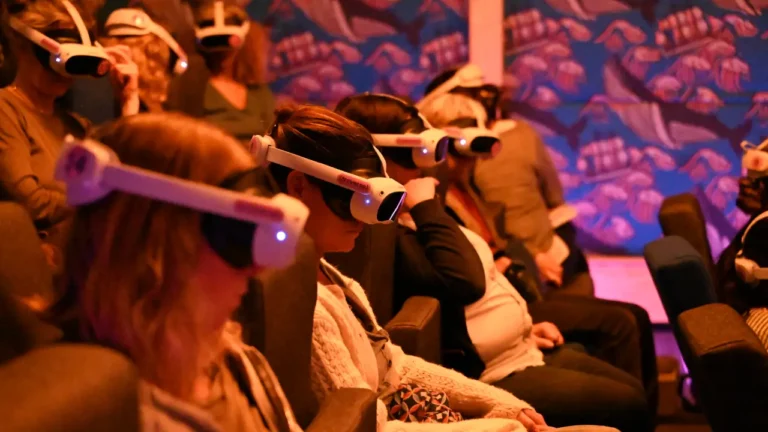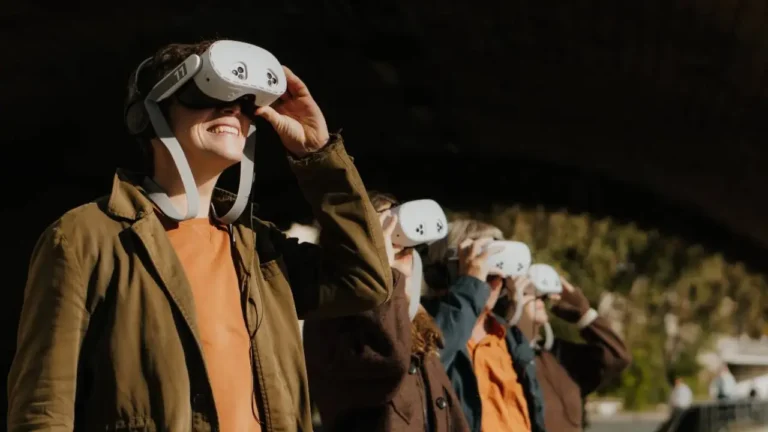
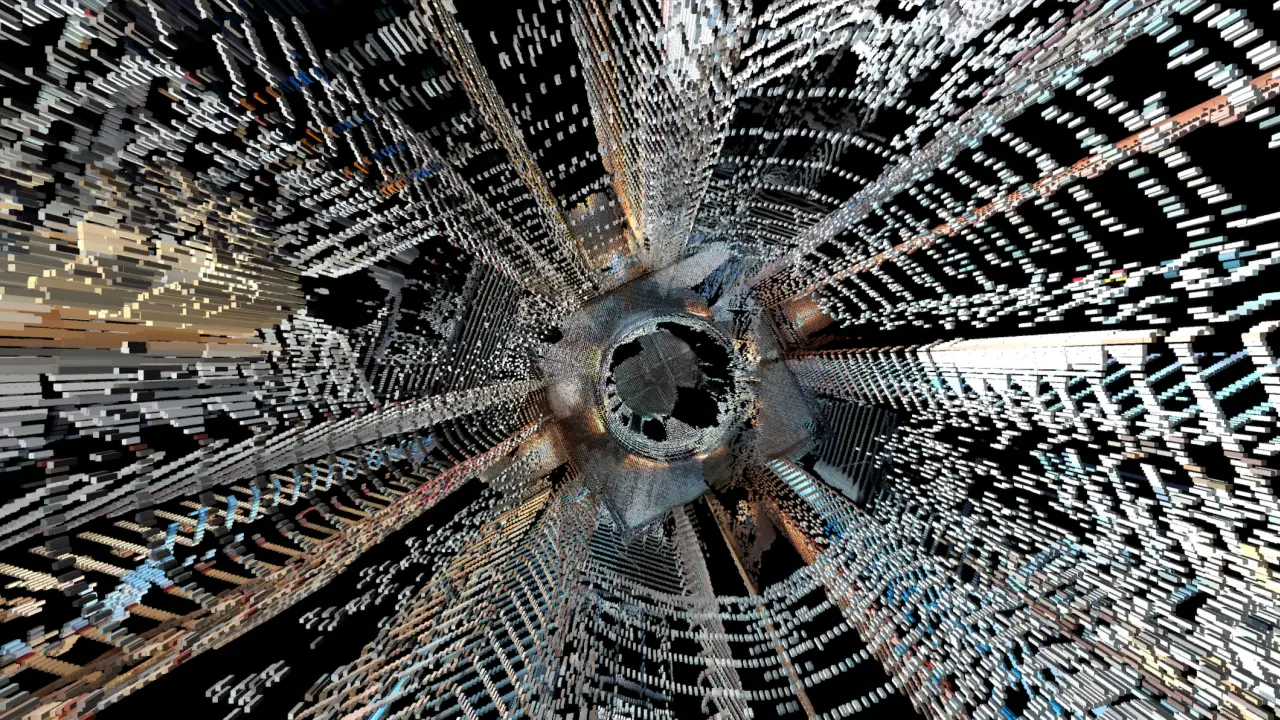
When I first discovered the GIFF (Geneva International Film Festival) and talked about it with its then artistic director, Anaïs Emery, one of the things that struck me straight away was how central storytelling was to the vision and the shaping of this event.
In a festival that hosts films, series, immersive works and more, stories have a value of their own, one that looks beyond the technology used to bring them to the audience.
2026 has been a year of change for the event. Anaïs left in June 2026, and Emilie Bujès took over on 1 August 2026. Yet the soul of the GIFF has stayed intact, thanks above all to the festival’s programming team. Together they carried the programme forward while keeping the editorial coherence of previous editions and the artistic standards you’d expect from an event of this calibre.
The immersive programme, opening on 30 October, once again puts content at its core, while also reflecting on innovation. Above all, it never forgets the people who experience these stories, to whom the GIFF wants to offer a new way of discovering them and connecting with them.
With Lucie Emch, Head of Programming Office, and immersive programmers Paola Gazzani Marinelli and Laurent Kempf (International Works), we started from exactly this: reflecting on what defines the GIFF’s vision as a whole today.
“It’s a transition year between Anaïs Emery and Emilie Bujès,” Lucie says. “But for us, it’s also a collective year. We constructed the programme all together, with the committee and the programming office. I think that really reflects what the GIFF is about: a plurality of audiovisual formats, a plurality of stories, and this year also a plurality of voices building the programme. Personally, I believe that’s necessary. When you build a programme with different perspectives, you end up programming different perspectives.”
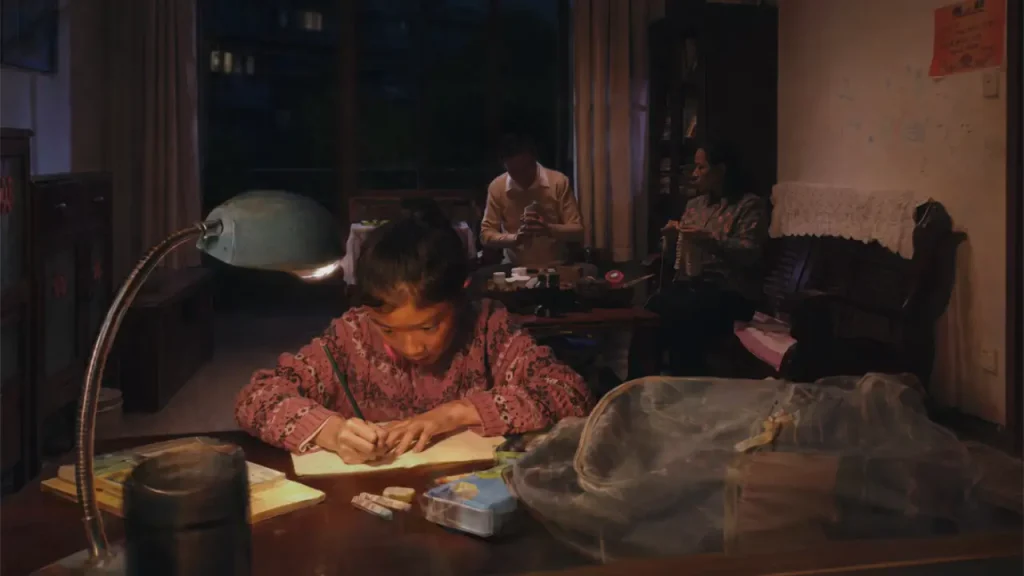
There’s continuity with what the festival has done before, of course. But the central idea is to use this very plurality of perspectives to spark even more of the public’s curiosity about formats that aren’t entirely new, but are certainly a step in a different direction from more traditional tools, which audiences already know well. “It is important for us to encourage audiences to move between films, series and immersive experiences, and to be curious about discovering new things. That’s what we’re doing with the Taiwan Spotlight section, for example”, Lucie explains. This year’s Taiwan Spotlight features some internationally renowned works: Singing Chen’s widely acclaimed, multi-award-winning The Clouds Are Two Thousand Meters Up, Craig Quintero’s Just For You Trilogy, In the Mist by Chou Tung-Yen and The Deserted (Jia Zai Lan Re Si) by celebrated film director Tsai Ming-liang. “Someone comes watching Stray Dogs by Tsai Ming-liang, and from there maybe discovers his immersive work too, seeing how his artistic approach carries through across different formats.”
Laurent Kempf and Paola Gazzani Marinelli, focused on the XR side, echo this. “Lucie has the overall view,” Laurent says, “while we’re really focused on XR. But the same idea applies there: we touch on many different things.” A plural vision that is also reflected, in some way, in the curatorial choices.
Finding a reason for innovation and for immersion
When I approach a festival, one of the things I always look for is whether a specific thread or mood connects the works in the selection. Sometimes a direction to follow, philosophical, thematic or emotional, makes all the difference for the audience. Other times, the beauty lies precisely in the variety of productions of the lineup.
“At the core, the thread is innovation,” Lucie says. “Finding works that are artistically engaging and mind-blowing. We saw some absolutely beautiful works that felt a bit more conventional, a bit less innovative. Since we started at the GIFF, the question has always been: what is new, what could be new? We look for works that take risks and explore new directions.”
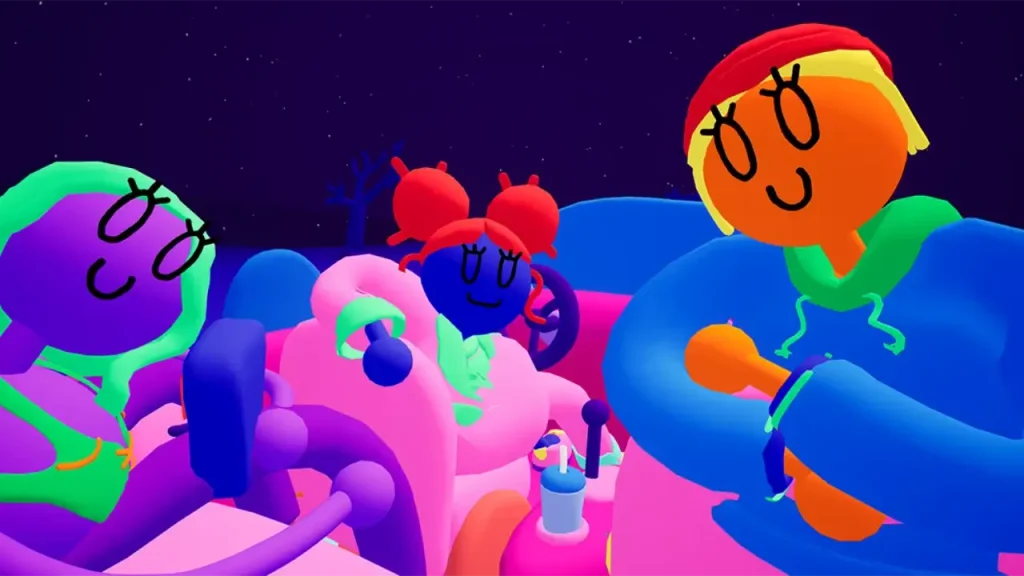
Paola sees it from another angle. “For me, it isn’t really innovation I’m looking for. It’s what the artist wants to say with the piece, and why they chose this medium to tell this particular story. When I see a work in VR or any other medium, I always ask myself whether the story could be told in another way. And if the answer is yes, then maybe it doesn’t need to be VR.“
A collective selection process
With all the potential changes of a year of transition, I was curious to understand how the selection itself had taken shape: what had shifted compared to the past, in the works that came in and in the way the team approached them.
“The programming office leads the selection process,” Lucie explains. “We start with the main festivals of the year, travelling or following their programmes, to understand what is happening in the immersive world. The way we search for works didn’t really change. What changed is the programming process itself, since Anaïs Emery left the festival at the end of June. It was a truly collective process, and it was important for us that everybody saw everything and discussed everything, also to make sure every work is aligned with our values and with what we want to talk about.”
“We received slightly fewer submissions this year”, Lucie continues. “The submission window was a bit shorter, sure, but it may also reflect what’s happening in the cultural world: a lot of funding is being cut.”
“We had a lot of meetings,” Paola jokes. “And it was indeed a more participatory process with the other members of the selection committee.”
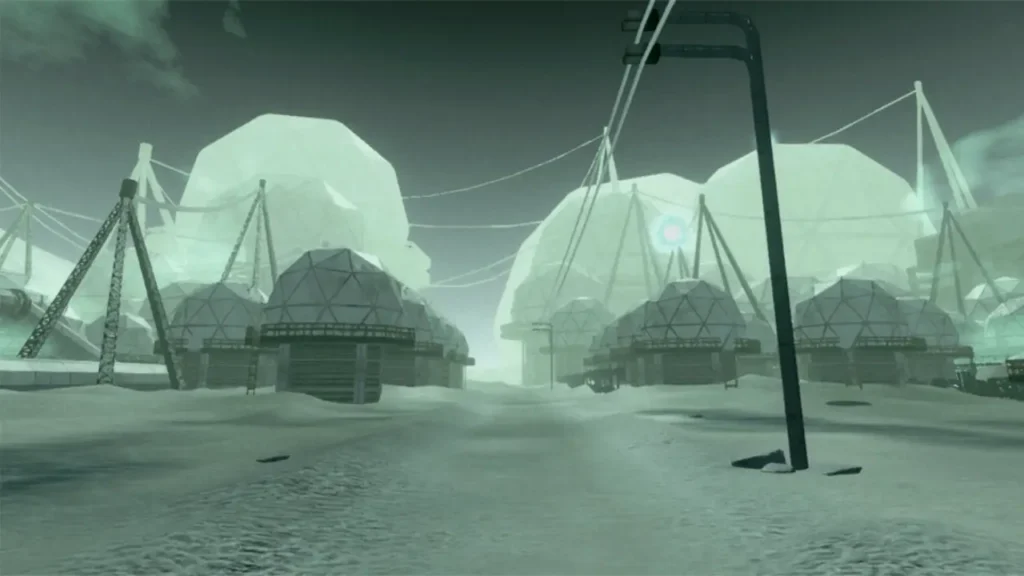
For Laurent, it was the first time at the GIFF, “So I can’t compare. But it was interesting to discuss everything together and see the opportunities we have to bring works that are hard to see in other contexts. Here in Switzerland, it’s very important to find the best and most original things, ones you wouldn’t be able to see otherwise.”
I find that a collective gaze can help enormously, especially in a field like ours, where immersive work is a living experience that involves us completely and is therefore, even more than cinema, bound up with personal perception. Bringing together long-standing voices and a fresh pair of eyes can give the GIFF’s artistic soul the kind of renewal without which any festival risks growing stale.
Beyond the headset: the premieres
“We have a few world premieres we’re really happy about, mostly Swiss projects,” Lucie says. “Supporting Swiss creation and Swiss artists is something the GIFF is very proud of. Captures, in the international competition, is a bit different from what we’ve shown in the past. It isn’t VR. And presenting works that don’t use headsets matters to us, because the GIFF has always been a bit different from other festivals: we try to be inclusive towards a general audience, and a lot of our public aren’t professionals.”
That’s why this year the programming team thought hard about how to make the programme easier to understand and to experience. “When we started,” Lucie continues, “the projects were short and technologically light. Nowadays a work can last an hour and require twelve square metres. We have to adapt. So we keep programmes like the short-film ones, where with one ticket you can try different works and see a plurality of approaches, while standalone works lasting an hour or more have separate tickets.“
The first example of this, already mentioned by Lucie, is Captures. “Captures is a huge structure: a 210-degree immersive screen, three metres high and fifteen metres wide. The idea was to question what immersive means outside the headset. It’s by a Geneva-based collective Structurals, working with the Swiss DJ Owelle, and it’s an audiovisual performance they’ll play four times during the festival – three of them for the public. It will be presented together with Future Frontiers, which is a film, not a live piece, by François Moncarey and Grègór Belibi Minya. Again, the idea is to bring in an audience that knows less about immersive and headsets, let them discover it, and maybe make them curious to try something else.“
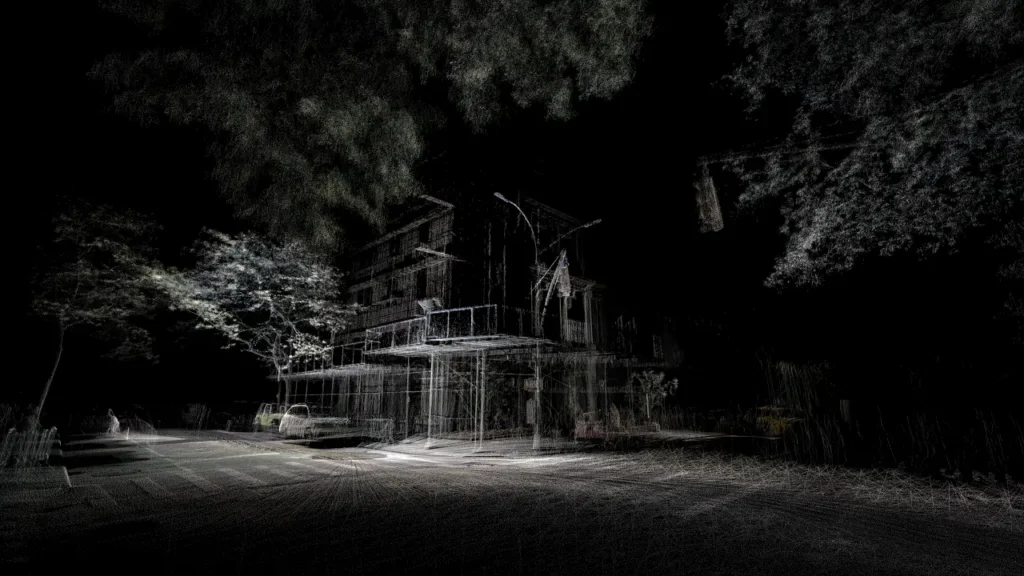
The same structure allowed the team to try something new. “Many professionals saw Katábasis in VR in Cannes. We loved it so much that we asked Ugo Arsac to adapt it for the screen. It’s the first time he’s adapted it for this kind of screen, so we’re really curious to see how it works. When a work is that well known, it can be frustrating for audiences who don’t like VR not to be able to discover it. So we’re thinking about how works can adapt to different formats. VR is truly part of Katábasis, of course. But we’re curious to see how it translates, and that will be something new to discover as well.“
These are not the only premieres. Among them is also Res Natura, a work by Julien Mercier and Mélanie Courtinat in the Future is Sensible section. “(Res Natura) is very dear to us because it’s a project about Switzerland, and we hope the public will be curious to learn more about it and about this ecosystem. It was originally only in English, but we asked the creators to make a French version so we can show it to schools. That’s very popular right now: everything is completely sold out for schools.“
Given my personal obsession with the history of Arctic exploration, one of the works I’m most looking forward to discovering at the festival is SILA – Héroïnes arctiques by Agnès de Cayeux, Mélanie Courtinat and Laura Mannelli, presented as an international premiere.
“We’re very happy about SILA too,” Lucie says. “It’s sometimes difficult to find female artists, especially in immersive and digital worlds. So it’s really interesting how these artists came together to tell the histories of five women. Supporting that kind of gender diversity, and that kind of collaboration, matters to us.”
Knowing where to go with the medium
Lucie Emch, Paola Gazzani Marinelli and Laurent Kempf have worked in the field for years, in different roles, and like me they have lived through a whole series of changes that have shaped this sector.
“I think artists know more clearly where they’re going with the medium, and it gets clearer every year,” Laurent says. “A few years back, it was more about trying different things, different ways, and the works themselves were less cohesive. Not less interesting, because they were proposing something different. But now we have more works where you get into the experience and follow it through more naturally, and they may be more accessible to the general public.”
That is the international picture. But looking at the Swiss sector too, a few notable points emerged during our conversation.
“We’re in a bit of a transitional phase in Switzerland, here in Romandie,” Laurent continues. “Cinéforom started its Digital Experience funding at the time, since then joined by a joint fund between the City and Canton of Geneva, and various funding opportunities by the Fondation pour la création numérique, and a lot of works came out of these. Cinéforom is ending its support this year, but it will continue in a different form. So there’s a bit of a question mark over where things are going, but they are continuing, and that’s good news. An ecosystem of creators has developed, and it will only grow from there.”
“It’s evolving, somehow,” Paola adds. “It takes time. VR, and extended reality in general, is only one part of digital creation as a whole, and maybe it isn’t the first choice for Swiss artists working in this field.”
“That goes with the DNA of the festival as well,” Laurent explains. “We’re very focused on immersive, and true, there are a lot of VR works. But we also have Indulto by Mélanie Courtinat, for example, a work inspired by video games, that is shown on a traditional display without a headset. In the past we’ve had several works that didn’t require one. As Paola said, it’s not just XR, it’s a wider field, and we always keep that in mind in what we want to show. Just as the festival says: stories can be told in many formats.”
Some festivals limit themselves to headsets. But what makes something immersive is sometimes not the tool, rather the way you approach the audience with your content. That the GIFF shows so many different ways of doing it is what makes the programme interesting.
“It’s really about bringing the audience to be curious and try different things”, Lucie stresses. “We try to have diversity at every level: techniques, approaches, stories. Feedback VR carries a postcolonial reflection so some works are more political, while others are really poetic and touching. We know exactly why each work is here and what it represents, in terms of artistic thinking or storyline. And these works also make us think about ourselves in the media, how we evolve with stories, why something is immersive and why it’s VR. We really want the audience to experience that, and to have a good time at the festival.”
What comes next
Around the works, at the GIFF, there’s an entire circuit: the GIFF PRO from 3 to 6 November, with its talks, case studies, the Geneva Digital Market, the visit to Gilles Jobin’s Studio 44 MocapLab. And then the Digital Night on November 4. I asked where they see the festival, and the field, heading in the near future.
“There are different aspects to that question,” Lucie says. “At the festival, we try things and see what works. The coherence between what we do at the GIFF and at the GIFF PRO, with case studies that go deeper into the works rather than just showing them, works very well. More generally, Emilie Bujès only arrived in August, so she isn’t involved in this year’s programme; it was too late. But there are things happening in Geneva in the immersive field, and she’s very curious and has many ideas. It’s still under construction, and we’re curious to see where it goes. What’s certain is that it’s essential for the GIFF to continue with this diversity of audiovisual formats. We’re the only festival in Switzerland, or at least the main one, really exploring immersive technology in this way. Of course it will evolve. As Laurent said, we’re curious about many different things, not only VR, and that curiosity is something she shares”.
– – –
You can find the full GIFF 2026 programme on the official website, with immersive experiences alongside TV series and films.
It includes some works we’ve already encountered at XRMust, including two of the Venice 83 award winners, Out of the Ashes by Nonny de la Peña and Rory Mitchell, and the much-loved The Pigeon Ring. Among the many fine titles are also two of my favourites from recent years: The Clouds Are Two Thousand Meters Up, one of the highest-quality works ever produced in our field, and my guilty pleasure, Everest: The First Ascent – which, after seeing Tenzing, I feel an absolute need to experience again.
Disclaimer — Editorial Note
This interview was conducted and written by an independent journalist for XRMust. It focuses on the GIFF 2026 Selection and its recent development. For full editorial transparency, we note that Mathieu Gayet, XRMust’s Publishing Director, also collaborates with the Festival on the selection comitee and the GIFF PRO programme. This role did not influence the interview process or the editorial content of the article, which were entrusted to another writer.